

Dona Nobis Pacem (from Missa Brevis, K. 259): SAB Choral Octavo
Wolfgang Amadeus Mozart / ed. and arr. Patrick M. Liebergen
Item: 00-PO-0005155
$2.25
Minimum order quantity: 20 copies
Pickup currently not available
Description
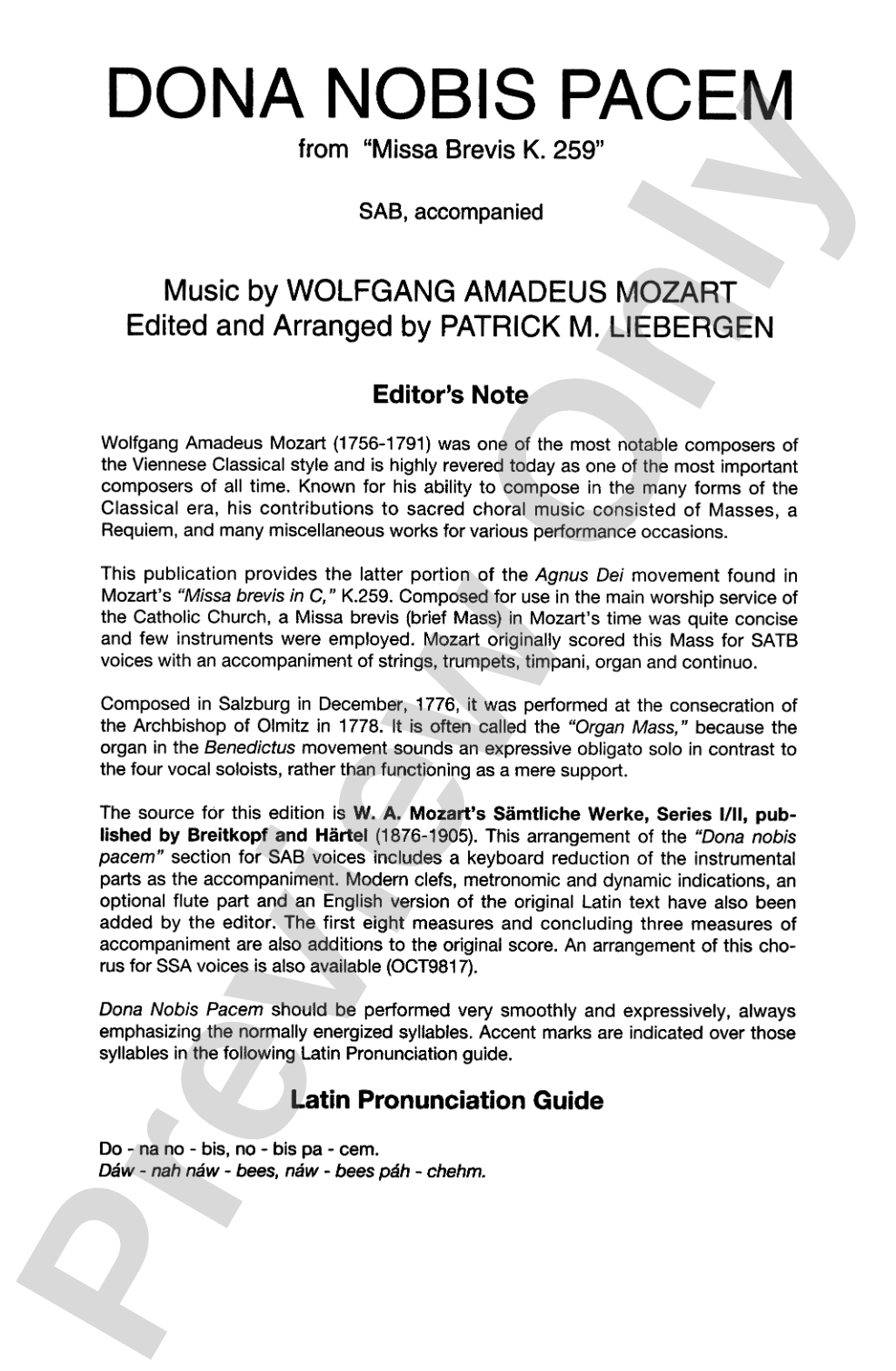
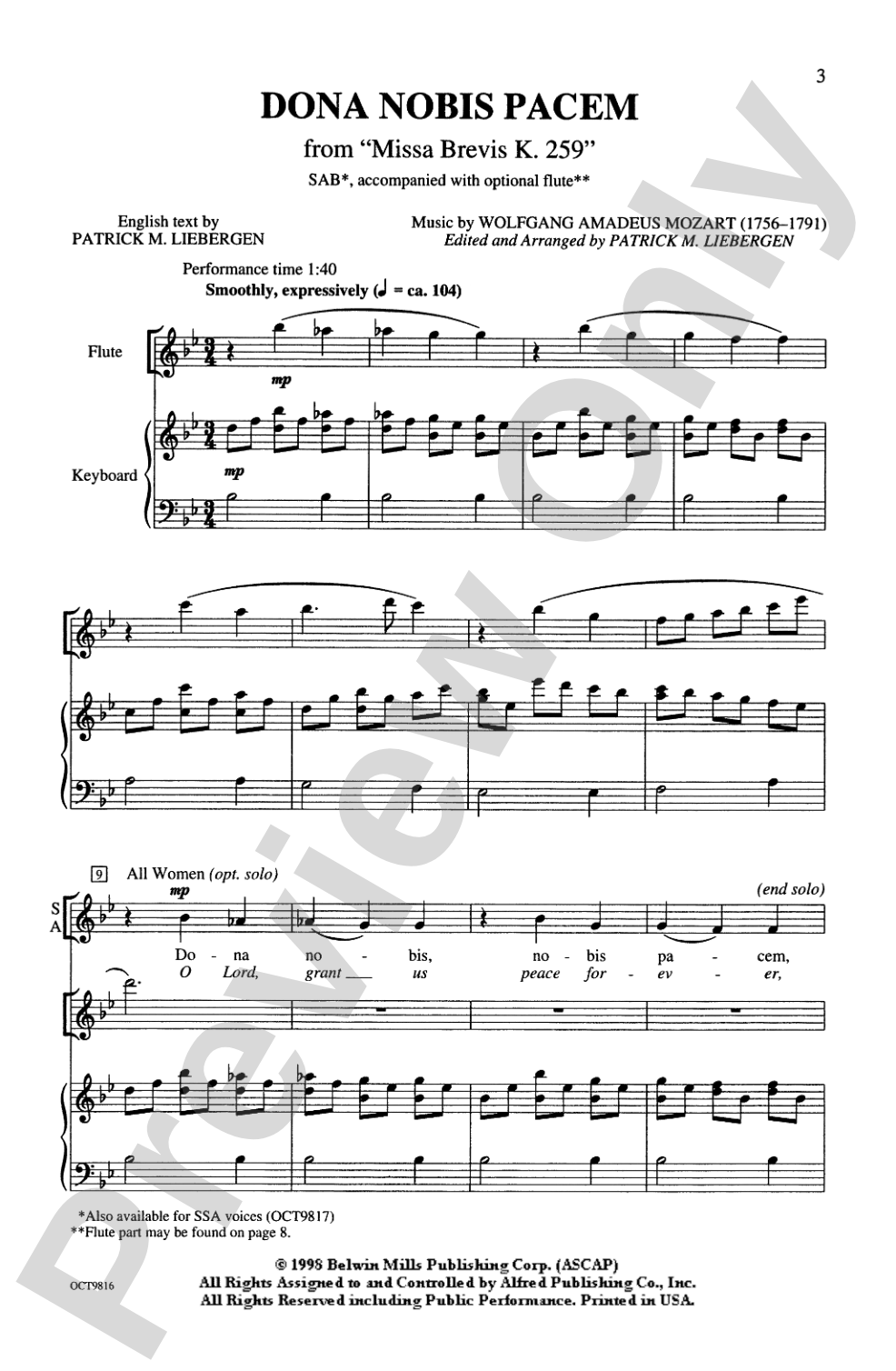
Patrick Liebergen provides us with a very singable edition of this Mozart masterpiece from Missa Brevis. Both Latin and English texts are provided. Add the optional flute part to enhance your performance. Ideal for concert, festival, or contest usage.


Dona Nobis Pacem (from Missa Brevis, K. 259): SAB Choral Octavo isn't in MakeMusic Cloud just yet...but it could be. Let us know you'd like to see it, and you'll help shape what comes next. In the meantime, start a free trial and dive into thousands of interactive titles your students can play along with today.
Request This Title
Tell us you want it.
Start Your Free Trial
Explore everything that's ready to play right now.
Sample Audio
No sample audio found.
Sample Video
No sample videos found.
Additional Details
Series:
Alfred Archive Edition: Belwin Festival Series
Publisher:
Alfred Music
Page Count:
12
SKU:
00-PO-0005155
More about this title
About the Composer: Wolfgang Amadeus Mozart
Wolfgang Amadeus Mozart (1756-1791) composed across every major genre of his time, from symphonies and concertos to operas and sacred works. His output was staggering in both volume and quality; he produced over 600 works before his death at 35. For choral directors, Mozart's sacred music remains essential repertoire because it balances structural clarity with emotional depth, making it both technically accessible and artistically rewarding for singers at all levels.
The Missa Brevis, K. 259, exemplifies Mozart's gift for writing elegant liturgical music that serves pastoral needs without sacrificing musical substance. These shorter mass settings were practical for church use while maintaining the craftsmanship expected of a master composer.
Why we love this
Liebergen's SAB arrangement preserves the crystalline vocal writing that makes Mozart's music so teachable while opening the piece to choirs without soprano sections. The dual-text approach gives you flexibility for liturgical or secular concert contexts, and the optional flute part adds textural richness without complicating rehearsal logistics.
What to expect
A prayer of peace distilled to its essence. The piece unfolds with serene simplicity, the kind of harmonic inevitability that feels both timeless and intimate. There is no drama here, only the quiet confidence of faith expressed through pure vocal sound.
Who it's for
SAB choirs with limited soprano resources, including community choirs, church choirs, and high school ensembles in transition. Directors seeking concert or festival repertoire with strong classical credentials will find this arrangement meets both artistic and practical needs.
How to get the most out of it
- Shape the melodic line with gentle dynamic undulation rather than excessive swelling; Mozart's architecture asks for clarity and forward motion.
- Use the optional flute part selectively. Try it in the final statement alone, or layer it in only on the text repetition to heighten impact without obscuring the vocal line.
- Keep the alto and bass parts grounded and supported; the sopranos will naturally carry the tune, but a solid lower foundation prevents the arrangement from sounding thin.
- Balance the Latin and English text clarity equally. Practice whichever language feels less familiar to your ensemble first, then reinforce both in performance mode.
How to use it
Program this as an opener for a concert centered on sacred or peace-themed repertoire, or place it midway through a mixed program to provide tonal and textural contrast. Its modest duration and concert-ready polish also make it ideal festival material, especially when you need a showpiece that is neither too demanding nor too lightweight.
Skills your students will build
- Balancing independent melodic lines in three-part writing
- Sustaining legato line across rests and sectional changes
- Maintaining pitch integrity in harmonic contexts with limited doubling
- Shifting between Latin and English text with equal clarity and authenticity