

Dona Nobis Pacem (from Grosse Orgelmesse): SATB Choral Octavo
By Franz Joseph Haydn / ed. and arr. Patrick M. Liebergen
Item: 00-PO-0000593
$1.95
Minimum order quantity: 20 copies
Pickup currently not available
Description
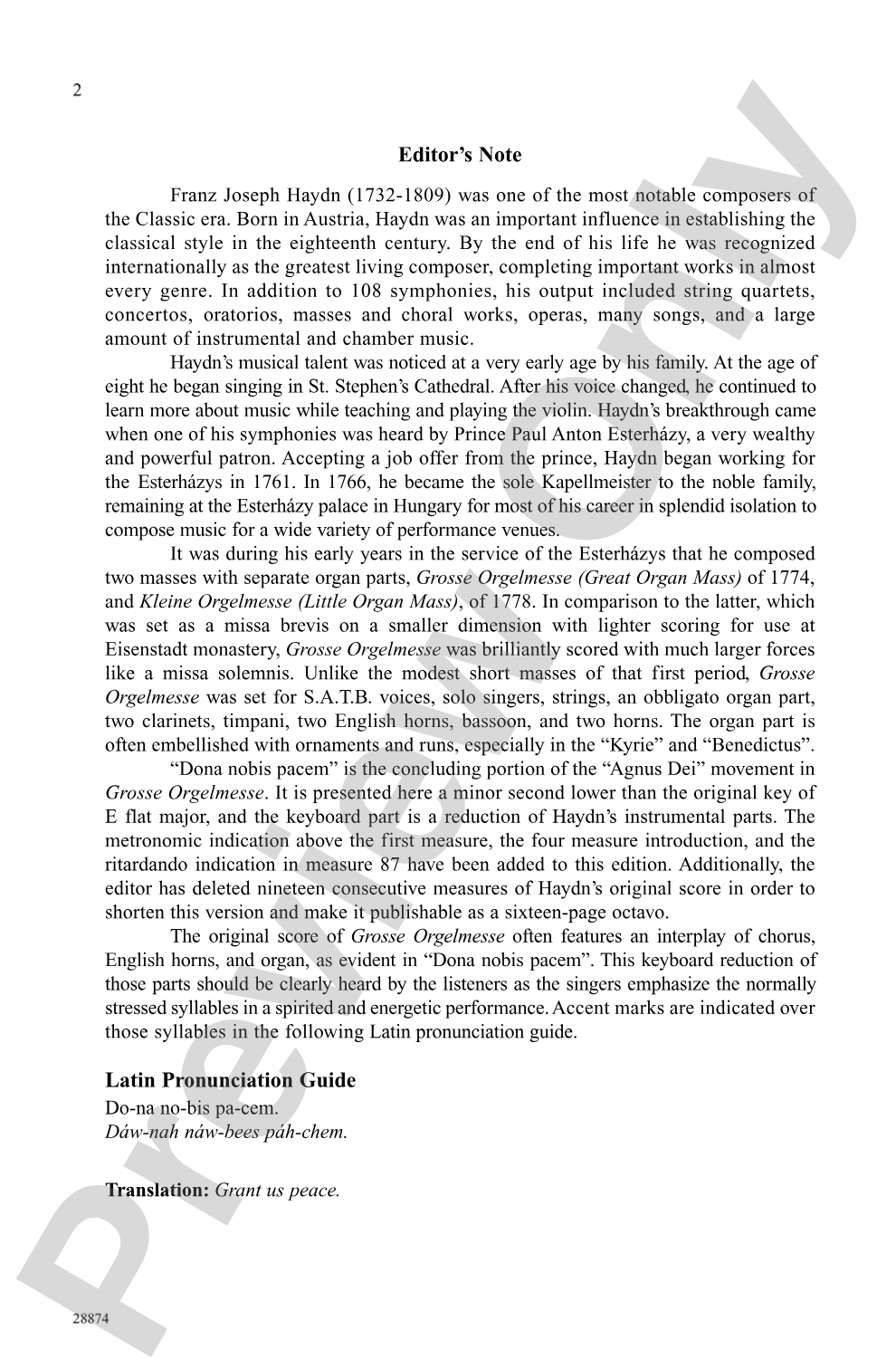
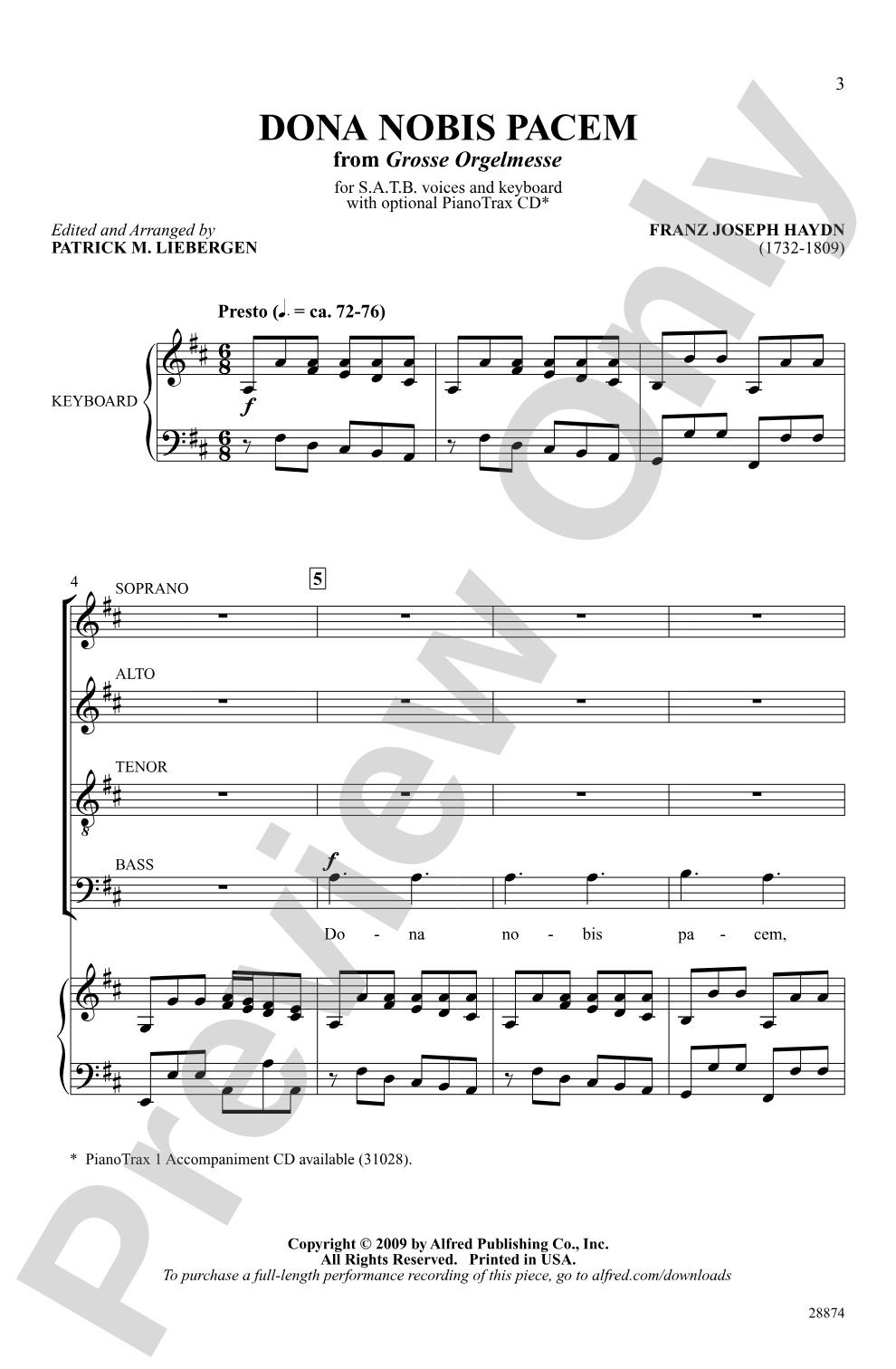
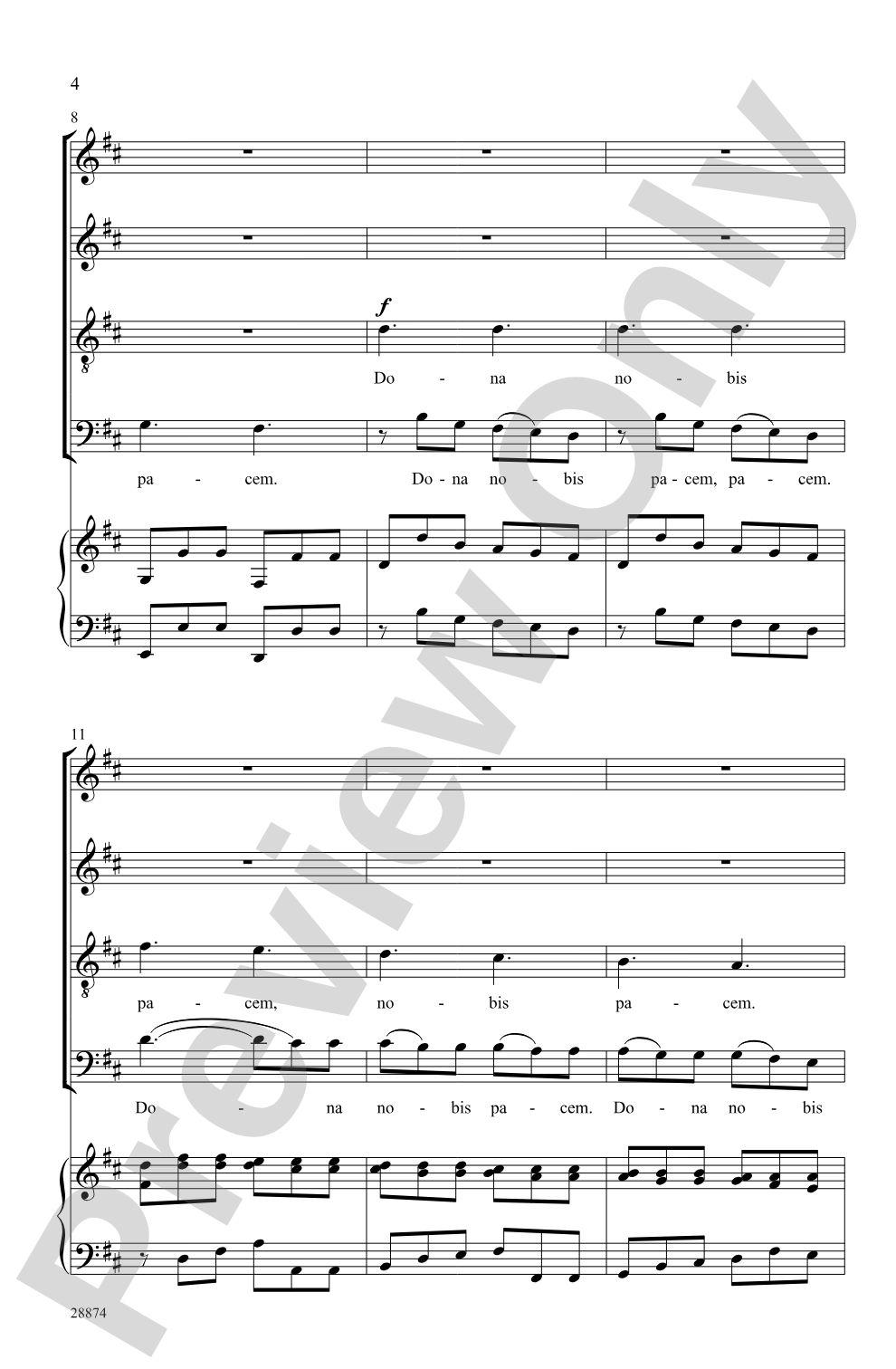
Extracted from the "Agnus Dei" movement of Haydn's Grosse Orgelmesse, this scholarly choral edition captures the authentic interplay of the original instrumentation (with a playable keyboard reduction) and the contrapuntal vocal parts. A joyful classical work that is fine fare for festivals and concerts. Accompaniment included on PianoTrax 1 CD (00-31028).


Dona Nobis Pacem (from Grosse Orgelmesse): SATB Choral Octavo isn't in MakeMusic Cloud just yet...but it could be. Let us know you'd like to see it, and you'll help shape what comes next. In the meantime, start a free trial and dive into thousands of interactive titles your students can play along with today.
Request This Title
Tell us you want it.
Start Your Free Trial
Explore everything that's ready to play right now.
Sample Audio
1
Audio File
--:--
0:00
0:00
Sample Video
No sample videos found.
Additional Details
Series:
Alfred Choral Designs
Publisher:
Alfred Music
Page Count:
16
SKU:
00-PO-0000593
More about this title
About the Composer: Franz Joseph Haydn
Franz Joseph Haydn (1732-1809) shaped the classical symphony and string quartet into forms that defined an era. Working across six decades as a composer, conductor, and teacher, he developed a compositional language marked by formal clarity, harmonic invention, and a gift for memorable melody. His sacred works, including the Grosse Orgelmesse, blend his mastery of counterpoint with the expressive demands of liturgical music.
Why we love this
This extraction from the Agnus Dei gives choirs access to a genuine masterwork without requiring the full mass. The contrapuntal writing is elegant and singable, the keyboard reduction honors Haydn's original orchestration without overwhelming amateur voices, and the piece carries real spiritual weight while remaining joyful and accessible. For a festival or concert program, it reads as substantial without demanding specialized expertise.
What to expect
Serene and purposeful, with an underlying current of hope. Haydn's setting moves between moments of intimate four-part texture and fuller harmonic sonorities, creating a sense of voices in conversation rather than in unison declaration. The melodic contours feel both classical in their restraint and genuinely moving in their directness.
Who it's for
SATB choirs with intermediate sight-reading skills and some experience with classical style. The piece rewards groups that can sustain clean vowels across longer phrases and manage independent voice lines without doubling. It fits equally well in a festival setting, a sacred concert, or an educational context where you want to introduce singers to Haydn's choral writing.
How to get the most out of it
- Balance the four voice parts carefully through the imitative passages; Haydn's counterpoint is transparent only when each line remains audible. Rehearse sections where voices enter in staggered fashion (soprano, then alto, then tenor, then bass) with the understanding that overlap should create clarity, not blur.
- Shape phrases with the keyboard accompaniment in mind. The reduction includes harmonic and rhythmic anchors that help singers find their way through longer melodic lines; use rehearsal recordings or the PianoTrax accompaniment to establish tempo and harmonic context early.
- Attend to word stress in the Latin text. The declarative opening (Dona nobis pacem) benefits from articulation that feels conversational rather than heavily accented; this approach keeps the piece's classical proportions intact while still projecting meaning.
- Work the key relationships carefully if your choir has limited experience with classical idiom. Haydn modulates within a clear harmonic framework; secure intonation in the original key before exploring how he moves briefly to the dominant and subdominant regions.
How to use it
Position this as a centerpiece in a sacred or classical-themed concert; its brevity and expressive clarity make it an ideal contrast to longer contemporary works. Alternatively, program it among other settings of Dona nobis pacem to show how the text has inspired composers across centuries, or place it early in a concert to establish an atmosphere of peace and reflection.
Skills your students will build
- Four-part counterpoint and voice independence
- Classical phrase architecture and harmonic function
- Latin diction and text-setting in sacred music
- Collaborative singing in imitative textures
- Intonation within key relationships (modulation to dominant and subdominant)