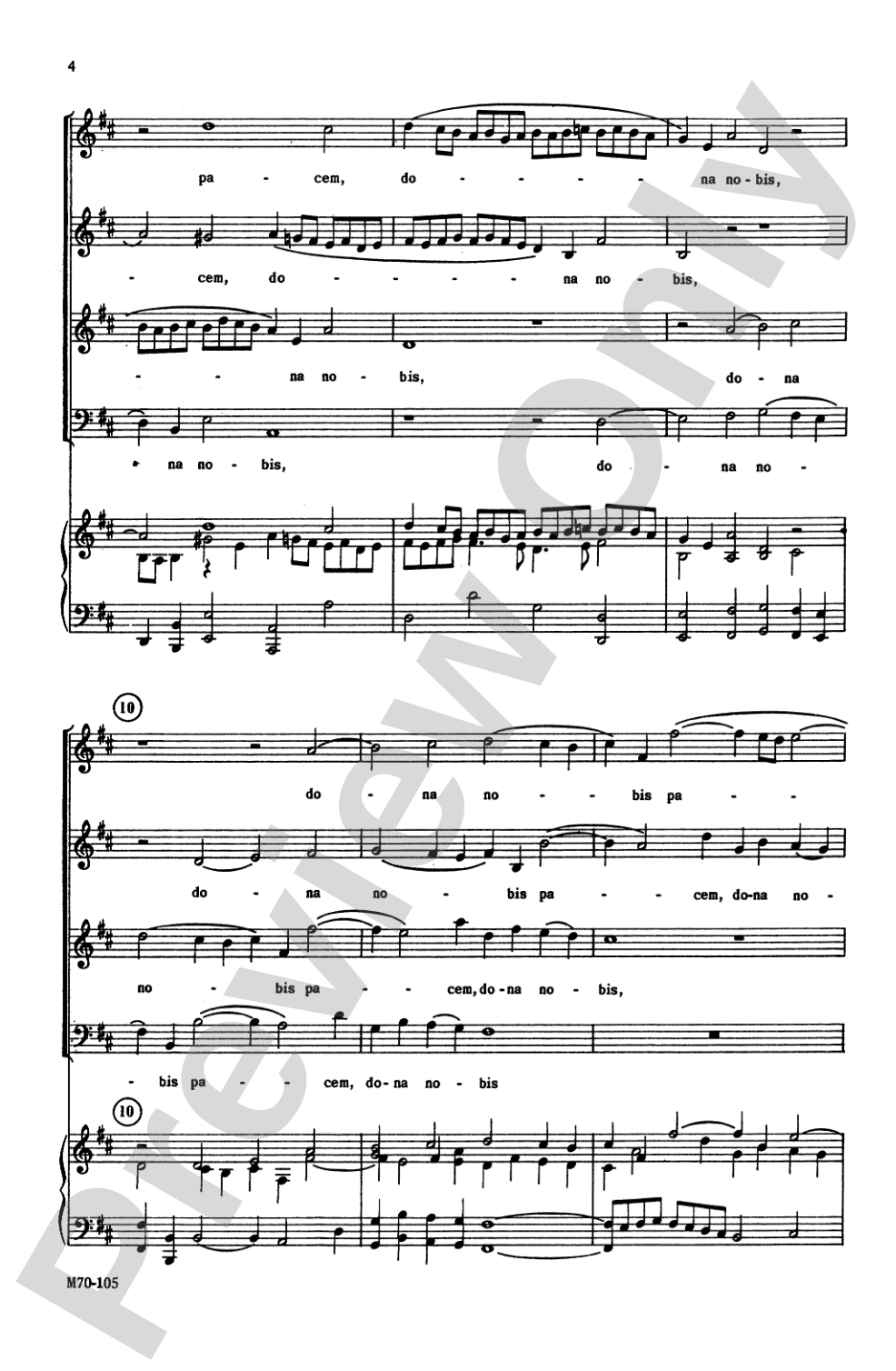
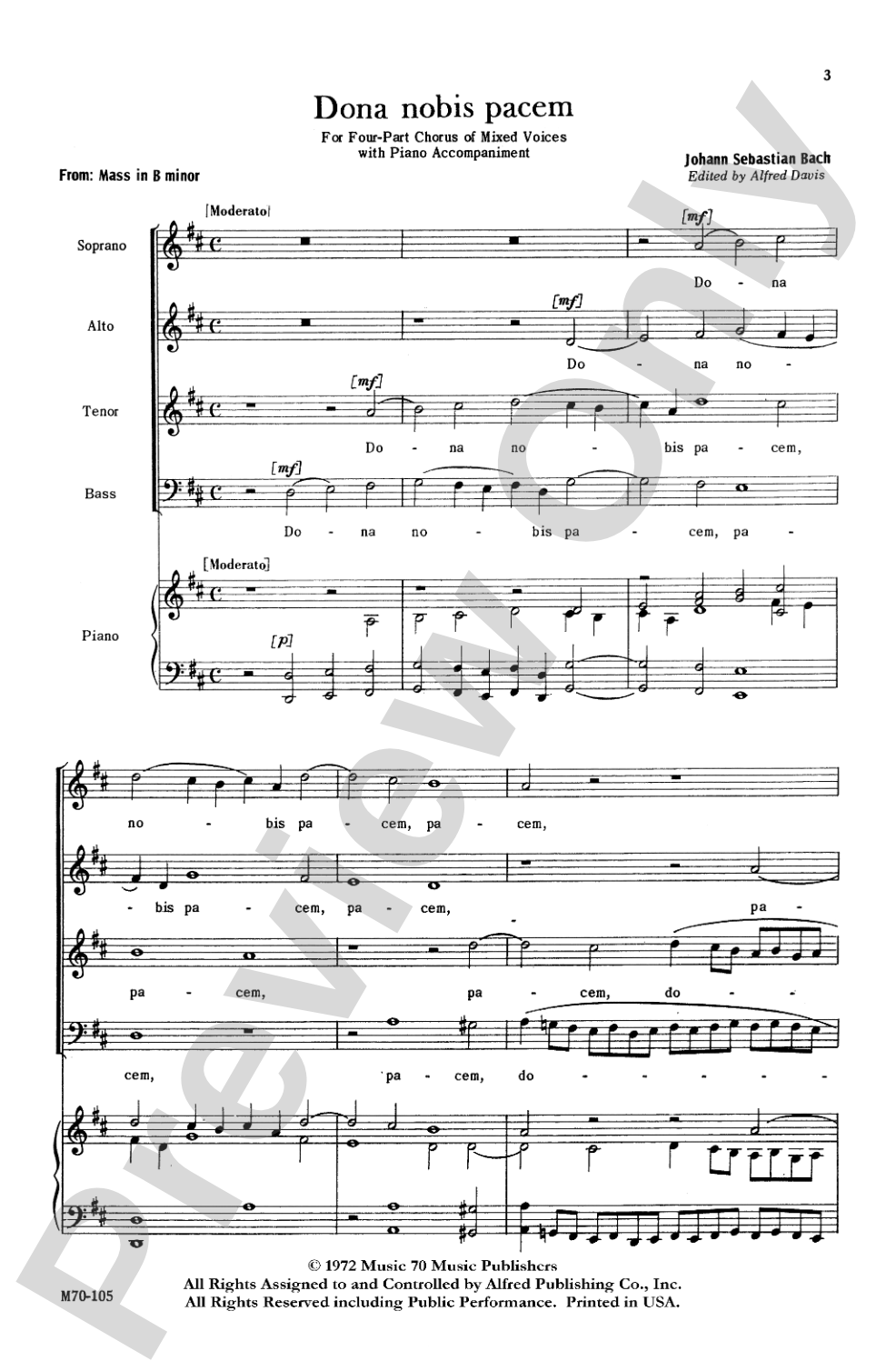
Dona Nobis Pacem Sheet Music Preview

Dona Nobis Pacem: SATB Choral Octavo

By Johann Sebastian Bach / ed. Alfred Davis

Item: 00-PO-0005118

Digital Download
$2.25

Minimum order quantity: 20 copies

Description

Dona Nobis Pacem: SATB Choral Octavo isn't in MakeMusic Cloud just yet...but it could be. Let us know you'd like to see it, and you'll help shape what comes next. In the meantime, start a free trial and dive into thousands of interactive titles your students can play along with today.

Sample Audio
No sample audio found.
Sample Video
Additional Details
Series: Alfred Archive Edition: Lawson-Gould Music Publishers
Publisher: Alfred Music
Page Count: 12
SKU: 00-PO-0005118

More about this title

About the Composer: Johann Sebastian Bach

Johann Sebastian Bach (1685-1750) stands as one of history's most prolific and influential composers. Working across Germany in the early 18th century, he synthesized the full range of Baroque musical language into works of unprecedented structural sophistication and emotional depth. His output spans sacred cantatas, passions, motets, and instrumental works that continue to define the foundation of Western music education.

Why we love this

Bach's "Dona Nobis Pacem" delivers the intellectual rigor and harmonic clarity that made him essential to music education, while remaining accessible enough for intermediate singers to experience genuine four-part polyphonic writing. The piece works equally well as a concert closer or as a teaching text for understanding voice leading and the power of a well-crafted fugal idea.

What to expect

A moment of crystalline stillness and spiritual purpose. The music unfolds with inevitable logic, each voice entering and interweaving as if the prayer for peace had always been singing itself. There is no dramatic urgency here, only the deep assurance that comes from four independent lines moving in perfect agreement.

Who it's for

Advanced high school choirs, college and university singers, and community choirs seeking substantive sacred repertoire. This edition works well for programs that value historical accuracy alongside modern score legibility.

How to get the most out of it

  • Balance the voices so each melodic idea emerges clearly; the alto and tenor lines carry substantial motivic material and should not be buried beneath soprano or bass.
  • Shape phrases by attending to Bach's harmonic rhythm rather than looking for obvious melodic peaks; this trains singers to hear how chord motion itself creates architecture.
  • Keep the tempo steady and unhurried to allow the counterpoint to breathe; rushing masks the contrapuntal relationships that give the piece its coherence.
  • Use the text underlay as a phrasing guide; Bach's syllable placement often suggests where singers should breathe and where lines should push through.

How to use it

Program this as a contemplative centerpiece or closing number on a concert mixing sacred styles and eras. It pairs naturally with other Bach motets or with Renaissance sacred music, and also stands effectively alongside more contemporary peace-themed choral works to show historical continuity of the theme.

Skills your students will build

  • Reading and executing four-part counterpoint with independent voice lines
  • Listening for harmonic function within a polyphonic texture
  • Sustaining phrase integrity while balancing multiple melodic ideas
  • Recognizing Baroque voice leading conventions and their emotional impact
  • Coordinate ensemble blend in music where all voices matter equally

You May Also Like