
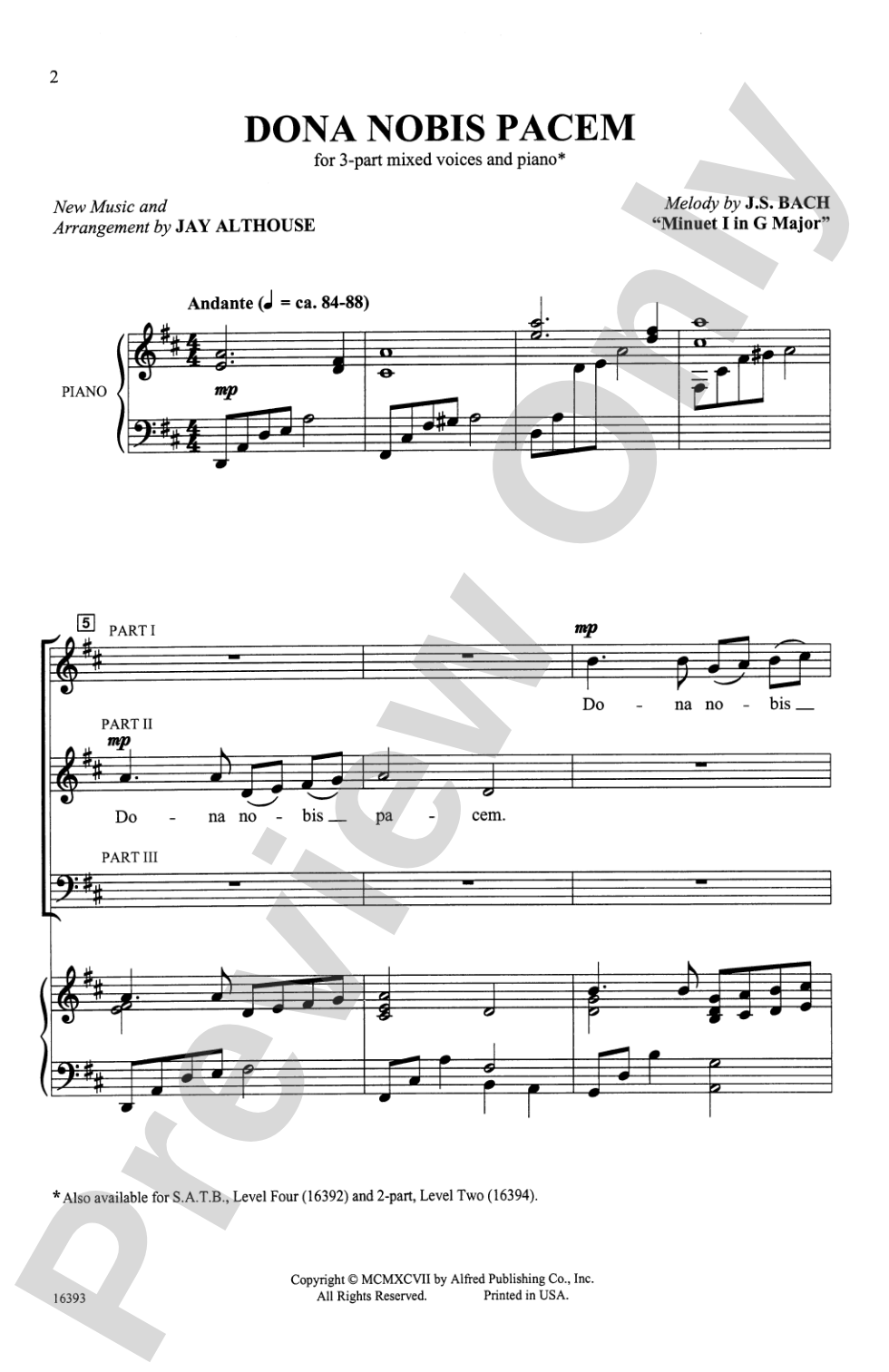
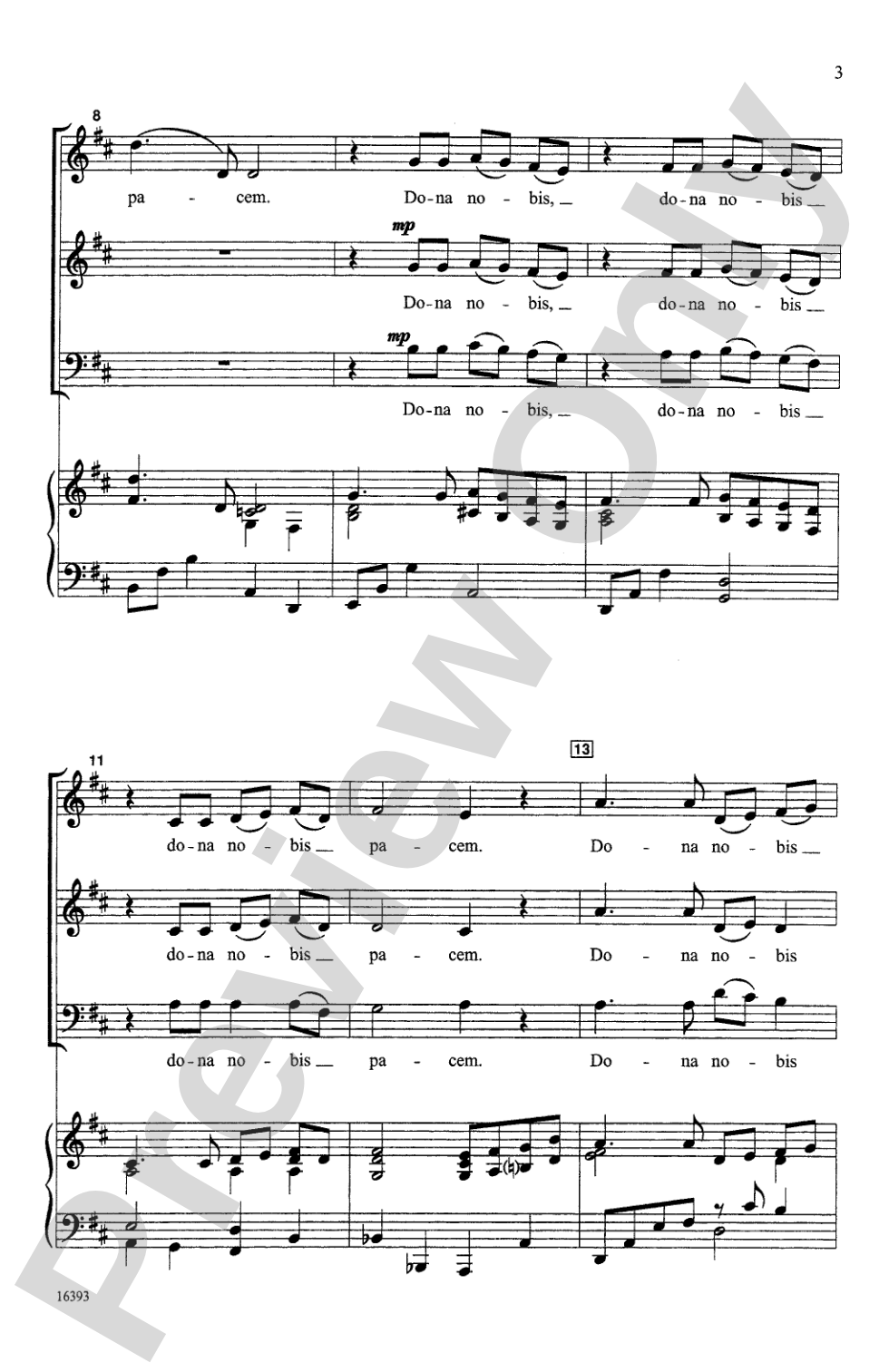

Dona Nobis Pacem: 3-Part Mixed, etc. Choral Octavo
Music by Johann Sebastian Bach / arr. Jay Althouse
Item: 00-PO-0003988
$2.25
Minimum order quantity: 20 copies
Pickup currently not available
Description
What an idea! Bach's famous "Minuet in G" with a Dona nobis pacem, "peace" text. Easily and quickly learned by any age choir. Simple and supportive piano accompaniment. Straightfoward choral writing complements Bach's beautiful and timeless melody.


Dona Nobis Pacem: 3-Part Mixed, etc. Choral Octavo isn't in MakeMusic Cloud just yet...but it could be. Let us know you'd like to see it, and you'll help shape what comes next. In the meantime, start a free trial and dive into thousands of interactive titles your students can play along with today.
Request This Title
Tell us you want it.
Start Your Free Trial
Explore everything that's ready to play right now.
Sample Audio
No sample audio found.
Sample Video
No sample videos found.
Additional Details
Series:
Alfred Archive Edition: Alfred Choral Designs
Publisher:
Alfred Music
Page Count:
8
SKU:
00-PO-0003988
More about this title
About the Composer: Johann Sebastian Bach
Johann Sebastian Bach (1685-1750) stands as one of the most influential composers in Western music history. Working across nearly every major form of the Baroque era, Bach synthesized German, Italian, and French musical traditions into works of extraordinary complexity and emotional depth. His mastery of counterpoint, harmonic innovation, and structural design continues to shape how musicians understand composition itself.
For choral directors, Bach represents both a touchstone and a teaching goldmine. His vocal music ranges from the intimate (chorale harmonizations) to the monumental (passions and mass movements), making his work accessible across skill levels while offering endless layers to explore with advancing ensembles.
Why we love this
This arrangement transforms one of the most recognizable melodies in classical music into a practical, singable piece for developing choirs. Jay Althouse's pairing of Bach's "Minuet in G" with the text "Dona nobis pacem" creates an unexpected marriage of form and meaning that feels both fresh and reverent. The straightforward three-part writing and supportive piano accompaniment mean your singers can focus on Bach's elegant melodic line without wrestling through complex voice-leading.
What to expect
There's an inherent grace to Bach's minuet melody, and pairing it with a text about peace gives the work both earnestness and quiet strength. The piece unfolds with classical elegance while remaining warm and approachable; it feels familiar in the way a beloved hymn feels familiar, yet retains the architectural sophistication of Bach's melodic thinking.
Who it's for
This octavo works beautifully for middle school, high school, and adult community choirs seeking accessible yet dignified sacred repertoire. Any ensemble that can manage basic SAB voicing will find this piece quickly learned and immediately rewarding for concert programming or festival submission.
How to get the most out of it
- Maintain clarity in the melodic line by reminding singers that Bach's minuet depends on crisp articulation and steady phrasing; avoid dragging through sustained notes.
- Balance the three parts evenly so the harmonic underpinning supports without overshadowing the soprano melody.
- Keep the accompaniment light and transparent; the piano should frame the voices, not fill space with unnecessary weight.
- Shape each phrase with gentle dynamic contours rather than remaining at one dynamic level throughout.
How to use it
This piece fits naturally into a concert program exploring sacred or classical themes, offering a bridge between traditional hymnody and art music. It's also an excellent choice for festival submissions, where the combination of recognizable Bach with clear, uncluttered choral writing often resonates with adjudicators. Consider pairing it with other Bach-based arrangements or with contrasting contemporary pieces to highlight the timeless appeal of the original melody.
Skills your students will build
- Singing legit classical melodic lines with proper phrasing and articulation
- Balancing and blending within a three-part texture
- Recognizing and interpreting the harmonic foundation Bach provides
- Working with piano accompaniment in a supported, collaborative way