Dona Dona: 1st Violin Sheet Music Preview

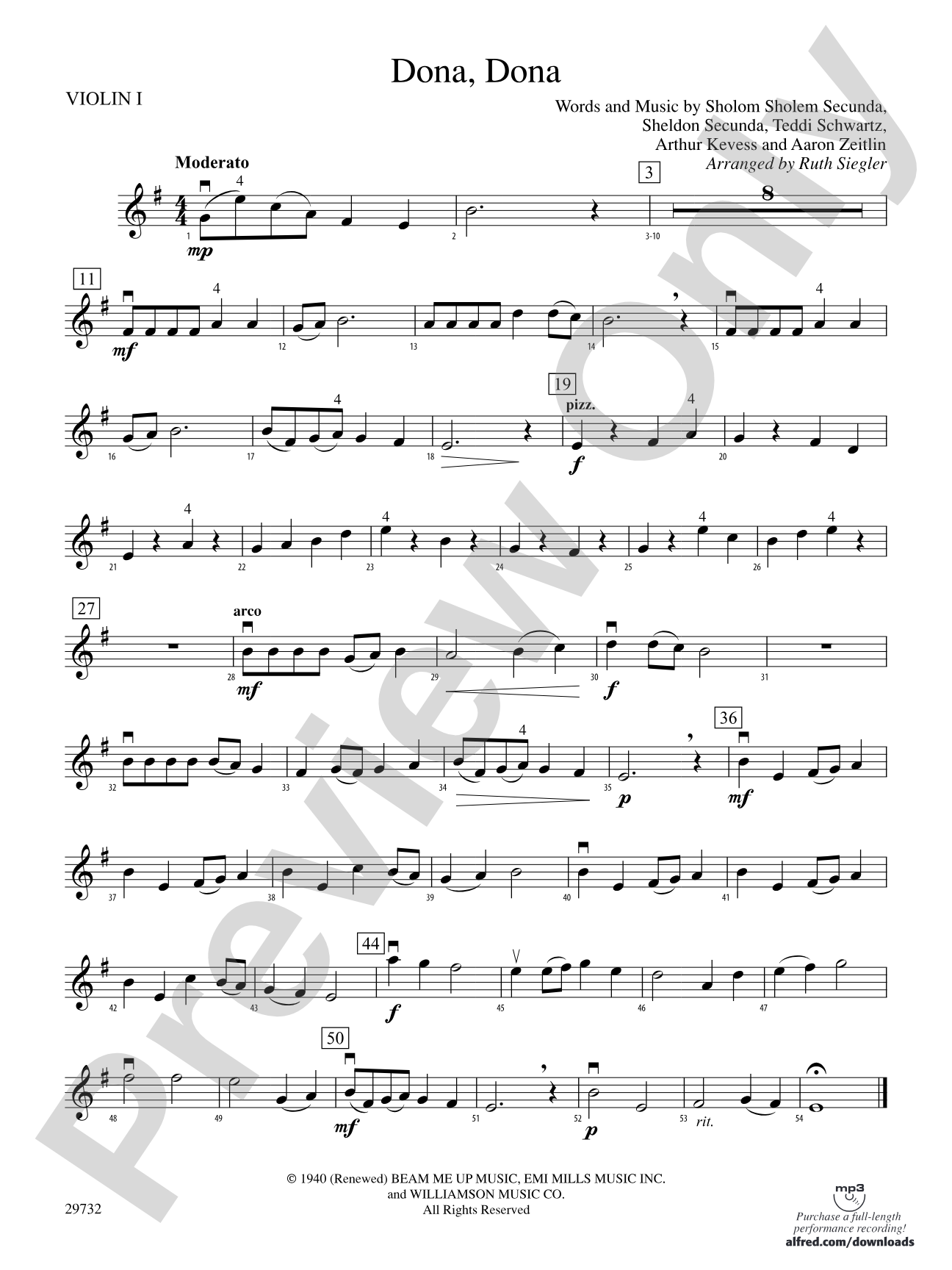
Dona Dona: 1st Violin

Words and music by Sholom Sholem Secunda, Sheldon Secunda, Teddi Schwartz, Arthur Kevess, and Aaron Zeitlin / arr. Ruth Siegler

Grade: 1.5

Item: 00-PC-0001585_VN1

Digital Download
$5.99
Description
Young string players will enjoy this soaring freedom song, a great lyrical piece in first position! The arrangement can be used to develop slurring and legato playing skills and to master the production of a rich pizzicato sound. Written in E minor with simple rhythms, students can experience performing in the minor mode without difficult accidentals. (2:15)

Don't just read it, hear it, play along with it, and watch your students grow with it. In MakeMusic Cloud, Dona Dona: 1st Violin comes alive with professional accompaniment, adjustable tempo, and built-in practice tools that turn solo practice into real progress.

Sample Audio
0:00
0:00
Sample Video
Additional Details
Series: Highland/Etling String Orchestra
Publisher: Alfred Music
Page Count: 62
SKU: 00-PC-0001585_VN1

More about this title

About the Composer: Sholom Sholem Secunda

Sholom Sholem Secunda (1894-1974) was a Yiddish theater composer and songwriter who wrote extensively for the stage, creating melodies that captured the emotional depth of Jewish cultural expression. His compositions became standards in Yiddish folk and theater music, performed across Eastern European communities and later by diaspora audiences worldwide. "Dona Dona," one of his most recognizable works, exemplifies his gift for writing memorable, singable melodies that resonate across generations and musical contexts.

Why we love this

This arrangement captures everything that makes string orchestra teaching rewarding: a melody so natural that students feel successful immediately, combined with genuine musical depth. The focus on legato phrasing and pizzicato texture gives you meaningful technical work without overwhelming young players, while the E minor tonality introduces minor-mode playing in an emotionally accessible way.

What to expect

A song of yearning and hope, marked by a soaring melody that seems to float above simple but supportive harmonies. The piece moves between moments of sustained, singing lines and lighter pizzicato passages, creating a dynamic emotional arc that young musicians can shape and own.

Who it's for

This piece is ideal for Grade 1.5 string orchestras looking for a lyrical standard that builds musicianship without technical barriers. It works equally well in community orchestra settings, school concerts, and festival competitions, and appeals to students who thrive on melody-driven repertoire.

How to get the most out of it

  • Build the legato phrase by having students think across the bar lines rather than stopping at each measure. Encourage a singing tone that mirrors how the melody would sound as a vocal line.
  • Develop the pizzicato passages by establishing consistent finger position and bounce. Have players practice the rhythm separately so the articulation is clean and unified across the section.
  • Balance the parts carefully in tuttis so the melody sings through; this arrangement works best when the inner voices support rather than compete with the primary line.
  • Take time with intonation in E minor, particularly the leading tone and the third of the chord. Young players often flat these notes, so ear training during sectionals pays dividends.

How to use it

Program this as a centerpiece for a concert focused on folk traditions or cultural music, where it can sit alongside other arranged standards. It also functions beautifully as a contest or festival selection that demonstrates musicality and ensemble cohesion at an accessible level.

Skills your students will build

  • Legato string technique and phrase shaping across multiple measures
  • Clean pizzicato articulation with consistent tone and rhythm
  • Playing in the minor mode with secure intonation in E minor
  • Balancing melody and accompaniment within an ensemble texture
  • Musical interpretation of a freedom song and its cultural context

You May Also Like