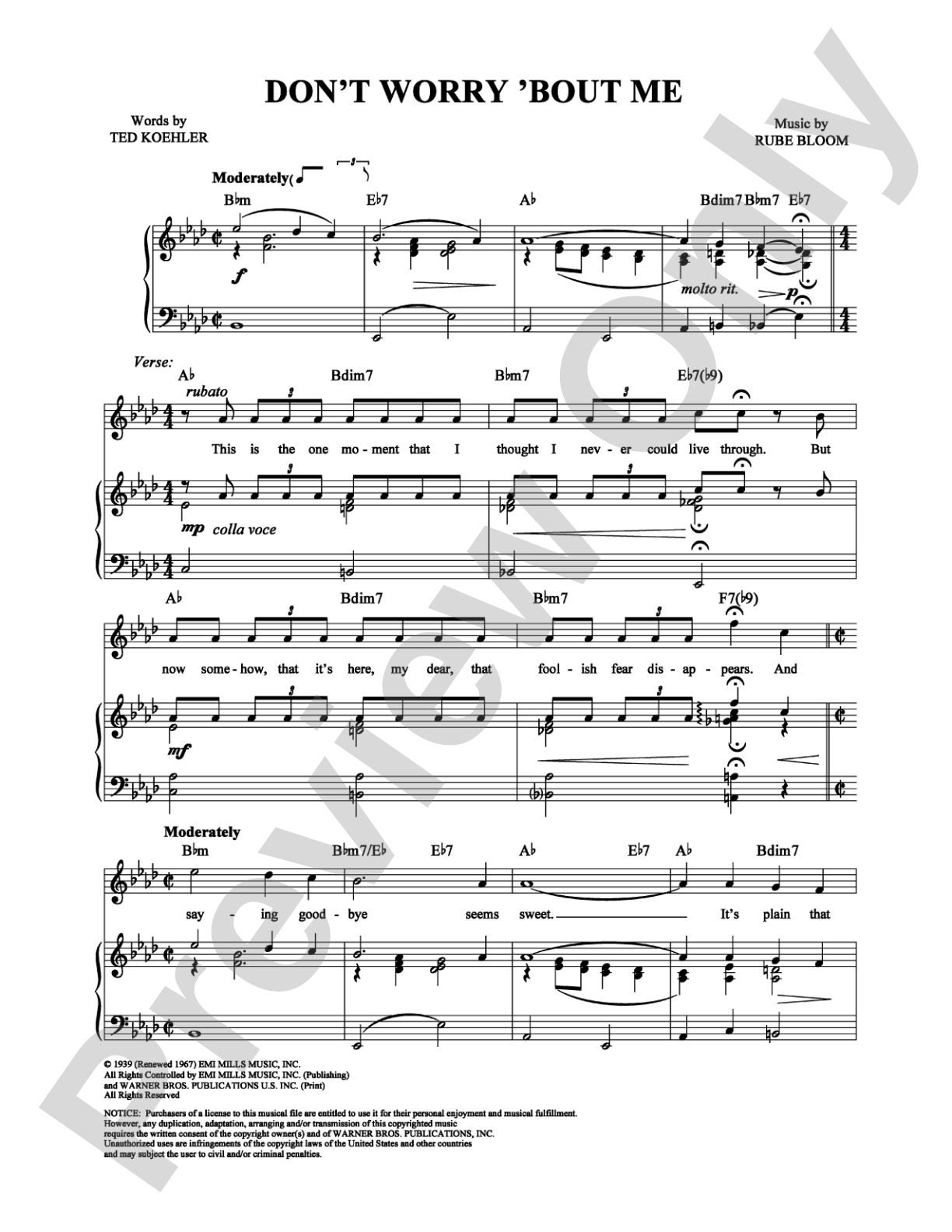
Don't Worry 'Bout Me: Piano/Vocal/Chords Digital Sheet Music

Don't Worry 'Bout Me: Piano/Vocal/Chords Digital Sheet Music

Frank Sinatra, Rube Bloom

Item: 00-PS-0003038

Digital Download
$3.99
Description

Don't Worry 'Bout Me: Piano/Vocal/Chords Digital Sheet Music isn't in MakeMusic Cloud just yet...but it could be. Let us know you'd like to see it, and you'll help shape what comes next. In the meantime, start a free trial and dive into thousands of interactive titles your students can play along with today.

Sample Audio
No sample audio found.
Sample Video
Additional Details
SKU: 00-PS-0003038

More about this title

About the Artist: Frank Sinatra

Frank Sinatra (1915-1998) shaped American popular song through his phrasing, interpretive depth, and impeccable musicianship. His influence on vocal jazz and the American songbook remains foundational to music education, particularly for students learning how to inhabit a melody with personality and emotional nuance.

Why we love this

This standard sits at the intersection of jazz sophistication and popular accessibility, making it ideal for teaching voice students how to balance interpretive freedom with harmonic awareness. The piano/vocal/chords format lets pianists accompany singers while also functioning as a standalone study piece for pianists learning to navigate jazz voicings and comping patterns.

What to expect

Optimistic and reassuring, wrapped in the cool sophistication of a jazz standard. The melody sits naturally in the voice, supported by harmonies that feel both familiar and gently surprising, creating a listening experience that feels both intimate and polished.

Who it's for

Jazz singers and jazz piano students who want to study authentic American songbook material with professional-grade harmonic notation. Accompanists preparing to work with vocalists in recital or performance class will find the chord lead sheet format essential for responsive, flexible playing.

How to get the most out of it

  • Treat the lyric phrasing as equal to the melodic line; Sinatra's signature style rests on where he places words within the bar rather than on top of the beat.
  • Explore the chord chart for substitutions and reharmonization rather than locking into one interpretation; this standard thrives on pianistic inventiveness.
  • Balance the vocal melody against the piano accompaniment so neither overwhelms; the song's charm depends on conversational interplay between voice and instrument.

How to use it

Pair this with other standards from the American songbook in a recital program to showcase vocal interpretive skills, or use it in a jazz elective or piano class as a model for studying lead sheets and chord-based accompaniment. The accessibility of the melody makes it suitable for intermediate singers and pianists, while the harmonic depth rewards advanced musicians returning to it.

Skills your students will build

  • Reading and interpreting lead sheet notation (melody, chord symbols, and lyrics)
  • Phrasing jazz standards with attention to lyrical placement and breath
  • Comping and voicing jazz chords on piano
  • Collaboration between vocalist and accompanist
  • Understanding jazz harmony and chord substitution

You May Also Like