Don't Stop Movin' (arr. Doug Watts) Sheet Music Preview

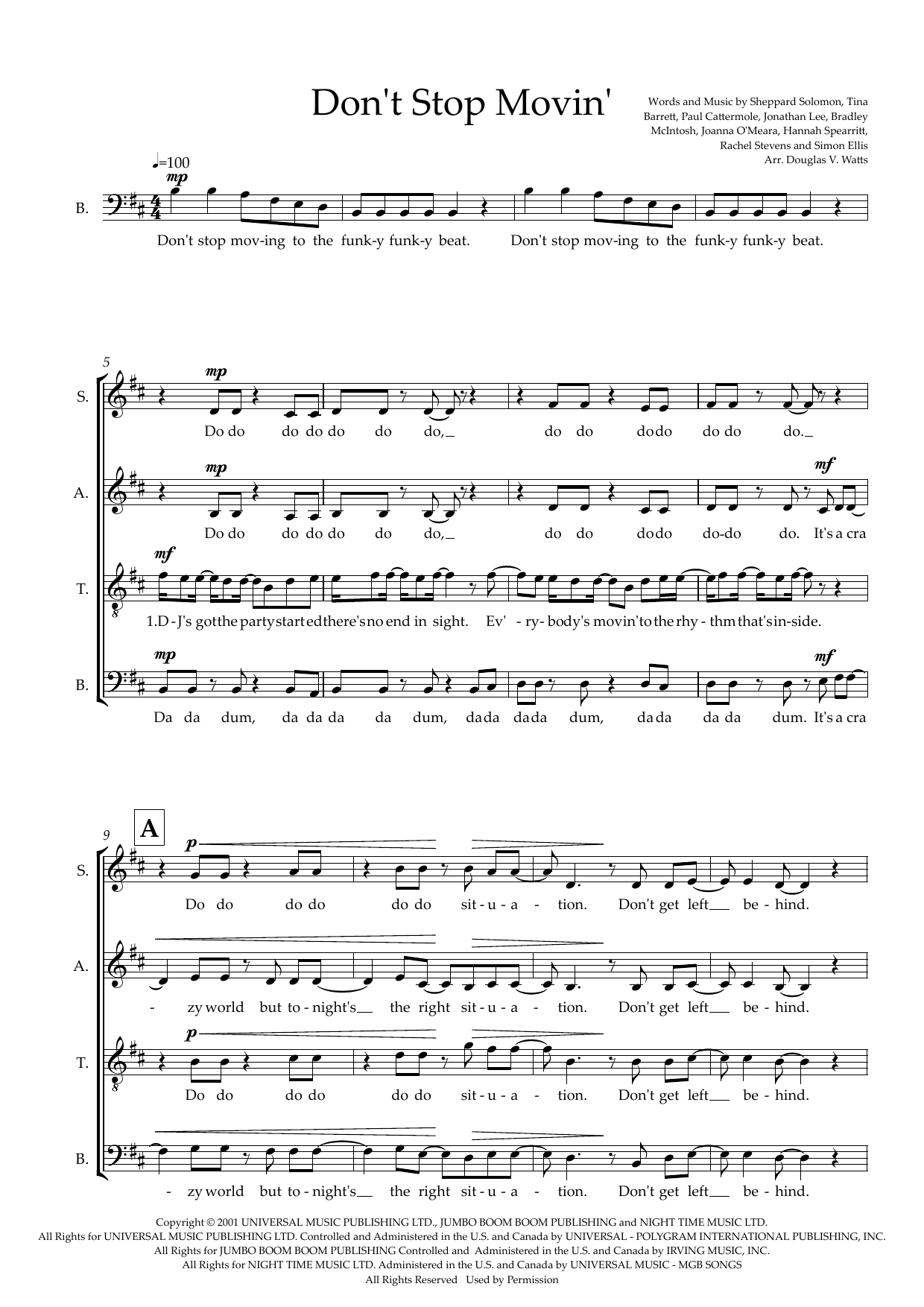
Don't Stop Movin' (arr. Doug Watts): SATB Choral Octavo

By S Club 7 / By Simon Ellis / By Sheppard Soloman / Arranged by Doug Watts

Item: 35-DS00462010

Digital Download
$1.99
Description

Don't Stop Movin' (arr. Doug Watts): SATB Choral Octavo isn't in MakeMusic Cloud just yet...but it could be. Let us know you'd like to see it, and you'll help shape what comes next. In the meantime, start a free trial and dive into thousands of interactive titles your students can play along with today.

Sample Audio
No sample audio found.
Sample Video
Additional Details
Publisher: Hal Leonard
Page Count: 8
SKU: 35-DS00462010

More about this title

About the Composer: S Club 7

S Club 7 emerged from the British pop landscape of the 1990s with a gift for crafting infectious, danceable tracks that connected across generations. Their catalog, built in collaboration with producers and songwriters including Simon Ellis and Sheppard Solomon, became a staple of late-90s pop radio and remains instantly recognizable to audiences who grew up with their music.

For choral arrangers and directors, S Club 7's material offers a rare advantage: songs engineered for rhythmic precision and vocal clarity that translate surprisingly well to ensemble singing. The accessibility of their melodies, combined with arrangements like this one by Doug Watts, makes them valuable tools for engaging singers in pop repertoire without sacrificing musicianship.

Why we love this

Doug Watts understands how to honor the infectious energy of this track while writing for SATB voices in a way that feels organic rather than forced. The arrangement respects what made the original compelling (that unstoppable forward momentum in the title itself) while giving each voice part something satisfying to sing, making it a natural choice for concert programs that need contemporary repertoire with genuine energy.

What to expect

This is kinetic, celebratory music built on insistent rhythmic momentum. The arrangement captures the propulsive quality of the original while preserving the accessibility that made the song a pop staple; singers feel the forward propulsion with every entrance, and the accumulated vocal texture builds toward something genuinely exciting rather than precious.

Who it's for

Choirs seeking contemporary pop repertoire that maintains musical substance will find this arrangement functional and engaging. It works equally well for high school and college ensembles, community choirs exploring non-classical material, or concert programs designed to reach audiences beyond traditional classical listeners.

How to get the most out of it

  • Nail the rhythmic drive from the opening: this arrangement lives in its groove, so lock the rhythm section (or click track in rehearsal) early and often to establish the foundation before layering in vocal parts.
  • Balance the lead vocal line against the harmonic support; in pop arrangements, the top line carries the song, but sopranos shouldn't overshadow the overall blend.
  • Keep the text crisp and articulate, especially on repeated phrases. Pop syllables demand clarity to feel fresh rather than muddy across multiple repetitions.
  • Let the altos and tenors drive the rhythmic patterns underneath; their parts likely contain the harmonic and rhythmic backbone that makes the groove feel relentless.

How to use it

Pair this with other contemporary pop arrangements to build a full set that showcases your choir's versatility, or feature it as a standalone energizer in a mixed concert format. It works particularly well as a closer or as a contrast piece in a program that otherwise leans toward classical or jazz repertoire, giving audiences a refreshing shift in tone.

Skills your students will build

  • Maintaining rhythmic precision in ensemble pop contexts
  • Balancing lead vocal lines against harmonic backgrounds
  • Executing clear, articulate text delivery in contemporary idioms
  • Reading and executing syncopated rhythmic patterns across multiple voice parts
  • Building ensemble cohesion through groove-based repertoire

You May Also Like