
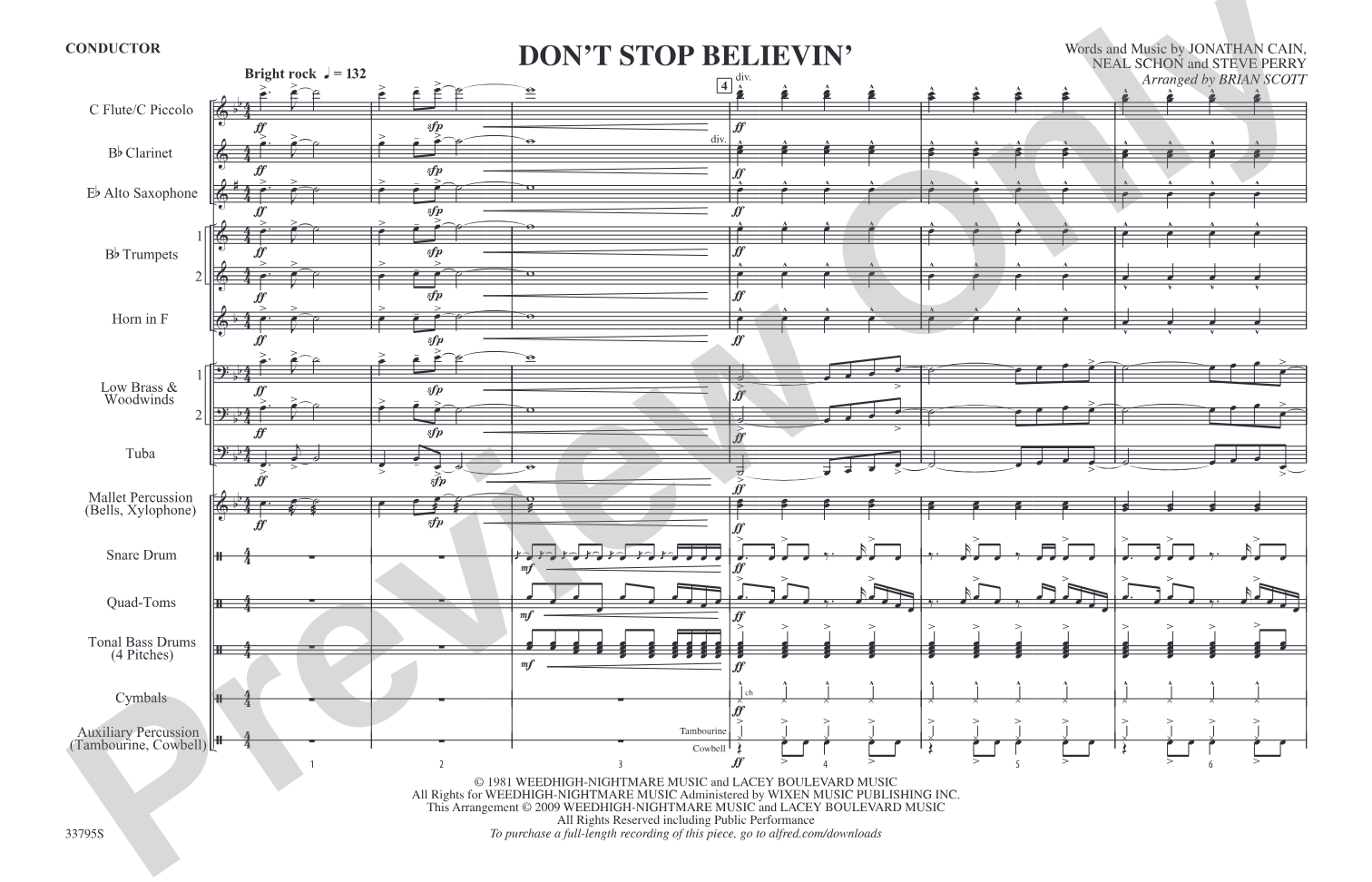
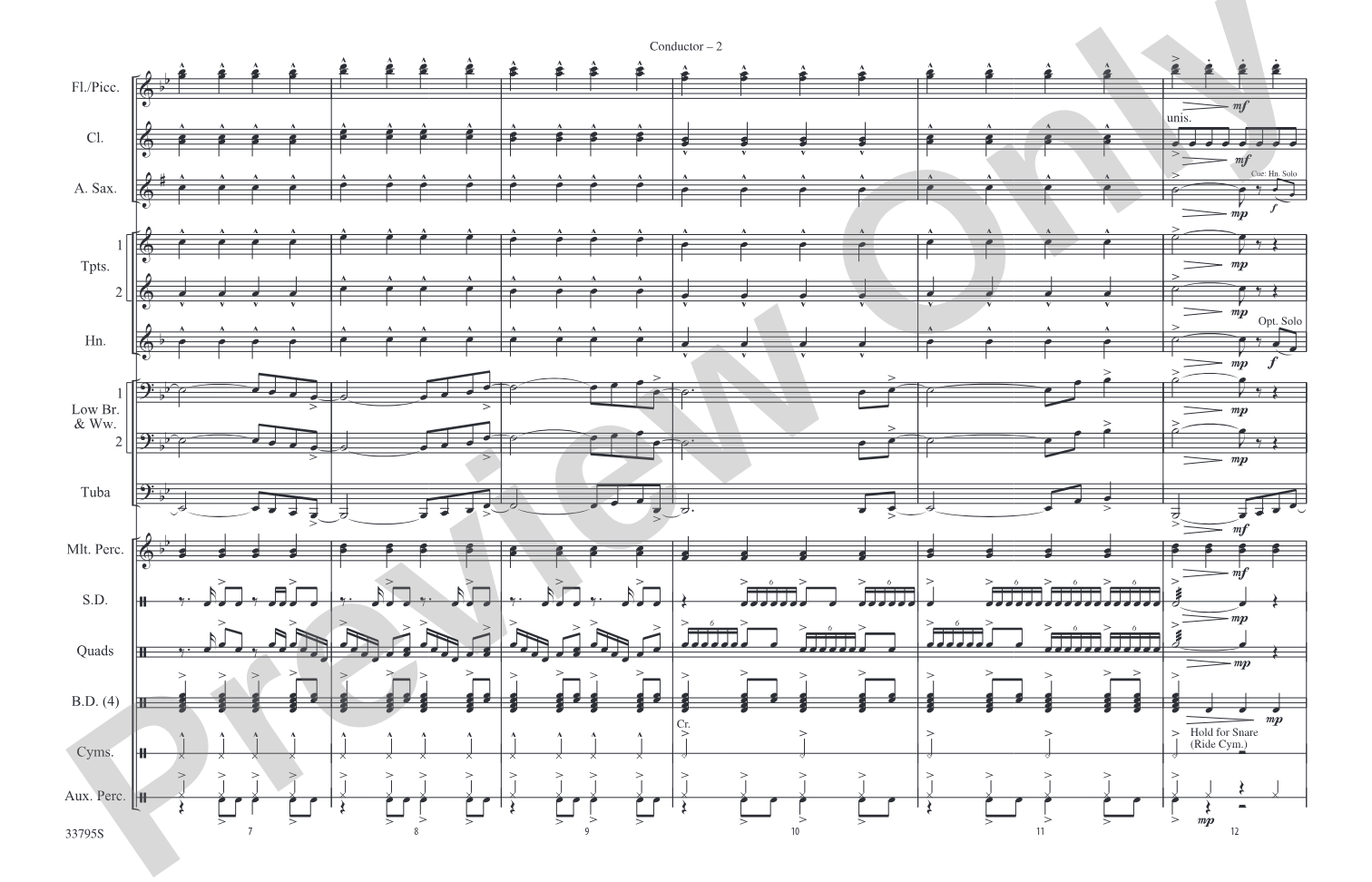
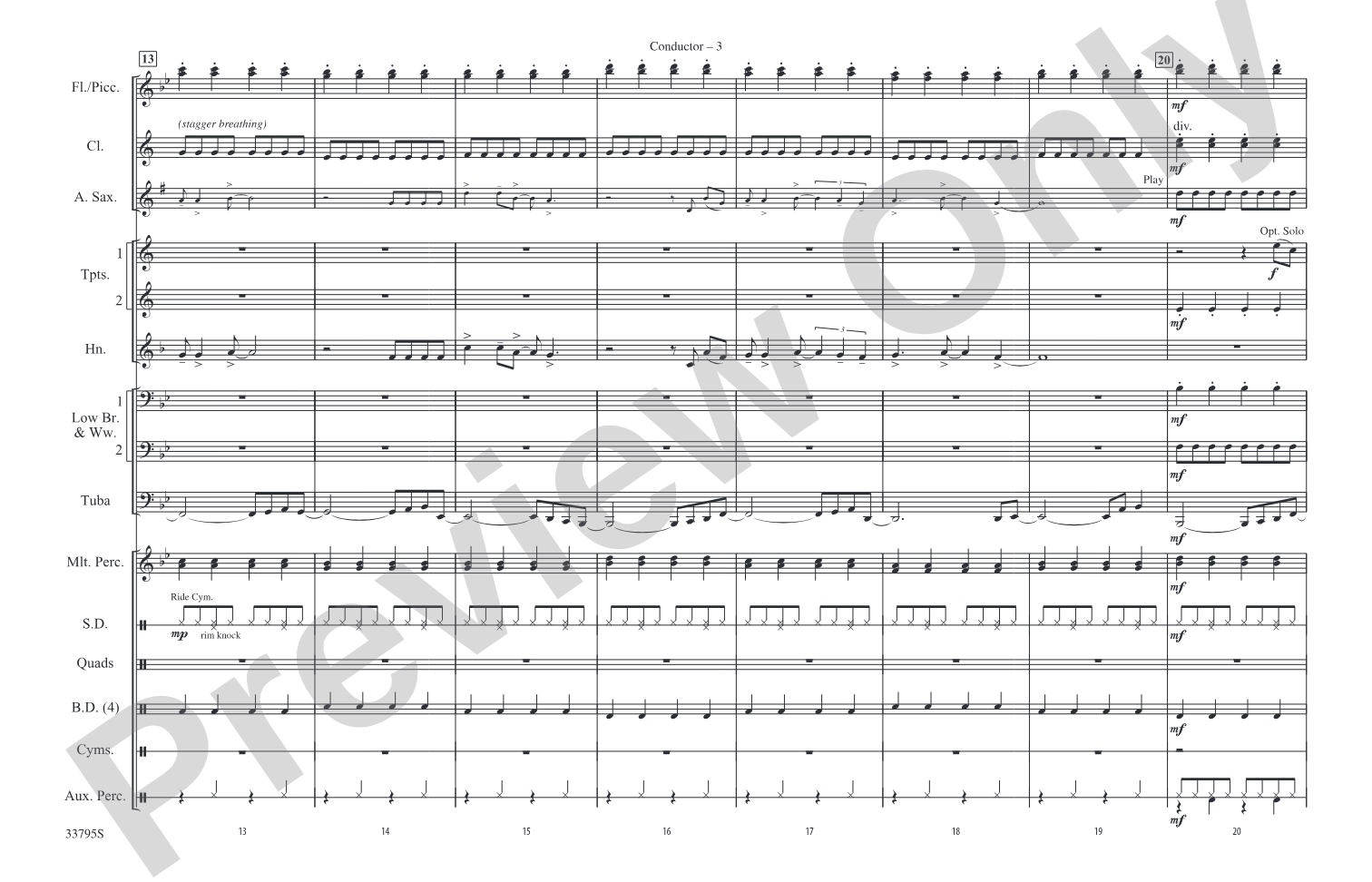
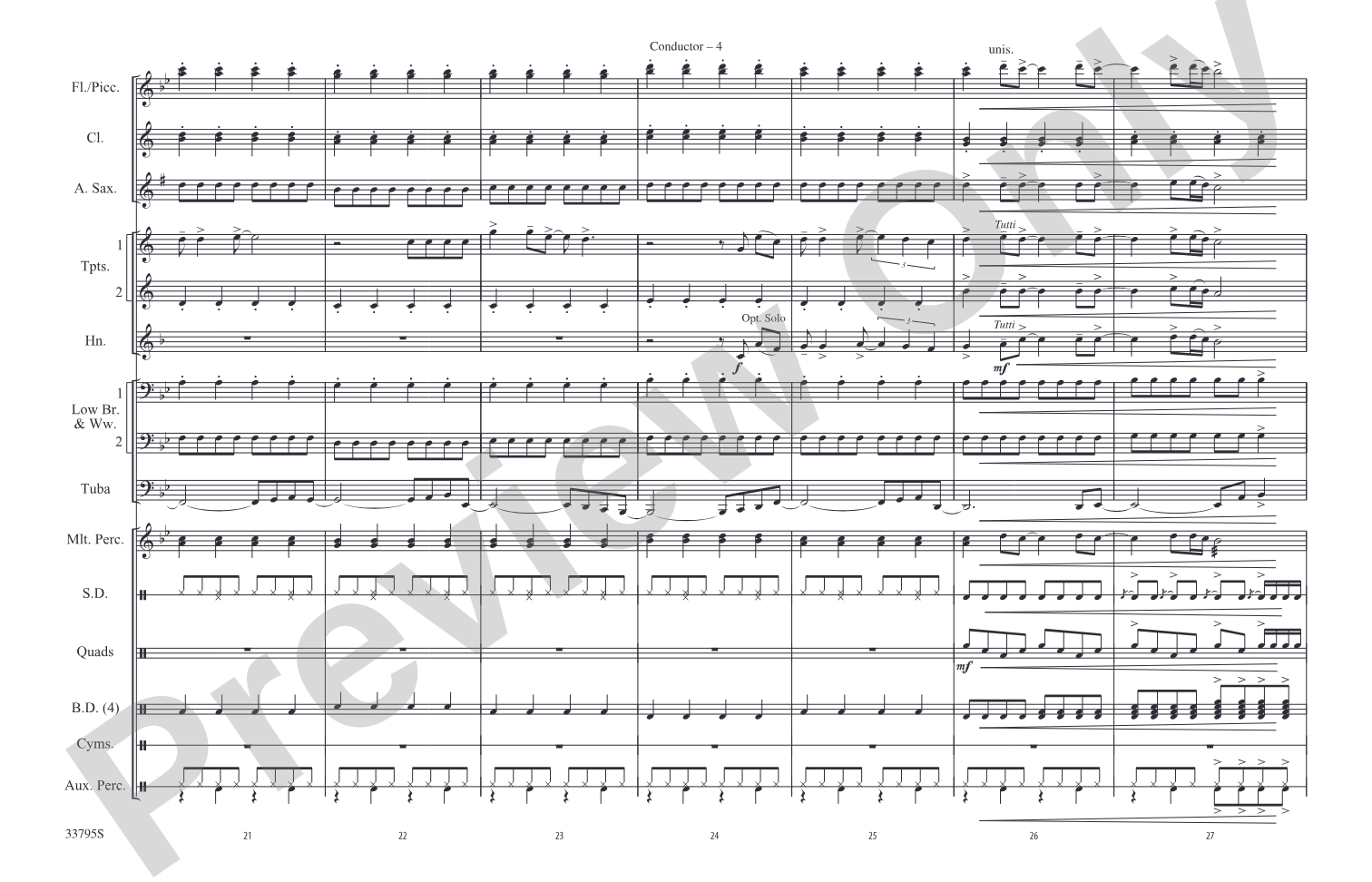
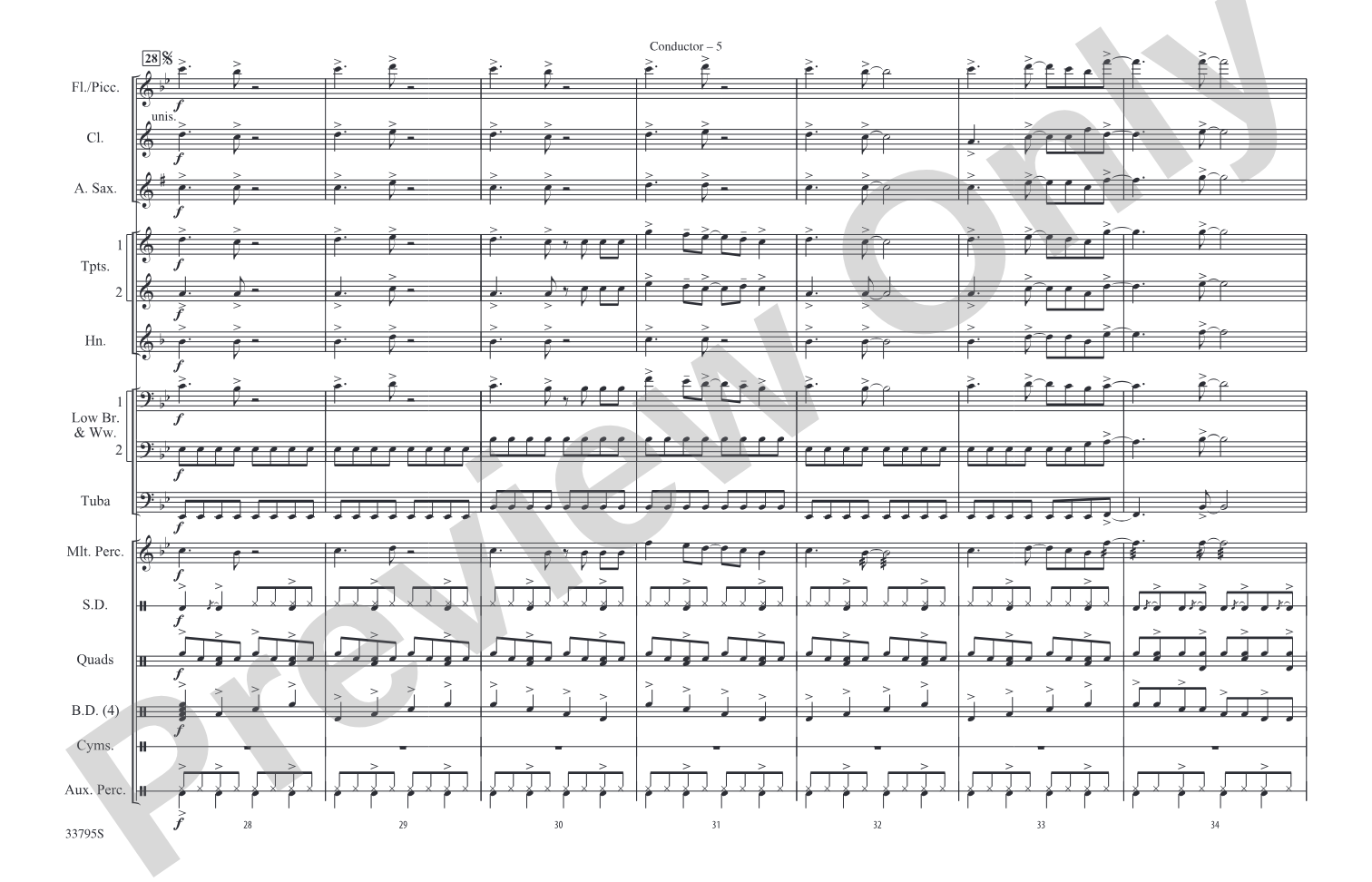
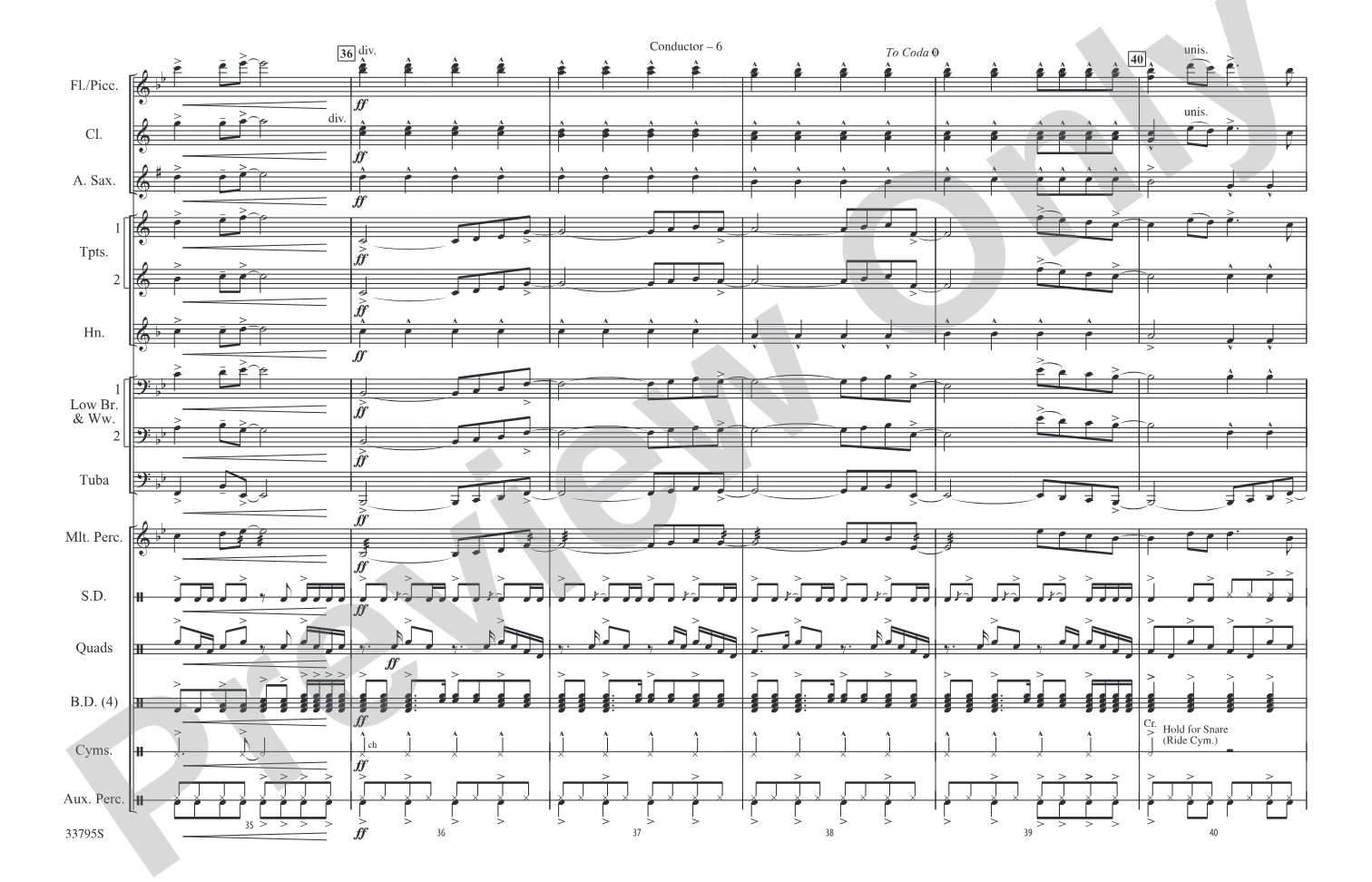
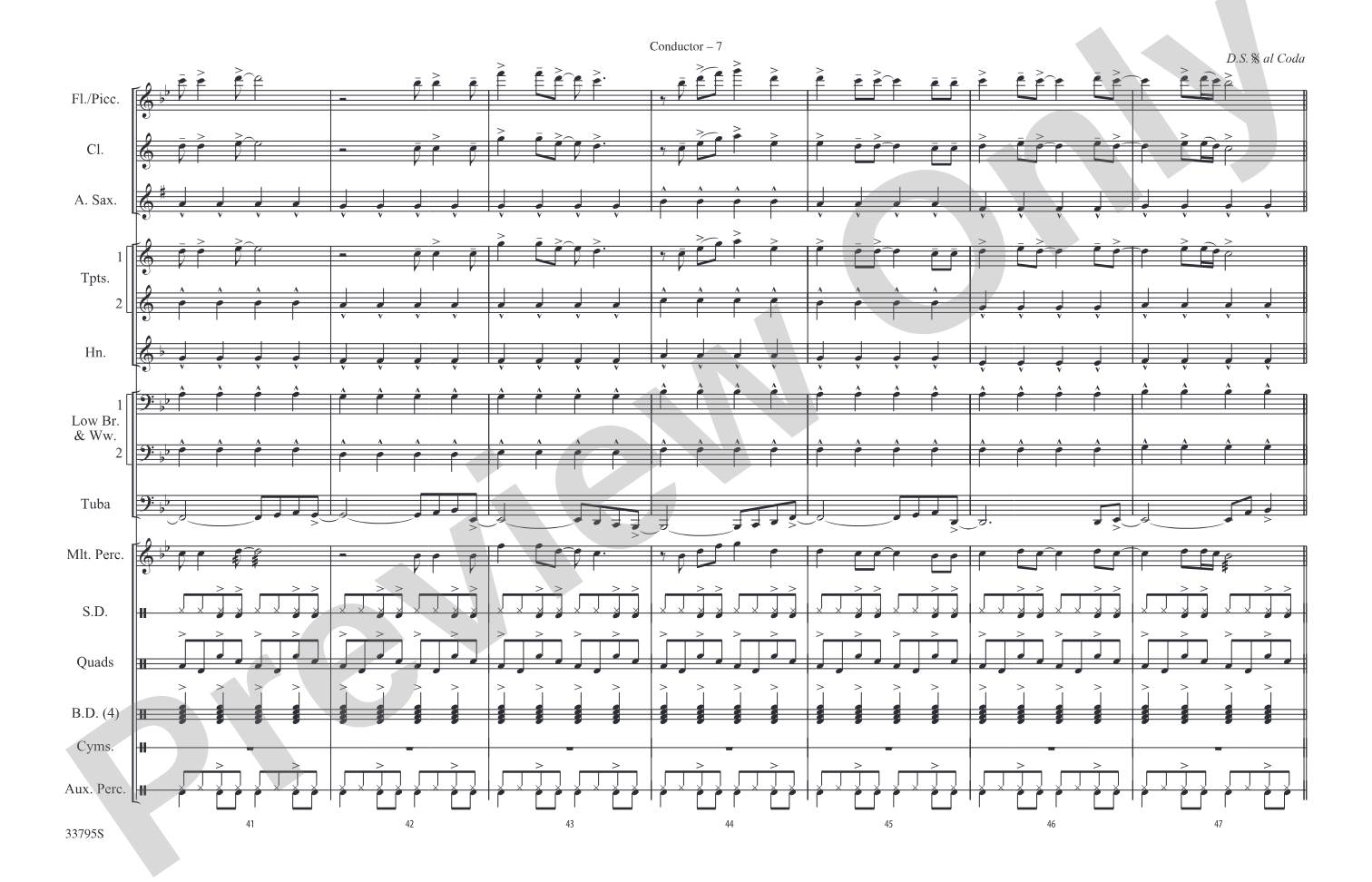
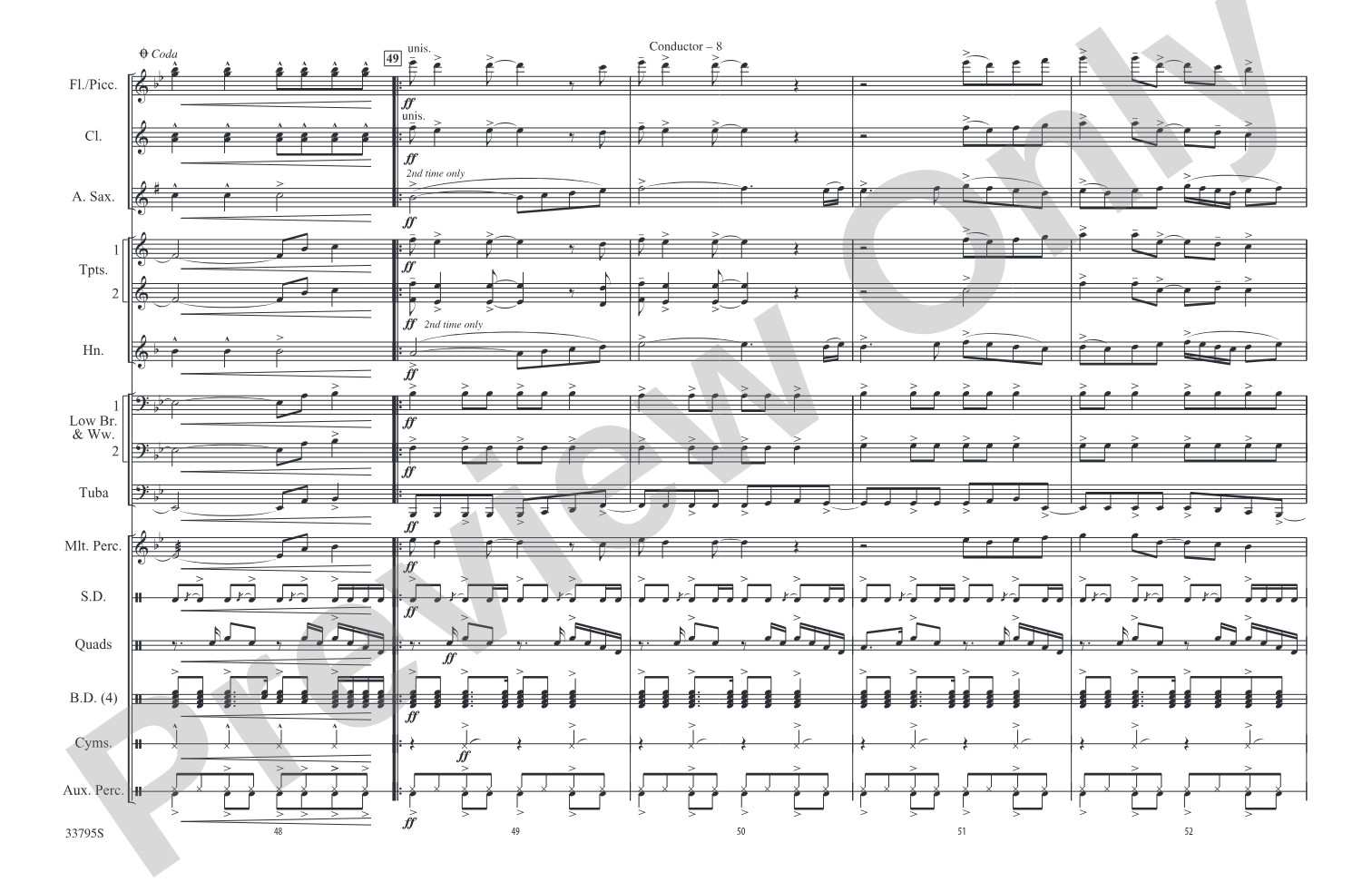
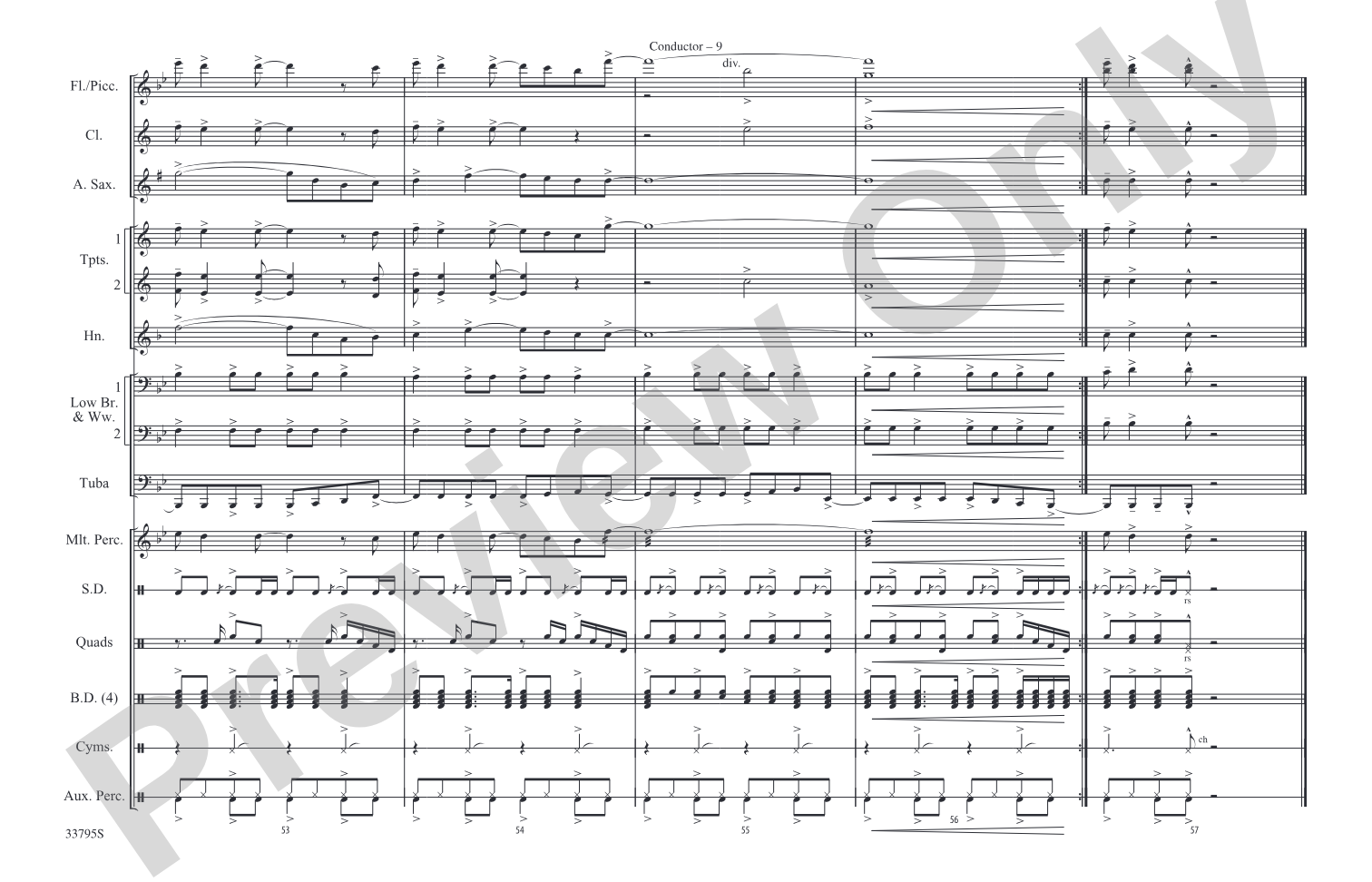

Don't Stop Believin': Score
As Heard on Glee
Words and music by Jonathan Cain, Neal Schon, and Steve Perry [Journey] / arr. Brian Scott
Grade: 3 (Medium)
Item: 00-PR-0006430
$9.00
Pickup currently not available
Description
The inspirational rocker from Journey is popular again due to the Fox TV show Glee. Horn and trumpet have optional solo opportunities in this solidly scored arrangement from Brian Scott. A real winner! (2:18)


Don't just read it, hear it, play along with it, and watch your students grow with it. In MakeMusic Cloud, Don't Stop Believin': Score comes alive with professional accompaniment, adjustable tempo, and built-in practice tools that turn solo practice into real progress.
Open in the Player
Jump straight in and assign it today.
Start Your Free Trial
Open this title and explore the full library in minutes.
Sample Audio
1
Audio File
--:--
0:00
0:00
Sample Video
Additional Details
Series:
Mega Sounds for Marching Band
Publisher:
Alfred Music
Page Count:
110
SKU:
00-PR-0006430
More about this title
About the Composer: Jonathan Cain
Jonathan Cain is a keyboardist and composer who served as the principal songwriter for Journey during their most commercially successful era. His work with the band produced some of rock's most enduring anthems, combining accessible melodies with solid harmonic structures that translate well across different instrumental voicings and ensemble sizes.
Why we love this
Brian Scott's arrangement captures the driving energy of the original while giving marching bands the exact kind of crowd-pleasing repertoire that keeps audiences engaged. The optional solo opportunities for horn and trumpet add personality without overshadowing the ensemble sound, making this a smart choice for programs that need a contemporary hit with substance.
What to expect
The arrangement carries the infectious optimism of the original while giving marching band instrumentation room to project warmth and conviction. There's a propulsive confidence here, grounded in a steady pulse that invites the ensemble to lean into the familiar melody and feel the satisfaction of delivering something genuinely musical.
Who it's for
This arrangement works for marching bands at the Grade 3 level seeking music that resonates with audiences and students alike. Directors programming contemporary popular music will find this a well-crafted alternative to typical stadium fare, appealing to both experienced ensembles and programs building their repertoire base.
How to get the most out of it
- Nail the rhythmic precision in the opening sections; this song lives or dies by groove. The arrangement's effectiveness depends on locking the pulse across the entire ensemble.
- Use the optional solos strategically. Feature your strongest players but resist the temptation to overindulge; let the solos breathe within the arrangement rather than stealing the spotlight.
- Keep the dynamics intentional and shaped. Rock arrangements can flatten easily if brass and woodwinds don't lean into the building intensity from verse to chorus.
- Match articulation across sections, particularly in the horn and trumpet lines. Consistency in tonguing and attack makes the solidarity of this piece shine through.
How to use it
Program this midway through a concert where you want to shift energy and reconnect with your audience. It pairs well with both traditional classical work and other contemporary arrangements, serving as a bridge between different musical worlds. The 2:18 duration also makes it ideal for festival competitions or outdoor performances where pacing matters.
Skills your students will build
- Maintaining steady groove and rhythmic precision in rock idiom
- Balancing ensemble sound while supporting optional solo passages
- Shaping dynamics across a contemporary arrangement
- Coordinating articulation and attack consistency across sections