
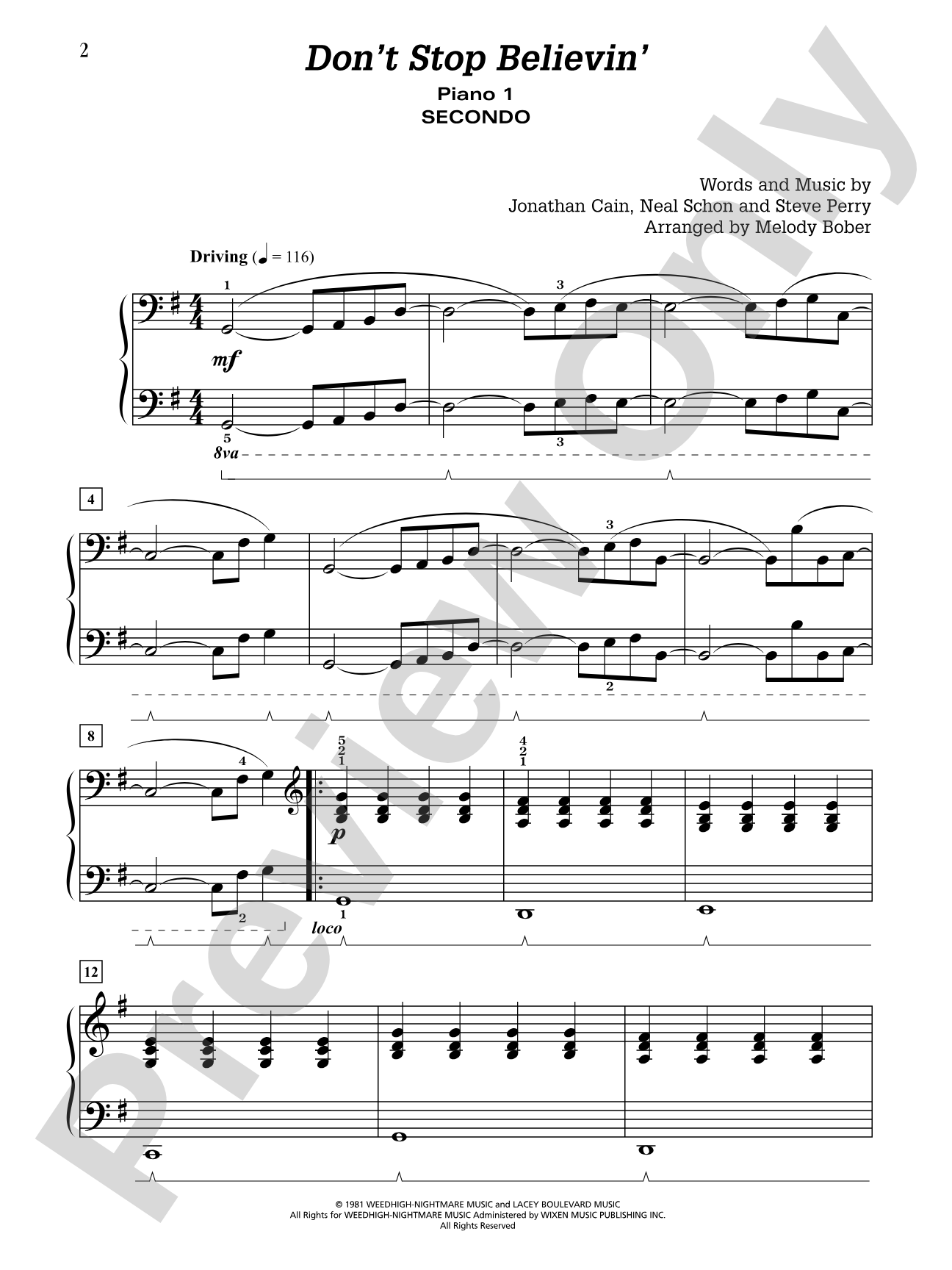
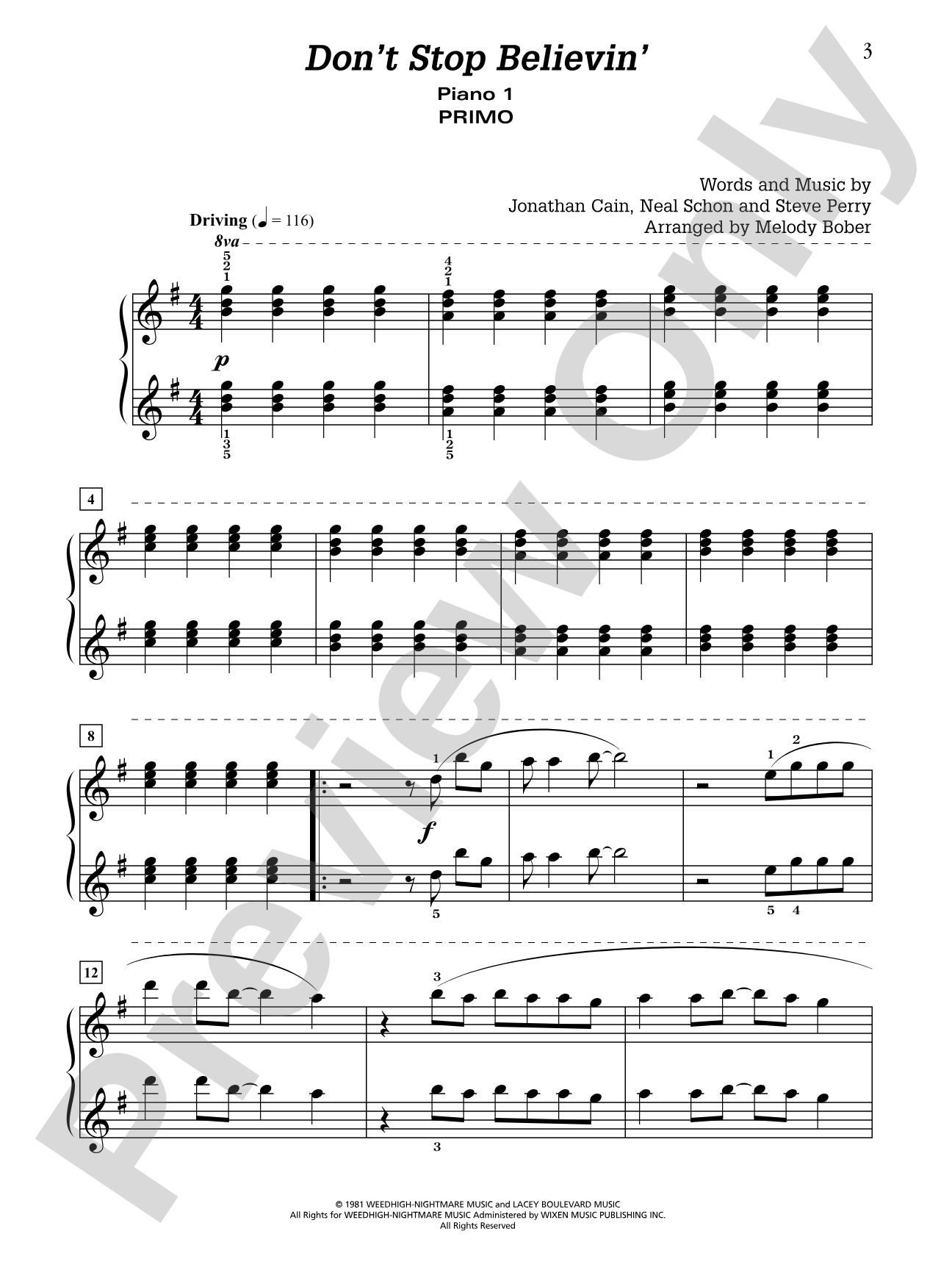
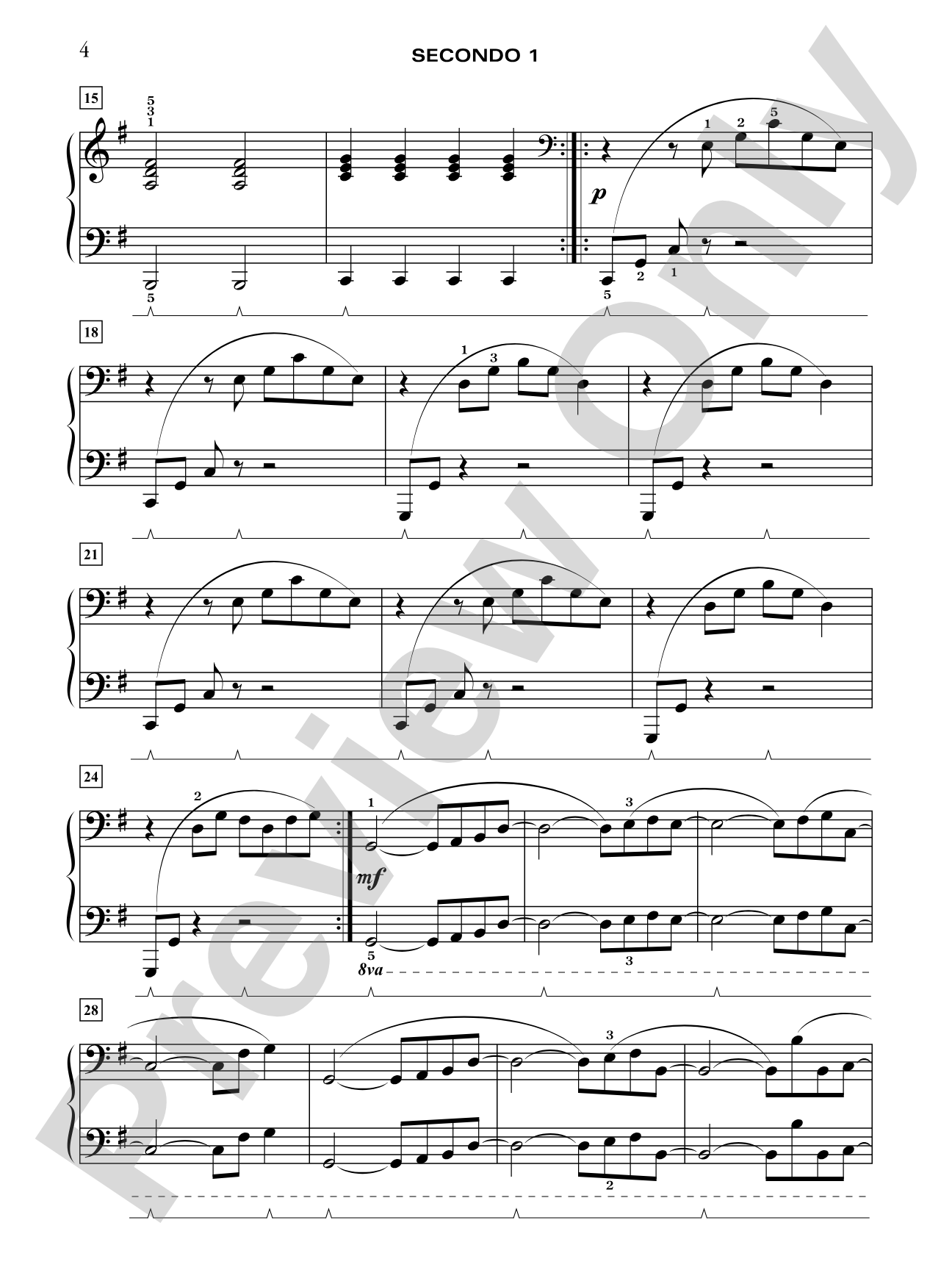
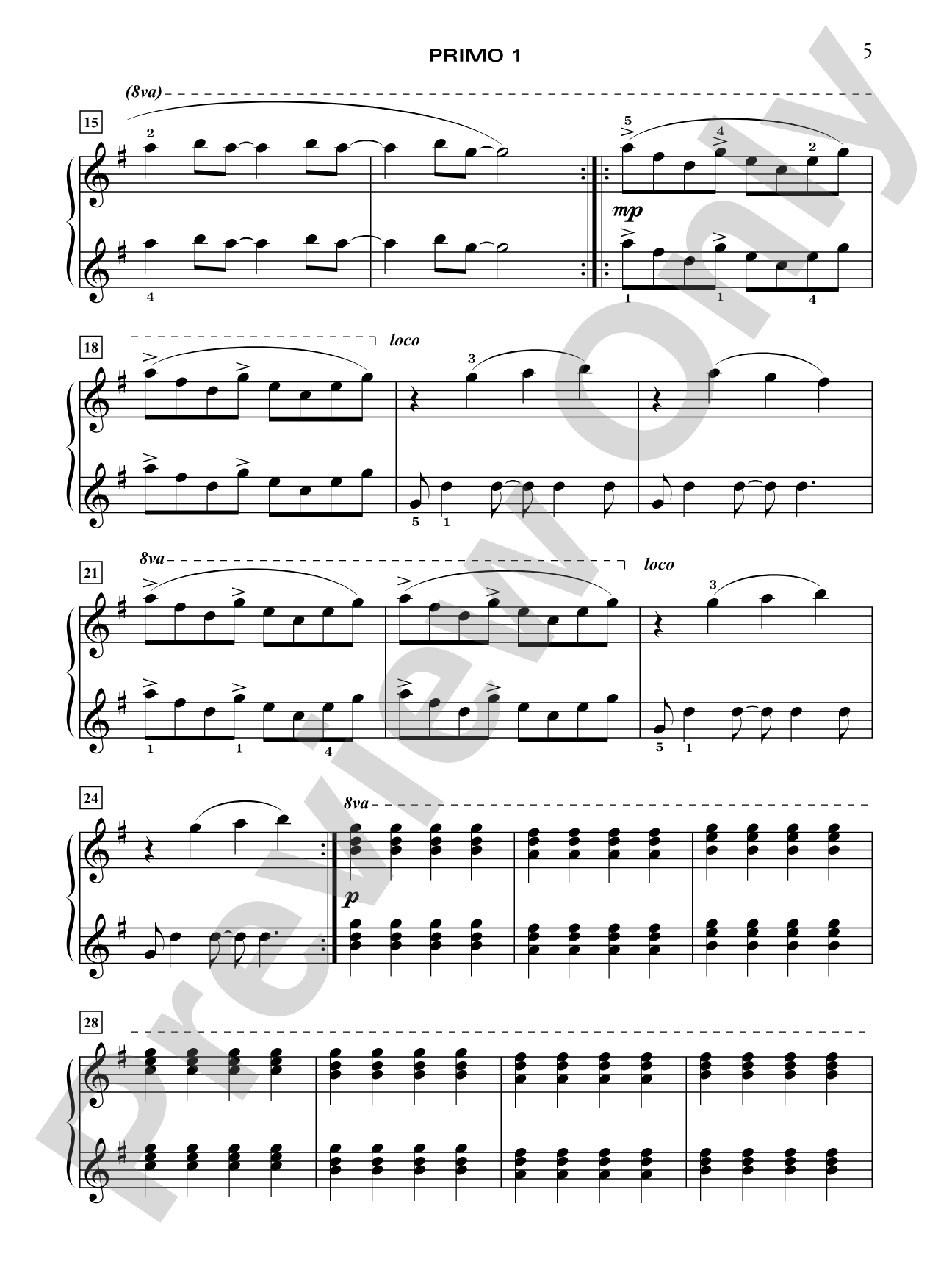

Don't Stop Believin': by Journey - Piano Quartet (2 Pianos, 8 Hands): Piano
by Journey
Words and music by Jonathan Cain, Neal Schon, and Steve Perry [Journey] / arr. Melody Bober
Level: Intermediate
Item: 00-PB-0000728
$8.99
Pickup currently not available
Related Items
Don't Stop Believin': Piano Quartet (2 Pianos, 8 Hands) Sheet (score & 4 parts included) |
$8.99
|
View |
Description
From the hit TV shows Glee and American Idol, Journey's timeless tune will delight audiences. First debuted in 1981, this classic rock piece has been used in many movies as well. Melody Bober's arrangement for two pianos, eight hands, is written for intermediate pianists and is set up as two duets (Piano 1 and Piano 2) with primo and secondo parts on facing pages. This popular piece is fun to play while providing important listening skills, technique, rhythmic control, and musicianship. "Don't Stop Believin'" is excellent for recitals, piano ensemble classes, and "monster" concerts. Score and four parts included. A Federation Festivals 2024-2028 selection.


Don't Stop Believin': by Journey - Piano Quartet (2 Pianos, 8 Hands): Piano isn't in MakeMusic Cloud just yet...but it could be. Let us know you'd like to see it, and you'll help shape what comes next. In the meantime, start a free trial and dive into thousands of interactive titles your students can play along with today.
Request This Title
Tell us you want it.
Start Your Free Trial
Explore everything that's ready to play right now.
Sample Audio
No sample audio found.
Sample Video
No sample videos found.
Additional Details
Publisher:
Alfred Music
Page Count:
32
SKU:
00-PB-0000728
More about this title
About the Composer: Jonathan Cain
Jonathan Cain is a keyboardist and composer best known for his work with Journey, the arena rock band that defined the sound of 1980s stadium rock. As the primary songwriter for many of Journey's biggest hits, Cain crafted melodies and chord progressions that became instantly recognizable to millions. His contributions to rock music education have been profound, not through formal teaching but through the enduring appeal of songs that appear in countless performance settings, from school concerts to professional competitions.
Cain's compositional voice blends accessible songwriting with harmonic sophistication, making his work attractive to arrangers seeking material that engages both performers and audiences. His legacy in music education extends through arrangements and adaptations of his most beloved songs, which serve as gateway repertoire for students exploring rock music in formal settings.
Why we love this
Melody Bober's arrangement brings genuine rock authenticity to the four-hand piano format without sacrificing the piece's immediate appeal or accessibility. The facing-page layout of primo and secondo parts keeps both pianists equally engaged, and the intermediate level makes this achievable for ensemble students while maintaining the anthemic energy that makes the original so memorable.
What to expect
The energy is infectious and celebratory, capturing the soaring optimism of the original while channeling it through the piano's rhythmic and harmonic textures. There's a satisfying blend of drive and accessibility here; the piece never feels overly complicated, yet it delivers the emotional punch that made the song culturally iconic.
Who it's for
This arrangement serves intermediate pianists ready to experience ensemble playing in a rock idiom. It works beautifully for piano classes exploring popular music, mixed-ability recitals where two pianists want substantial shared repertoire, and festival competitions seeking contemporary material with immediate audience recognition.
How to get the most out of it
- Establish a steady, driving pulse together before rehearsal; this piece relies on rhythmic cohesion between both pianos. Have the pianists tap out the main beat pattern in unison first to lock in the tempo.
- Balance the melody and accompaniment roles clearly between primo and secondo. Listen to a recording together to identify which piano carries the hook at each moment, then adjust dynamics accordingly.
- Pay attention to the rock-style articulation and don't over-legalize the accompaniment patterns. Let the eighth-note figures bounce slightly rather than smooth them out.
- Mark all the sync points where both pianos unite musically, especially key riffs and climactic moments. Rehearse those sections separately to ensure absolute precision.
How to use it
This quartet shines as a recital centerpiece in ensemble showcases, where it gives two pianists equal musical footing and guarantees audience engagement. The contemporary idiom and immediate recognizability make it ideal for fundraising concerts, community events, or festival programming where you want to bridge classical and popular music contexts.
Skills your students will build
- Rhythmic precision and ensemble synchronization across two independent instruments
- Balancing melody and accompaniment roles in a rock-style context
- Reading and executing rhythmic figures typical of pop/rock music
- Dynamic control and stylistic articulation appropriate to contemporary repertoire
- Sight-reading coordination between partner pianists