Don't Stop Believin': 1st Trombone Sheet Music Preview

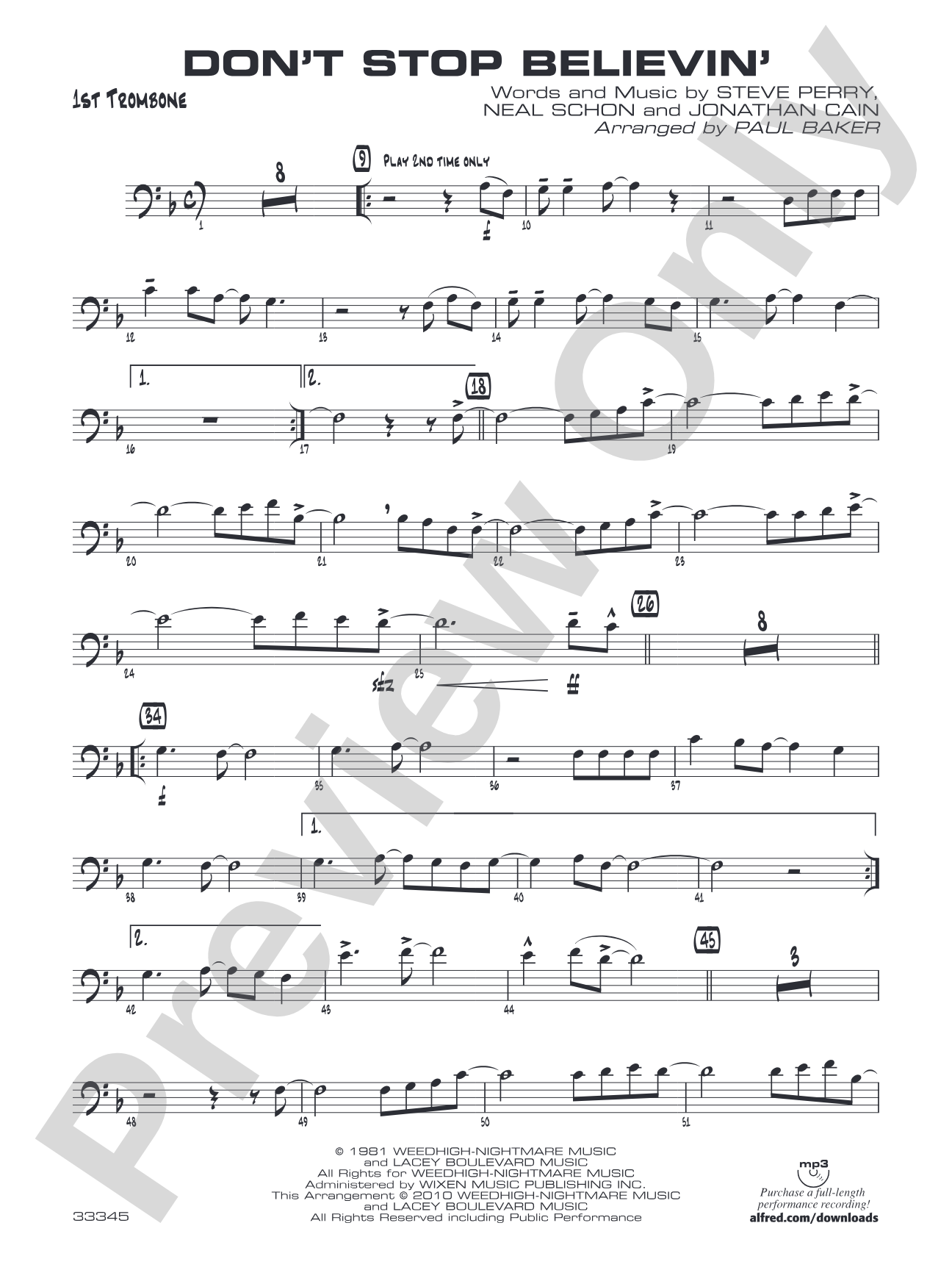
Don't Stop Believin': 1st Trombone

Words and music by Steve Perry, Neal Schon, and Jonathan Cain [Journey] / arr. Paul Baker

Grade: 2 (Medium Easy)

Item: 00-PC-0016203_TN1

Digital Download
$3.00
Description
Hey rock fans, here is a super-chestnut from the band Journey arranged for young jazz ensemble by Paul Baker. From the opening line, this chart is magical to the band and the audience. It has no jazz solos but if you have a guitar player, the arrangement has an optional written guitar melodic line that's also written for trumpets. A great classic and highly recommended. (4:10)

Don't just read it, hear it, play along with it, and watch your students grow with it. In MakeMusic Cloud, Don't Stop Believin': 1st Trombone comes alive with professional accompaniment, adjustable tempo, and built-in practice tools that turn solo practice into real progress.

Sample Audio
0:00
0:00
Sample Video
Additional Details
Series: Young Jazz Ensemble
Publisher: Alfred Music
Page Count: 94
SKU: 00-PC-0016203_TN1

More about this title

About the Composer: Steve Perry

Steve Perry served as the lead vocalist and primary lyricist for Journey, one of the most commercially successful rock bands of the 1970s and 1980s. His songwriting contributions shaped the band's signature sound, blending arena rock accessibility with emotional directness. Perry's compositions remain staples of popular music education, offering educators repertoire that genuinely engages young musicians.

Why we love this

This arrangement captures what makes the original unforgettable while stripping away nothing essential. Paul Baker's voicing respects the source material completely—the melody line that defined a generation emerges clearly through the ensemble, and the optional written guitar part (doubable on trumpet) gives the piece flexibility without requiring improvisation. It's a rare rock chart that plays just as powerfully to a jazz ensemble as it does to an audience.

What to expect

Immediate and anthemic. The opening establishes emotional gravity in seconds, and the arrangement sustains that forward momentum throughout without becoming exhausting. There's genuine lift in this music, the kind that makes ensemble playing feel like something worth doing.

Who it's for

Jazz ensembles at grades 2-3 looking for repertoire that bridges contemporary rock and jazz contexts without condescension. Directors seeking pieces that energize rehearsals and connect with student musicians beyond the traditional jazz canon will find immediate engagement here.

How to get the most out of it

  • Balance the melody against supporting voices during the main theme. The chart's magic lies in that opening hook, so keep it in the foreground even when the full band enters.
  • Shape the dynamics gradually through the arrangement rather than hitting climaxes abruptly. This song earns its peaks.
  • If deploying the optional written guitar line on trumpet, isolate that section during rehearsal to ensure the part sits naturally within the trumpet section's range and blend.
  • Lock the rhythm section early and solidly. The groove matters more than individual flourishes in this style.

How to use it

Program this as a finale or near-finale to draw casual listeners into a jazz concert. The song's cultural footprint means audiences recognize it within bars, creating a built-in connection that opens doors for fuller appreciation of your ensemble's musicianship. It also works well paired with other pop-rock standards to establish a themed concert.

Skills your students will build

  • Sustaining melodic shape across phrase lines without sentiment
  • Balancing ensemble texture when popular melodies dominate
  • Reading and executing optional instrumental doublings
  • Controlling dynamics in a non-classical style context
  • Maintaining groove-based rhythmic precision

You May Also Like