Don't Stop (arr. Dirk Kokx) Sheet Music Preview

Don't Stop (arr. Dirk Kokx): SSAA Choral Octavo

As performed by Fleetwood Mac / Arranged by Dirk Kokx

Item: 35-DS00490680

Digital Download
$2.99
Description

Don't Stop (arr. Dirk Kokx): SSAA Choral Octavo isn't in MakeMusic Cloud just yet...but it could be. Let us know you'd like to see it, and you'll help shape what comes next. In the meantime, start a free trial and dive into thousands of interactive titles your students can play along with today.

Sample Audio
No sample audio found.
Sample Video
Additional Details
Publisher: Hal Leonard
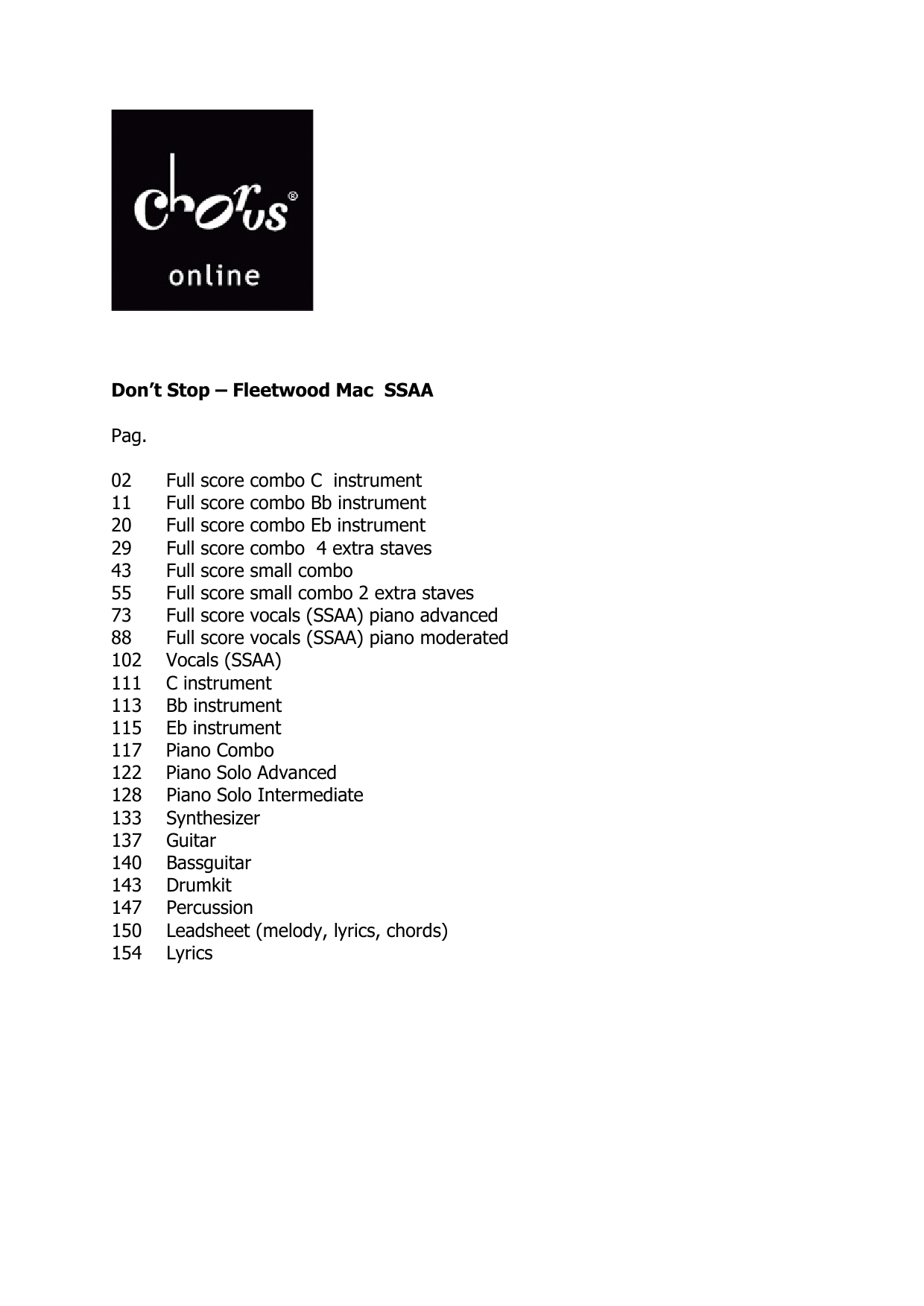
Page Count: 154
SKU: 35-DS00490680

More about this title

About the Artist: Fleetwood Mac

Fleetwood Mac emerged from the British blues scene in 1967 and evolved into one of rock music's most successful acts, defining the sound of the 1970s and beyond. The band's 1977 album 'Rumours' became a cultural touchstone, spawning multiple hit singles and showcasing the songwriting prowess of Lindsey Buckingham, Stevie Nicks, and Christine McVie. Their influence on popular music and performance remains substantial in music education, where their catalog continues to engage singers across skill levels.

The band's strength lay in crafting memorable melodies paired with sophisticated harmonies, making their work ideal for choral arrangement. 'Don't Stop' exemplifies this approach, offering an accessible yet musically substantive vehicle for teaching contemporary repertoire in ensemble settings.

Why we love this

Dirk Kokx's arrangement captures the infectious optimism of the original while crafting genuine harmonic interest across the SSAA voicing. Your singers will connect immediately to material they actually want to sing, and the arrangement rewards careful attention to blend and intonation without requiring advanced vocal technique. This is the rare pop arrangement that feels both authentic and musically substantial.

What to expect

Optimistic and propulsive, with an undercurrent of sophistication beneath the pop accessibility. The arrangement maintains the original's uplifting message while inviting singers into harmonic textures that reward careful listening. It's the kind of piece that feels effortless when it's well-prepared and genuinely rewarding to perform.

Who it's for

This arrangement suits choirs with intermediate to advanced singers seeking engaging contemporary repertoire. It works equally well for concert programming, competitions, or informal performances where audience connection matters. Ensembles looking to bridge classical training with popular music will find this a natural teaching vehicle.

How to get the most out of it

  • Balance the melody line against the supporting voices; the arrangement works best when all four parts remain clearly audible rather than letting any voice recede into pure accompaniment.
  • Establish a solid rhythmic foundation with your section leaders before full ensemble rehearsals. The groove matters more than perfection, so lock in the feel early and maintain it consistently.
  • Exploit the dynamic potential of the piece. Even uptempo pop benefits from strategic softening and building; use contrast to sustain energy across the full performance.
  • Pay attention to vowel consistency on sustained notes. Pop phrasing can sometimes encourage laziness in vowel shapes, but SSAA harmony demands precision to blend effectively.

How to use it

Consider this a closer to a concert section focused on contemporary music, where it will energize an audience and showcase your choir's versatility. It pairs well alongside other pop or musical theatre selections, or it can anchor a program exploring how classic hits translate to choral settings. The familiarity of the source material means even listeners unfamiliar with choral music will appreciate what your singers are doing.

Skills your students will build

  • Balancing multiple harmonic lines in close voicing
  • Maintaining rhythmic groove in contemporary music
  • Vowel consistency across SSAA voicings
  • Phrasing control in pop and rock idioms
  • Blending chromatic or unexpected harmonic movement

You May Also Like