
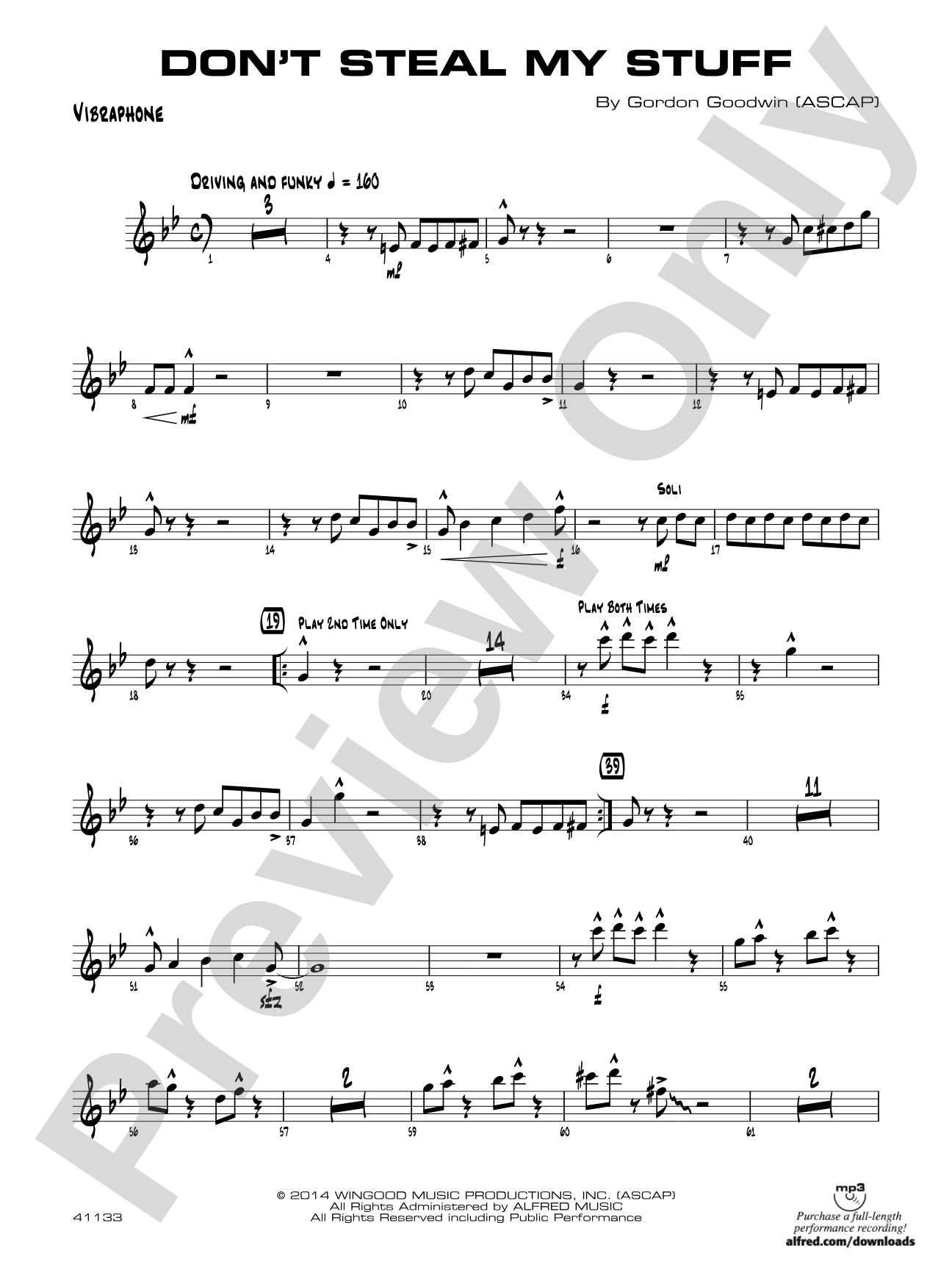

Don't Steal My Stuff: Vibraphone
By Gordon Goodwin
Grade: 3 (Medium)
Item: 00-PC-0016270_V
$3.00
Pickup currently not available
Description
Gordon Goodwin wrote this funky chart for Grade 3 to showcase trumpet 1 and trombone 1. Everything is written out to include the melody duet, the solos, and the trades. The tempo is very accessible at 160 BPM. Don't Steal My Stuff by Gordon Goodwin is fun and easy to assemble. (5:08) This title is available in MakeMusic Cloud.


Don't just read it, hear it, play along with it, and watch your students grow with it. In MakeMusic Cloud, Don't Steal My Stuff: Vibraphone comes alive with professional accompaniment, adjustable tempo, and built-in practice tools that turn solo practice into real progress.
Open in the Player
Jump straight in and assign it today.
Start Your Free Trial
Open this title and explore the full library in minutes.
Sample Audio
1
Audio File
--:--
0:00
0:00
Sample Video
Additional Details
Series:
Jazz Band Series
Publisher:
Alfred Music
Page Count:
106
SKU:
00-PC-0016270_V
More about this title
About the Composer: Gordon Goodwin

Gordon Goodwin began composing at five years old, writing complete pieces rather than fragments or isolated melodies. His first big band chart, Hang Loose, was composed when he was just thirteen. This early mastery of large ensemble writing eventually led to work as a composer and orchestrator for major films including Bad Boys II, Con Air, Remember the Titans, and Star Trek: Nemesis, earning him three Emmy Awards and multiple Grammy nominations along the way.
Beyond film and television, Goodwin has written for and performed with artists ranging from Quincy Jones to Christina Aguilera, conducting major symphony orchestras across North America and Europe. Since 2000, he has led Gordon Goodwin's Big Phat Band, a Los Angeles-based jazz ensemble whose debut album made history as the first commercially released DVD audio title. His work continues to balance high-level professional achievement with a sustained commitment to big band composition and the jazz ensemble tradition.
Why we love this
Goodwin writes ensemble charts with genuine humor and personality, and this one delivers both musicality and rehearsal efficiency. The fact that everything is written out (melody, solos, trades) eliminates guesswork and lets your ensemble focus on execution rather than interpretation. At 160 BPM with clear Grade 3 voicings, it sits in that sweet spot where students can sound polished without grinding through technical barriers.
What to expect
Funky and propulsive, with a rhythm-section pocket that makes you want to move. The trumpet and trombone trades inject conversational joy and wit, while Goodwin's harmonic choices keep the sound contemporary without sacrificing accessibility.
Who it's for
This chart is ideal for Grade 3 jazz ensembles looking for a showcase that spotlights strong trumpet and trombone players without overwhelming the section. Directors who want their students to sound professional and engaged will appreciate the complete writing and the groove-based energy that keeps younger players motivated.
How to get the most out of it
- Lock in the groove early. The funk foundation under the trumpet and trombone duet is what makes this chart work, so establish pocket and confidence in the rhythm section before worrying about section balance.
- Shape the melody duet with clarity and separation. Trumpet 1 and trombone 1 are the feature here, so articulation and phrasing should be conversational rather than mechanical.
- Give solos space to breathe. Goodwin writes strong solo passages with full ensemble support, so allow your soloists room for expression without the rhythm section crowding the time.
- Balance the trades carefully. When trumpet and trombone exchange figures, make sure transitions feel seamless by maintaining consistent dynamics and articulation across the handoff.
How to use it
Program this as a mid-set energizer that resets the room after a ballad or something more substantial. Its five-minute length and clear entertainment value make it perfect for concert programming where you want to showcase section stars while keeping audience momentum alive.
Skills your students will build
- Maintaining steady tempo and groove in medium-up swing time
- Melodic phrasing and call-and-response dialogue between soloists
- Rhythmic precision in written solos and ensemble figures
- Balance and blend when trading sections between brass voices
- Time-feel and articulation in funk-influenced jazz styles