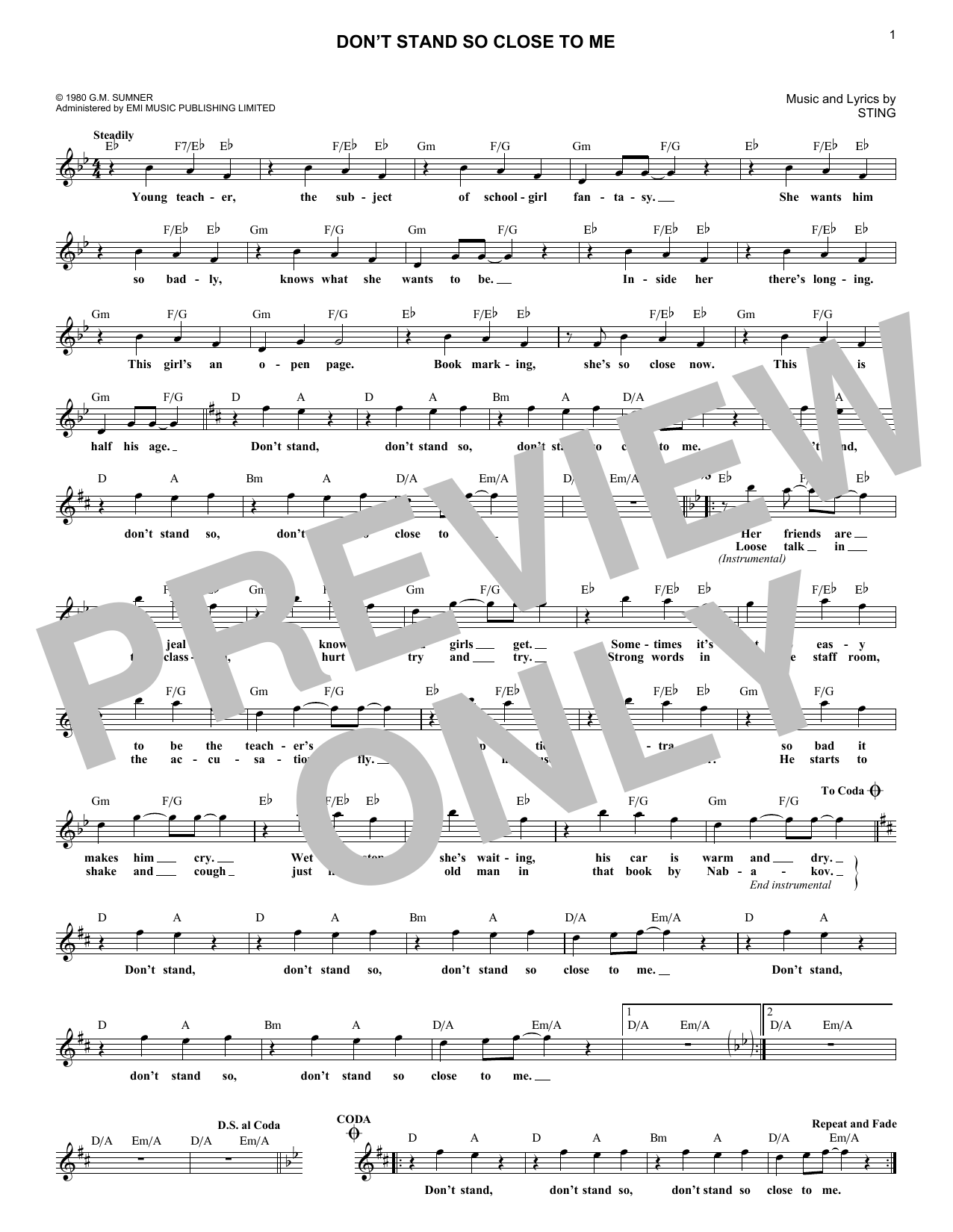
Don't Stand So Close To Me Sheet Music Preview

Don't Stand So Close To Me: Lead Sheet / Fake Book

As performed by The Police

Item: 35-DS00376627

Digital Download
$3.99
Description

Don't Stand So Close To Me: Lead Sheet / Fake Book isn't in MakeMusic Cloud just yet...but it could be. Let us know you'd like to see it, and you'll help shape what comes next. In the meantime, start a free trial and dive into thousands of interactive titles your students can play along with today.

Sample Audio
No sample audio found.
Sample Video
Additional Details
Publisher: Hal Leonard
Page Count: 1
SKU: 35-DS00376627

More about this title

About the Artist: The Police

The Police formed in London in 1977 and became one of the most influential rock bands of the 1980s. Led by Sting's distinctive vocals and songwriting, the trio combined punk energy with reggae rhythms and jazz harmonies, creating a sound that was both intellectually sophisticated and deeply catchy. Their hit singles and albums earned multiple Grammy Awards and established them as masters of writing songs with memorable hooks and unexpected harmonic twists.

For music educators, The Police represent an ideal teaching tool for understanding how pop and rock songwriting can incorporate complex harmonic movement, syncopated rhythms, and layered production ideas into accessible, radio-friendly formats. Their work demonstrates that commercial success and musical substance need not be mutually exclusive.

Why we love this

This lead sheet captures one of the 1980s' most distinctive pop rock hits in a format that works beautifully for jazz ensembles, pop vocal groups, and keyboard players exploring contemporary songwriting. The stark, minimalist melody sits perfectly for singers while the chord changes reward instrumentalists who dig into the harmonic movement. It's the kind of tune that sounds deceptively simple until you're actually playing it and discover why it lodged itself in the cultural memory.

What to expect

Restrained and controlled, with an edge underneath the polish. The melody sits in a conversational range with plenty of rhythmic space; the harmony moves in unexpected directions that keep listeners attentive. There's a cool, almost detached quality to the song that contrasts with its deeply catchy hook.

Who it's for

Jazz and pop ensemble directors looking for engaging 1980s material that challenges players harmonically without requiring extended technical display. Singers and keyboard players who want to explore a songwriting approach that balances commercial appeal with sophisticated harmonic language.

How to get the most out of it

  • Nail the swing of the rhythm section. The song's tension comes from syncopation and space, not from rushing; lock into a pocket that feels unhurried and controlled.
  • Let the bass line breathe. Rather than filling every beat, use silence strategically to mirror the vocal phrasing and keep the arrangement lean.
  • Balance the vocal melody against instrumental fills. The tune invites call-and-response; use dynamics and rests to create conversation between voice and accompaniment.
  • Pay attention to the harmonic color of each chord. Some voicings will feel more contemporary or edgy than others; choose your shell voicings intentionally based on the sound you want.

How to use it

Include this in a pop standards or 1980s rock unit to show students how the decade's best songwriters blended jazz harmony with rock production. It works equally well as a keyboard feature, a vocal showcase, or an ensemble piece. The single-page format makes it ideal for reading sessions or as part of a contemporary music workshop.

Skills your students will build

  • Reading and performing syncopated rhythmic figures
  • Interpreting jazz-influenced chord symbols in a pop context
  • Vocal phrasing and rhythmic placement over groove-based accompaniment
  • Keyboard voicing choices for contemporary music styles
  • Understanding reggae and new wave rhythmic feels in mainstream songwriting

You May Also Like