Don't Sit Under The Apple Tree (With Anyone Else But Me): Easy Piano Digital Sheet Music

Don't Sit Under The Apple Tree (With Anyone Else But Me): Easy Piano Digital Sheet Music

Charlie Tobias, Lew Brown, Glenn Miller, Sam H. Stept, The Andrews Sisters

Item: 00-PS-0009460

Digital Download
$3.99
Description

Don't Sit Under The Apple Tree (With Anyone Else But Me): Easy Piano Digital Sheet Music isn't in MakeMusic Cloud just yet...but it could be. Let us know you'd like to see it, and you'll help shape what comes next. In the meantime, start a free trial and dive into thousands of interactive titles your students can play along with today.

Sample Audio
No sample audio found.
Sample Video
Additional Details
SKU: 00-PS-0009460

More about this title

About the Artist: Glenn Miller

Glenn Miller led one of the most commercially successful big bands of the 1940s, known for a distinctive sound built on clarinet-led reed sections and smooth brass arrangements. His orchestra became a cultural phenomenon during the swing era, recording dozens of hits before Miller's military service and subsequent disappearance in 1944. For music educators, Miller's catalog represents a pivotal moment when jazz and popular music reached mainstream audiences through careful orchestration and memorable melodies.

The Andrews Sisters, one of the era's most popular vocal groups, frequently collaborated with Miller's orchestra. Their tight harmonies and rhythmic precision on recordings like this one defined the vocal style of the 1940s and remain essential listening for understanding American popular music history.

Why we love this

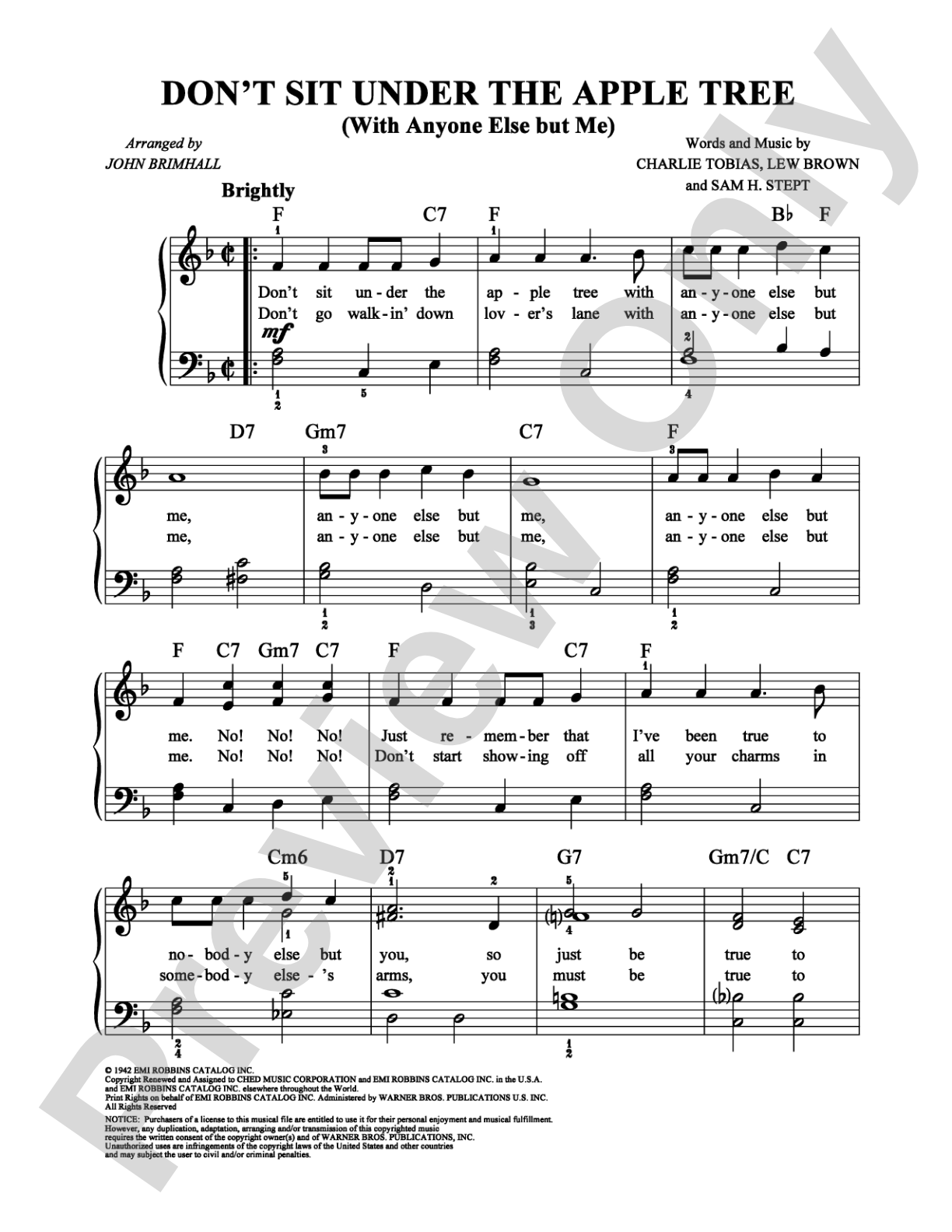
This easy arrangement captures the charm of a song that defined American optimism during World War II, making it accessible for pianists still building technique. The straightforward lead melody and steady accompaniment patterns let students focus on phrasing and the rhythmic snap characteristic of swing-era pop, without demanding advanced hand independence or complex voicings. Programming this piece creates an instant connection to music history that resonates across generations.

What to expect

Bright and optimistic, with the unmistakable bounce of 1940s swing. The melody moves smoothly over a steady pulse, evoking the companionship and gentle humor of a song written to comfort soldiers and sweethearts during wartime. There's an earnest sincerity beneath the cheerful exterior that gives the tune unexpected emotional depth.

Who it's for

Piano students at early intermediate levels who are ready to explore repertoire beyond classical etudes and folk arrangements. This piece works well for students developing swing style, understanding period-specific phrasing, and building confidence with songs that have cultural and historical significance.

How to get the most out of it

  • Keep the left hand accompaniment steady and rhythmic throughout; this isn't an excuse to rush or drag, but rather to establish the groove that made swing era music so danceable.
  • Shape the melody with gentle dynamics rather than heavy accents; the song's warmth comes from lyrical phrasing, not assertive articulation.
  • Use the recorded arrangement as a reference for tempo and feel, but trust your own musical instincts about where the melody breathes.
  • Lean slightly into the syncopated figures to capture the style period without overplaying them.

How to use it

Pair this with other songs from the 1940s nostalgia repertoire to create a program segment celebrating American popular music history. Students can perform it as a solo recital piece, or it works beautifully as a collaborative moment with a vocalist or small ensemble. It's also an excellent choice for informal performances or community events where audiences appreciate familiar, accessible music.

Skills your students will build

  • Swing rhythm and syncopation in early intermediate contexts
  • Legato pedaling and sustained harmony underneath a moving melody
  • Phrasing across 4- and 8-bar phrases with period-appropriate articulation
  • Recognizing and performing the rhythmic vocabulary of 1940s popular music

You May Also Like