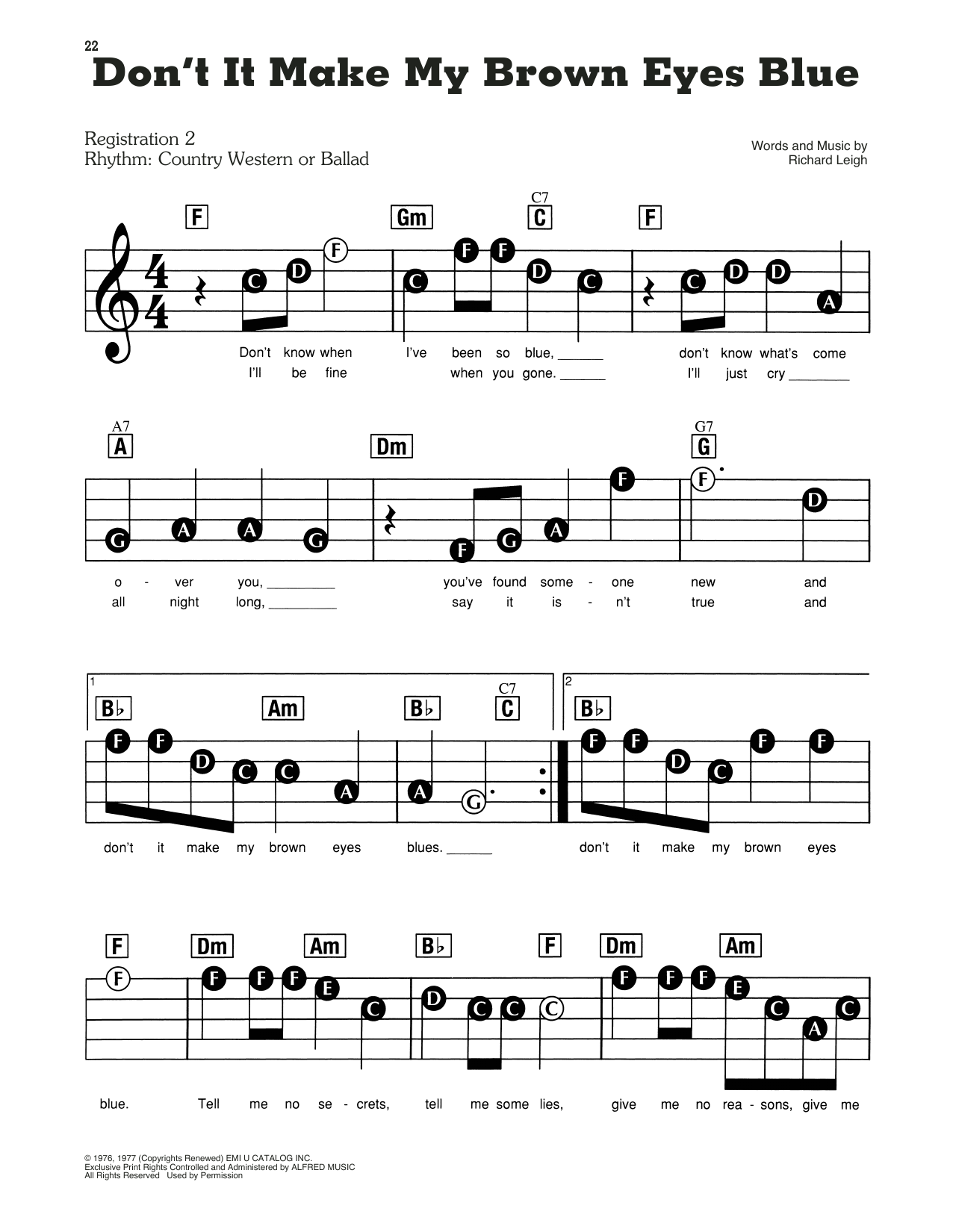
Don't It Make My Brown Eyes Blue Sheet Music Preview

Don't It Make My Brown Eyes Blue: E-Z Play Today

As performed by Crystal Gayle

Item: 35-DS00454466

Digital Download
$4.99
Description

Don't It Make My Brown Eyes Blue: E-Z Play Today isn't in MakeMusic Cloud just yet...but it could be. Let us know you'd like to see it, and you'll help shape what comes next. In the meantime, start a free trial and dive into thousands of interactive titles your students can play along with today.

Sample Audio
No sample audio found.
Sample Video
Additional Details
Publisher: Hal Leonard
Page Count: 2
SKU: 35-DS00454466

More about this title

About the Artist: Crystal Gayle

Crystal Gayle became a crossover sensation in the late 1970s, bringing country music to pop radio audiences with her distinctive, crystalline voice and sophisticated arrangements. Her 1978 hit "Don't It Make My Brown Eyes Blue" topped both country and pop charts, proving that well-crafted songwriting and authentic vocal delivery could transcend genre boundaries. As a performer, she elevated country standards through careful phrasing and emotional restraint, influencing how subsequent generations approached the intersection of country tradition and mainstream appeal.

Why we love this

This arrangement gives pianists a genuine pop standard without requiring jazz reharmonization skills or complex technical displays. The song's melodic strength and emotional simplicity mean students can focus on tone control, sustain pedal usage, and the subtle interpretive choices that turn a familiar tune into a polished performance.

What to expect

Wistful and intimate, with the quiet confidence of someone reflecting honestly on heartbreak. The melody has a singing quality that asks the pianist to become a vocalist, creating space and warmth rather than technical display.

Who it's for

Pianists preparing for recitals, competitions, or performance assessments who want a piece with genuine emotional content and broad appeal. Music directors building pop and standards repertoire for concert programs or student showcases will find this accessible and audience-friendly.

How to get the most out of it

  • Shape the vocal line with gentle dynamic swells rather than abrupt attacks; let the melody breathe across phrase endings instead of cutting it short.
  • Balance the accompaniment so it supports the melody without overwhelming it; think orchestral reduction rather than full-bodied piano writing.
  • Respect the song's ballad tempo and resist the urge to rush; sustained notes and breathing room are structural features, not dead space.

How to use it

Position this as a bridge between classical and contemporary repertoire, or pair it with other 1970s standards to create a "singer-songwriter" themed concert set. Solo pianists benefit from its two-page length and moderate difficulty for an intermission piece or concert closer.

Skills your students will build

  • Sustained legato playing with careful pedal management
  • Melodic phrasing and shaping without overstatement
  • Balance between solo line and accompaniment textures
  • Interpretation of popular song structure and form
  • Tempo control and breathing in ballad settings

You May Also Like