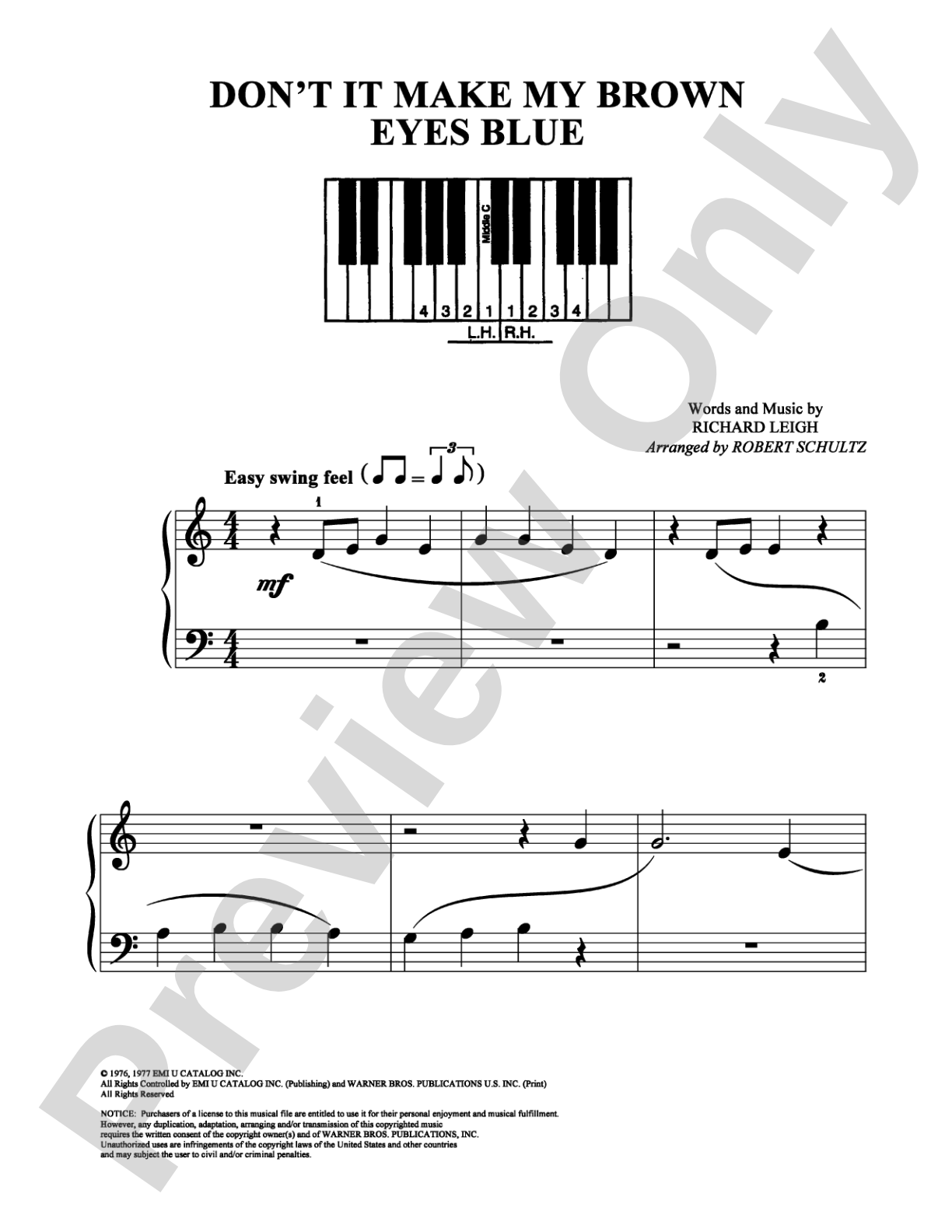
Don't It Make My Brown Eyes Blue: Easy Piano Digital Sheet Music

Don't It Make My Brown Eyes Blue: Easy Piano Digital Sheet Music

Crystal Gayle, Richard Leigh

Item: 00-PS-0007318

Digital Download
$3.99
Description

Don't It Make My Brown Eyes Blue: Easy Piano Digital Sheet Music isn't in MakeMusic Cloud just yet...but it could be. Let us know you'd like to see it, and you'll help shape what comes next. In the meantime, start a free trial and dive into thousands of interactive titles your students can play along with today.

Sample Audio
No sample audio found.
Sample Video
Additional Details
SKU: 00-PS-0007318

More about this title

About the Artist: Crystal Gayle

Crystal Gayle emerged as one of country music's defining voices in the 1970s and 1980s, known for her distinctive alto range and crossover appeal. Her interpretations bridged country and adult contemporary radio, making her work accessible to pianists exploring music beyond traditional classical repertoire.

Why we love this

This arrangement captures the warmth and simplicity of one of country music's most iconic ballads, making it ideal for pianists who want to explore contemporary repertoire without wrestling complex harmonies. The easy setting honors the song's emotional directness while remaining genuinely playable for advancing students.

What to expect

The piece carries a tender, intimate quality, built on the foundation of one of country music's most poignant love songs. Simple harmonic progressions and a straightforward melodic line create space for genuine feeling rather than technical flourish.

Who it's for

Pianists in their first or second year of study who are ready to move beyond method book exercises into real songs will connect with this arrangement. It also suits adult learners and returning pianists who appreciate contemporary country music and want accessible repertoire with emotional substance.

How to get the most out of it

  • Shape the melody with a singing tone rather than mechanical evenness; let the phrasing breathe at the ends of phrases where the original vocal recording does.
  • Keep the accompaniment light and supportive so the right-hand melody remains the clear focal point throughout.
  • Experiment with tempo flexibility in the final phrase to match the introspection of the lyric and create a gentle final cadence.

How to use it

This works well in a student recital where you want to celebrate progress on popular music alongside classical pieces, or as a stand-alone performance for informal settings like community events or open mics. It can also introduce ensemble collaborations if paired with a vocalist.

Skills your students will build

  • Playing sustained melodic lines with expressive control
  • Balancing accompaniment texture with melodic priority
  • Interpreting country and contemporary music idioms on piano
  • Shaping phrases through tempo and dynamic variation

You May Also Like