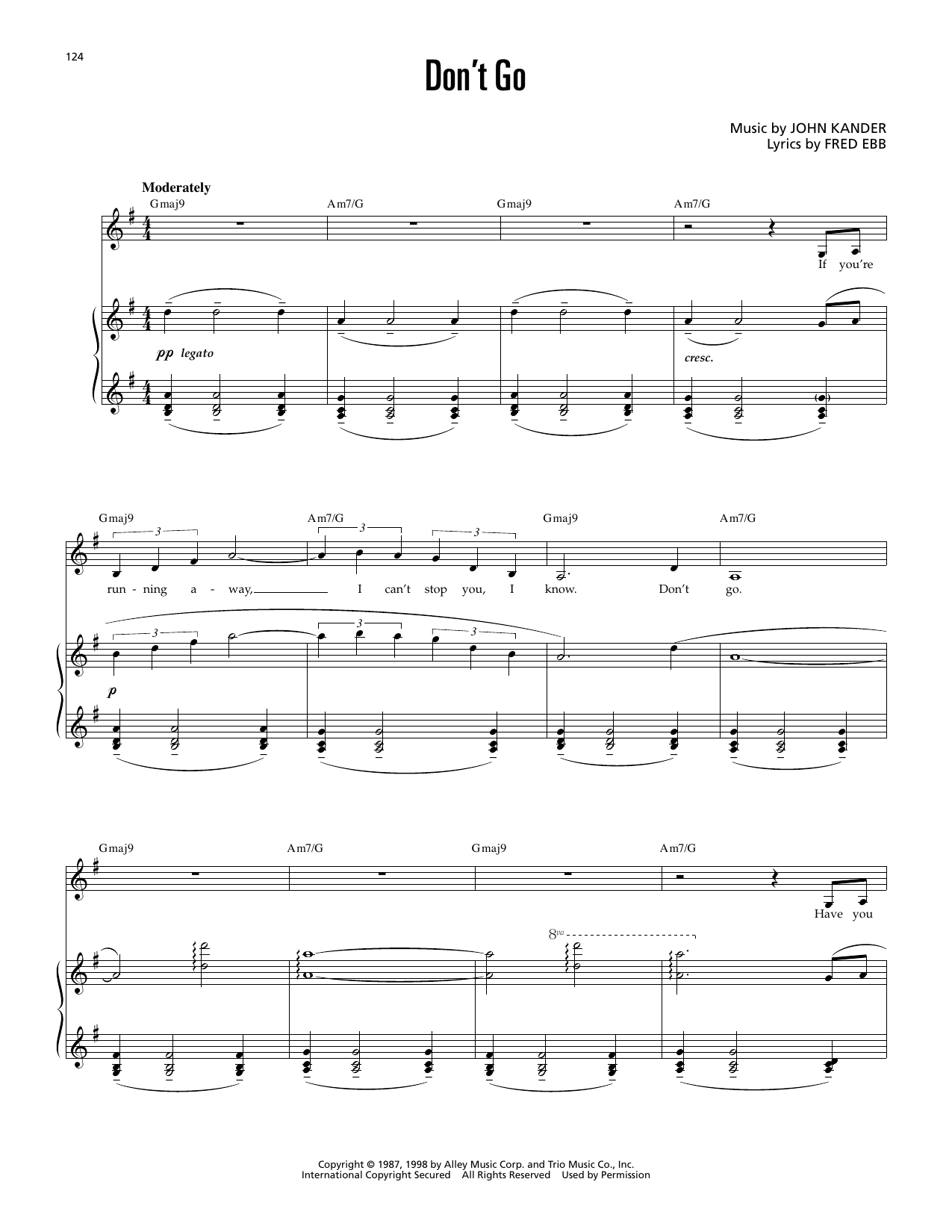
John Kander and Fred Ebb created the score for Cabaret in 1966, crafting one of Broadway's most sophisticated and darkly theatrical musical statements. Their partnership produced a body of work that refused sentimentality, instead using song to illuminate the moral complexities of their narratives. Kander's piano-driven compositional style and Ebb's urbane, often unsettling lyrics made them architects of a new kind of Broadway music, one that treated the stage as a space for serious dramatic inquiry rather than escapism.
Why we love this
This number sits at the emotional core of Cabaret, asking something harder of a singer than most theater material does. The harmonic language is sophisticated without being showy, and the lyric's quiet desperation cuts through the Weimar decadence surrounding it. Programming this gives your singers access to music that rewards genuine interpretive maturity.
What to expect
Tender and devastated at once, the song moves through resignation without ever becoming sentimental. There's a jazz-influenced ease to the harmonic movement that contrasts with lyrics about loss, creating a kind of sophisticated ache that lingers.
Who it's for
Singers with solid technique and the interpretive range to handle material that's emotionally restrained but dramatically loaded. This works for voice students building cabaret repertoire, mature ensemble singers looking to expand beyond traditional musical theater, or vocalists preparing for college auditions who need a piece that demonstrates emotional intelligence.
How to get the most out of it
Approach the vocal line as prose set to music rather than a melody to be sung prettily. The phrasing should breathe like someone actually speaking.
Balance the piano accompaniment carefully so it supports without overshadowing the intimacy the lyric demands.
Sit with the harmonic colors Kander uses, particularly around the chord changes, rather than rushing through them.
How to use it
This stands beautifully on its own in a recital or cabaret setting, or it can anchor a program around mature musical theater repertoire. Pair it with other Kander and Ebb material for a focused exploration of their compositional voice, or use it to introduce singers to the theatrical music that emerged from 1960s Broadway.
Skills your students will build
Interpreting understated emotional content in vocal lines
Navigating chromatic harmonic progressions
Sustaining a conversational vocal tone across a full phrase
Collaborating with a pianist on dynamic balance and rubato
Working with sophisticated theatrical material that demands maturity
You May Also Like
Scan to Complete Your Purchase
Use your phone's camera to scan the code below
You'll log in on your phone and the order will be added to your account