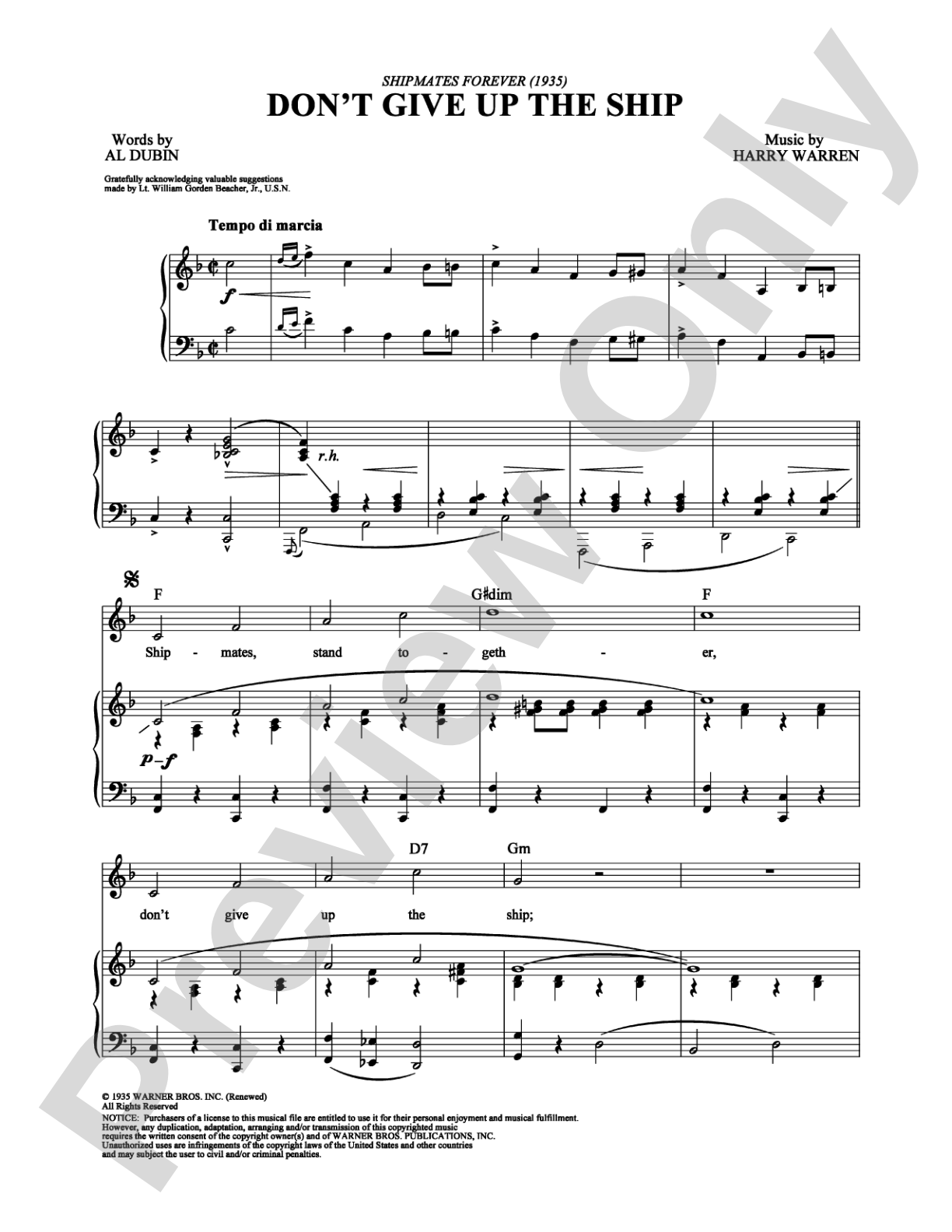
Don't Give Up the Ship: Piano/Vocal/Chords Digital Sheet Music

Don't Give Up the Ship: Piano/Vocal/Chords Digital Sheet Music

Harry Warren

Item: 00-PS-0008502

Digital Download
$3.99
Description

Don't Give Up the Ship: Piano/Vocal/Chords Digital Sheet Music isn't in MakeMusic Cloud just yet...but it could be. Let us know you'd like to see it, and you'll help shape what comes next. In the meantime, start a free trial and dive into thousands of interactive titles your students can play along with today.

Sample Audio
No sample audio found.
Sample Video
Additional Details
SKU: 00-PS-0008502

More about this title

Why we love this

This sea shanty arrangement pairs a singable, memorable melody with straightforward piano accompaniment, making it accessible for singers working across multiple levels. The chord symbols give pianists flexibility to comp or play the written voicings, and the narrative text connects emotionally to the performance.

What to expect

Determined and spirited, with the defiant resolve of a sea shanty rooted in naval history. The melody carries folk-like directness while the piano grounds the performance in harmonic clarity, creating an arrangement that feels both grounded and resilient.

Who it's for

Singers preparing solo material for recitals, competitions, or casual performance settings who want a piece with narrative weight and historical resonance. Pianists seeking shorter, character-driven accompaniment repertoire will find the chordal framework straightforward to interpret.

How to get the most out of it

  • Establish the rhythm section feel early in rehearsal by having the pianist lock the steady accompaniment pattern before layering in the vocal line.
  • Bring out the text's storytelling arc by varying dynamics across verses; the opening can sit softer and more conversational before building intensity toward the refrain.
  • Coordinate phrasing between voice and piano so the accompaniment supports (not echoes) the singer's breathing and interpretive choices.

How to use it

This works well as a narrative solo in a cabaret or pops concert, or paired with other American folk or historical repertoire. Its shorter length makes it ideal for a lighter moment in a recital program, and the subject matter appeals to audiences who enjoy storytelling songs.

Skills your students will build

  • Narrative expression and character consistency across a solo piece
  • Coordination between vocalist and pianist in a lead-and-support relationship
  • Reading chord symbols and translating them into accompaniment voicings
  • Managing tempo and phrasing in a folk-based melody

You May Also Like