
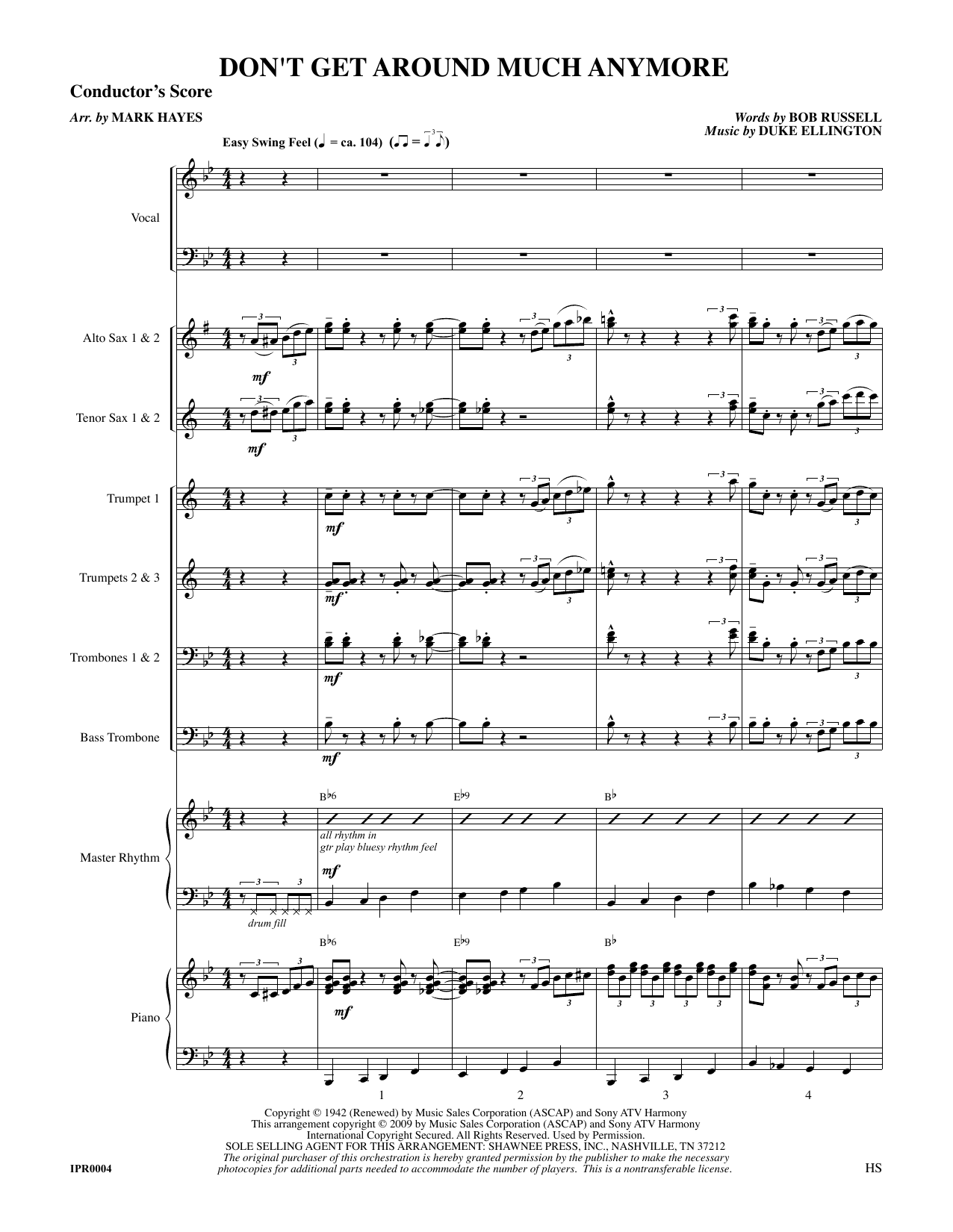

Don't Get Around Much Anymore (arr. Mark Hayes): Choral Instrumental Pak
As performed by Duke Ellington / Arranged by Mark Hayes
Item: 35-PK00475917
$65.00
Pickup currently not available
Buy Extra Parts (Digital PDF Download)
Parts Added to Cart!
Description
This jazz standard by Duke Ellington and Bob Russell is an American classic. Mark Hayes has captured its flair in a choral that's perfect for concert choirs or smaller ensembles such as jazz and show choirs. The big band instrumentation complements with class and accentuates the style of the piece. Instrumentation includes: Score, Alto Sax 1 2, Tenor Sax 1 2, Trumpet 1, Trumpets 2 3, Trombones 1 2, Bass Trombone, Master Rhythm, Piano.


Don't Get Around Much Anymore (arr. Mark Hayes): Choral Instrumental Pak isn't in MakeMusic Cloud just yet...but it could be. Let us know you'd like to see it, and you'll help shape what comes next. In the meantime, start a free trial and dive into thousands of interactive titles your students can play along with today.
Request This Title
Tell us you want it.
Start Your Free Trial
Explore everything that's ready to play right now.
Sample Audio
No sample audio found.
Sample Video
No sample videos found.
Additional Details
Publisher:
Hal Leonard
SKU:
35-PK00475917
More about this title
About the Artist: Duke Ellington
Duke Ellington stands as one of the twentieth century's most prolific composers, and his influence on American music remains unmatched. Beyond his legendary big band career, Ellington's gift for melody and harmonic sophistication shaped how we understand jazz composition itself. His songs continue to anchor standard repertoires across every idiom, from classical to pop to musical theater.
For music educators, Ellington's work offers a direct line into teaching jazz vocabulary, swing feel, and the collaborative nature of ensemble music. His compositions reward repeated listening and reveal new details with each encounter, making them ideal teaching tools that never feel worn out.
Why we love this
Hayes has arranged this standard with genuine stylistic command. His instrumentation sits perfectly between accessibility and authenticity, giving smaller ensembles the full flavor of a big band piece without requiring a seventeen-piece rhythm section. The writing balances vocal prominence with instrumental personality in a way that keeps the energy high while staying musical.
What to expect
Warm, sophisticated, and gently swinging. The melody carries a conversational ease that makes the lyric land naturally, while the harmony beneath it suggests late-night clubs and elegant restraint. This is jazz for people who want to swing without showing off.
Who it's for
Concert choirs expanding into jazz and pop repertoire will find this arrangement both musically rewarding and technically manageable. Jazz ensembles and show choirs gain a legitimate standard that teaches style without compromising musicianship. Smaller programs benefit from the optional flexibility of the rhythm section while still achieving that classic big band sound.
How to get the most out of it
- Establish the swing feel early in rehearsal by isolating the rhythm section (piano, bass, drums) and locking the fundamental groove before layering horns and choir.
- Pay attention to Hayes's dynamics markings in the horn sections; they're written to support rather than overshadow the vocal line, so respect the balance he's indicated.
- Record yourself at each stage of learning (just choir, just instruments, combined) to hear what's blending and what's sticking out.
- Let the piano voicings guide your chord understanding. Hayes's reharmonization keeps one foot in the jazz tradition while staying clear enough for singers to hear their parts.
How to use it
Slot this into a spring pops concert alongside other Ellington standards or contemporary jazz arrangements to give your audience a genuine taste of American songwriting craft. It also works beautifully as a bridge piece in mixed repertoire programs, offering singers an approachable entry into jazz phrasing and style. The length and accessibility make it a strong choice for early-season programming when ensembles are still building confidence.
Skills your students will build
- swing phrasing and jazz articulation
- reading lead sheets and chord symbols
- balancing vocal and instrumental independence
- stylistically appropriate dynamics and shaping within a jazz idiom
- ensemble listening and blend across mixed instrumental colors