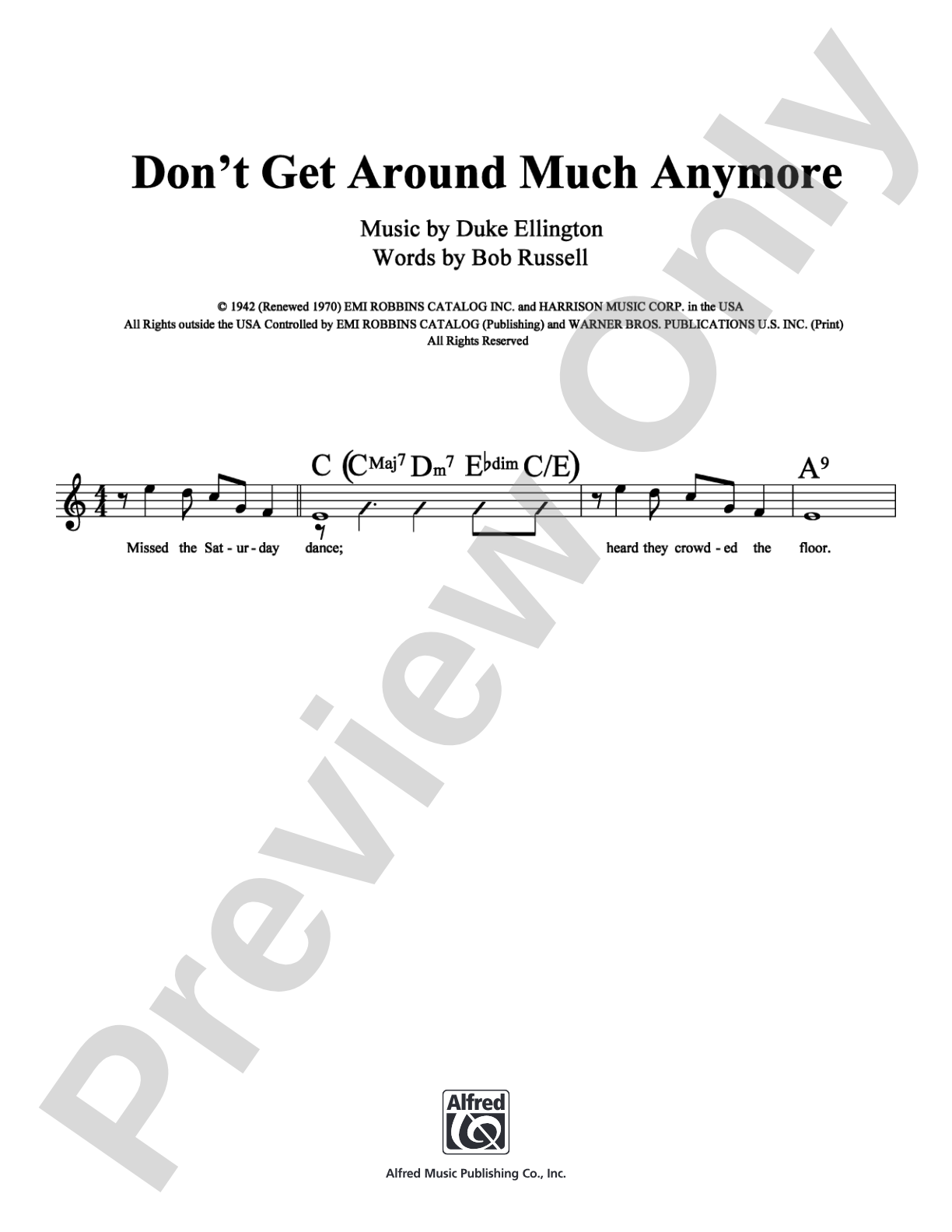
Duke Ellington (1899, 1974) transformed jazz from dance music into a serious compositional art form. His innovations in orchestration, harmonic sophistication, and formal structure reshaped what composers could do within the idiom, and his prolific output, over 1,000 compositions, established a repertoire that remains central to jazz education and performance.
Ellington's songwriting pairs melodic accessibility with harmonic complexity. Standards like this one demonstrate why his tunes became the foundation of jazz pedagogy: the melodies are memorable enough for singers and soloists to make their own, while the chord changes reward deeper harmonic exploration. For music educators, his work bridges the gap between popular appeal and musical substance.