Don't Get Around Much Anymore: Piano Digital Sheet Music

Don't Get Around Much Anymore: Piano Digital Sheet Music

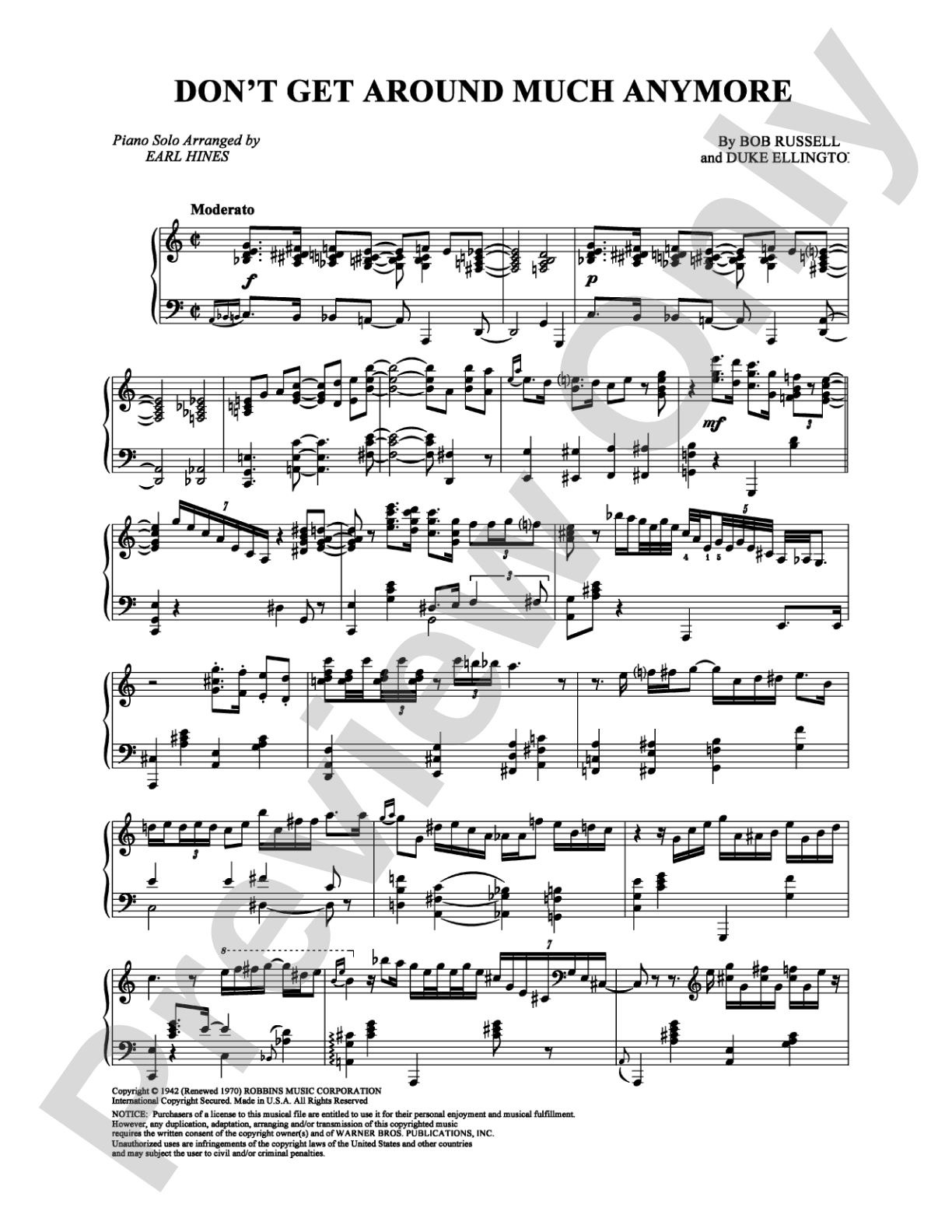
Duke Ellington, Earl Hines

Item: 00-PS-0007305

Digital Download
$3.99
Description

Don't Get Around Much Anymore: Piano Digital Sheet Music isn't in MakeMusic Cloud just yet...but it could be. Let us know you'd like to see it, and you'll help shape what comes next. In the meantime, start a free trial and dive into thousands of interactive titles your students can play along with today.

Sample Audio
No sample audio found.
Sample Video
Additional Details
SKU: 00-PS-0007305

More about this title

About the Artist: Duke Ellington

Duke Ellington (1899-1974) shaped American music across seven decades as a composer, bandleader, and pianist whose work transcended jazz to influence classical composers, film scores, and the broader American songbook. His gifts for harmonic innovation, orchestration, and melody made him one of the most recorded artists in history, and his compositions remain central to jazz education and performance worldwide.

Why we love this

Ellington's harmonies in this standard reward close listening and invite pianists to explore the rich voicings that made his compositions sound both sophisticated and singable. The melody sits naturally under the hand while the supporting harmony opens doors to reharmonization and interpretation, making it equally valuable for students developing jazz vocabulary and for mature pianists seeking a vehicle for personal expression.

What to expect

A relaxed sophistication defines this tune, with Ellington's gift for making complex harmony feel inevitable and natural. The piece has an unhurried elegance that invites the performer to find space within the phrases, creating an intimate conversation between melody and the supporting harmony.

Who it's for

This digital sheet music serves pianists with jazz literacy who want to explore a cornerstone standard in both classical and jazz contexts. Whether you're building a jazz repertoire, preparing for recitals that blend genres, or teaching students about American songwriting, this straightforward digital format makes it accessible for study, performance, and archival.

How to get the most out of it

  • Lean into the sophistication of Ellington's chord voicings rather than racing through the melody; these harmonies earned their place through decades of bandstand testing.
  • Shape the phrasing around lyrical breathing even in an instrumental setting, treating the tune's contour as a vocalist would.
  • Experiment with comping and stride patterns to deepen your understanding of how the harmony functions, then return to a cleaner approach if the arrangement calls for it.
  • Listen to recordings by both Earl Hines and other jazz pianists to hear how different touch and time feel can shift the piece's character without changing a single note.

How to use it

Pair this with other Ellington compositions to build a thematic concert set that demonstrates his range and influence, or nestle it into a jazz standards recital alongside works by Gershwin and Porter. Its popularity means it pairs well with vocalist-accompanied programming, allowing pianists to support singers or vice versa.

Skills your students will build

  • Reading and interpreting jazz chord symbols and substitutions
  • Voicing jazz harmony on piano with voice leading awareness
  • Phrasing techniques that honor both melody and accompaniment texture
  • Understanding the relationship between written notation and jazz interpretation

You May Also Like