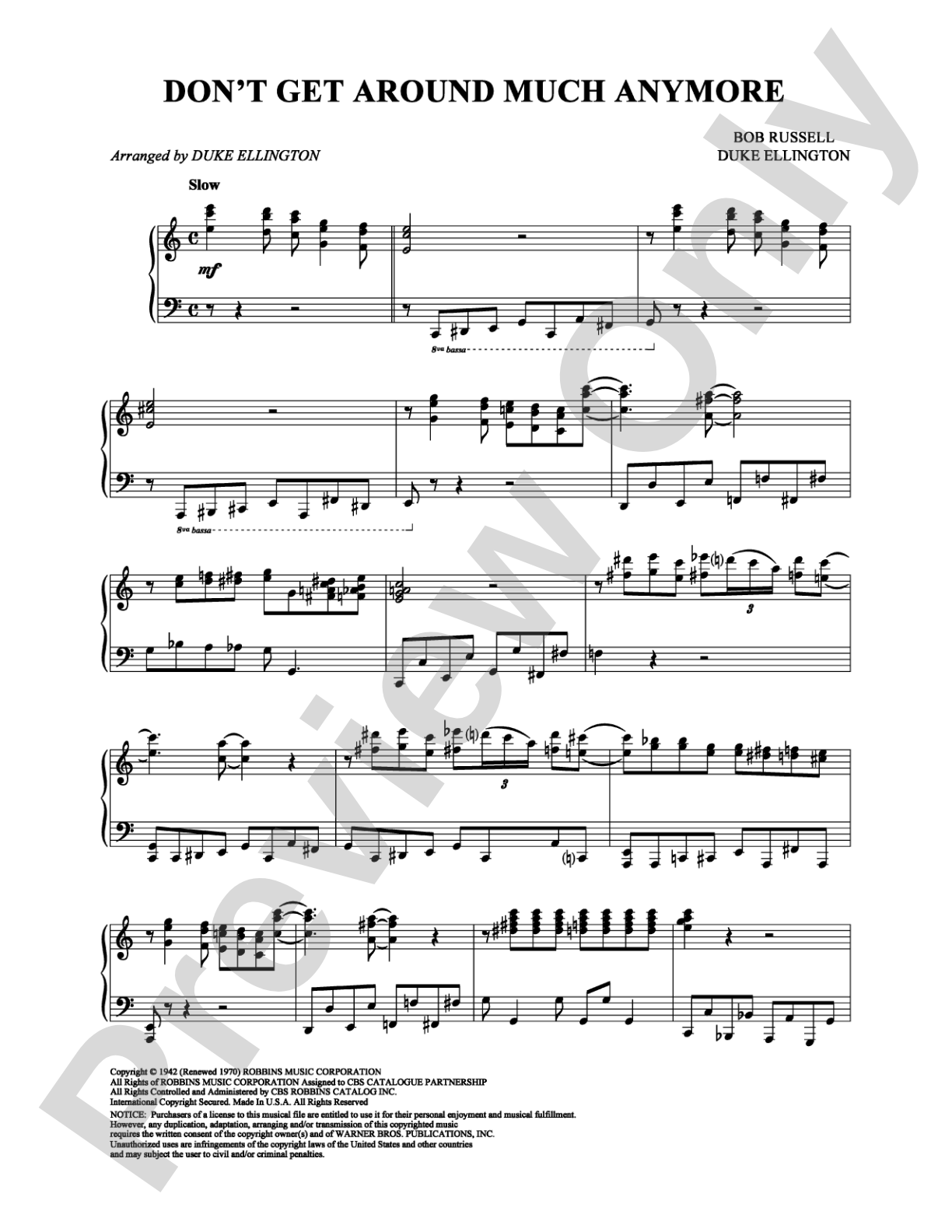
Duke Ellington (1899, 1974) fundamentally reshaped what jazz could be. Trained as a classical pianist, he brought compositional sophistication and harmonic adventurousness to popular music, creating a body of work that spans decades and defies easy categorization. His influence on American music extends far beyond the jazz world; his melodies, harmonies, and orchestral thinking became foundational to how musicians across genres approach composition and arrangement.
Ellington's legacy in music education rests partly on his prolific output and partly on his method: he composed pragmatically for the musicians around him, which meant his scores work. Teachers and students return to his pieces because they're written with both artistic integrity and practical playability in mind. His piano works especially reveal his own sophisticated touch as a performer and his gift for making complex ideas sound inevitable.