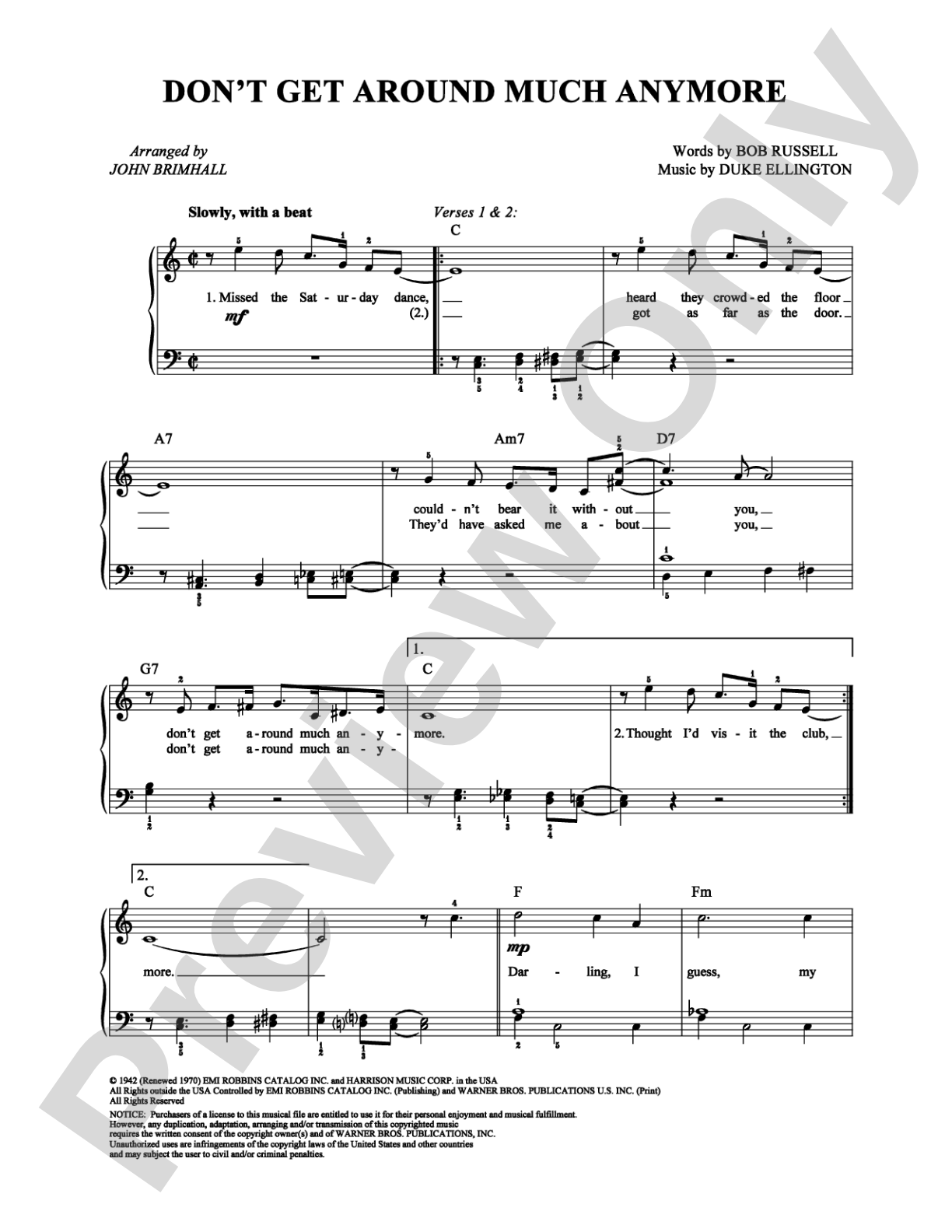
Don't Get Around Much Anymore: Piano/Vocal/Chords Digital Sheet Music

Don't Get Around Much Anymore: Piano/Vocal/Chords Digital Sheet Music

Duke Ellington

Item: 00-PS-0007302

Digital Download
$3.99
Description

Don't Get Around Much Anymore: Piano/Vocal/Chords Digital Sheet Music isn't in MakeMusic Cloud just yet...but it could be. Let us know you'd like to see it, and you'll help shape what comes next. In the meantime, start a free trial and dive into thousands of interactive titles your students can play along with today.

Sample Audio
No sample audio found.
Sample Video
Additional Details
SKU: 00-PS-0007302

More about this title

About the Creator: Duke Ellington

Duke Ellington composed "Don't Get Around Much Anymore" in 1940, working with lyricist Bob Russell to create one of the most enduring standards in the American songbook. Ellington's genius lay in writing melodies that felt both sophisticated and instantly singable, a quality that made this tune a favorite across jazz ensembles, singers, and pop artists alike.

Why we love this

This standard sits perfectly in that sweet spot where jazz sophistication meets pure singability. The chord changes reward thoughtful harmonic exploration without demanding virtuosic pyrotechnics, making it an ideal vehicle for singers developing their jazz interpretation skills.

What to expect

There's a bittersweet quality to this tune, the lyrics paint a picture of longing and missed connection, but the melody itself never slides into melodrama. Instead, it has an understated elegance, the kind of sophisticated melancholy that defined the best of 1940s songwriting.

Who it's for

Jazz singers at the intermediate level and above who want to explore a beloved standard with harmonic depth and interpretive flexibility. Pianists developing their jazz comping vocabulary will find rich material here for exploring voicing choices and rhythmic interaction with a vocalist.

How to get the most out of it

  • Treat the lyric phrasing as a guide rather than a rule. The conversational nature of this tune invites you to sit behind the beat and find your own pocket with the piano.
  • Explore the chord voicings beyond the written changes. Jazz standards thrive when accompanists voice these harmonies with personality; your interpretation of the comping sets the emotional tone for the vocalist.
  • Let the rubato breathe, especially at phrase endings. The reflective quality of the lyric demands space for that introspection to land.

How to use it

Program this in a jazz or cabaret set where you want a moment of introspection and connection with the audience. It works beautifully as a ballad that lets a vocalist demonstrate control and emotional maturity without resorting to vocal gymnastics.

Skills your students will build

  • Interpreting jazz standards with harmonic awareness
  • Rhythmic flexibility and phrasing in a conversational context
  • Chord voicing choices and jazz comping techniques
  • Building emotional narrative within a structured form

You May Also Like