Don't Get Around Much Anymore: Piano Digital Sheet Music

Don't Get Around Much Anymore: Piano Digital Sheet Music

Duke Ellington

Item: 00-PS-0000692

Digital Download
$3.99
Description

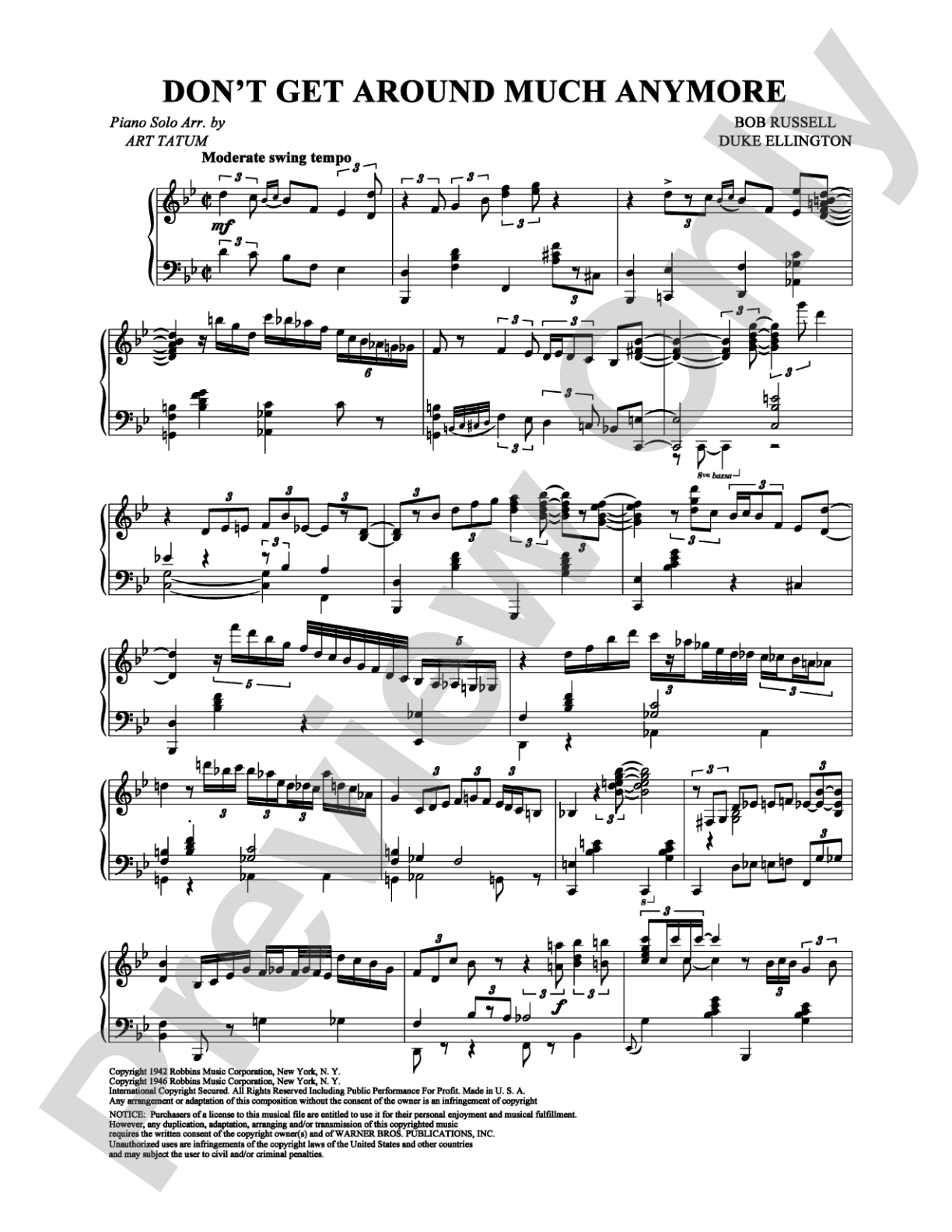
Don't Get Around Much Anymore: Piano Digital Sheet Music isn't in MakeMusic Cloud just yet...but it could be. Let us know you'd like to see it, and you'll help shape what comes next. In the meantime, start a free trial and dive into thousands of interactive titles your students can play along with today.

Sample Audio
No sample audio found.
Sample Video
Additional Details
SKU: 00-PS-0000692

More about this title

Why we love this

This standard sits perfectly between accessibility and sophistication. A pianist can deliver a thoroughly convincing performance with modest harmonic knowledge and a solid swing feel, yet there's real interpretive room for someone ready to explore comping choices and reharmonization.

What to expect

Sophisticated yet unpretentious. The melody has a languid, almost wistful quality that invites introspection, while the harmonic changes move with the ease of someone who knows exactly where they're going. It's the musical equivalent of a well-worn leather chair and a good book.

Who it's for

Jazz pianists building their standards repertoire, whether advancing beyond lead sheets or looking for a familiar touchstone to develop comping fluency. This also works for pianists who play in mixed ensembles and want a solid solo vehicle with strong harmonic grounding.

How to get the most out of it

  • Establish a clear swing eighth-note feel from the opening; the melody's charm depends on sitting slightly behind the beat.
  • Treat the left hand as a conversation partner, not mere accompaniment. Respond to what the melody does rather than locking into one comping pattern.
  • Let the bridge breathe. The harmonic movement often shifts here; give yourself space to acknowledge the key center change before swinging back home.
  • Explore dynamics across the form. Many pianists nail the head but flatten out on repeats; use softer touch, sparser voicings, or busier fills to keep interest alive.

How to use it

Feature it as a solo recital piece to showcase your comping and improvisation chops, or pair it with other Ellington-era standards for a jazz history set. It's substantial enough to anchor a program but intimate enough to work as an encore.

Skills your students will build

  • Swing eighth-note feel and rhythmic placement
  • Jazz chord voicing and reharmonization
  • Left-hand comping patterns and responding to melody
  • Solo form navigation and repeated chorus development
  • Blues and jazz harmonic syntax

You May Also Like