
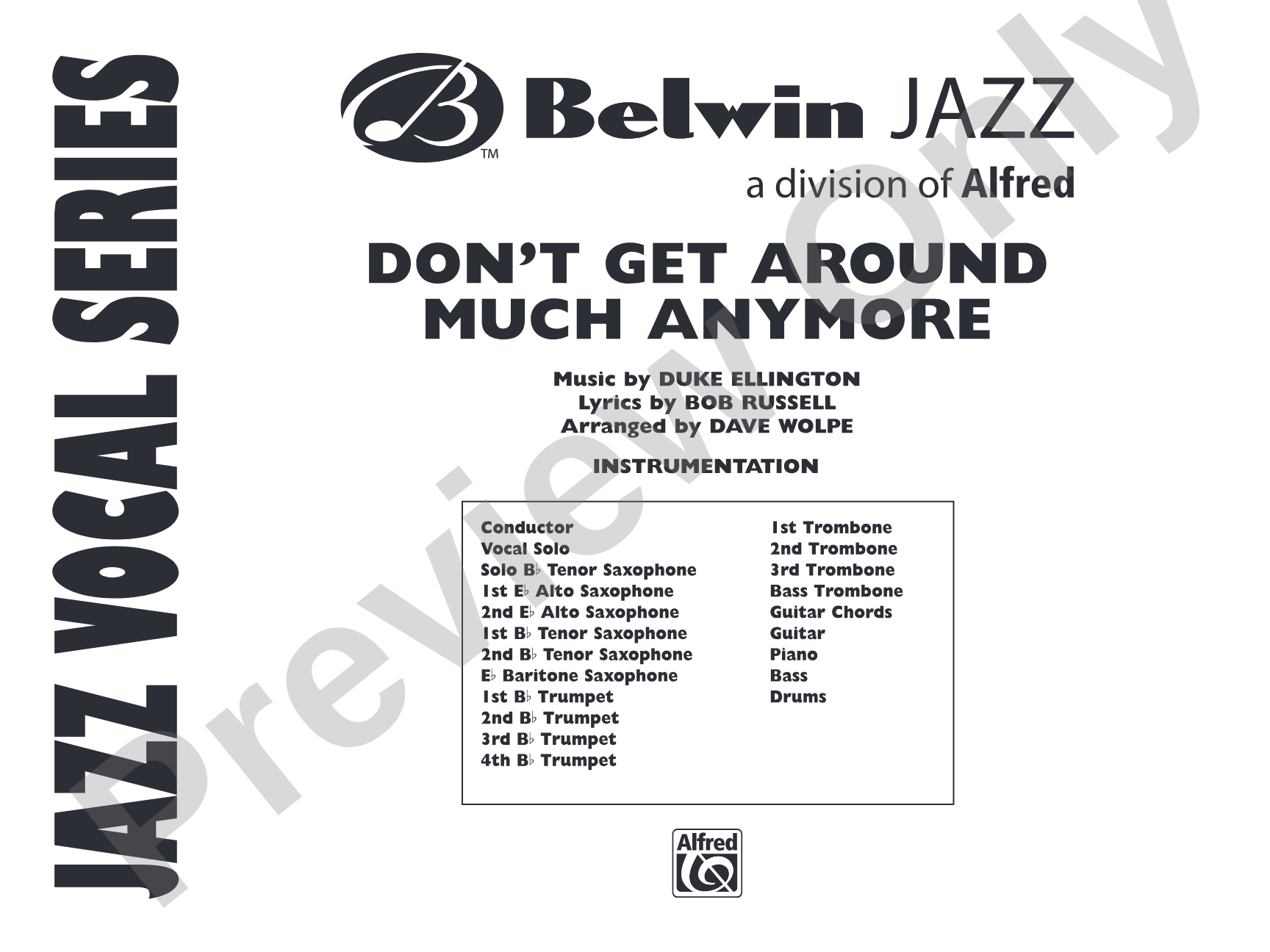

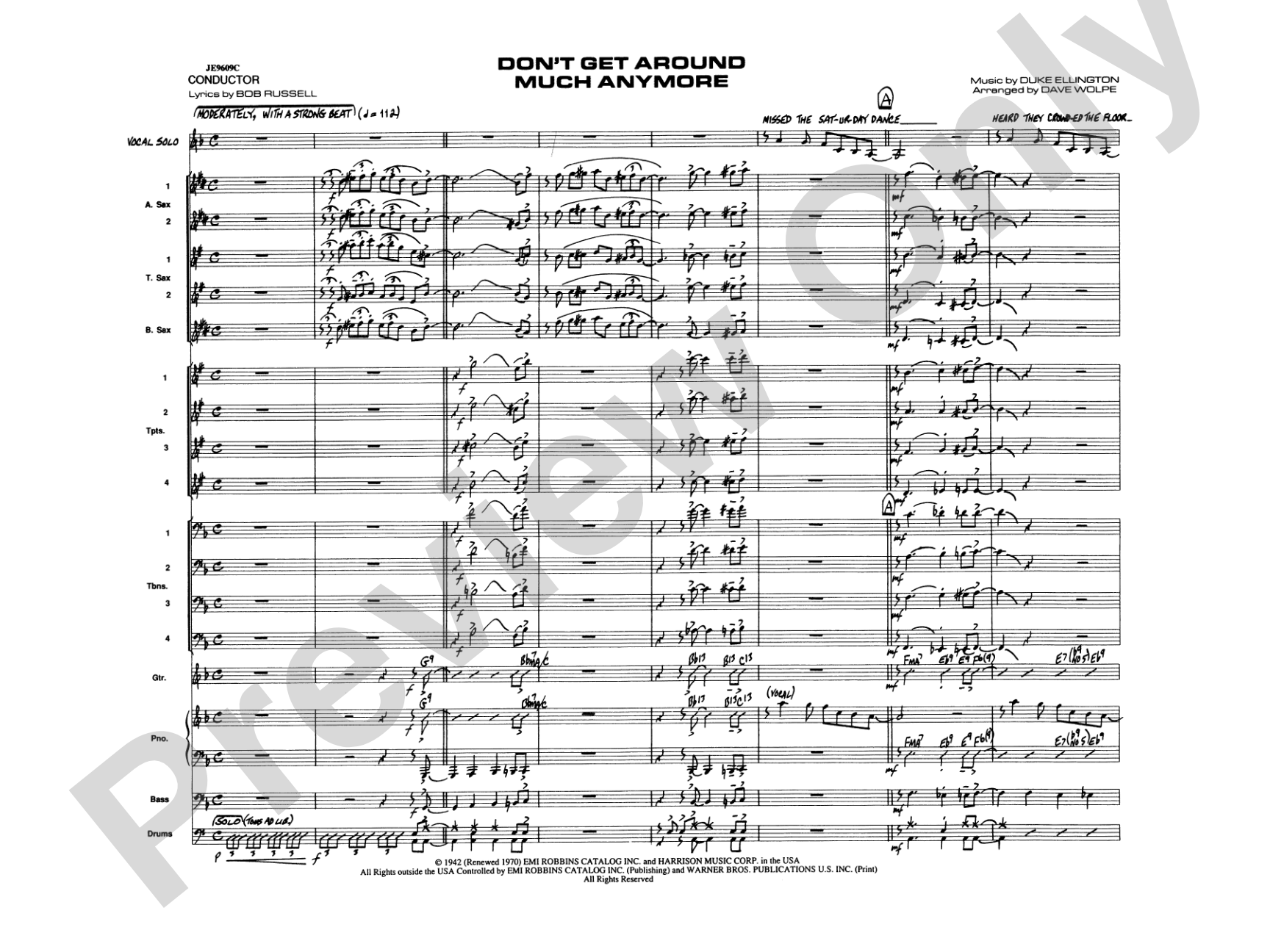
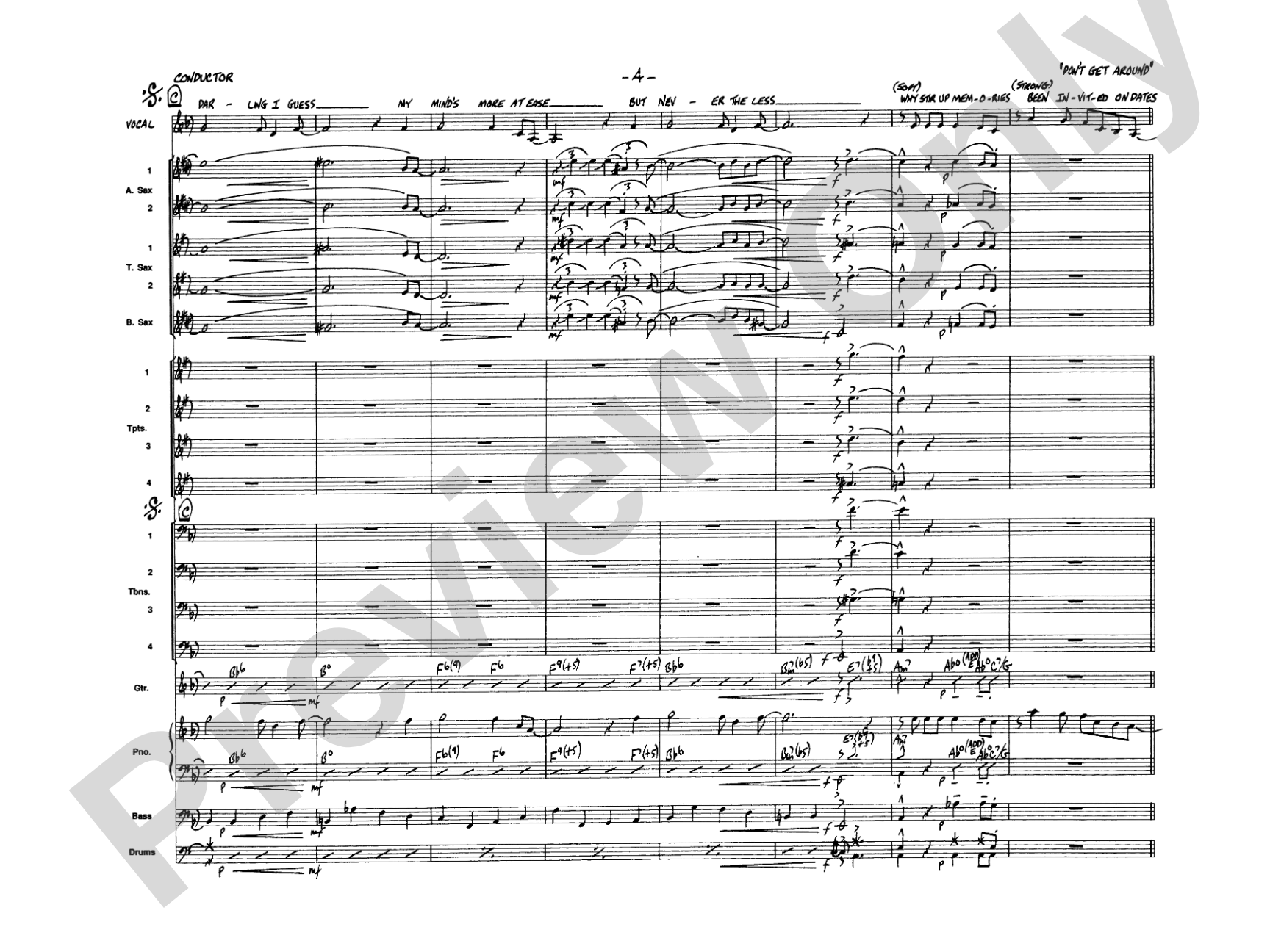
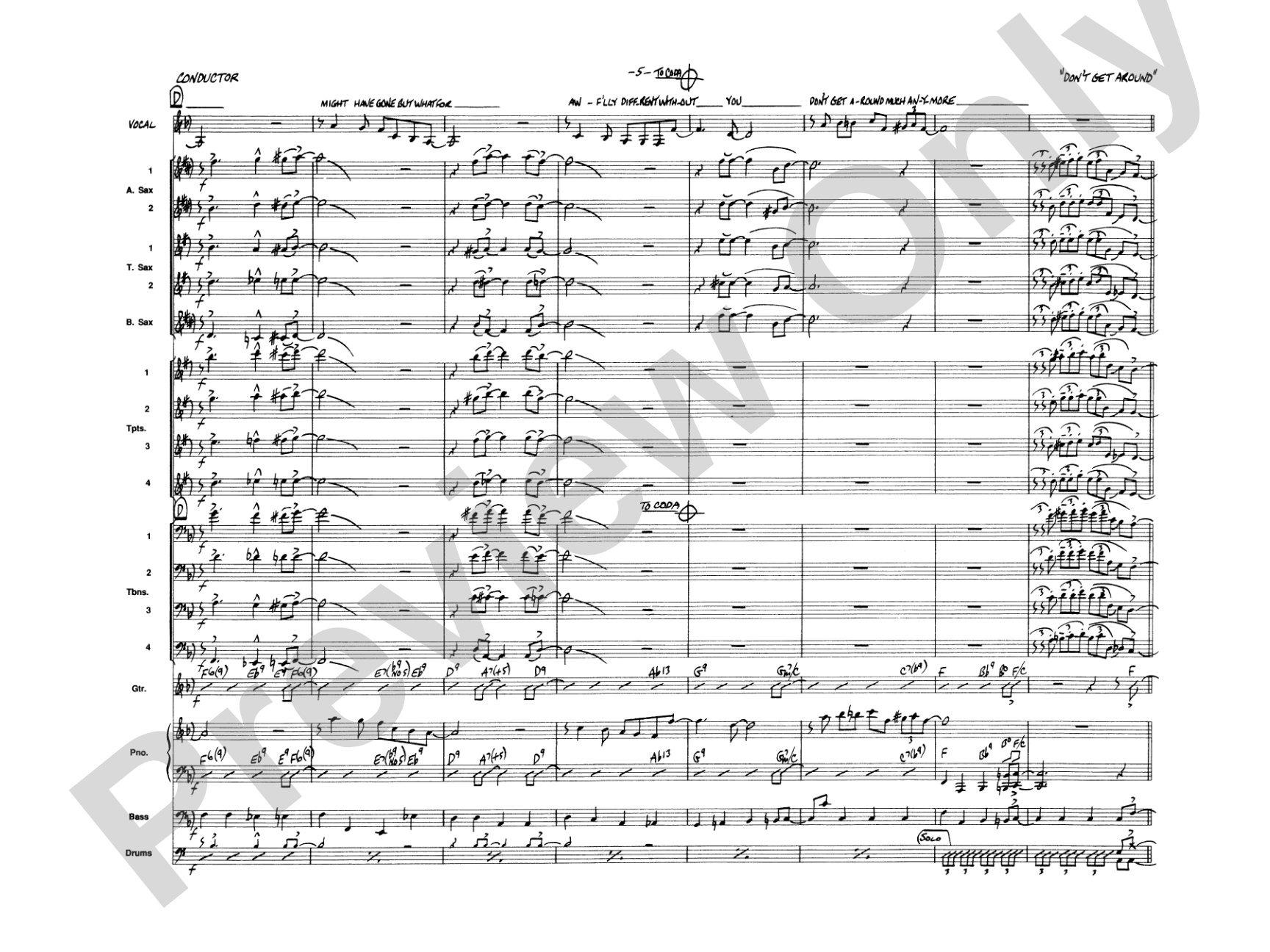
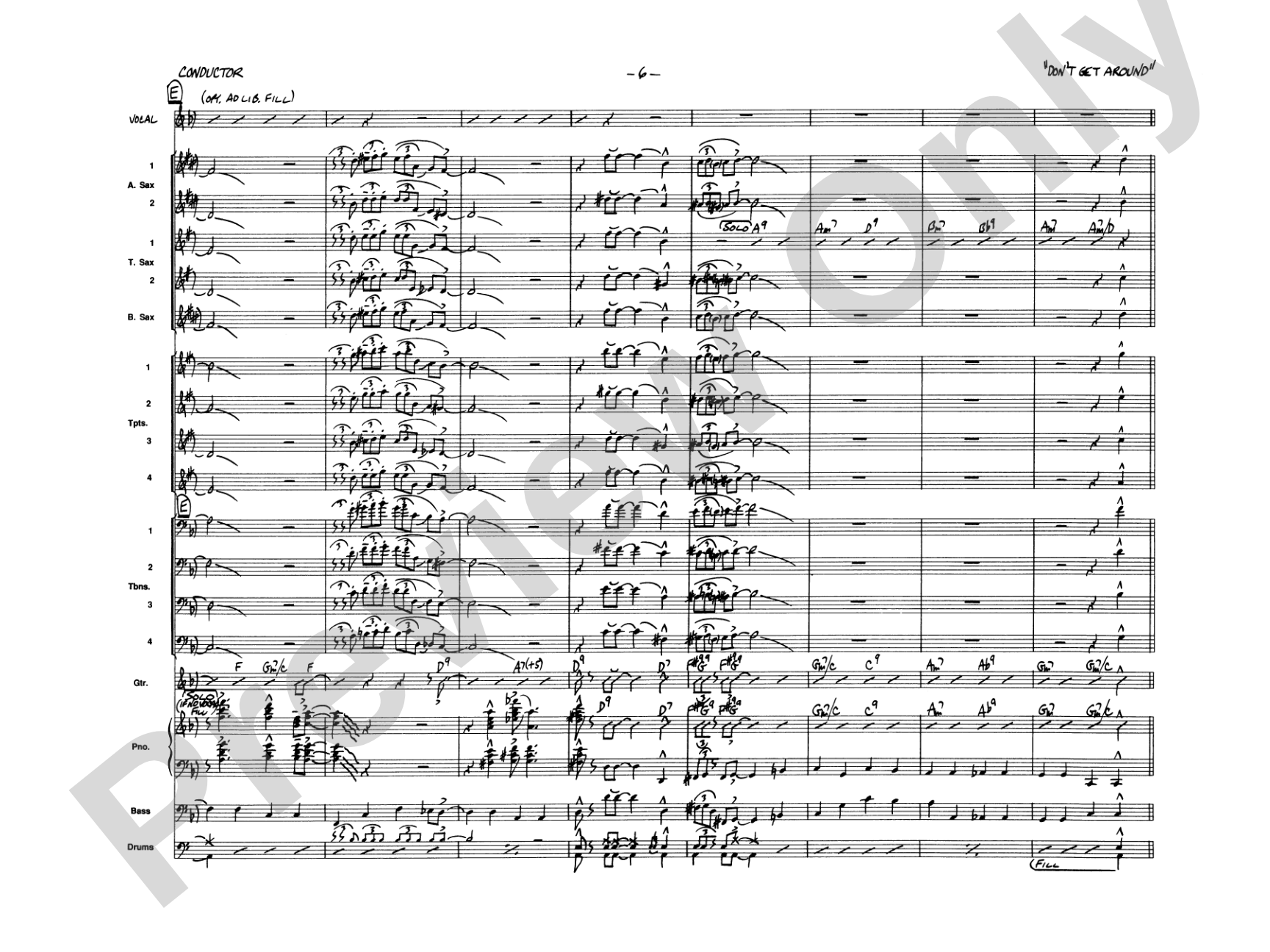
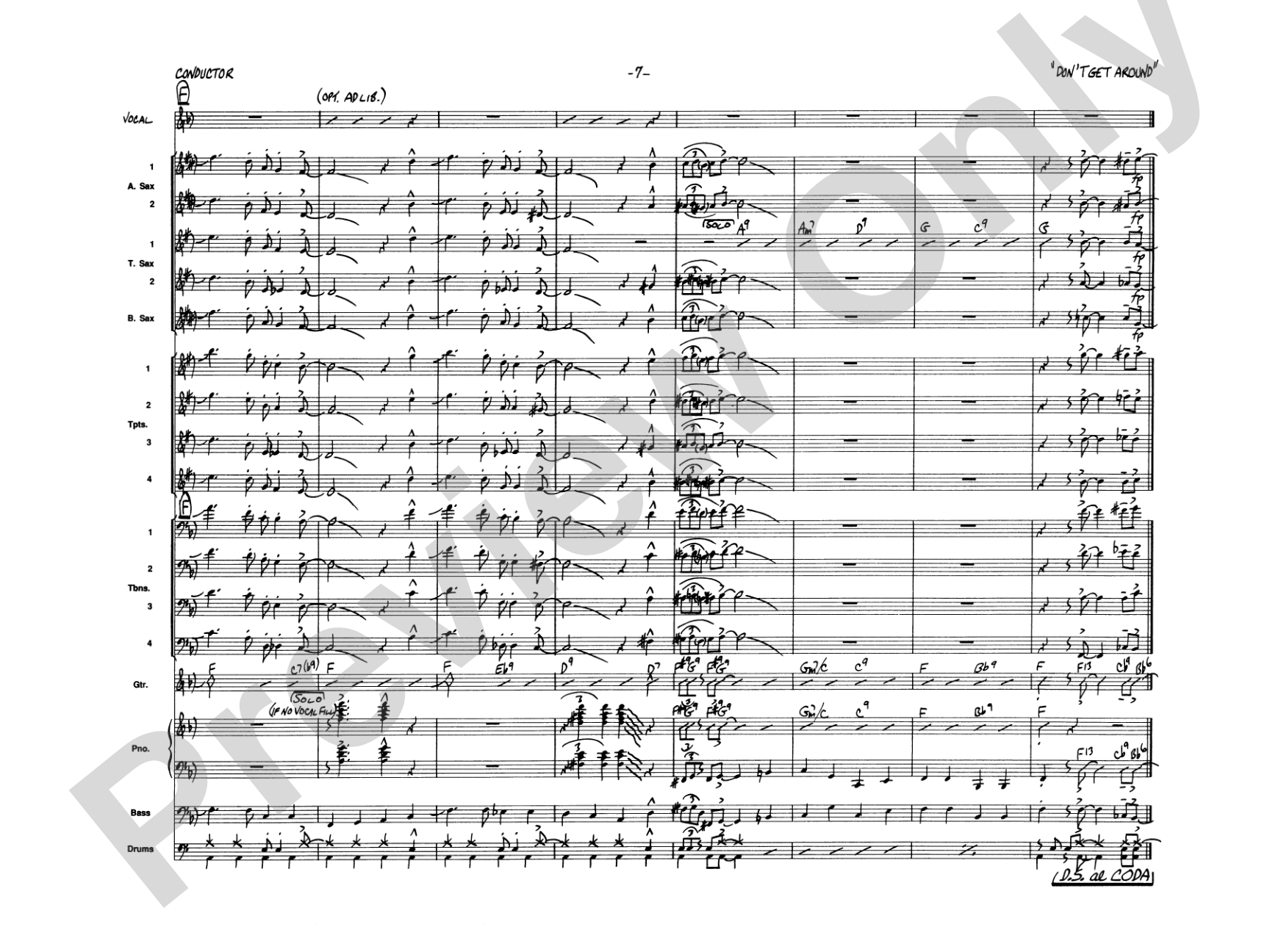
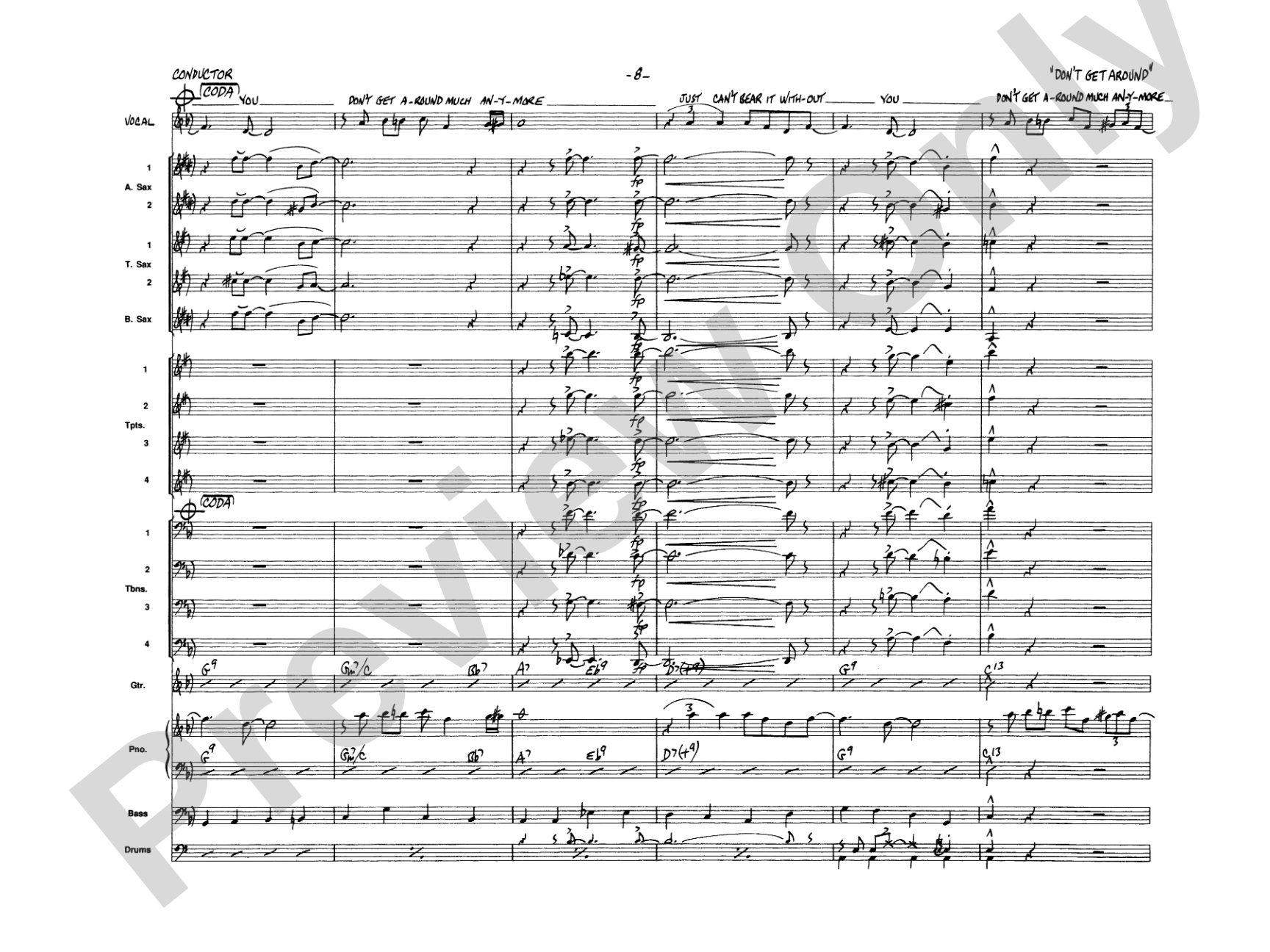
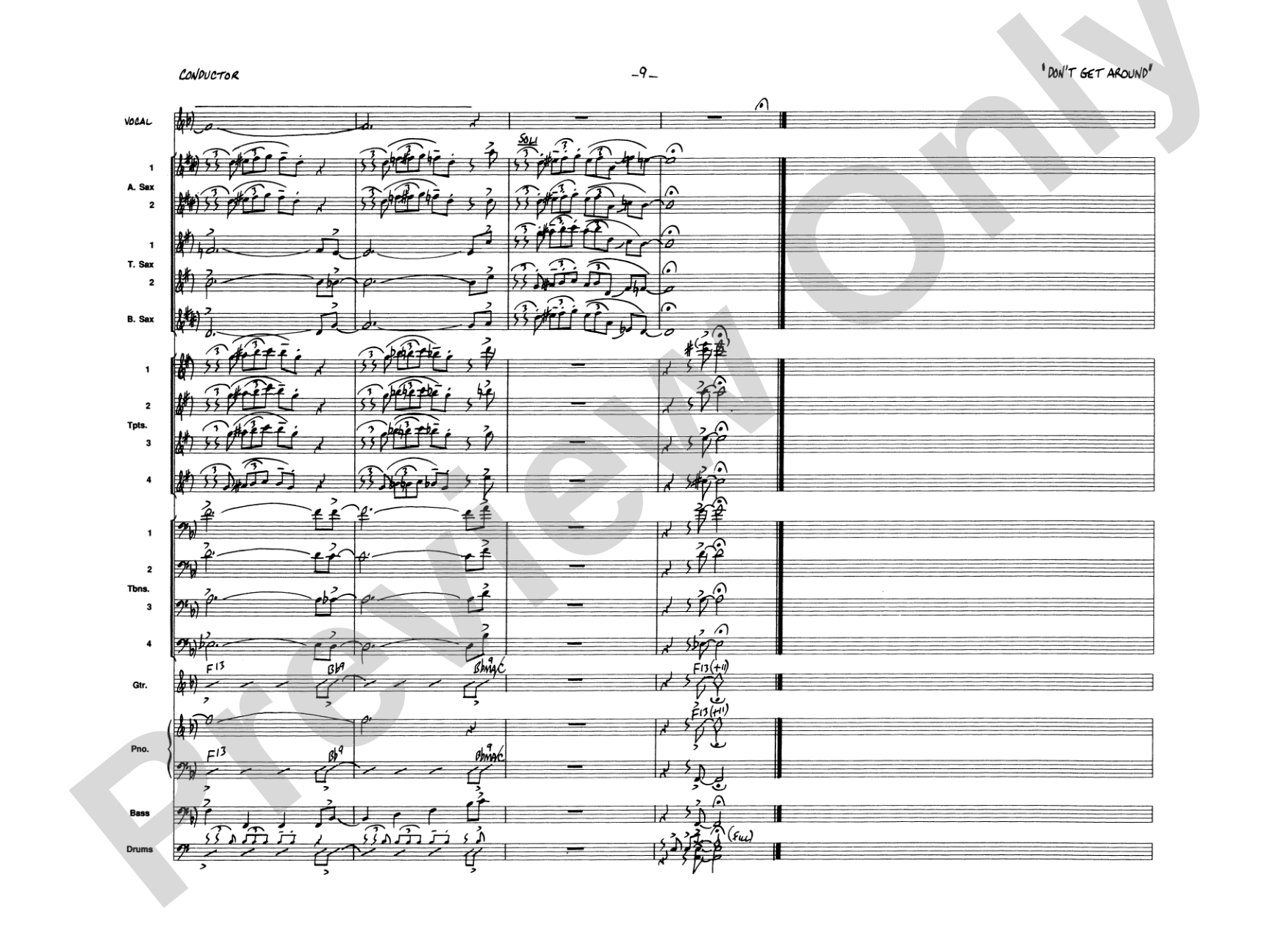


Don't Get Around Much Anymore: Vocal Solo with Jazz Ensemble Conductor Score & Parts
Vocal Feature
By Ellington & Russell / arr. Dave Wolpe
Grade: 4 (Medium Advanced / Difficult)
Item: 00-PK-0002431
$54.00
One moment…
Description
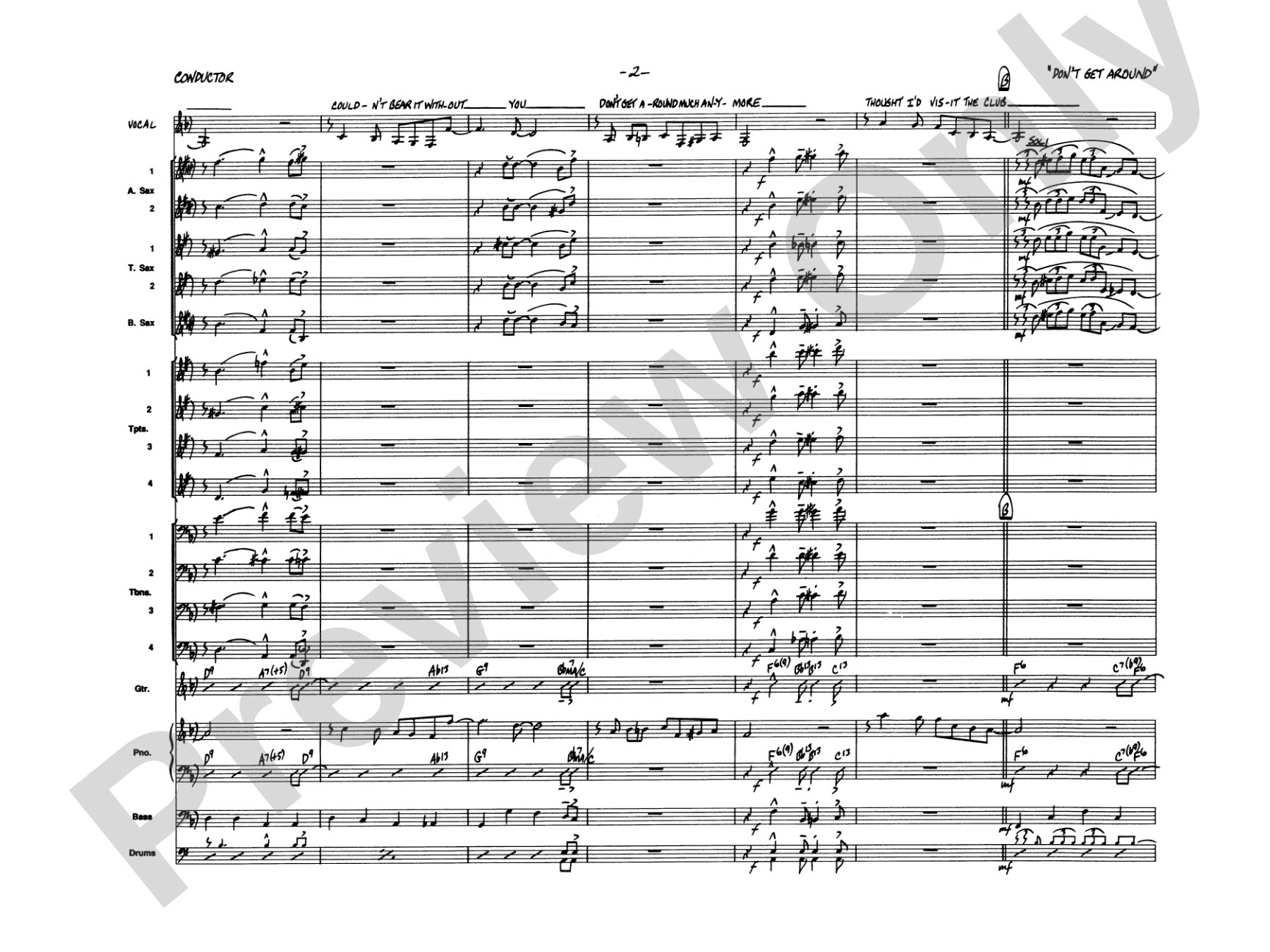
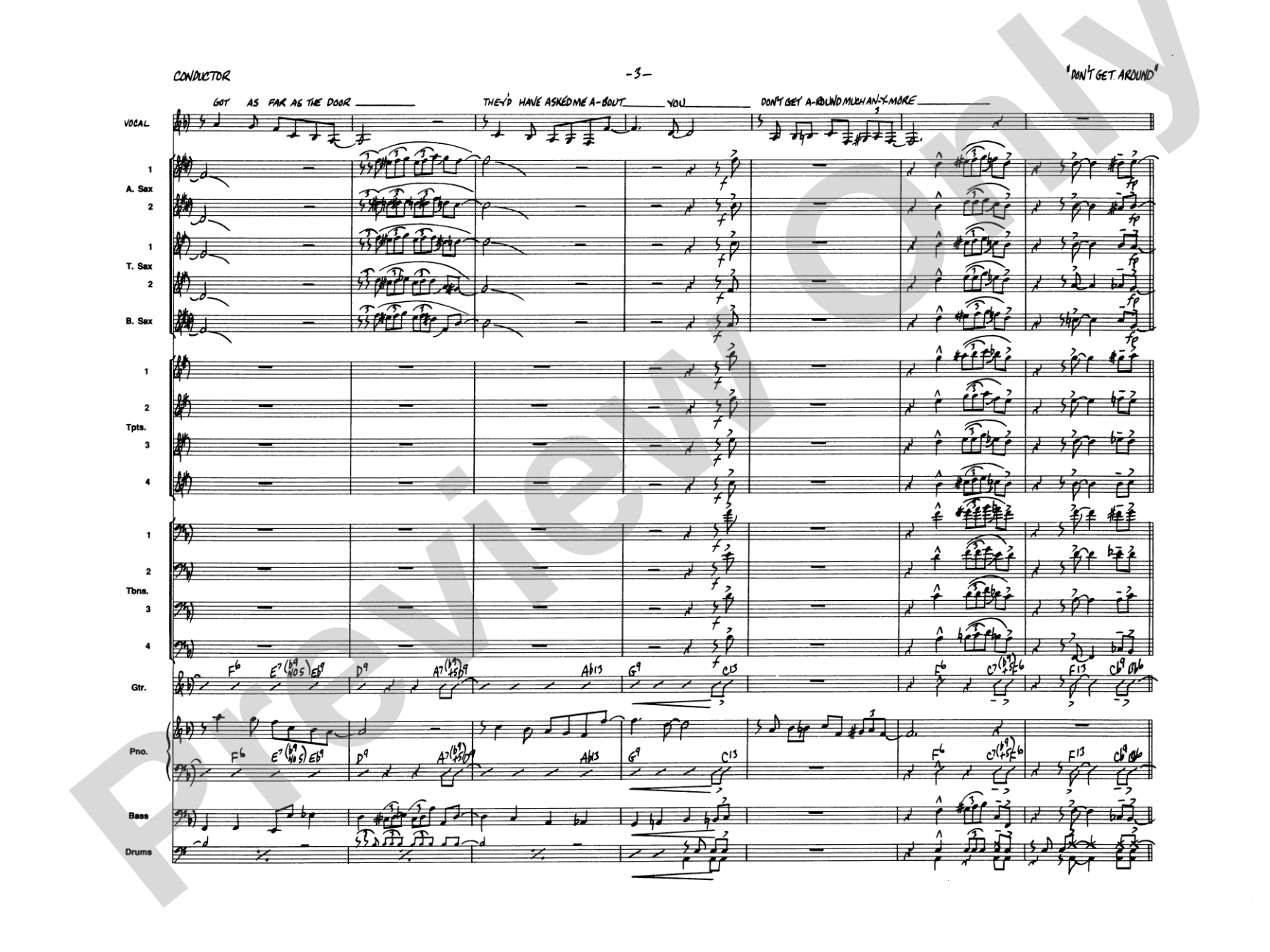
This beautiful arrangement is the perfect way to feature your best vocalist. Dave's chart is very 'sweet.' The vocalist gets an opportunity to trade licks with the band and even do a little improvisation. Duke Ellington and Dave Wolpe make for a great combination! (duration 3:00)


Don't Get Around Much Anymore: Vocal Solo with Jazz Ensemble Conductor Score & Parts isn't in MakeMusic Cloud just yet...but it could be. Let us know you'd like to see it, and you'll help shape what comes next. In the meantime, start a free trial and dive into thousands of interactive titles your students can play along with today.
Request This Title
Tell us you want it.
Start Your Free Trial
Explore everything that's ready to play right now.
Sample Audio
No sample audio found.
Sample Video
No sample videos found.
Additional Details
Series:
Jazz Vocal Series
Publisher:
Alfred Music
Page Count:
41
SKU:
00-PK-0002431
More about this title
About the Arranger: Dave Wolpe
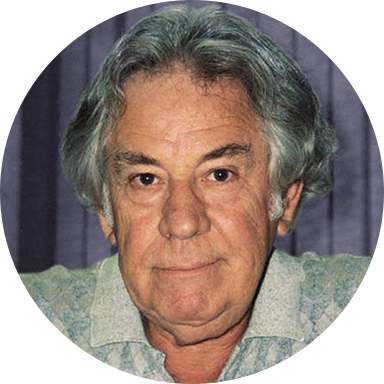
Dave Wolpe began his career in orchestration and jazz arranging in 1965, developing a distinctive style that balances sophistication with accessibility. His work with the Glenn Miller Orchestra spans decades, and he served as co-arranger on the platinum-selling In the Christmas Mood. Beyond the Miller organization, Wolpe has contributed arrangements to the orchestras of Ray Anthony, Lawrence Welk, and Les Brown, establishing himself as a trusted voice in big band and jazz ensemble writing.
Why we love this
Wolpe's arrangement captures the essence of Ellington's composition while giving your vocalist genuine opportunities to shine: trading passages with the band and stepping into a moment of improvisation feels natural here, not forced. The orchestration supports rather than overshadows the voice, which is harder to achieve than it sounds. This is the kind of chart that makes your featured soloist feel like a bandleader, not a guest.
What to expect
Sophisticated yet approachable, with a warm, conversational quality that recalls the best of mid-century big band vocals. The arrangement swings comfortably while allowing moments of intimacy, and the interplay between singer and ensemble creates a sense of musical dialogue that feels both planned and spontaneous.
Who it's for
Jazz ensemble directors looking to feature a strong vocalist without resorting to overly simplified arrangements. This works equally well for programs centered on vocal jazz or for ensembles wanting to expand beyond purely instrumental repertoire. Your soloist should be comfortable with swing phrasing, harmonic sophistication, and the demands of standing in front of a full ensemble.
How to get the most out of it
- Establish the vocalist's range and comfort with the key before rehearsal; this Grade 4 writing sits in a sophisticated harmonic landscape that demands a singer confident in both lyrical passages and rhythmic trading sections.
- Build ensemble maturity around the vocal melody first. The band's role is to listen and respond, so lock the rhythm section rhythm and balance before layering in the horn fills and countermelodies.
- Shape the improvisation section collaboratively. Work with your soloist on chord changes and phrasing before performance so the trade-offs with the ensemble feel conversational, not chaotic.
- Balance the 'sweet' orchestration Wolpe creates by maintaining clarity in the rhythm section; lush voicings in the horns can easily muddied if the groove isn't rock solid underneath.
How to use it
Program this as a centerpiece for a jazz concert, perhaps pairing it with other Ellington or Ellington-influenced material to create a stylistic anchor for the evening. At three minutes, it works well as a solo feature that doesn't dominate pacing, yet its sophistication commands attention. It also serves as an excellent closer if you want to remind your audience of the blend of accessibility and artistry your ensemble has developed.
Skills your students will build
- Swing phrasing and interpretive freedom within a composed framework
- Listening and responding to ensemble musicians while maintaining solo presence
- Basic jazz improvisation over chord changes
- Balancing lyrical singing with rhythmic precision in a jazz context
- Reading and performing with complex jazz harmonies and voicings