
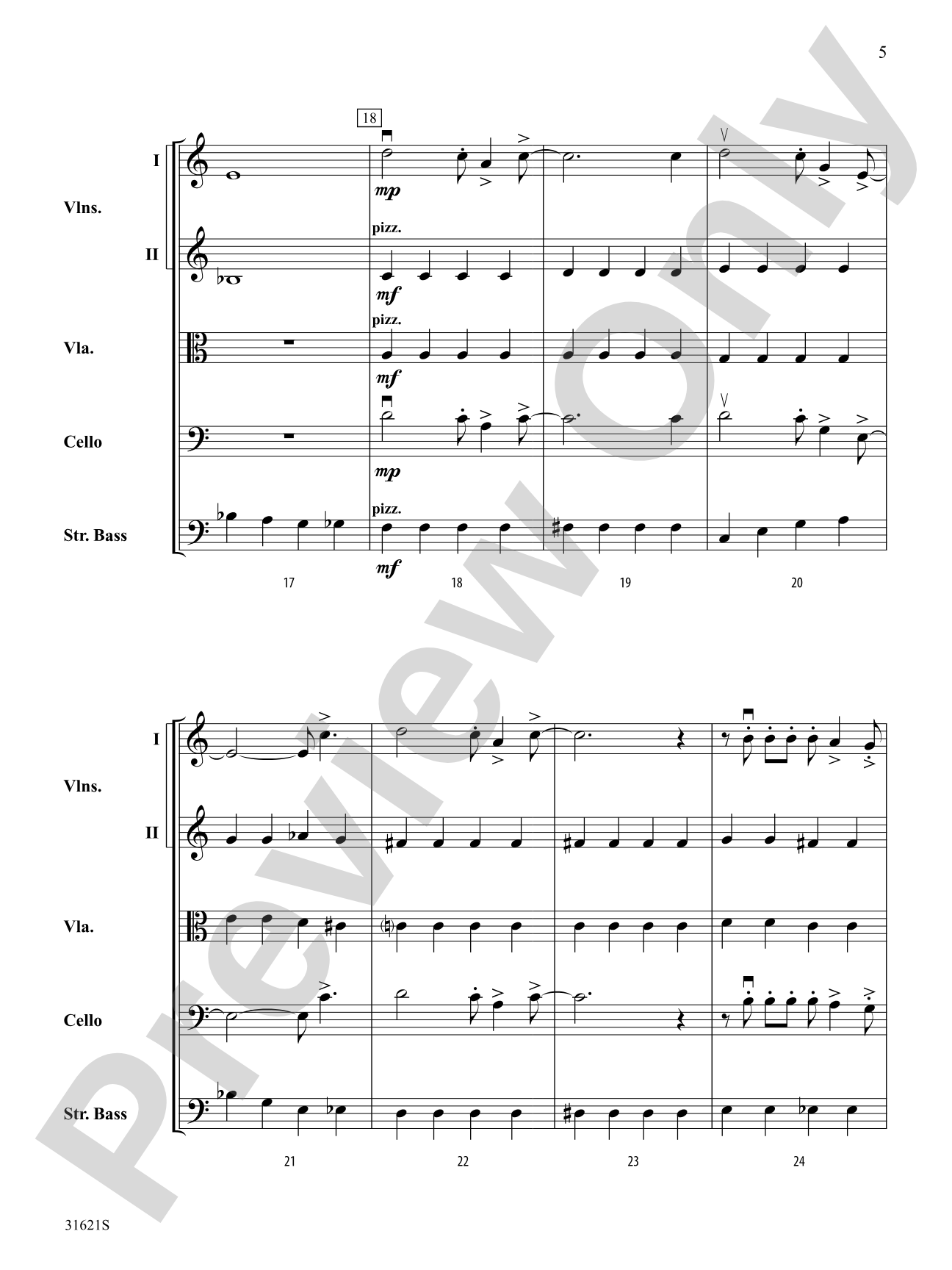
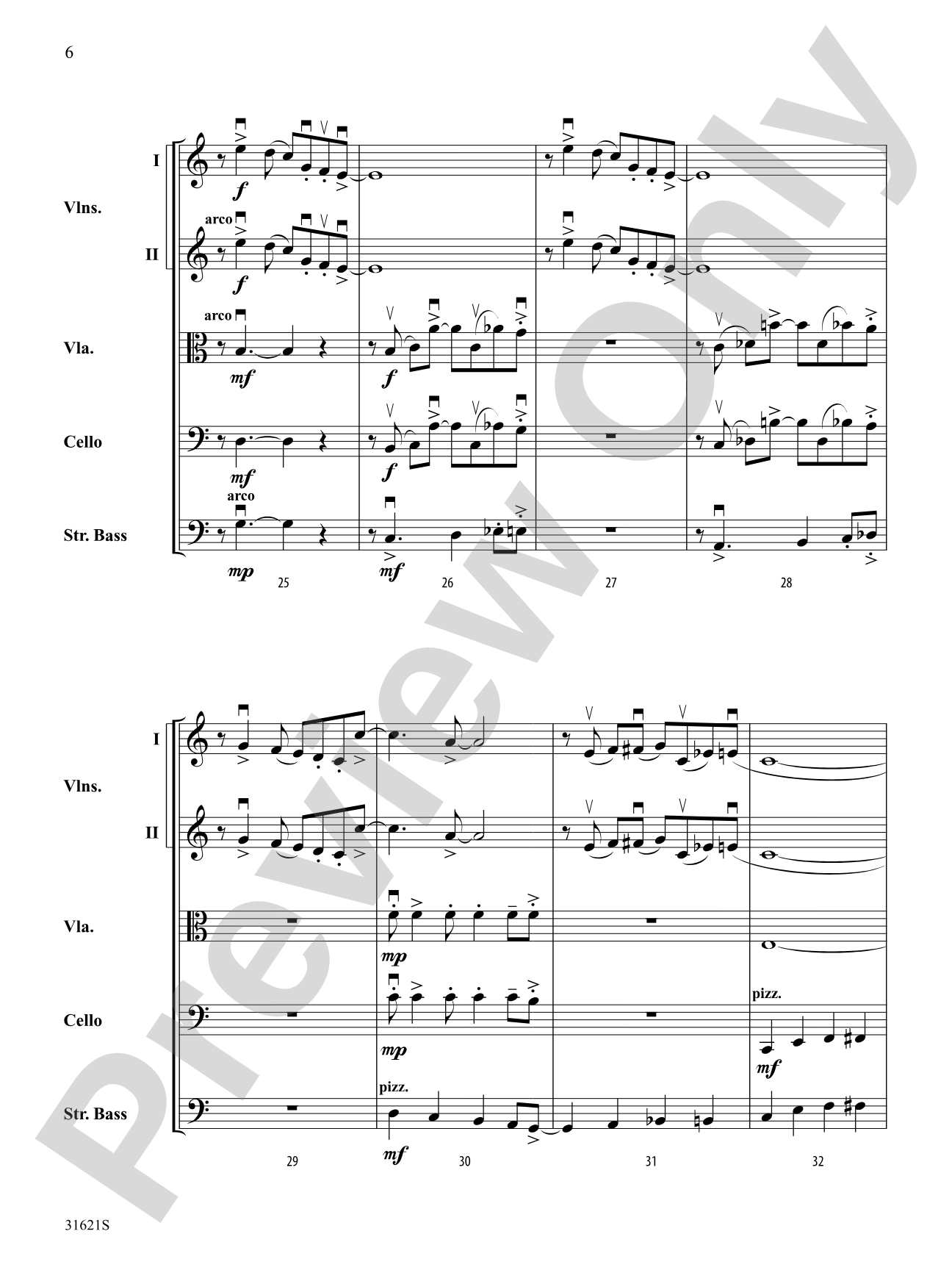
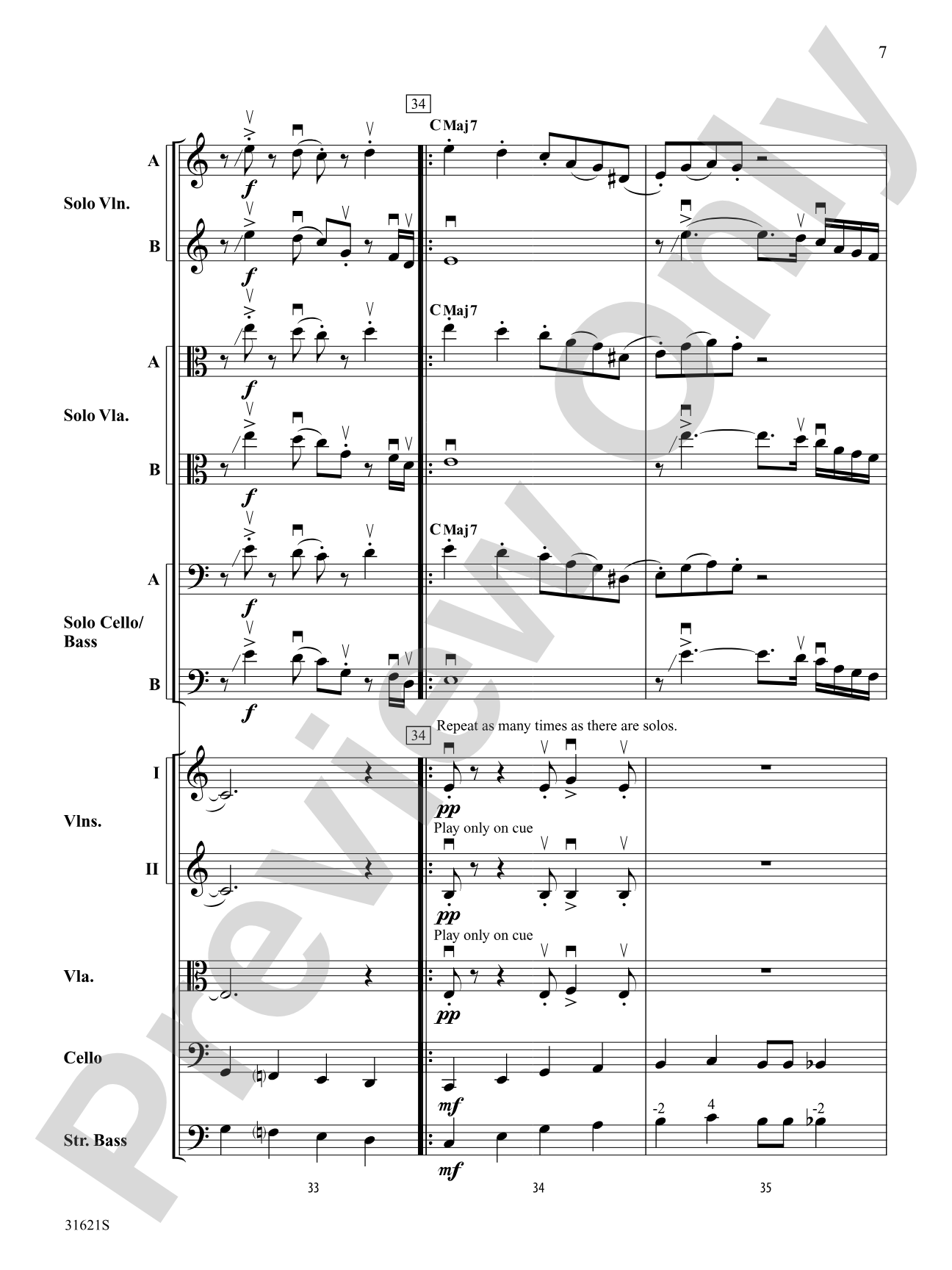
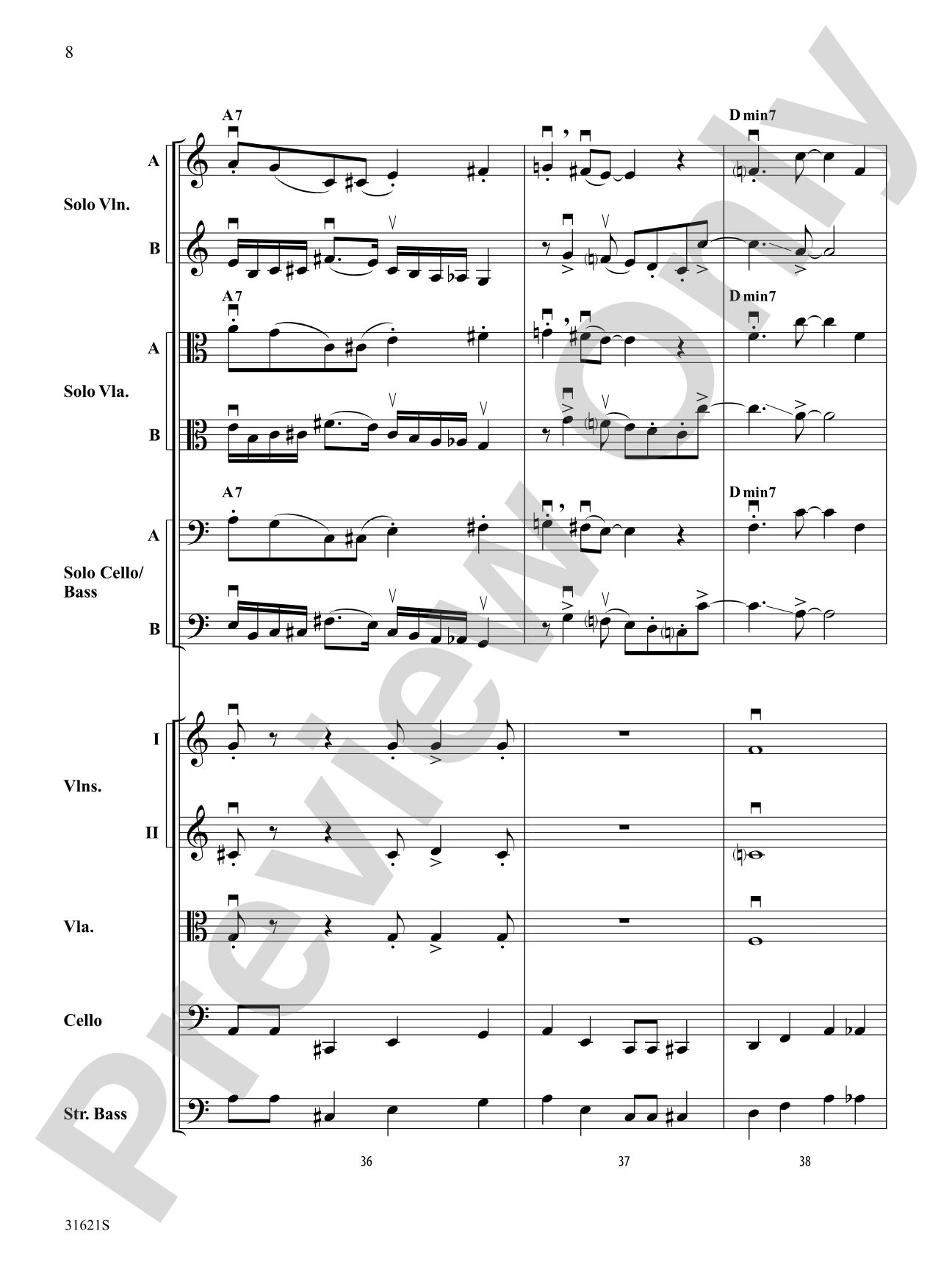
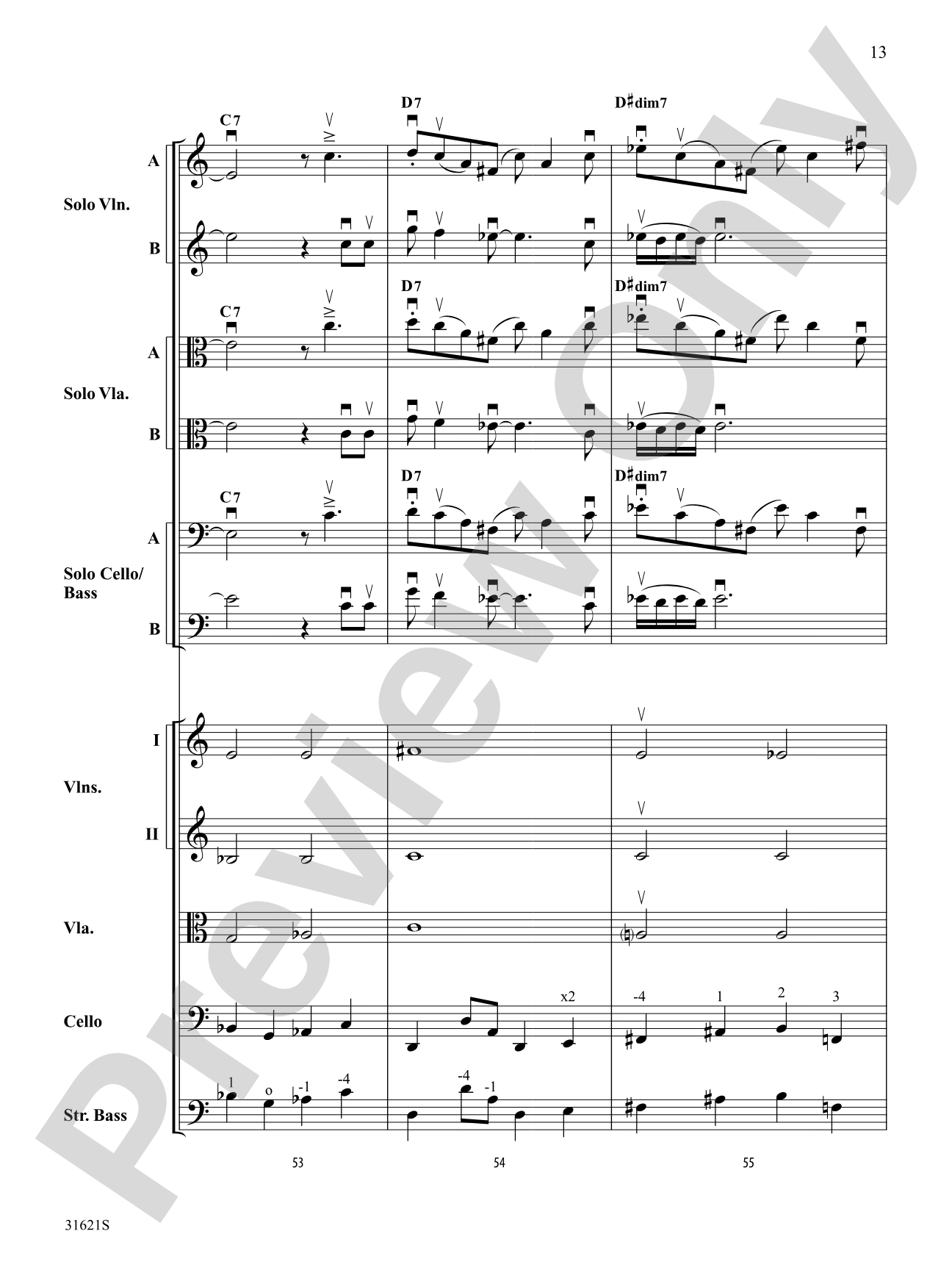
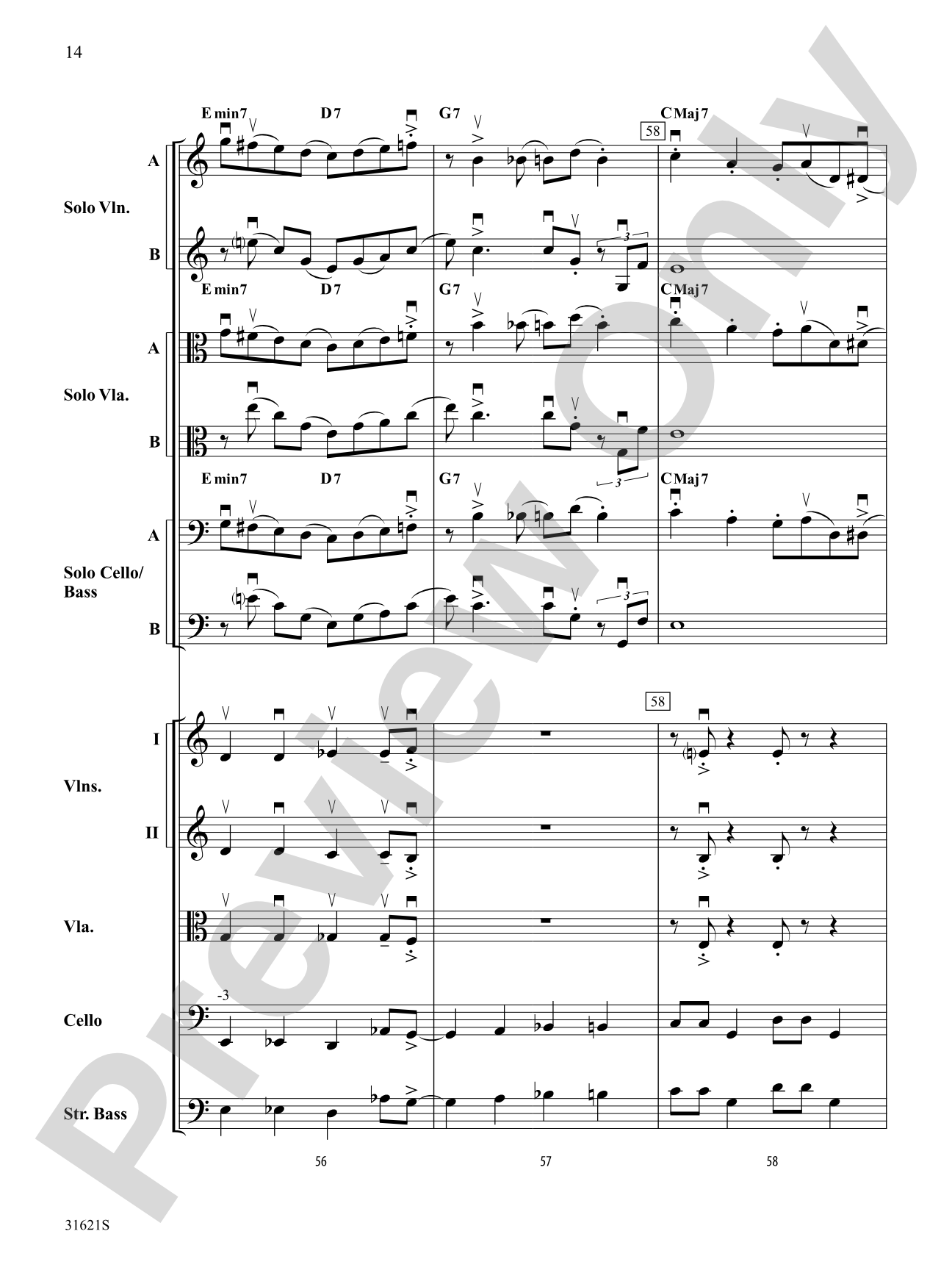
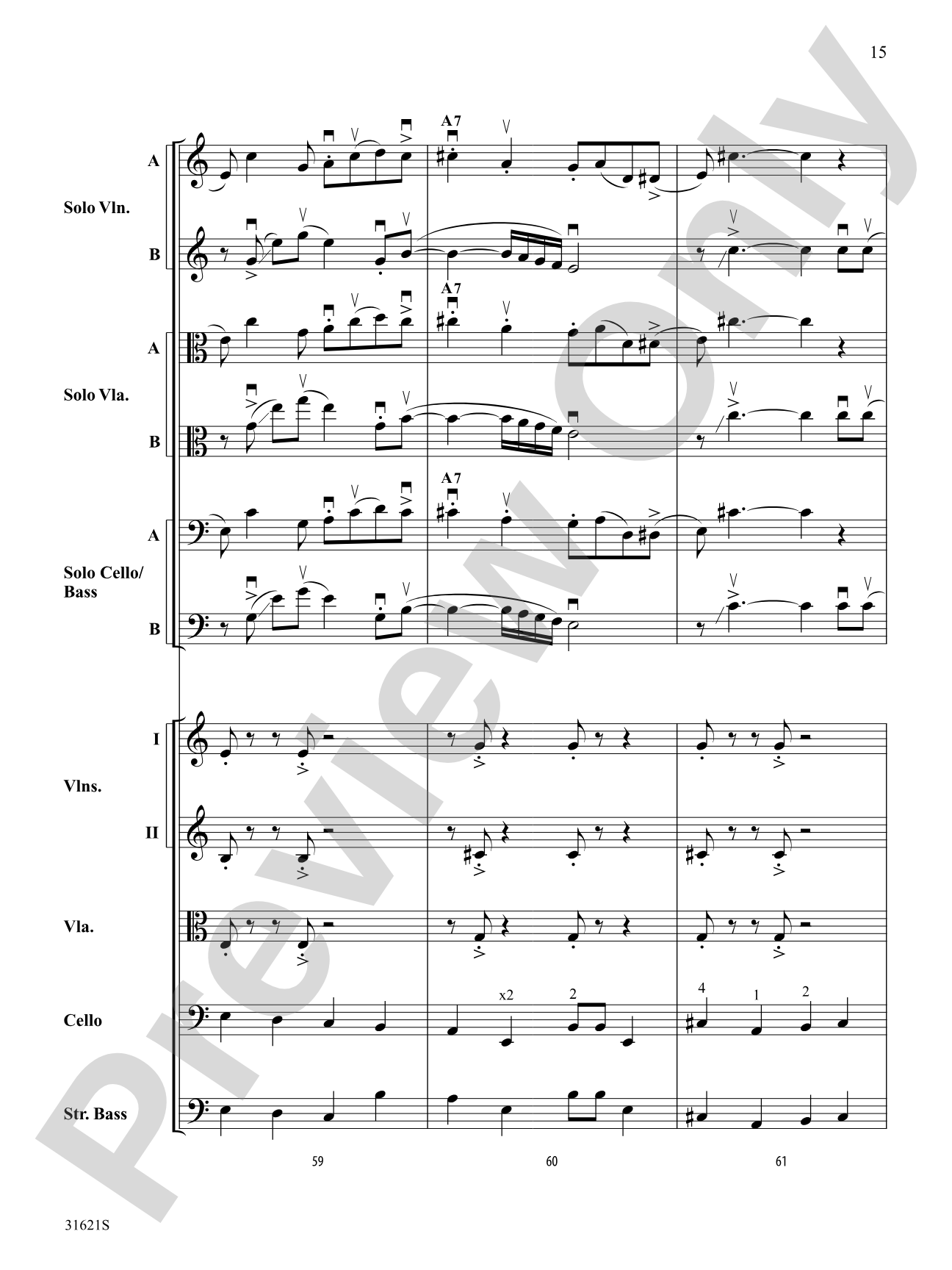
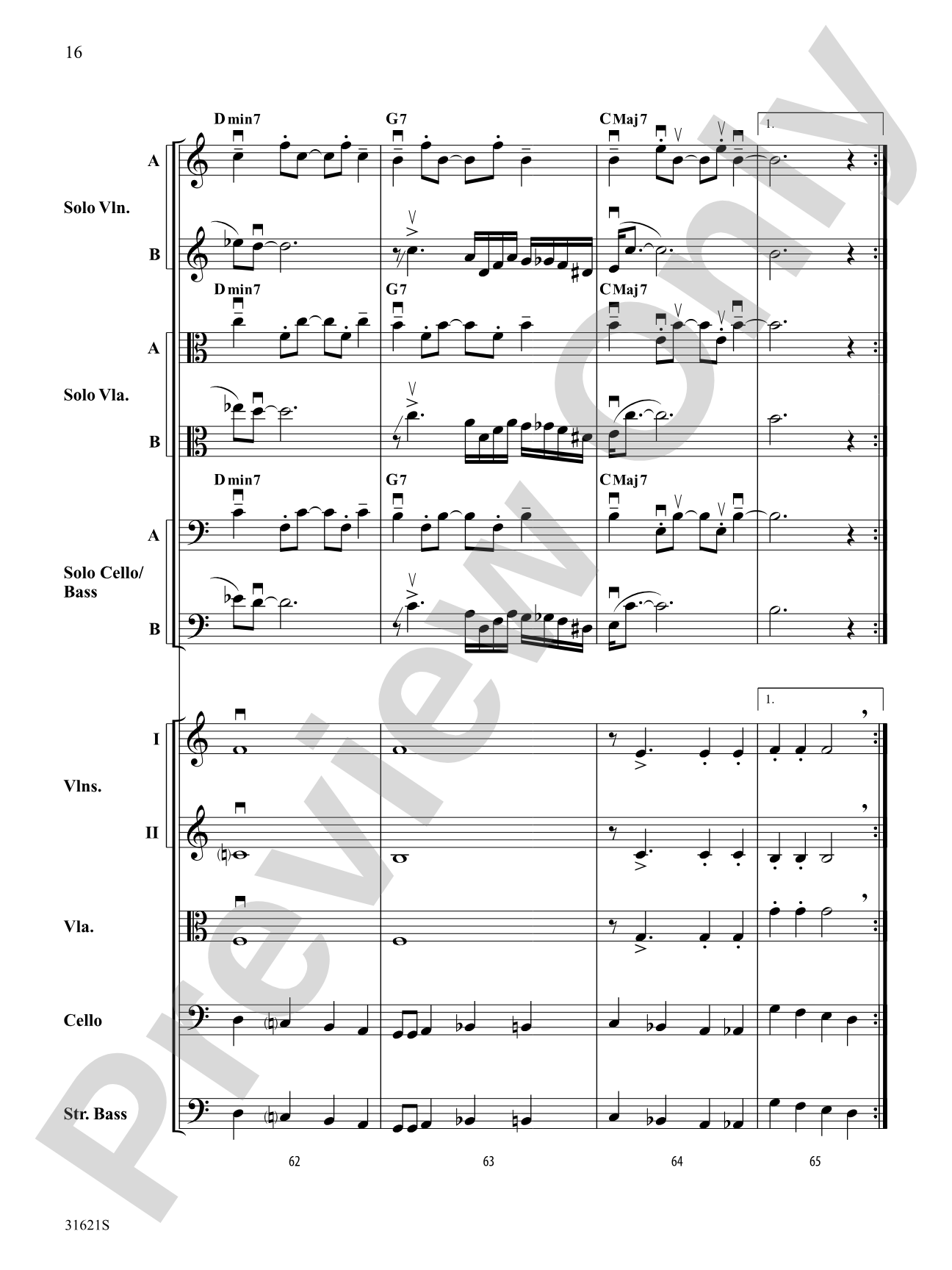
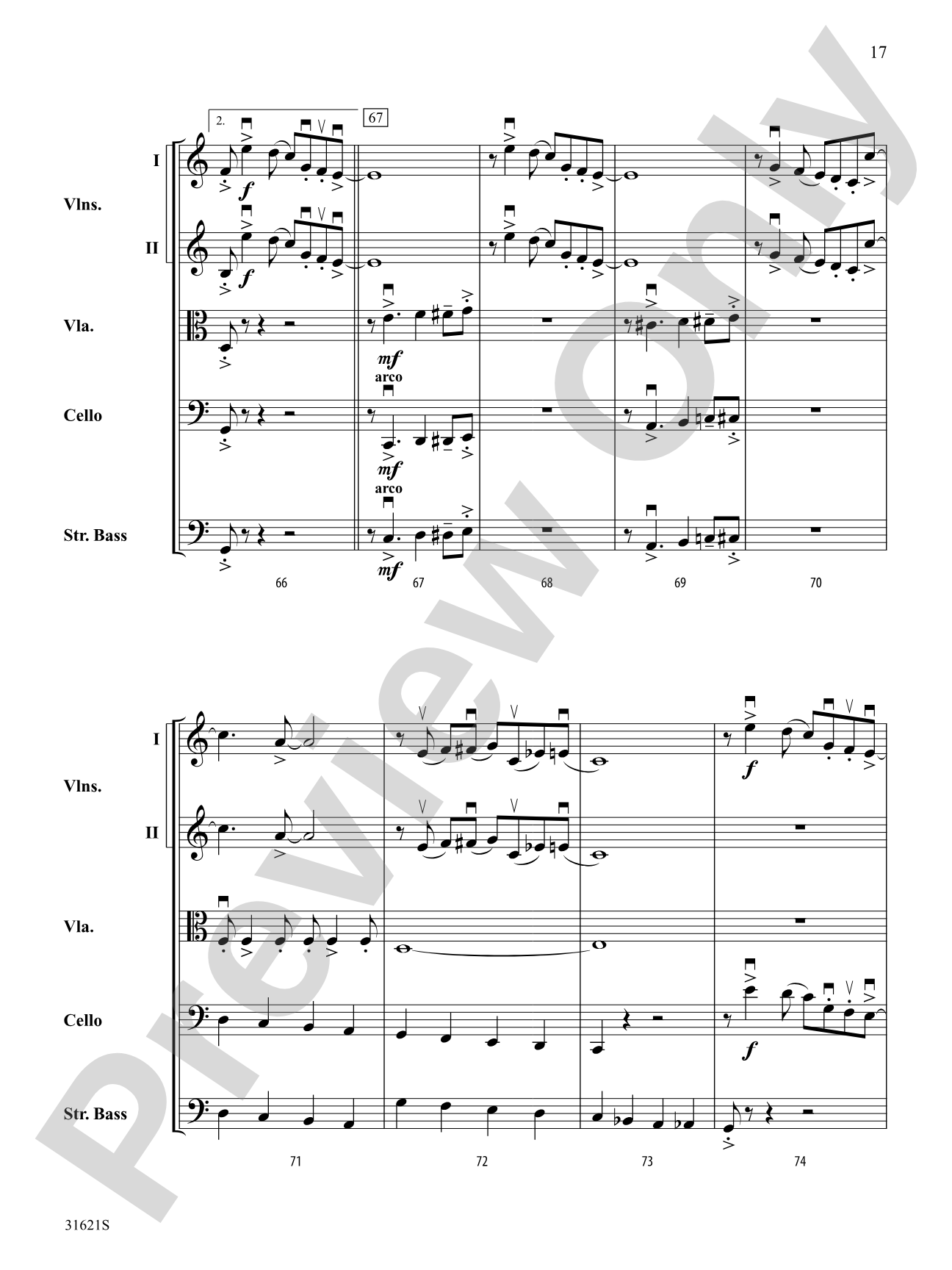
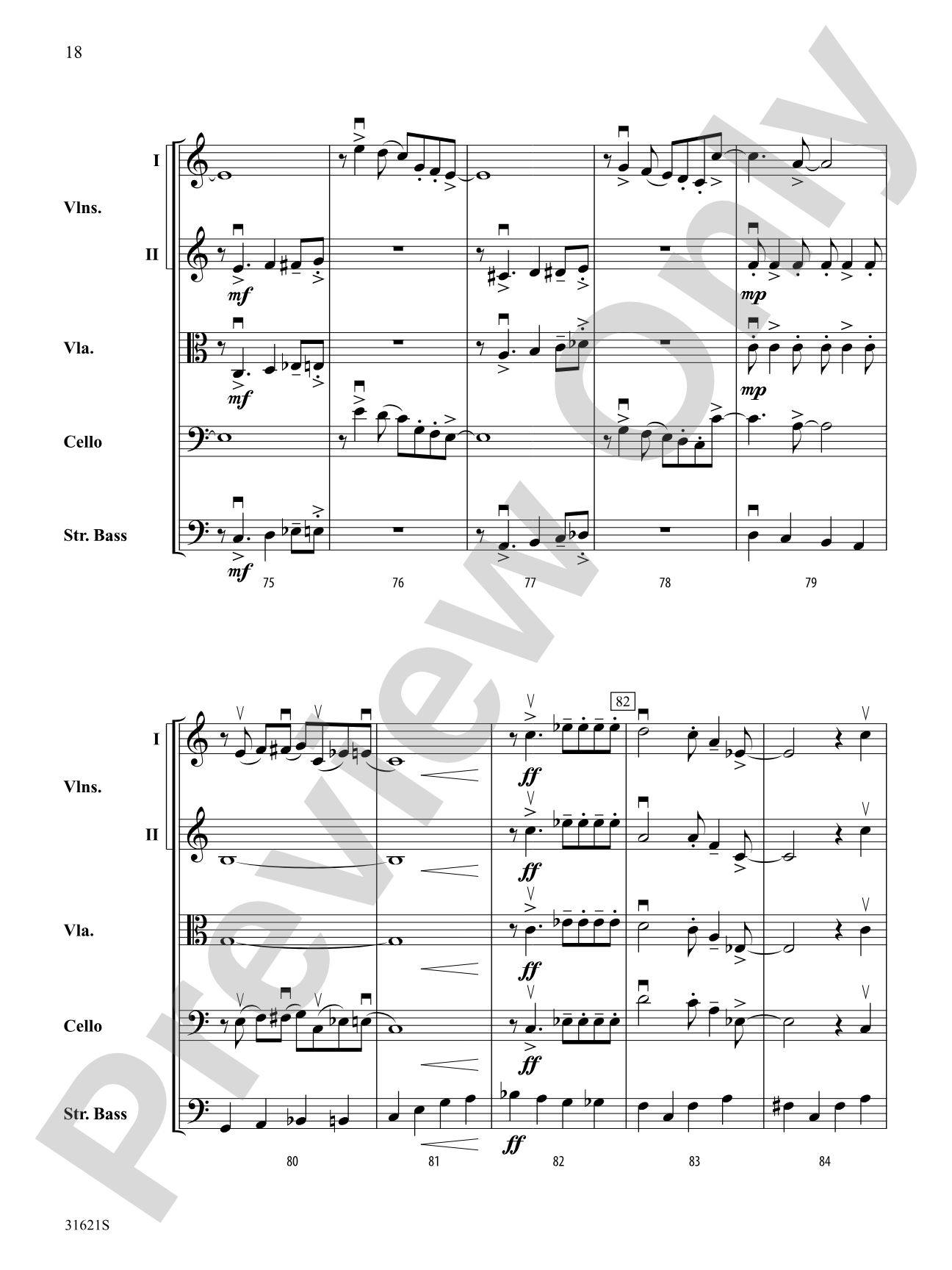
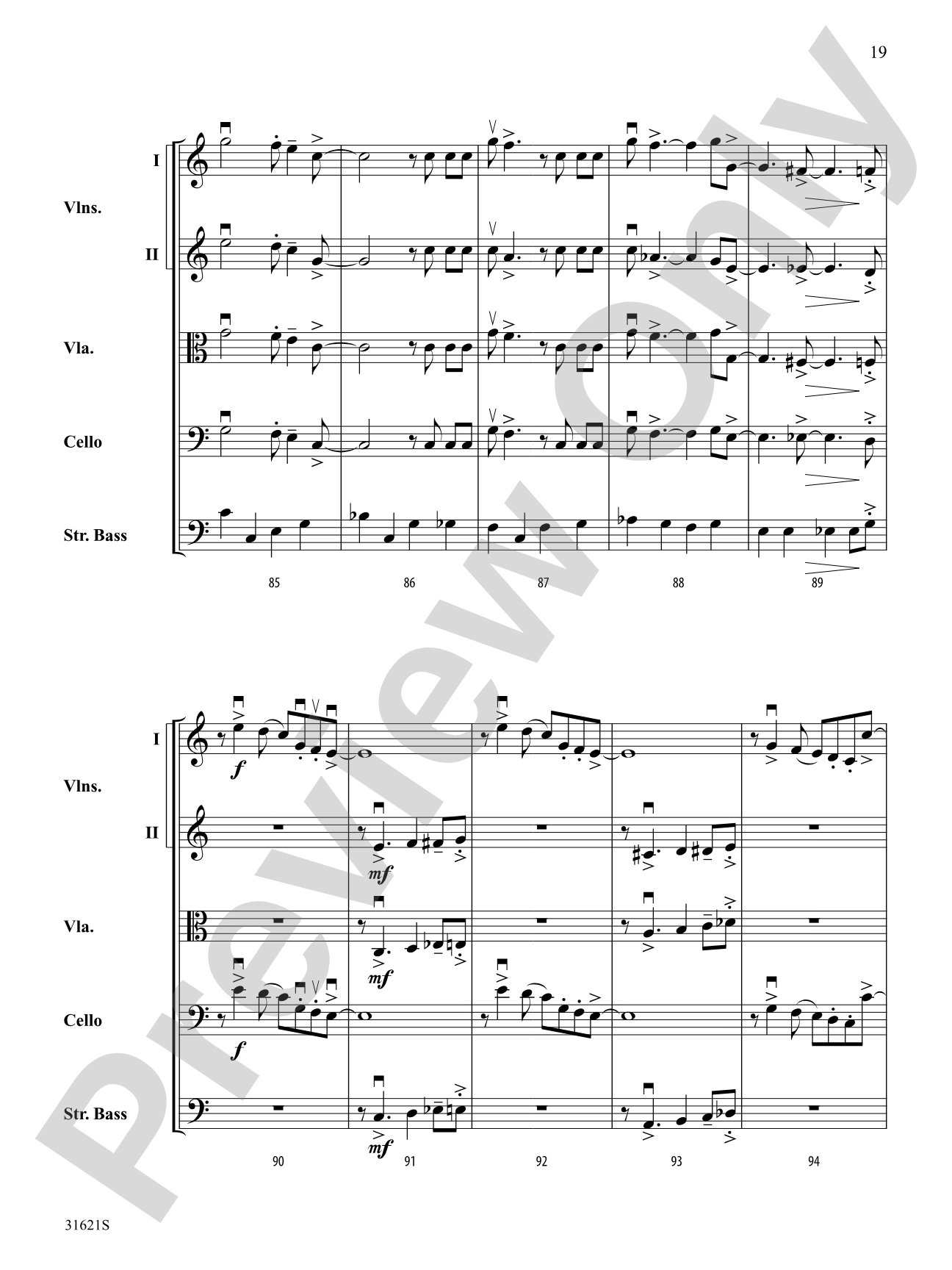
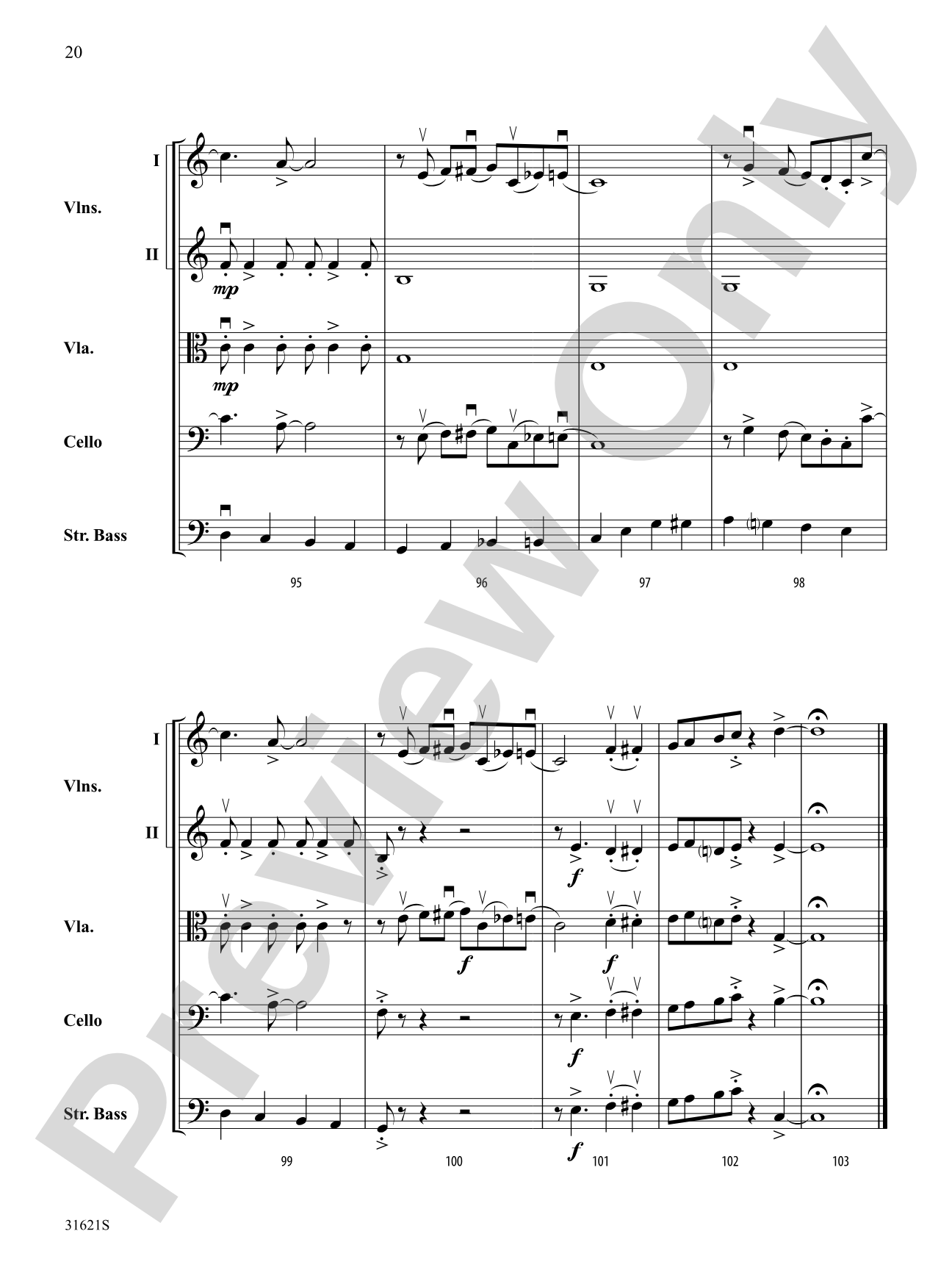

Don't Get Around Much Anymore: String Orchestra Conductor Score & Parts
By Duke Ellington and Bob Russell / arr. Robert Gardner
Grade: 3.5
Item: 00-PK-0001791
$60.00
One moment…
Related Items
Don't Get Around Much Anymore: String Orchestra Conductor Score & Parts |
$60.00
|
View |
Description
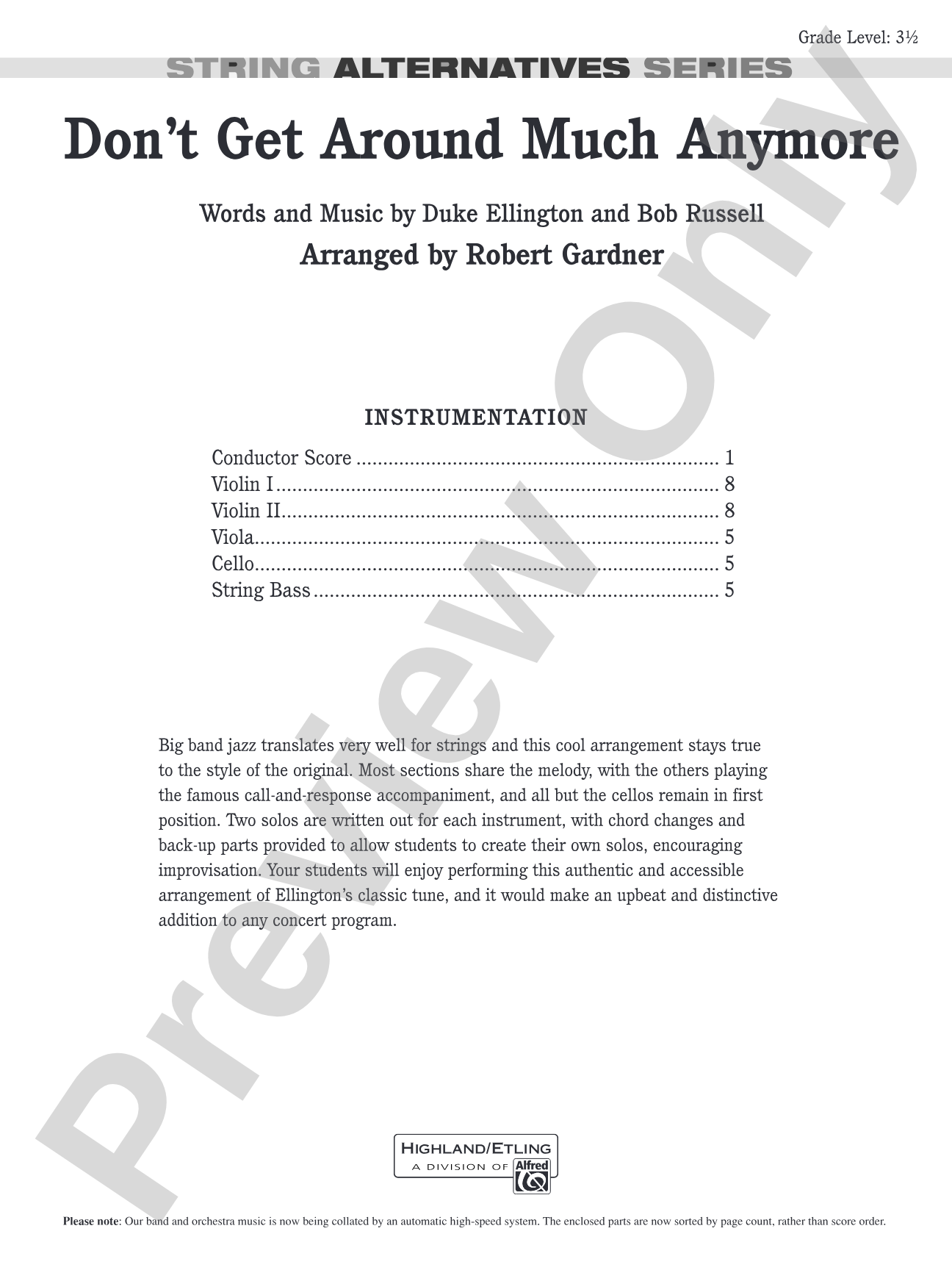
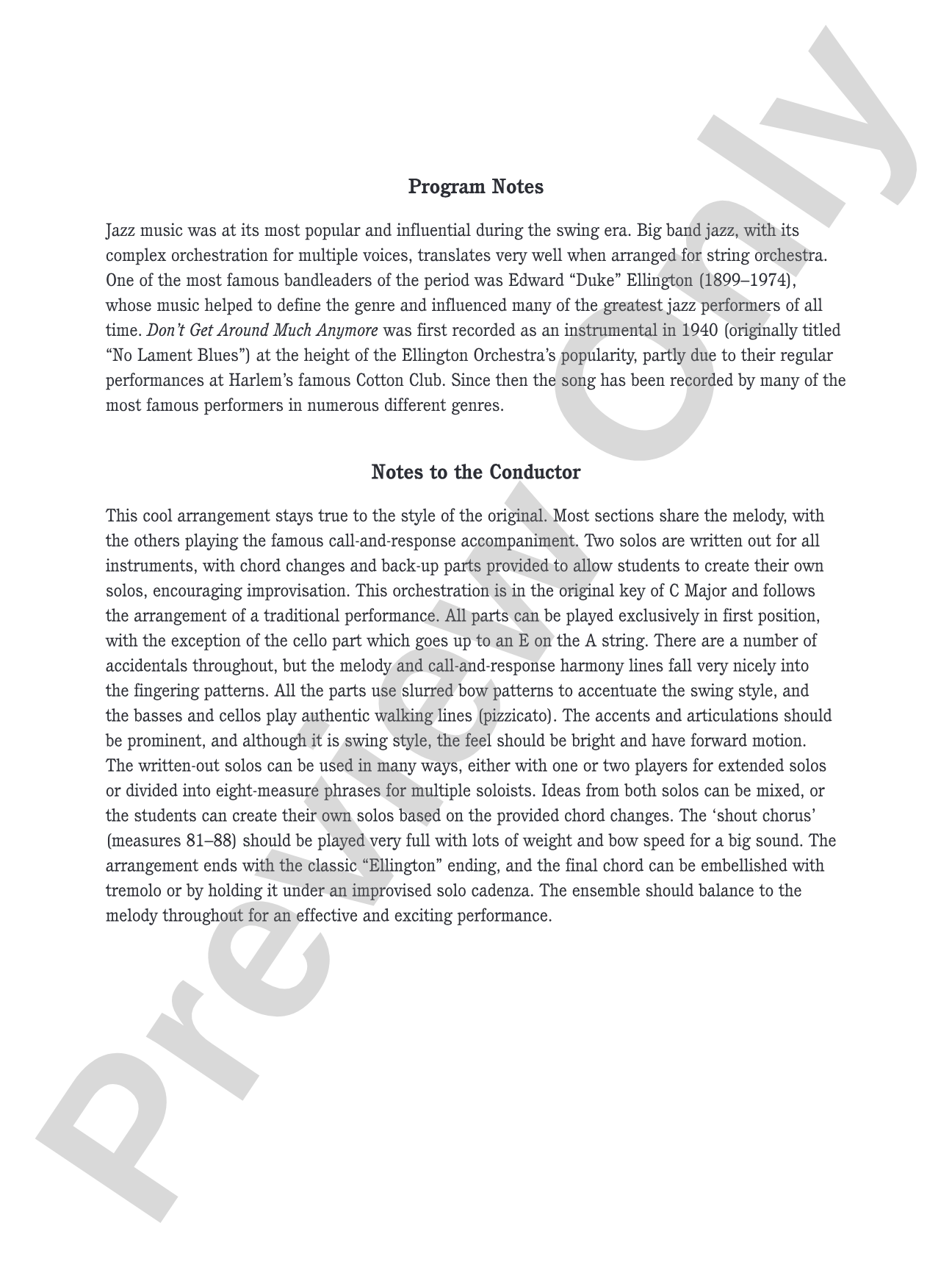
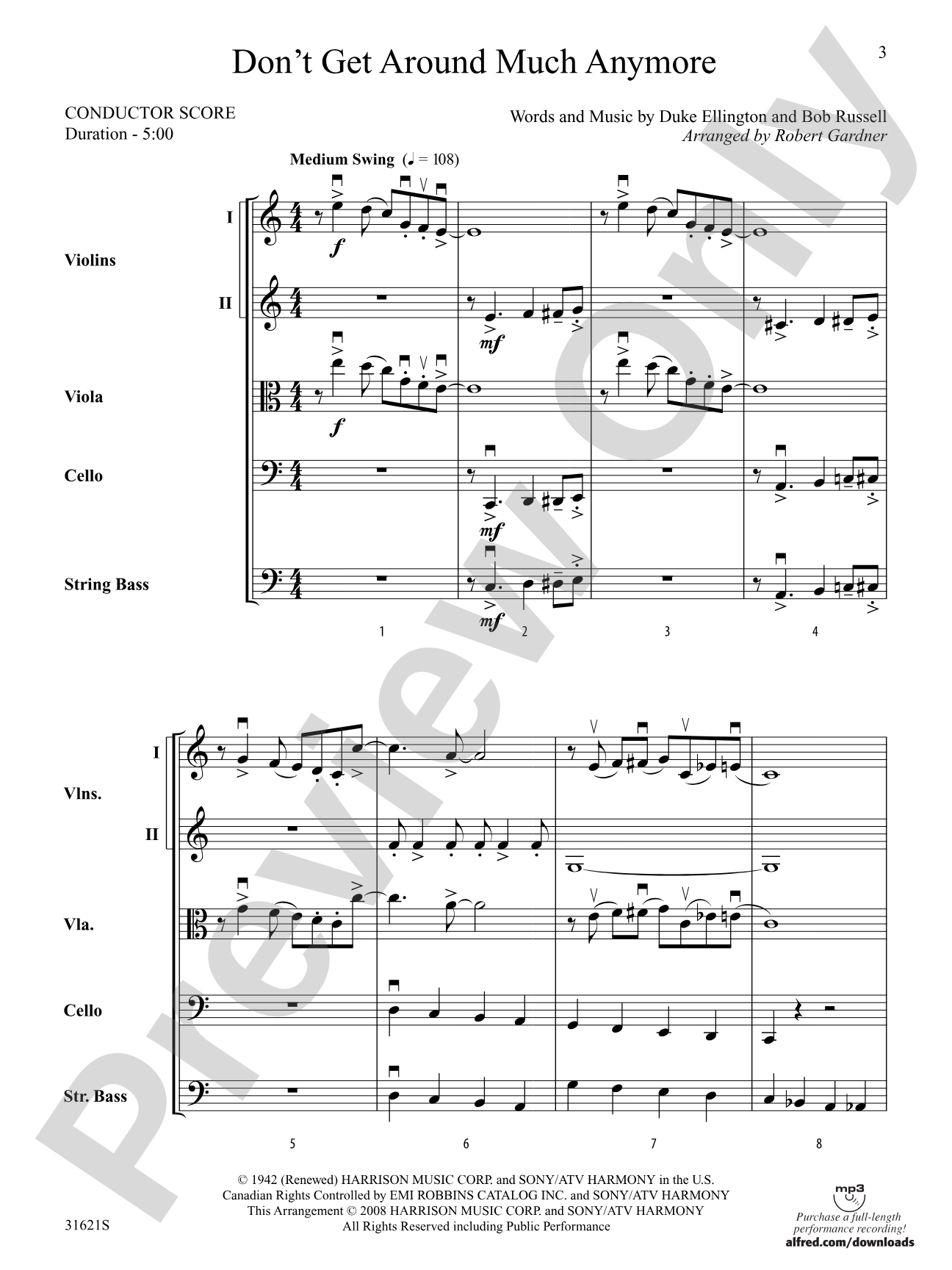
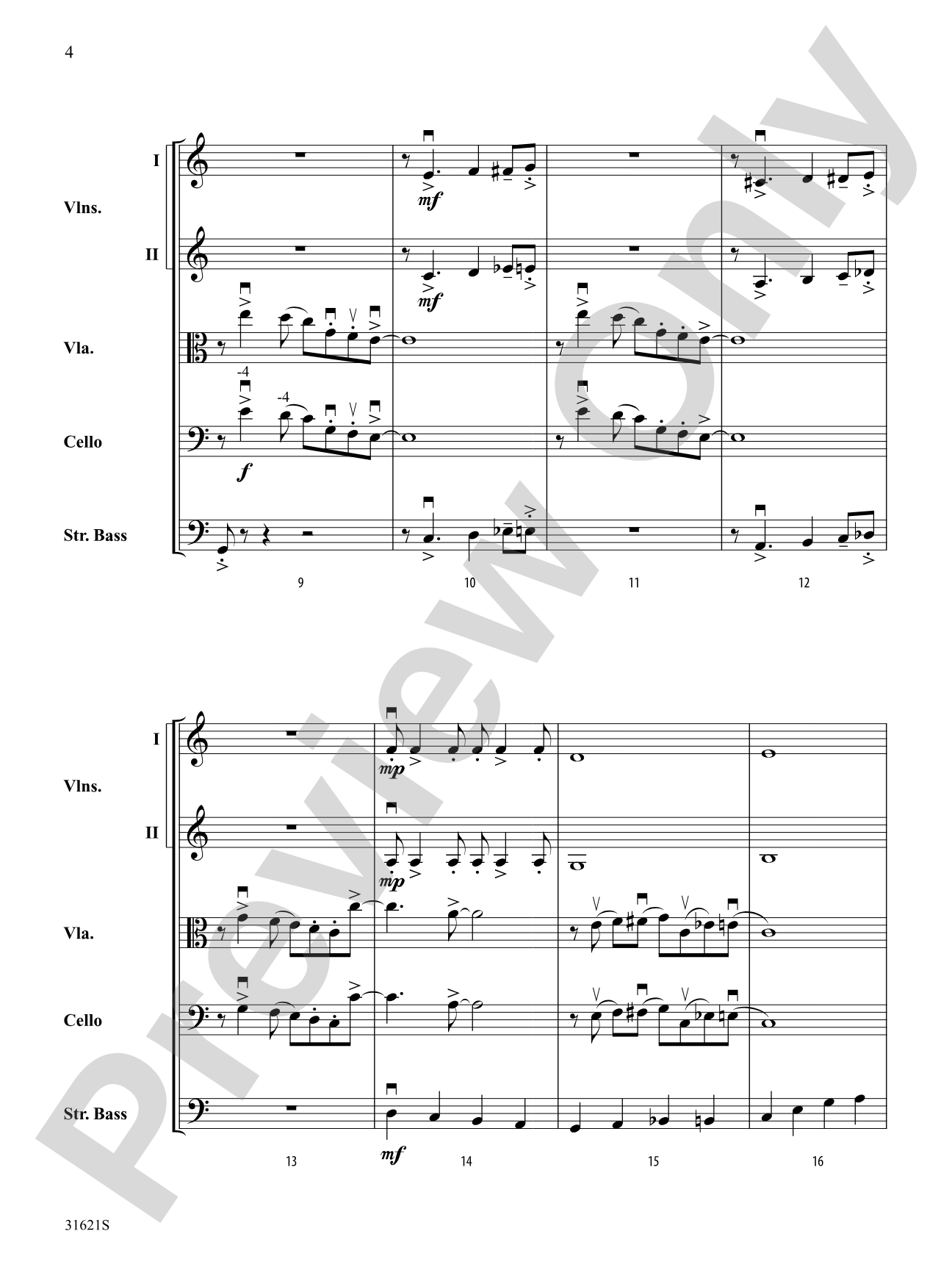
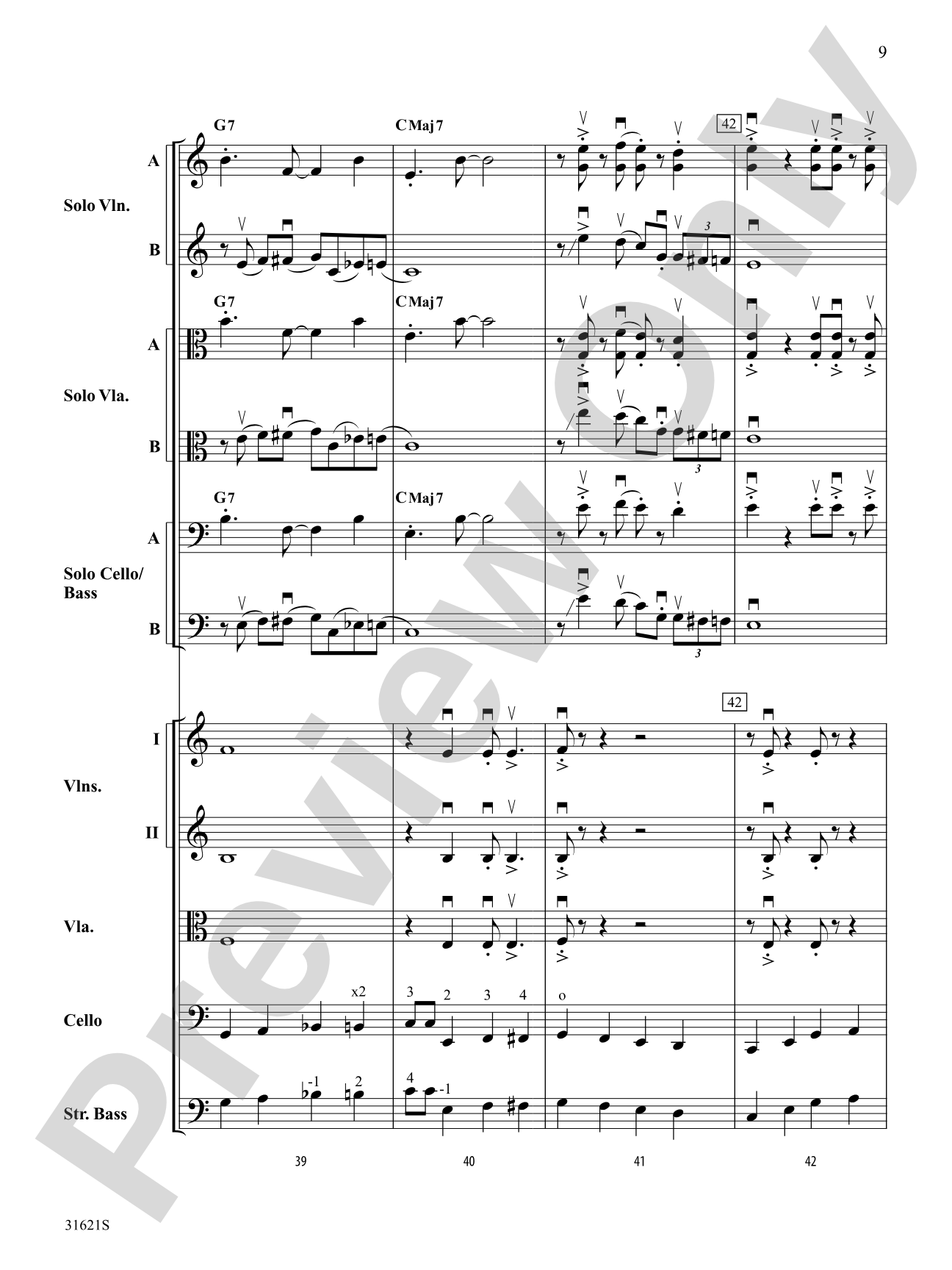
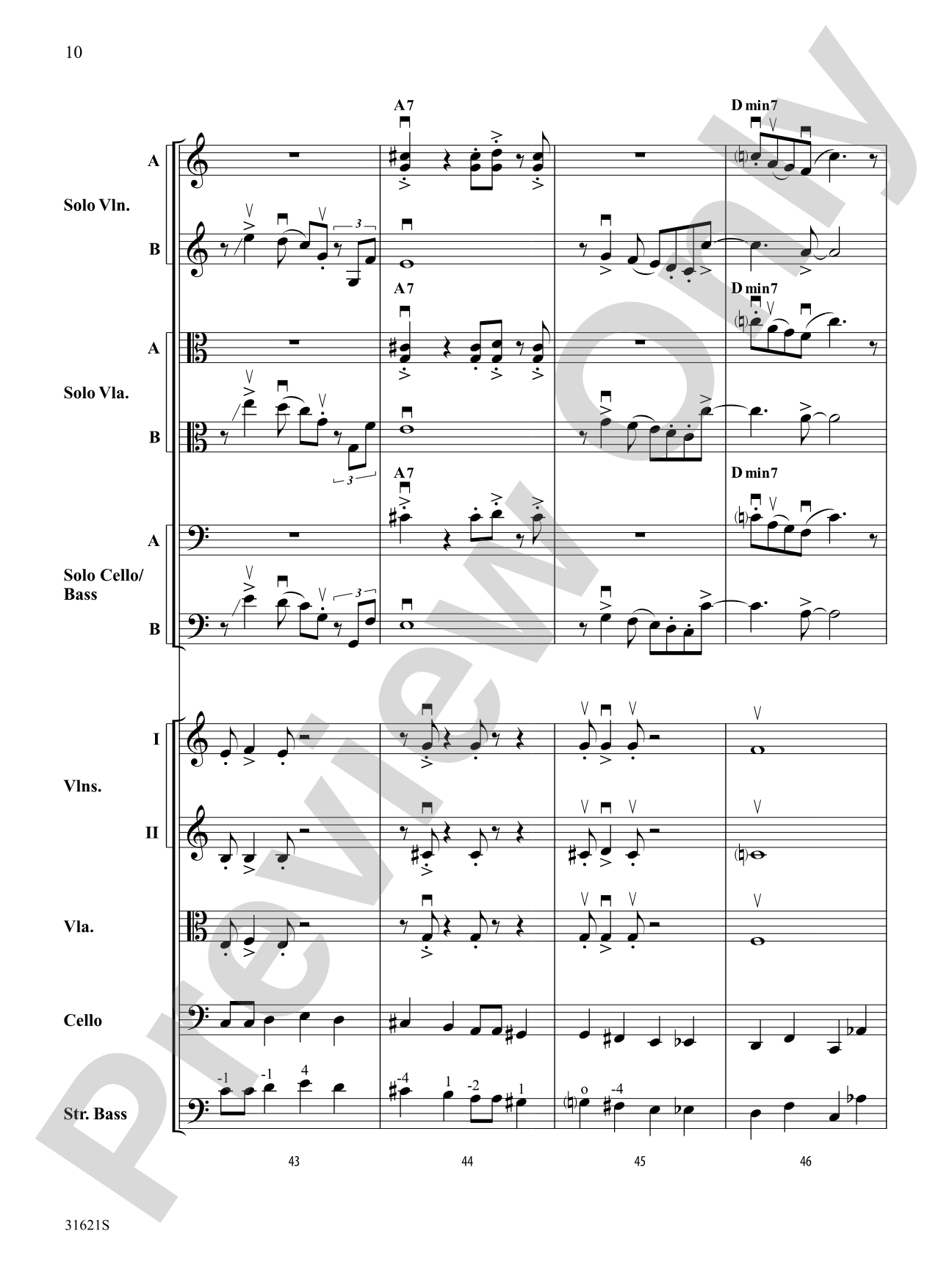
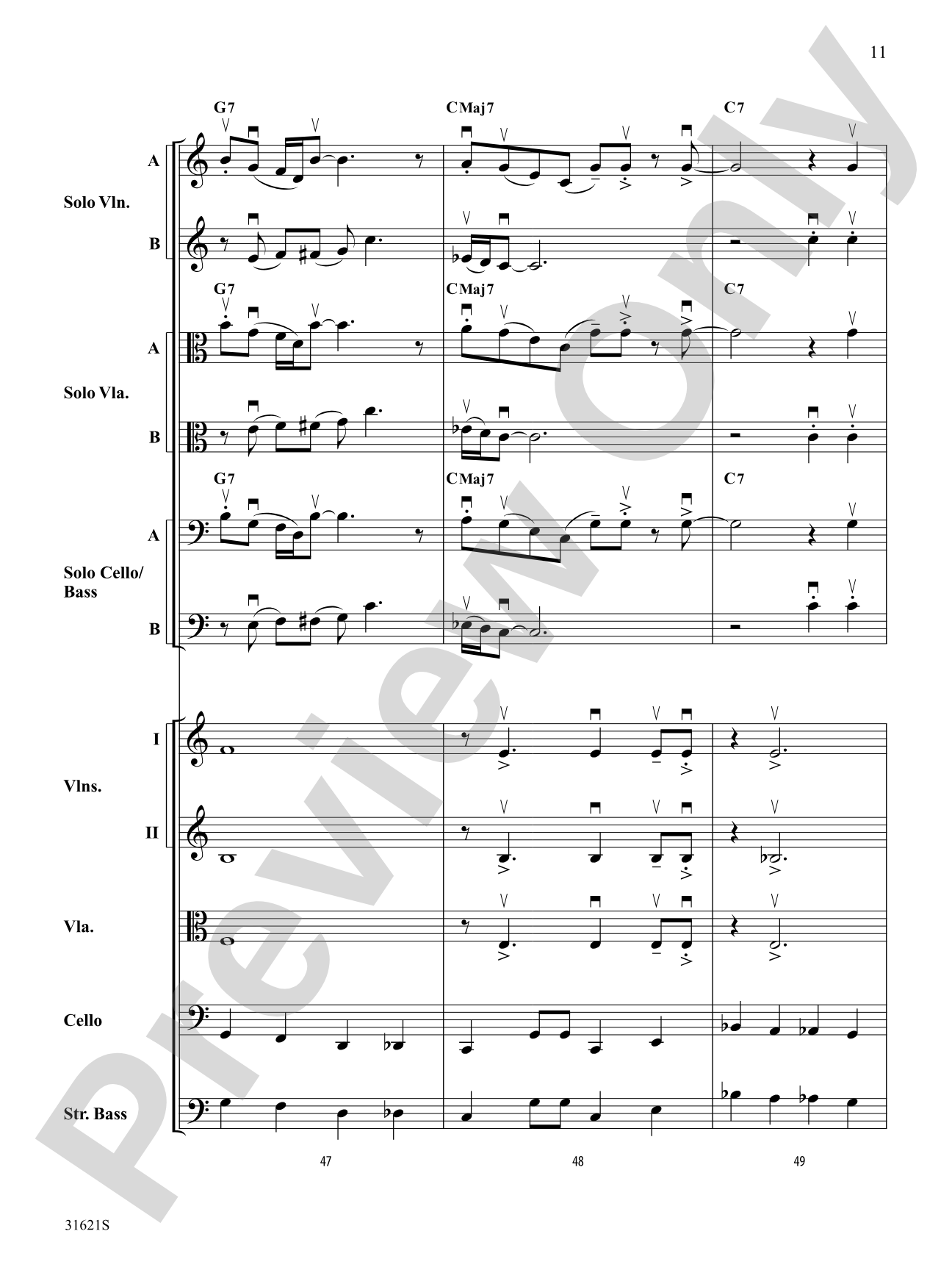
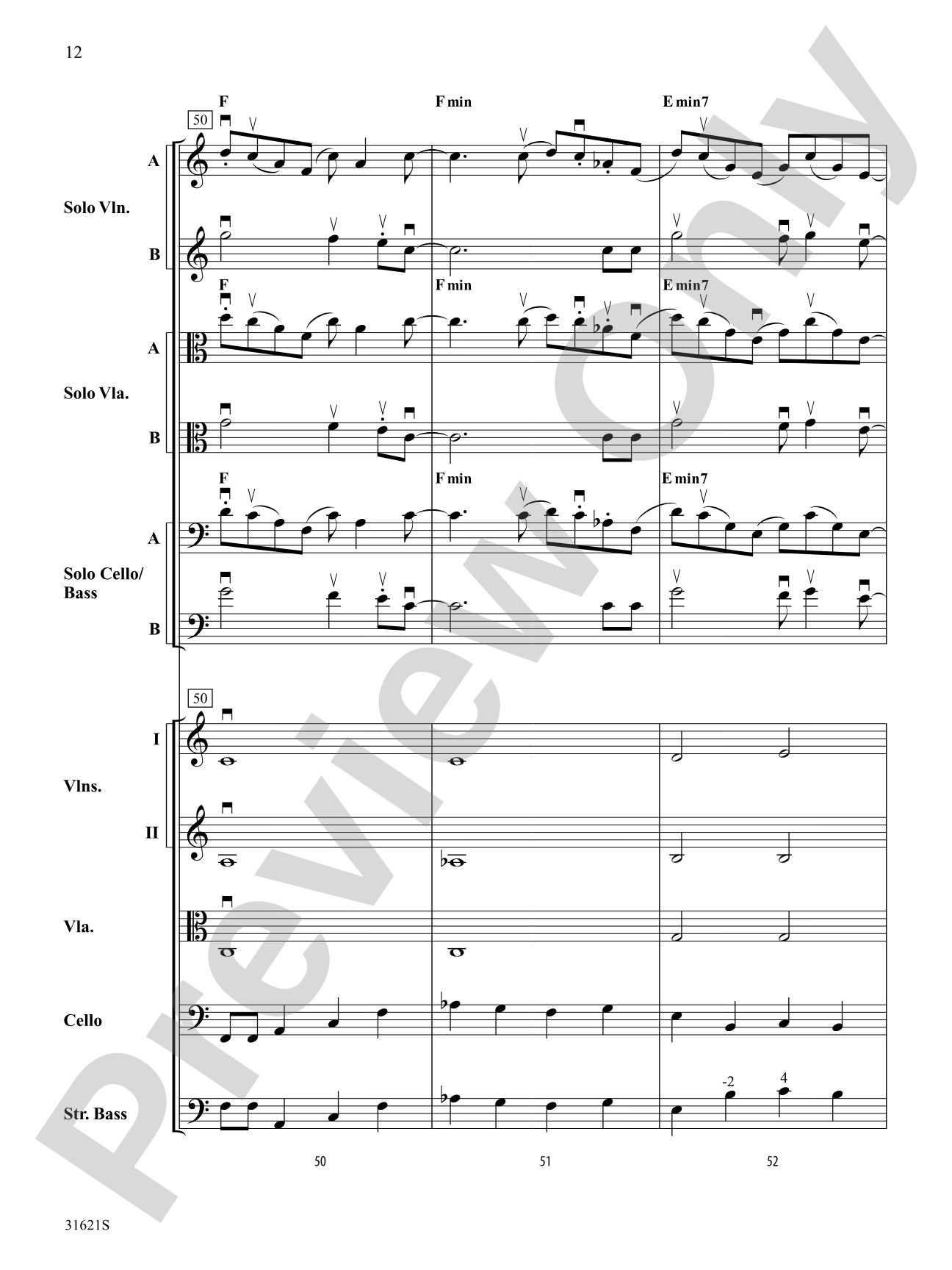
Big band jazz translates very well for strings and this cool arrangement stays true to the style of the original. Most sections share the melody, with the others playing the famous call-and-response accompaniment, and all but the cellos remain in first position. Two solos are written out for each instrument, with chord changes and back-up parts provided to allow students to create their own solos, encouraging improvisation. Your students will enjoy performing this authentic and accessible arrangement of Ellington's classic tune, and it would make an upbeat and distinctive addition to any concert program.


Don't Get Around Much Anymore: String Orchestra Conductor Score & Parts isn't in MakeMusic Cloud just yet...but it could be. Let us know you'd like to see it, and you'll help shape what comes next. In the meantime, start a free trial and dive into thousands of interactive titles your students can play along with today.
Request This Title
Tell us you want it.
Start Your Free Trial
Explore everything that's ready to play right now.
Sample Audio
1
Audio File
--:--
0:00
0:00
Sample Video
No sample videos found.
Additional Details
Series:
Highland/Etling String Alternatives
Publisher:
Alfred Music
Page Count:
124
SKU:
00-PK-0001791
More about this title
About the Composer: Duke Ellington
Duke Ellington (1899-1974) stands as one of the most prolific and influential composers in American music history. His sophisticated harmonies, memorable melodies, and innovative orchestrations shaped not just jazz but the broader landscape of 20th-century music, earning him recognition as a classical composer of the first rank.
Ellington's gift for writing music that works across styles and ensembles makes his compositions ideal for music education. His pieces reward serious musical study while remaining immediately engaging for student performers, and his legacy demonstrates that jazz and concert music are not separate worlds but interconnected traditions.
Why we love this
This arrangement captures the swagger and sophistication of big band writing without asking strings to do things they weren't designed for. Gardner's voicings stay idiomatic to the string family, the call-and-response texture keeps all players engaged, and the written-out solos paired with improvisation scaffolding give students real agency to develop their own voice while staying grounded in the tune's harmonic language.
What to expect
Urbane and unhurried. The piece has the cool confidence of a late-night jazz club transplanted to the concert hall, with elegant voicings that let the strings shimmer while the easy call-and-response keeps everything grounded and playful. When the ensemble swings together, the whole room feels like it's leaning back in satisfaction.
Who it's for
String orchestras in the upper intermediate range (around Grade 3-4) who want to explore jazz repertoire without compromising string technique. This works equally well for students encountering swing style for the first time and for ensembles looking to add personality and variety to their concert programs.
How to get the most out of it
- Balance the melody across sections rather than piling all violins forward; the rotating melody shares belong to violas and cellos too, so light them appropriately to keep the texture fresh.
- Lock the rhythm section (cellos and basses) to the swing feel first; once that pocket is secure, the upper voices will sit naturally into the groove.
- Encourage improvisers to use the written-out solo examples as models, not blueprints; students should listen to how those solos move through the changes and then compose their own using similar phrasing ideas.
- Take the call-and-response sections at a relaxed tempo; rushing these will flatten the wit in the writing and destroy the conversational quality that makes this arrangement sing.
How to use it
Program this as a concert highlight rather than a filler piece; it deserves a spot where audiences will appreciate its style shift and sophistication. Pair it with a classical string work and a more contemporary piece to show the full range of what your string orchestra can express, or use it to close a concert on an upbeat, swinging note.
Skills your students will build
- Swing articulation and rhythmic interpretation (straight eighth notes as swung eighths)
- Reading and performing call-and-response textures with clear ensemble communication
- Basic jazz improvisation using provided chord changes and melodic models
- First position comfort across multiple string voices
- Stylistic awareness and ensemble balance in jazz-influenced writing