Don't Fear The Reaper (arr. Dan Pate) Sheet Music Preview

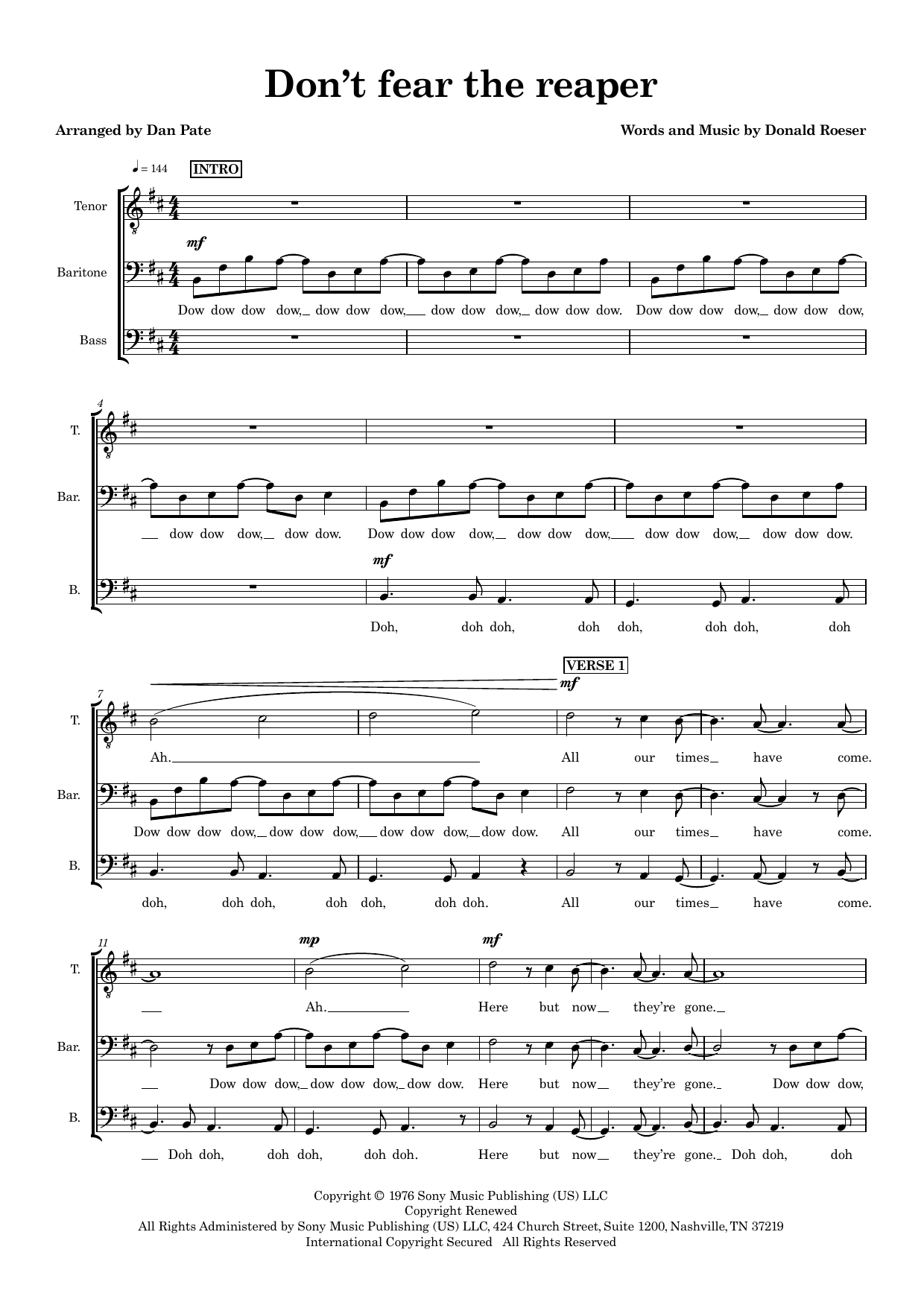
Don't Fear The Reaper (arr. Dan Pate): TTBB Choral Octavo

As performed by The Blue Oyster Cult / Arranged by Dan Pate

Item: 35-DS01890990

Digital Download
$1.99
Description

Don't Fear The Reaper (arr. Dan Pate): TTBB Choral Octavo isn't in MakeMusic Cloud just yet...but it could be. Let us know you'd like to see it, and you'll help shape what comes next. In the meantime, start a free trial and dive into thousands of interactive titles your students can play along with today.

Sample Audio
No sample audio found.
Sample Video
Additional Details
Publisher: Hal Leonard
Page Count: 8
SKU: 35-DS01890990

More about this title

About the Artist: The Blue Oyster Cult

The Blue Oyster Cult emerged from New York in the early 1970s as architects of a distinctive sound that blended hard rock intensity with progressive rock complexity. Their 1976 album "Agents of Fortune" became a cultural touchstone, anchored by "Don't Fear the Reaper," a track that has transcended its original context to become a standard of American popular music. The band's willingness to layer synthesizers, guitars, and vocals into densely arranged compositions made them natural subjects for choral adaptation.

What made the Cult enduring in music education circles is their catalog's accessibility paired with genuine musical substance. "Don't Fear the Reaper" in particular carries a melody strong enough to sustain a cappella treatment while its original arrangement demonstrates how rock production can create atmosphere without relying on effects or electronics. For directors seeking material that connects to students' cultural knowledge, the Cult's output offers rare crossover appeal.

Why we love this

Dan Pate's arrangement captures the hypnotic quality of the original without requiring a rhythm section or accompaniment, making this accessible for many programs. The TTBB voicing sits comfortably across the tenor and bass ranges, and the eight-page length signals genuine compositional work rather than a simple transcription. Most importantly, this piece genuinely engages male singers with material they recognize, which remains rarer in the choral repertoire than it should be.

What to expect

A minor-key meditation that builds from introspective verses into a powerful refrain. The arrangement honors the original's hypnotic quality while giving each voice part meaningful melodic or harmonic material, creating that satisfying balance between solo spotlight and ensemble weight that keeps singers engaged.

Who it's for

Male choral ensembles at the high school, college, or community level who want material with cultural resonance and a melody that actually sings. This works especially well for groups seeking accessible a cappella repertoire that doesn't sound like a novelty or compromise choice.

How to get the most out of it

  • Balance the iconic melodic hook across your tenors; it should float above the harmonic foundation without pushing into shouting territory, especially in the softer passages.
  • Shape the dynamic curve from the opening verses through the chorus deliberately. Restraint in the early sections makes the final repetitions land with earned power.
  • Treat the sustained notes as opportunities for blend work. Lock your bass line first, then have tenors and baritones find their harmonic center against that anchor.
  • The minor key works best when your singers commit to the darker emotional content. Avoid making it feel upbeat or bright; the arrangement supports quiet intensity.

How to use it

Position this as a concert closer or show finale where you want the audience to leave with something they recognize. The piece also works well in a program pairing contemporary pop arrangements with classical or art song repertoire, demonstrating the range of your ensemble's capabilities.

Skills your students will build

  • Sustaining tone in minor keys without dipping into vocal depression
  • Balancing prominence of melody with supportive harmonic voices
  • Dynamic control across extended form (8 pages requires pacing discipline)
  • Blend and intonation across TTBB ranges without instrumental doubling

You May Also Like