Don't Exist (from Fangirls) (arr. Alice Chance and Zara Stanton) Sheet Music Preview

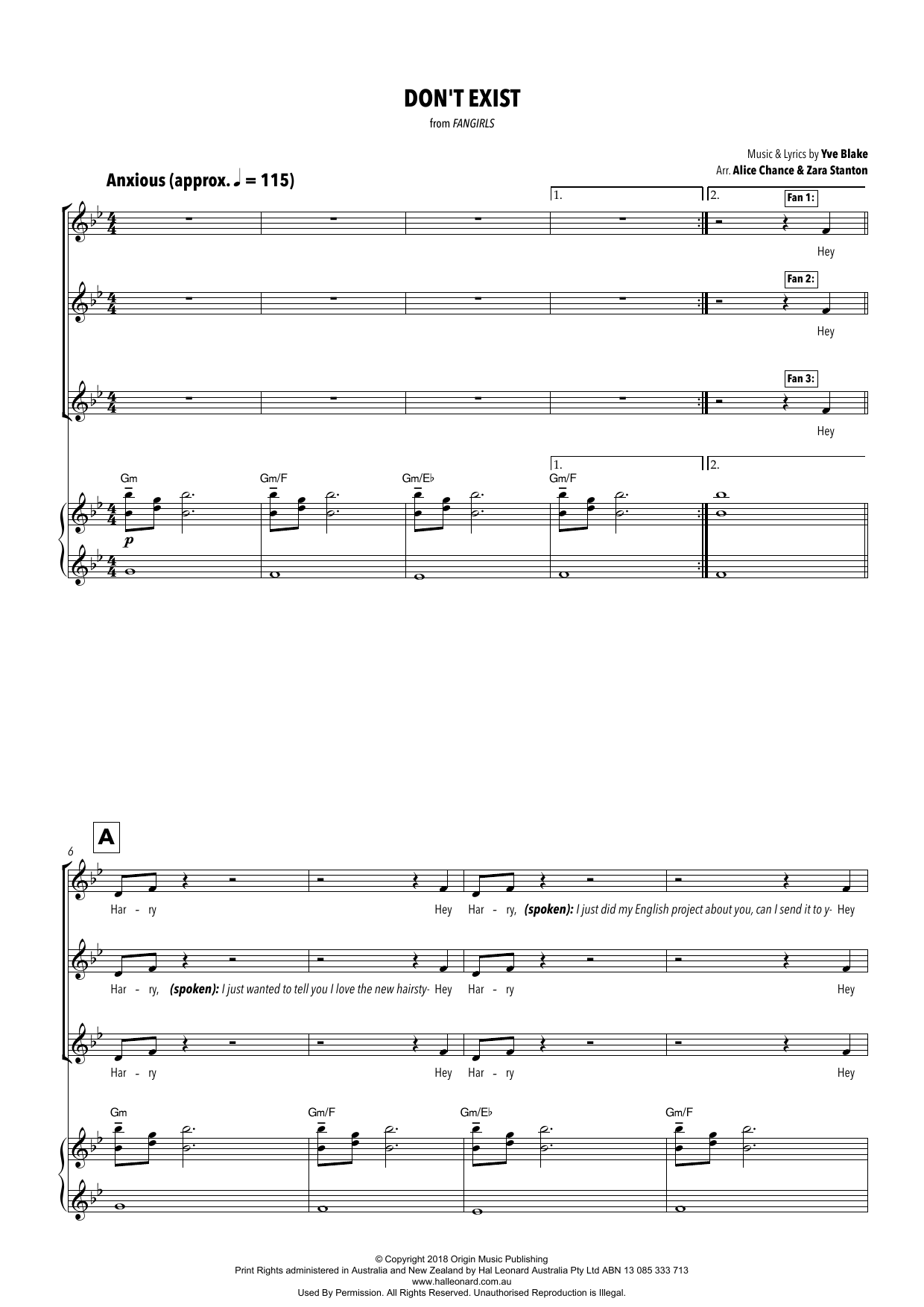
Don't Exist (from Fangirls) (arr. Alice Chance and Zara Stanton): Piano Vocal

By Yve Blake / Arranged by Alice Chance / Arranged by Zara Stanton

Item: 35-DS00474223

Digital Download
$5.99

One moment…

Description

Don't Exist (from Fangirls) (arr. Alice Chance and Zara Stanton): Piano Vocal isn't in MakeMusic Cloud just yet...but it could be. Let us know you'd like to see it, and you'll help shape what comes next. In the meantime, start a free trial and dive into thousands of interactive titles your students can play along with today.

Sample Audio
No sample audio found.
Sample Video
Additional Details
Publisher: Hal Leonard
Page Count: 9
SKU: 35-DS00474223

More about this title

About the Composer: Yve Blake

Yve Blake is a British composer and lyricist whose work spans musical theatre, concert music, and operatic projects. Her compositions are known for sharp wit, contemporary harmonic language, and emotional directness, making her work particularly resonant with younger audiences and accessible to emerging performers.

Why we love this

Blake's song writing captures the specificity of contemporary adolescent experience without condescension. The arrangement by Chance and Stanton strips the material down to its emotional core, making this accessible for solo singers while retaining the theatrical punch of the original.

What to expect

Urgent and honest without being overwrought. The song sits in that space between private confession and public declaration, where a character stakes a claim about her own existence. There's defiance here, but also real vulnerability underneath.

Who it's for

Voice students exploring contemporary musical theatre repertoire, singers preparing audition material that showcases emotional nuance, and performers developing skills with modern harmonic language and contemporary text setting.

How to get the most out of it

  • Find the conversational rhythm beneath the melody; this song thrives when it sounds like honest speech rather than formal singing.
  • Let the piano's harmonic movement guide your phrasing more than strict bar lines; Blake's harmonic language supports natural breathing.
  • Balance vulnerability with attitude. The song works when both qualities coexist, not when one dominates the other.

How to use it

Pair this with other contemporary musical theatre selections to showcase how current composers are expanding the canon beyond traditional Broadway idioms. It works equally well as a solo recital piece or as part of a cabaret program exploring themes of identity and self-assertion.

Skills your students will build

  • Navigating contemporary harmonic language and unexpected chord progressions
  • Shaping lyrical phrases that follow speech patterns rather than symmetrical melody
  • Balancing introspective singing with dramatic delivery
  • Collaborating expressively with a pianist to shape emotional timing

You May Also Like