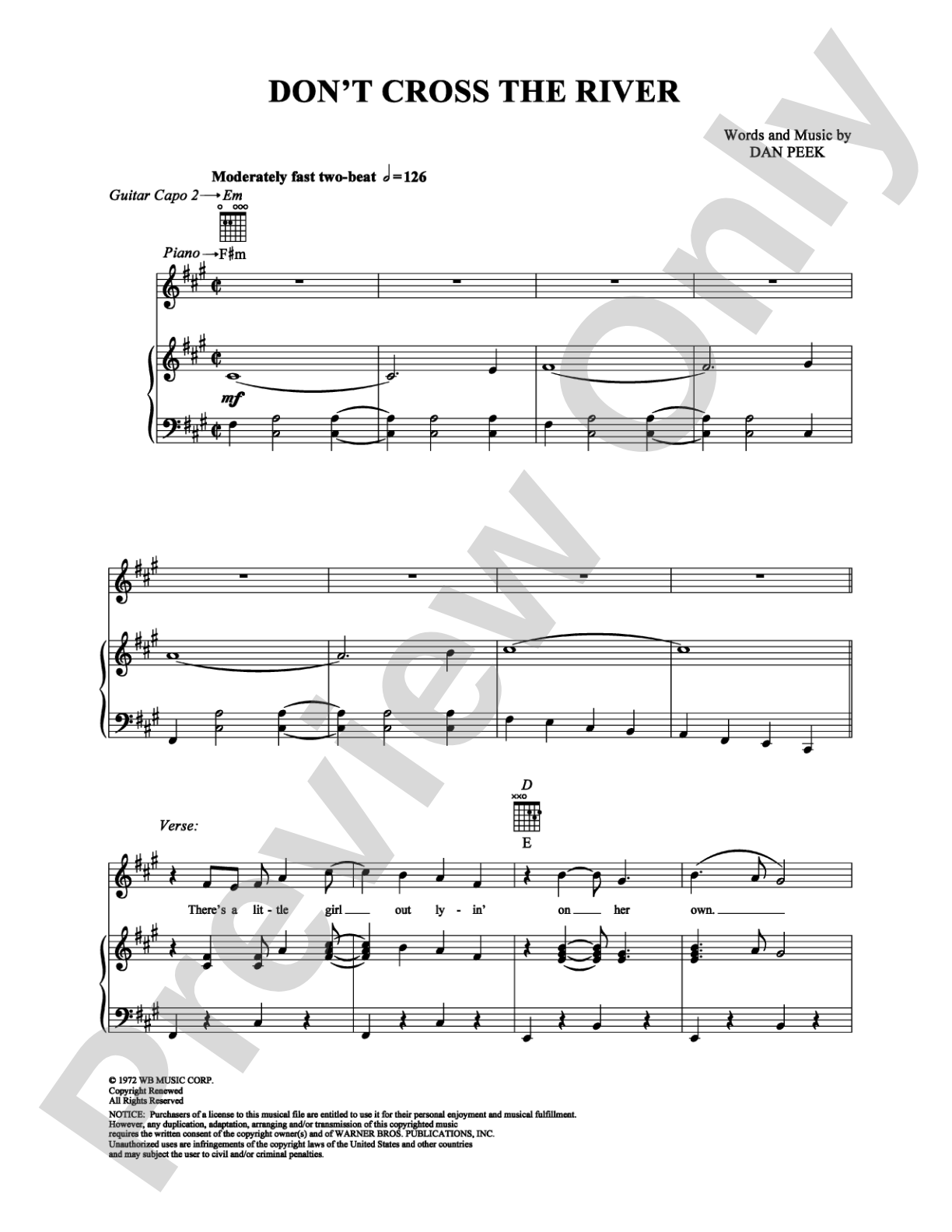
Don't Cross the River: Piano/Vocal/Chords Digital Sheet Music

Don't Cross the River: Piano/Vocal/Chords Digital Sheet Music

Garth Brooks, Dan Peek

Item: 00-PS-0002237

Digital Download
$3.99
Description

Don't Cross the River: Piano/Vocal/Chords Digital Sheet Music isn't in MakeMusic Cloud just yet...but it could be. Let us know you'd like to see it, and you'll help shape what comes next. In the meantime, start a free trial and dive into thousands of interactive titles your students can play along with today.

Sample Audio
No sample audio found.
Sample Video
Additional Details
SKU: 00-PS-0002237

More about this title

About the Artist: Garth Brooks

Garth Brooks emerged as a transformative figure in country music during the 1990s, bringing arena-rock energy and emotional directness to a genre often dominated by traditional sounds. His ability to craft narratives that resonate across audiences, combined with his understanding of how songs function in live performance, made him one of the best-selling artists of all time and shaped how contemporary country music reaches listeners.

Why we love this

Brooks's storytelling approach creates natural opportunities for singers to explore character and restraint in narrative song. The straightforward melodic language and clear harmonic structure make this accessible for pianists at intermediate levels while still rewarding careful attention to lyrical phrasing and emotional arc.

What to expect

The song carries a reflective, cautious tone, with lyrics that frame a metaphorical choice against a steady, unhurried harmonic landscape. The emotional weight lies in restraint rather than display, inviting performers to find meaning in the spaces between phrases.

Who it's for

This arrangement serves singers and pianists preparing country music for recital, studio work, or audition contexts. It's especially valuable for vocalists seeking accessible, well-known material that demonstrates storytelling ability without requiring extensive vocal range.

How to get the most out of it

  • Balance the vocal line against the piano accompaniment so lyrics remain intelligible; the chord progression should support rather than dominate the melody.
  • Use dynamic shaping to highlight the story's emotional turns; resist the urge to play uniformly or to let the groove override the song's narrative weight.
  • Pay attention to the chord voicings provided; they often suggest the harmonic color Brooks's arrangement intends, which affects how the voice projects over the accompaniment.

How to use it

This works well in mixed recital programs where country repertoire balances classical, art song, or musical theatre selections. It can also serve as an accessible introduction to narrative song for students exploring genre diversity in their vocal studies.

Skills your students will build

  • Narrative storytelling through song phrasing
  • Balance between vocal line and accompaniment
  • Reading and interpreting chord symbols in contemporary arrangements
  • Dynamic shaping in country song idiom

You May Also Like