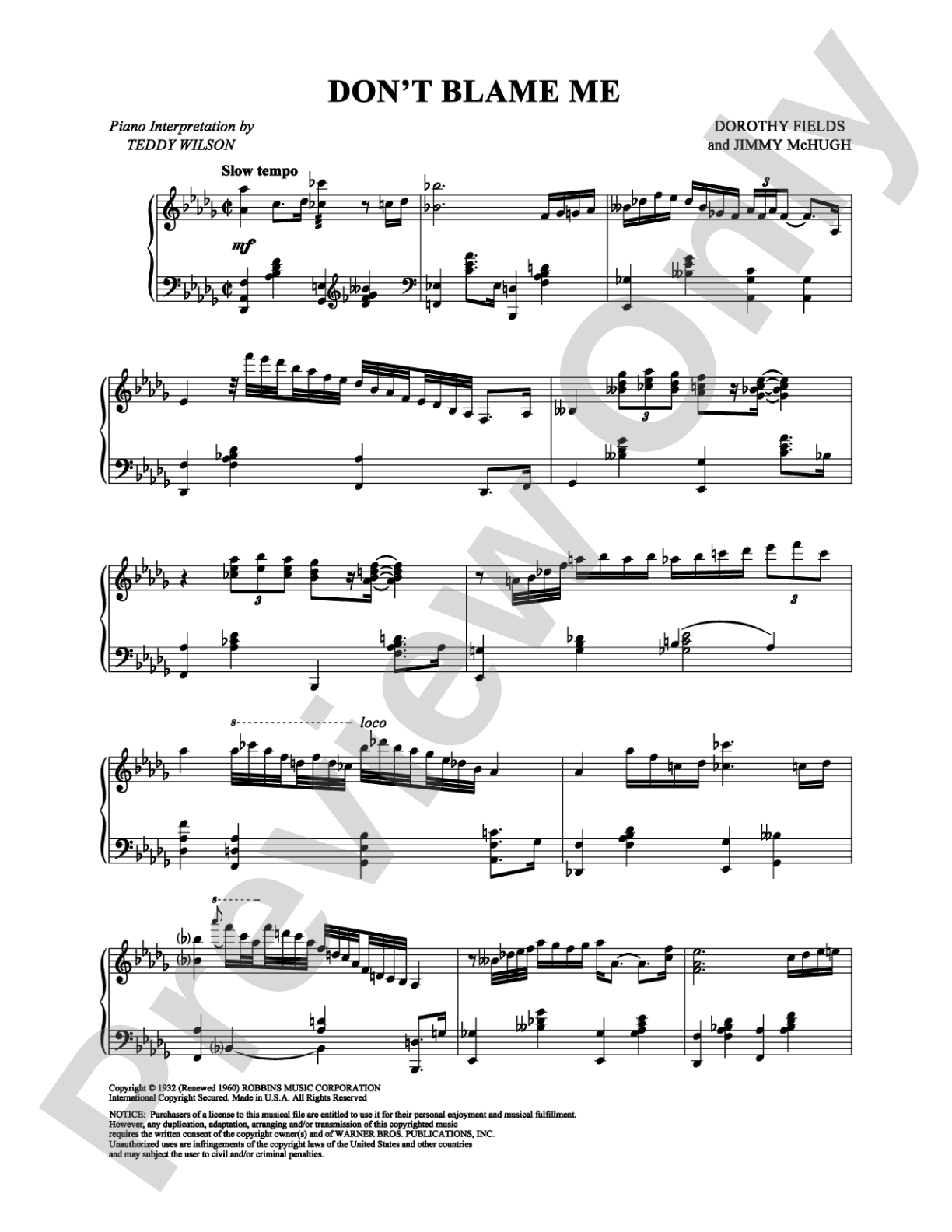
Don't Blame Me: Piano Digital Sheet Music

Don't Blame Me: Piano Digital Sheet Music

Jimmy McHugh, Dorothy Fields, Teddy Wilson

Item: 00-PS-0000685

Digital Download
$3.99
Description

Don't Blame Me: Piano Digital Sheet Music isn't in MakeMusic Cloud just yet...but it could be. Let us know you'd like to see it, and you'll help shape what comes next. In the meantime, start a free trial and dive into thousands of interactive titles your students can play along with today.

Sample Audio
No sample audio found.
Sample Video
Additional Details
SKU: 00-PS-0000685

More about this title

About the Artist: Teddy Wilson

Teddy Wilson (1912-1986) was a pianist and bandleader who shaped the sound of swing jazz and became one of the first Black musicians to perform and record regularly with white musicians during the Jim Crow era. His refined touch, harmonic sophistication, and ability to accompany singers made him a sought-after collaborator for some of jazz's greatest vocalists, including Billie Holiday and Ella Fitzgerald.

Wilson's approach to the piano combined classical training with jazz idiom, resulting in tasteful comping and solos that prioritized musicality over showiness. His recordings remain essential listening for pianists studying jazz accompaniment and small-group interplay.

Why we love this

Wilson's interpretation of this jazz standard showcases the elegance and restraint that defined his playing style. His voicings and comping patterns offer pianists a masterclass in how to support a melody while maintaining harmonic interest and forward momentum.

What to expect

Poised and conversational, with an unhurried elegance that draws the listener in. The arrangement unfolds with the intimacy of a master class, each phrase shaped with care and harmonic intelligence.

Who it's for

Jazz pianists looking to deepen their understanding of swing-era comping and melodic interpretation. Students studying jazz history and accompaniment will benefit from analyzing how Wilson voices chords and voices the melody simultaneously.

How to get the most out of it

  • Study the exact voicings and inversions Wilson uses; they demonstrate sophisticated harmonic choices that go beyond block chords and root position triads.
  • Pay attention to the rhythmic placement of comping figures relative to the melody. Wilson's accompaniment sits in the pocket without rushing or dragging the tune.
  • Explore the balance between solo passages and supportive accompaniment. Notice where Wilson steps back and where he takes space.
  • Listen closely to his touch and tone quality. Wilson achieves clarity and warmth without excess pedal or heavy-handed dynamics.

How to use it

Include this in a jazz recital or standards showcase to demonstrate the timeless appeal of Wilson's playing and the enduring quality of this composition. It pairs naturally with other swing-era vocal standards and provides historical context for the development of jazz piano.

Skills your students will build

  • Jazz chord voicings and substitutions
  • Comping techniques in swing style
  • Balancing melody and accompaniment simultaneously
  • Listening to and interpreting a recorded solo
  • Understanding the harmonic language of jazz standards

You May Also Like