
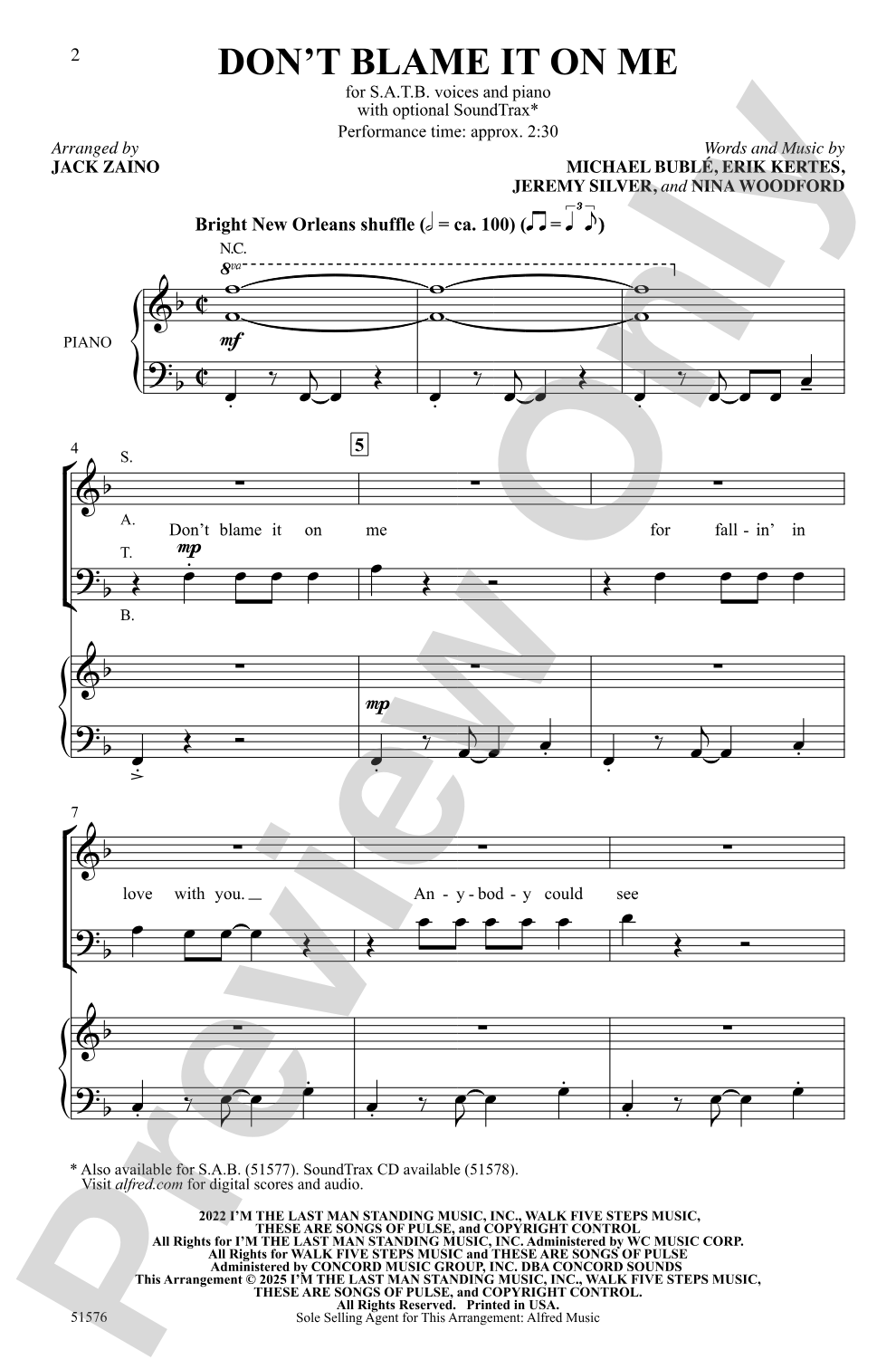
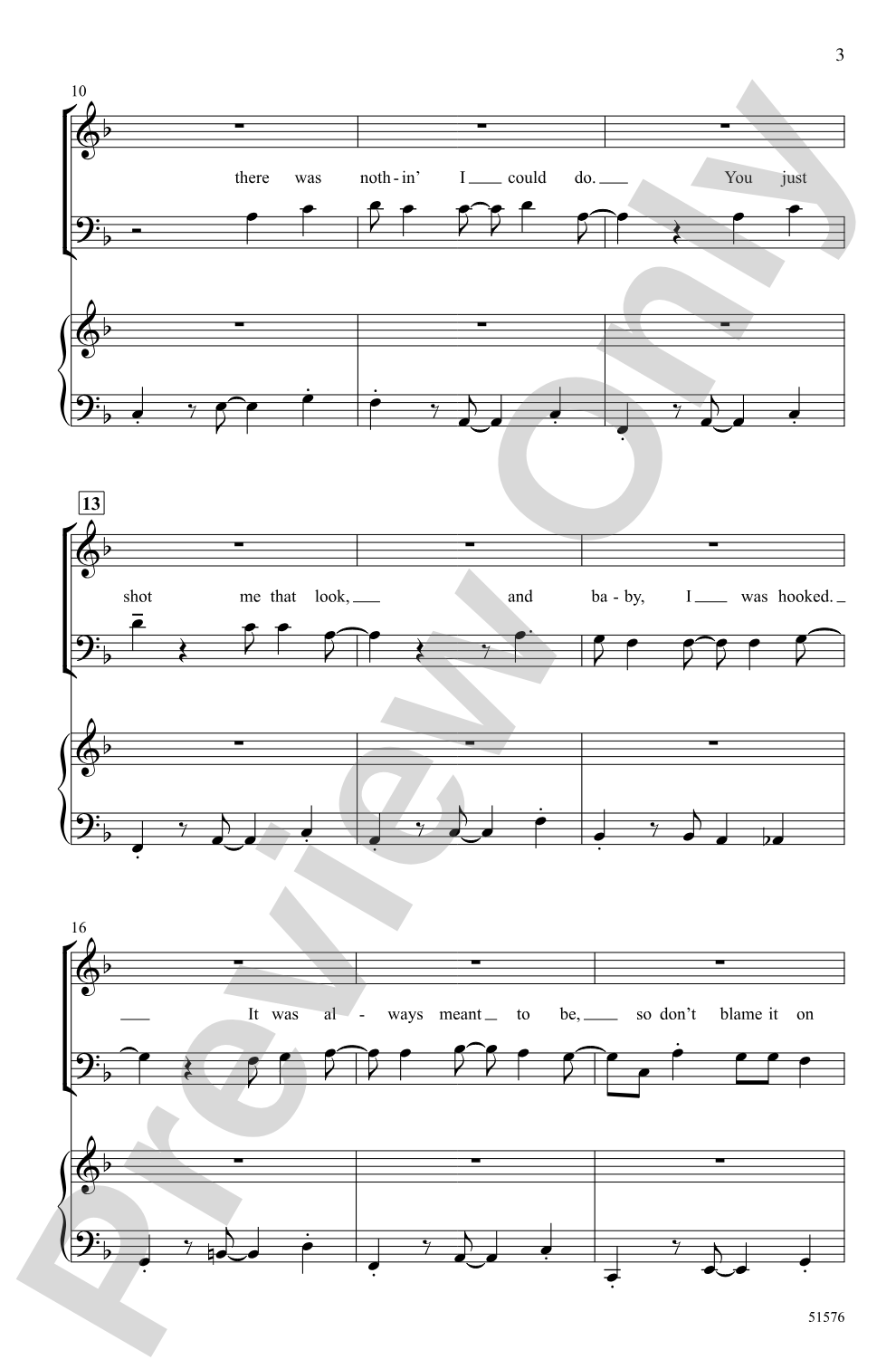
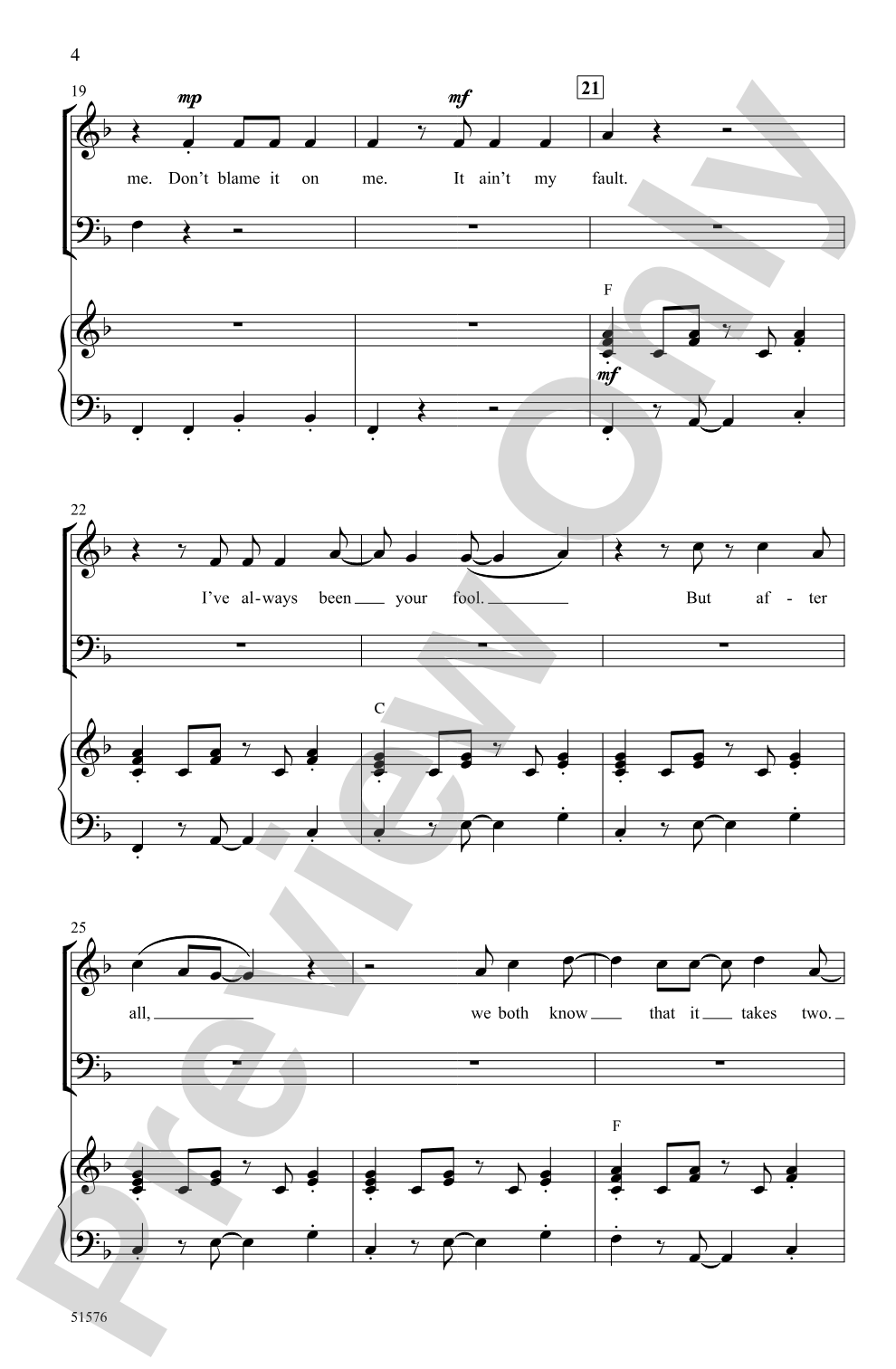

Don't Blame It on Me: SATB Choral Octavo
Words and music by Michael Bublé, Erik Kertes, Jeremy Silver, and Nina Woodford / arr. Jack Zaino
Item: 00-PO-0007542
$2.45
Minimum order quantity: 20 copies
One moment…
Related Items
Don't Blame It on Me: SAB Choral Octavo |
$2.45
|
View | |
Don't Blame It on Me: SoundTrax Digital Audio Download |
$29.99
|
View | |
Don't Blame It on Me: Choral Octavo SoundPax |
$35.00
|
View | |
Don't Blame It on Me: SATB Choral Octavo |
$2.45
|
View | |
Don't Blame It on Me: SAB Choral Octavo |
$2.45
|
View | |
Don't Blame It on Me: Choral SoundTrax CD |
$29.99
|
View | |
Don't Blame It on Me: Choral Octavo SoundPax |
$35.00
|
View |
Description
A bright New Orleans shuffle and playful lyrics about falling in love make this cheerful Michael Bublé gem a sure-fire winner! This kickin' arrangement opens with a flirty feature for the guys, and includes both call-and-response and stacked harmonies once everyone's in. Don't miss the lively horns and thumping bass on our big-band style SoundTrax.


Don't Blame It on Me: SATB Choral Octavo isn't in MakeMusic Cloud just yet...but it could be. Let us know you'd like to see it, and you'll help shape what comes next. In the meantime, start a free trial and dive into thousands of interactive titles your students can play along with today.
Request This Title
Tell us you want it.
Start Your Free Trial
Explore everything that's ready to play right now.
Sample Audio
1
Audio File
--:--
0:00
0:00
Sample Video
Additional Details
Series:
Alfred Pop Choral Series
Publisher:
Alfred Music
Page Count:
16
SKU:
00-PO-0007542
More about this title
About the Composer: Michael Bublé
Michael Bublé is a Canadian singer and songwriter known for his sophisticated take on jazz standards and contemporary pop songs. His warm vocal delivery and big-band sensibilities have made him a fixture in modern popular music, with particular appeal to audiences who appreciate classic vocal styling alongside current songwriting.
Why we love this
Jack Zaino's arrangement captures everything that makes this song infectious: the New Orleans shuffle groove lands immediately, the guys' opening feature gives early soloists a genuine moment to shine, and the layered call-and-response sections build ensemble energy without requiring advanced vocal technique. The recorded accompaniment nails the big-band horns and bass, so your singers can lock into the groove from day one.
What to expect
Sunny and flirty, with the kind of easy confidence that makes love songs feel like a conversation rather than a confession. The New Orleans shuffle gives everything a little swagger, and the big-band touches suggest late-night jazz clubs rather than formal concert halls.
Who it's for
Choirs with solid blend and secure rhythm reading who want a contemporary piece with genuine style and pop appeal. This works equally well for high school ensembles and community choirs that appreciate modern pop vocal writing without the technical demands of classical literature.
How to get the most out of it
- Center the opening tenor feature as a genuine moment of swagger. The guys need to own the flirtatiousness; it sets the tone for everything that follows.
- Nail the rhythmic precision of the New Orleans shuffle groove during rehearsal before layering harmonies. A locked rhythm section (even just the quarter-note pulse) keeps the call-and-response sections from sliding into confusion.
- Balance the stacked harmonies in the ensemble sections so the top line stays conversational, not buried. These harmonies support the tune; they don't replace it.
- Lean into the recorded accompaniment's horns and bass during performance. Let your singers feel supported by that big-band texture rather than fighting to be heard over it.
How to use it
Program this as a closer or penultimate selection on a concert that includes other contemporary pop or light jazz fare. It's a natural pairing with other Alfred Pop Choral Series titles and works especially well when you're balancing classical repertoire with material that connects directly to what your singers hear on the radio.
Skills your students will build
- Secure interpretation of New Orleans shuffle rhythms and syncopation
- Ensemble call-and-response singing with clear cues and balanced voices
- Stacked harmony voicing at moderate ranges without strain
- Stylistic awareness of contemporary pop vocals and big-band arrangements
- Rhythmic confidence in ensemble sections with recorded accompaniment