

Domine Deus: 3-Part Mixed Choral Octavo
By Sally K. Albrecht
Item: 00-PO-0001640
$1.85
Minimum order quantity: 20 copies
Pickup currently not available
Description
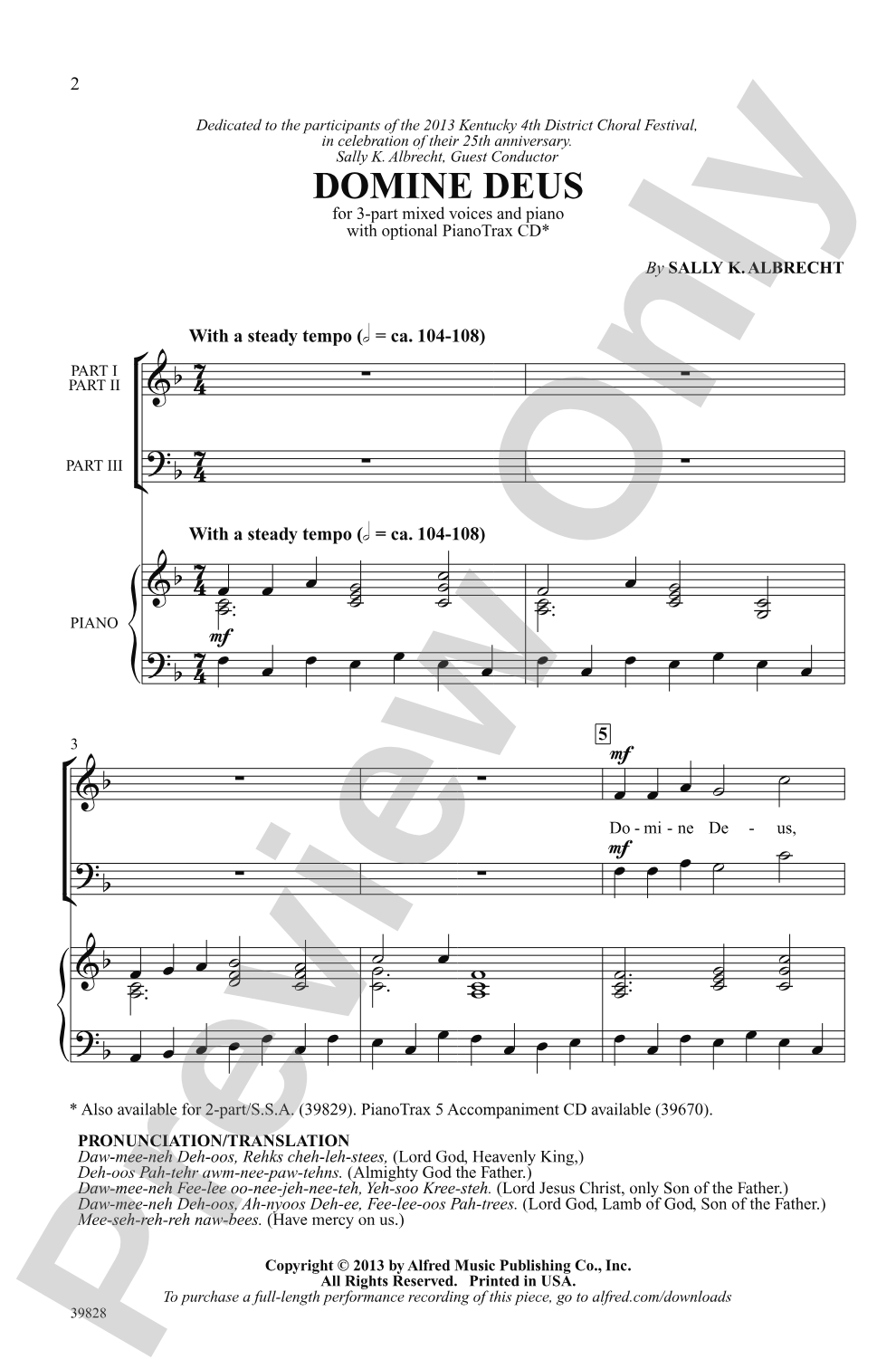
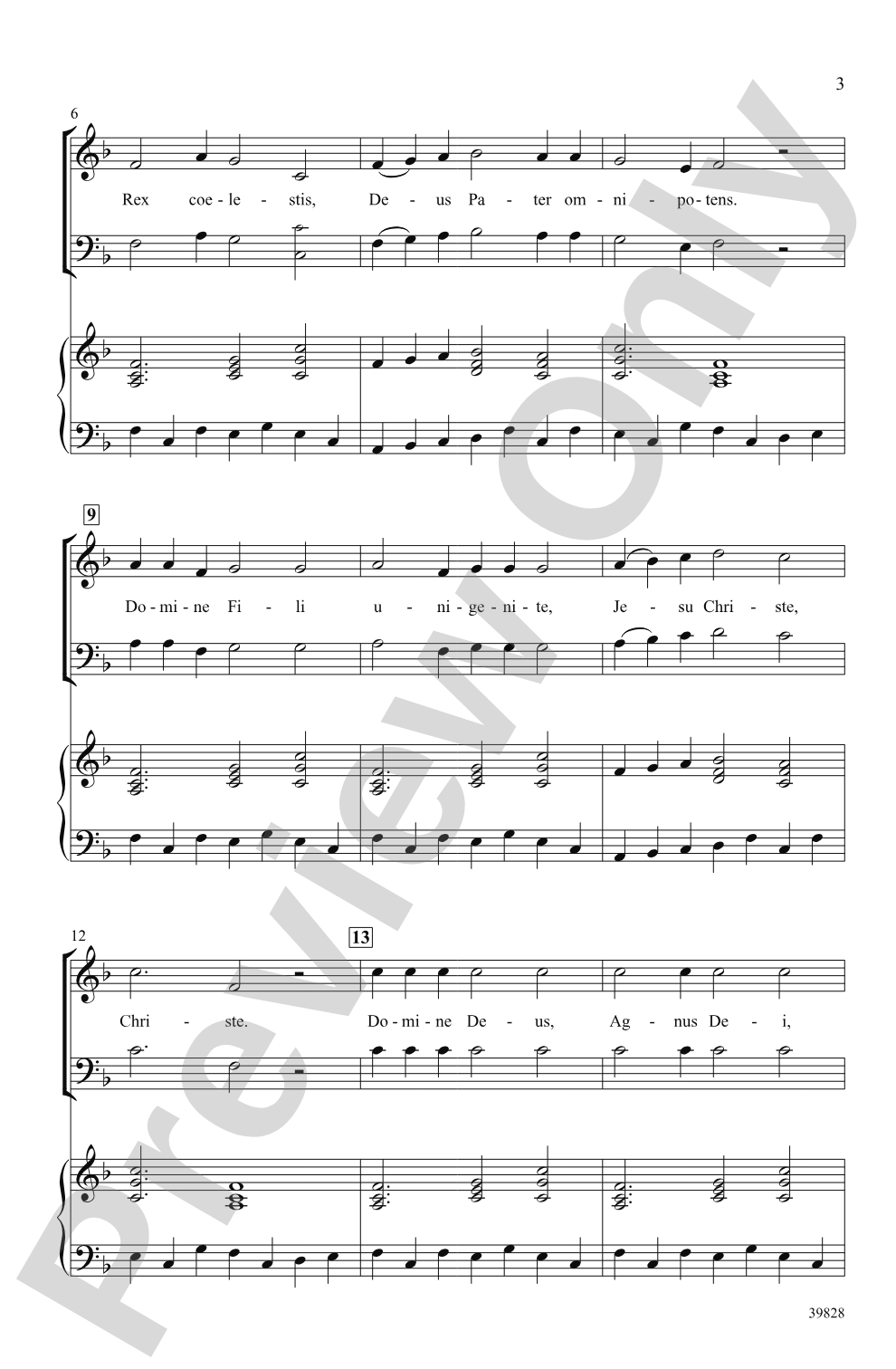
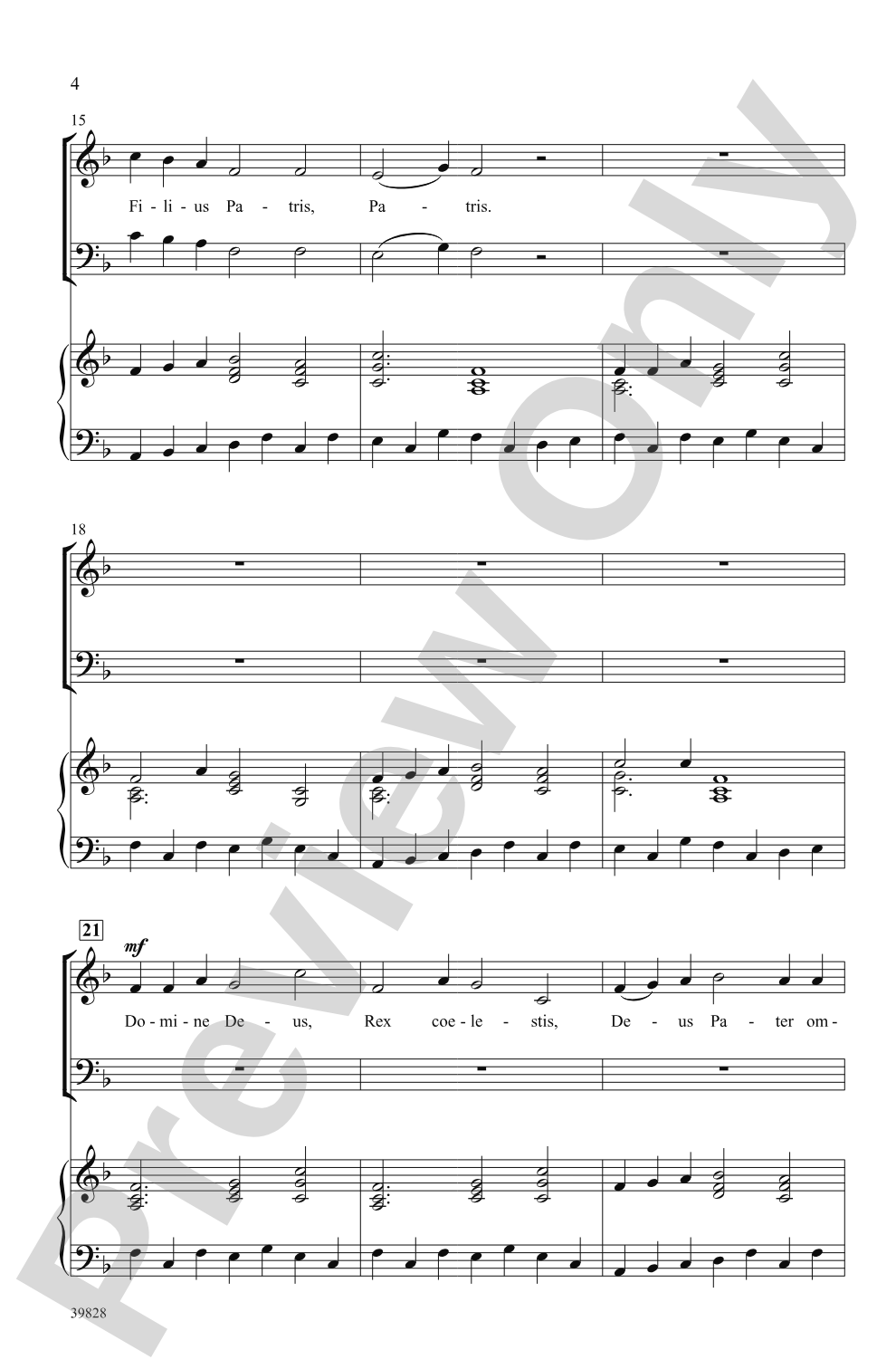
This excellent 3-part teaching round sets the familiar "Domine Deus" text in 7/4 time. The ABA form, with a contrasting 4/4 add-on middle section, results in a successful and rewarding choral experience.


Domine Deus: 3-Part Mixed Choral Octavo isn't in MakeMusic Cloud just yet...but it could be. Let us know you'd like to see it, and you'll help shape what comes next. In the meantime, start a free trial and dive into thousands of interactive titles your students can play along with today.
Request This Title
Tell us you want it.
Start Your Free Trial
Explore everything that's ready to play right now.
Sample Audio
1
Audio File
--:--
0:00
0:00
Sample Video
No sample videos found.
Additional Details
Series:
Alfred Choral Designs
Publisher:
Alfred Music
Page Count:
12
SKU:
00-PO-0001640
More about this title
About the Composer: Sally K. Albrecht
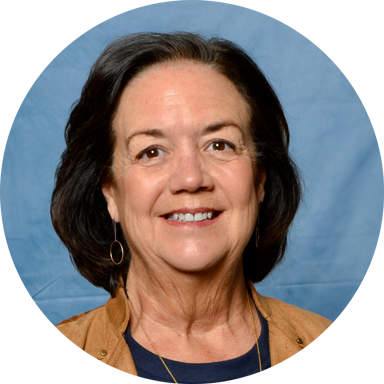
Sally K. Albrecht has shaped American choral music for decades as a composer, conductor, and advocate for accessible choral writing. Since 1987, she has received the ASCAP Special Music Award annually and maintains over 600 choral publications in print alongside 75 larger works for stage and concert. Her expertise comes from thirty years directing school choral, vocal, and elementary music publications at major educational publishers, including her tenure at Alfred Music, combined with conducting experience at honor choirs and festivals at Lincoln Center, Carnegie Hall, and The Kennedy Center.
Her academic background spans music and drama: she earned a B.A. from Rollins College (1976) and both an M.A. in Drama and M.M. in Accompanying from the University of Miami. She has taught at Oakland University, Jersey City State College, and Meredith College. In 2021, she received the Distinguished Alumna Award from both the University of Miami Frost School of Music and Rollins College, where she serves on the Board of Trustees. She lives in North Carolina with her husband, composer and arranger Jay Althouse.
Why we love this
The metric shift from 7/4 to 4/4 gives this piece real compositional weight without demanding advanced rhythmic skills. SAB voicing stays confident and rewarding throughout, and the round structure naturally builds ensemble cohesion while the ABA form keeps singers engaged with musical variety.
What to expect
Meditative yet rhythmically alive. The 7/4 framework creates an almost hypnotic quality appropriate to the Latin text, while the contrasting 4/4 middle section provides relief and forward momentum. The round structure invites a sense of communal prayer and builds natural, organic harmony.
Who it's for
Middle and high school choirs seeking sacred repertoire that challenges rhythmic thinking without sacrificing singability. Directors who want to introduce mixed meter and unusual time signatures in a context that feels musical rather than technical.
How to get the most out of it
- Establish the 7/4 pulse firmly in rehearsal before introducing the text. Counting aloud in fours against the 7/4 framework helps singers feel the underlying pulse without losing the familiar Latin words.
- Let the middle section breathe. The shift to 4/4 is your chance to reset the energy; mark a clear tempo change in your conducting to signal this contrast to the ensemble.
- Use the round structure to your advantage during learning. Divide the choir early and have one section loop while another enters, building confidence before tackling full unison moments.
- Balance the SAB voicing carefully so altos aren't buried, especially where soprano and alto lines move in parallel. A light accompaniment (if used) should support, not mask, the middle voice.
How to use it
This works beautifully as a spiritual centerpiece in a concert built around sacred music or world traditions. Pair it with longer, more elaborate Latin motets to show the range of approaches to sacred text, or use it to open a program where its contemplative quality sets the tone for what follows.
Skills your students will build
- Reading and performing in 7/4 time signature
- Singing round structure with overlapping voice entries
- Transitioning between contrasting meters (7/4 and 4/4)
- Balancing three-part mixed voicing (SAB)
- Interpreting Latin liturgical text with musical sensitivity