
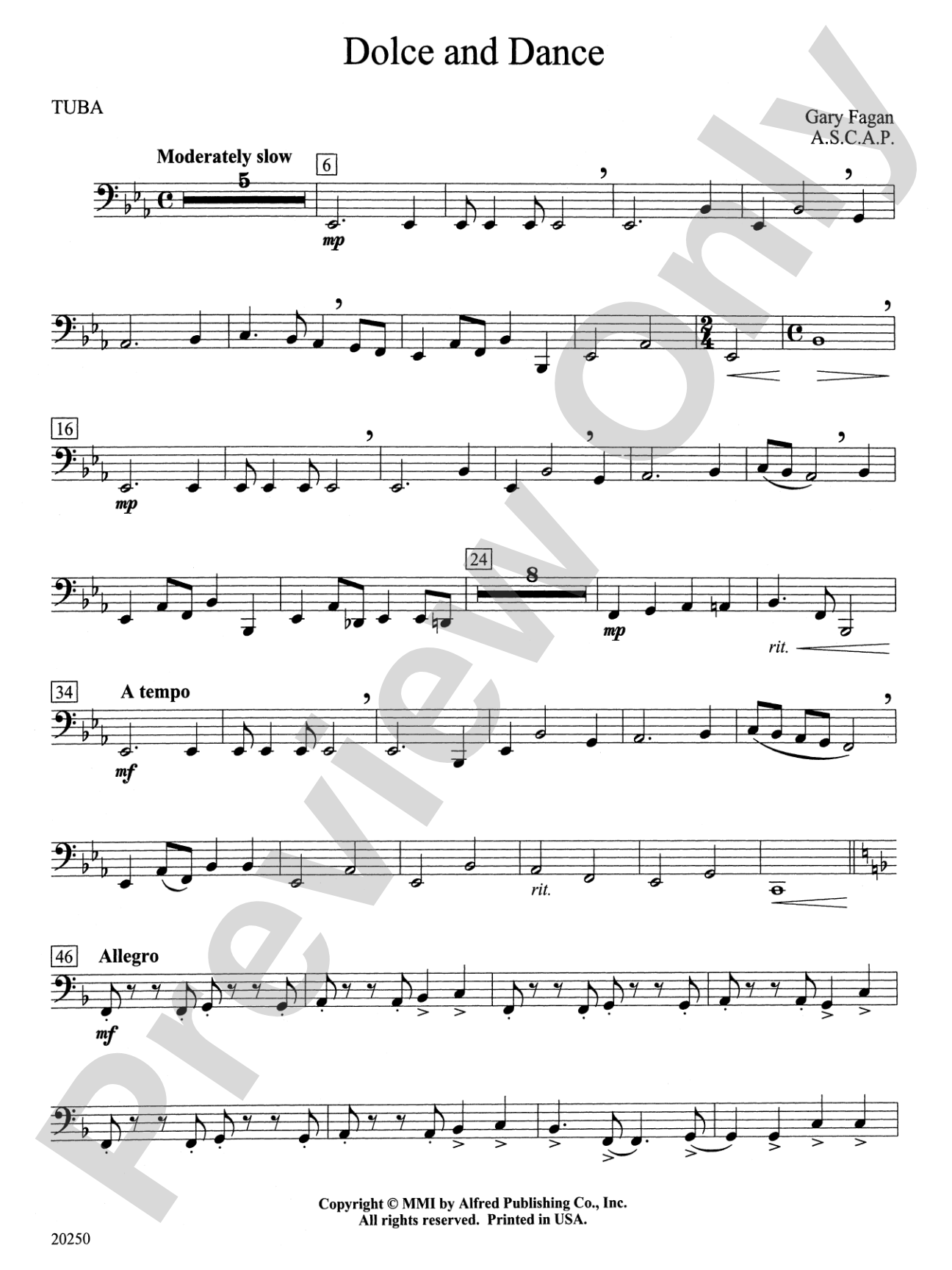

Dolce and Dance: Tuba
By Gary Fagan
Grade: 2 (Medium Easy)
Item: 00-PC-0000369_TB1
$3.00
Pickup currently not available
Description
Dolce and Dance by Gary Fagan gives your students an opportunity to shine by incorporating two contrasting styles in one piece. The first section allows for legato lines and sensitive phrasing, while the second section calls for a marcato feel to be played in a dance-like fashion. Great for contest!


Don't just read it, hear it, play along with it, and watch your students grow with it. In MakeMusic Cloud, Dolce and Dance: Tuba comes alive with professional accompaniment, adjustable tempo, and built-in practice tools that turn solo practice into real progress.
Open in the Player
Jump straight in and assign it today.
Start Your Free Trial
Open this title and explore the full library in minutes.
Sample Audio
1
Audio File
--:--
0:00
0:00
Sample Video
Additional Details
Series:
Young Symphonic
Publisher:
Alfred Music
Page Count:
268
SKU:
00-PC-0000369_TB1
More about this title
About the Composer: Gary Fagan

Gary Fagan brings decades of classroom experience to his compositional voice. A Maryland-based composer and educator, he earned degrees in Music Education from Bridgewater College and in a graduate program at James Madison University. His works have been performed at prestigious venues including the Midwest Band and Orchestra Clinic and the White House, and his contributions to music education have been recognized with the Central Virginia Outstanding Middle School Teacher award and multiple Outstanding Educator honors.
Fagan's 36-year tenure as a band director in Albemarle County shaped his deep understanding of what student musicians need to develop musically and technically. He remains active in the profession as a University Supervisor and adjunct faculty member at JMU, where he teaches arranging, and continues as a clinician, adjudicator, and performer. His memberships in ASCAP, the National Band Association, and Phi Beta Mu Bandmasters Fraternity reflect his sustained commitment to the craft and the profession.
Why we love this
Fagan understands what Grade 2 students need to experience success without oversimplifying the musical content. Two distinct styles in one piece keep the ensemble engaged while building expressive range, and the contest-ready context gives students a concrete goal. The contrast between legato lyricism and marcato articulation makes this piece rewarding to teach because you're not just filling rehearsal time; you're developing musicianship that transfers to everything else they'll play.
What to expect
The opening unfolds with singing, sustained lines that ask your students to think like wind players in a choir. Then the floor shifts: the music becomes rhythmically alive and bouncing, with articulation that cuts through and makes the band feel energized and playful.
Who it's for
This score and parts set works for middle school and early high school bands looking to develop lyrical playing alongside rhythmic precision. Directors programming for contest or concert need a Grade 2 piece that challenges musicianship without requiring advanced technical facility.
How to get the most out of it
- Shape the dolce section with clear phrase breathing; mark your score where the band should breathe together so the legato lines don't collapse mid-phrase.
- Establish the dance rhythm early in rehearsal by having the ensemble tap the pulse while you conduct the second section's feel, ensuring everyone locks into the marcato character before adding articulation.
- Balance the contrast sharply in dress rehearsal and performance. Conduct with different energy and gesture between sections so the stylistic shift reads clearly to the audience.
How to use it
Program this on a contest entry where you want to show range, or use it mid-concert as a mood bridge between a heavier work and something lighter. It's also ideal for a full rehearsal cycle when you want to emphasize contrasting musical styles in a single piece.
Skills your students will build
- Sustaining legato phrases with proper breath support
- Controlling marcato articulation with precision and consistency
- Reading conductor gestures that communicate stylistic change
- Balancing dynamic contrast between lyrical and rhythmic sections
- Responding to phrase-level shaping and pacing adjustments