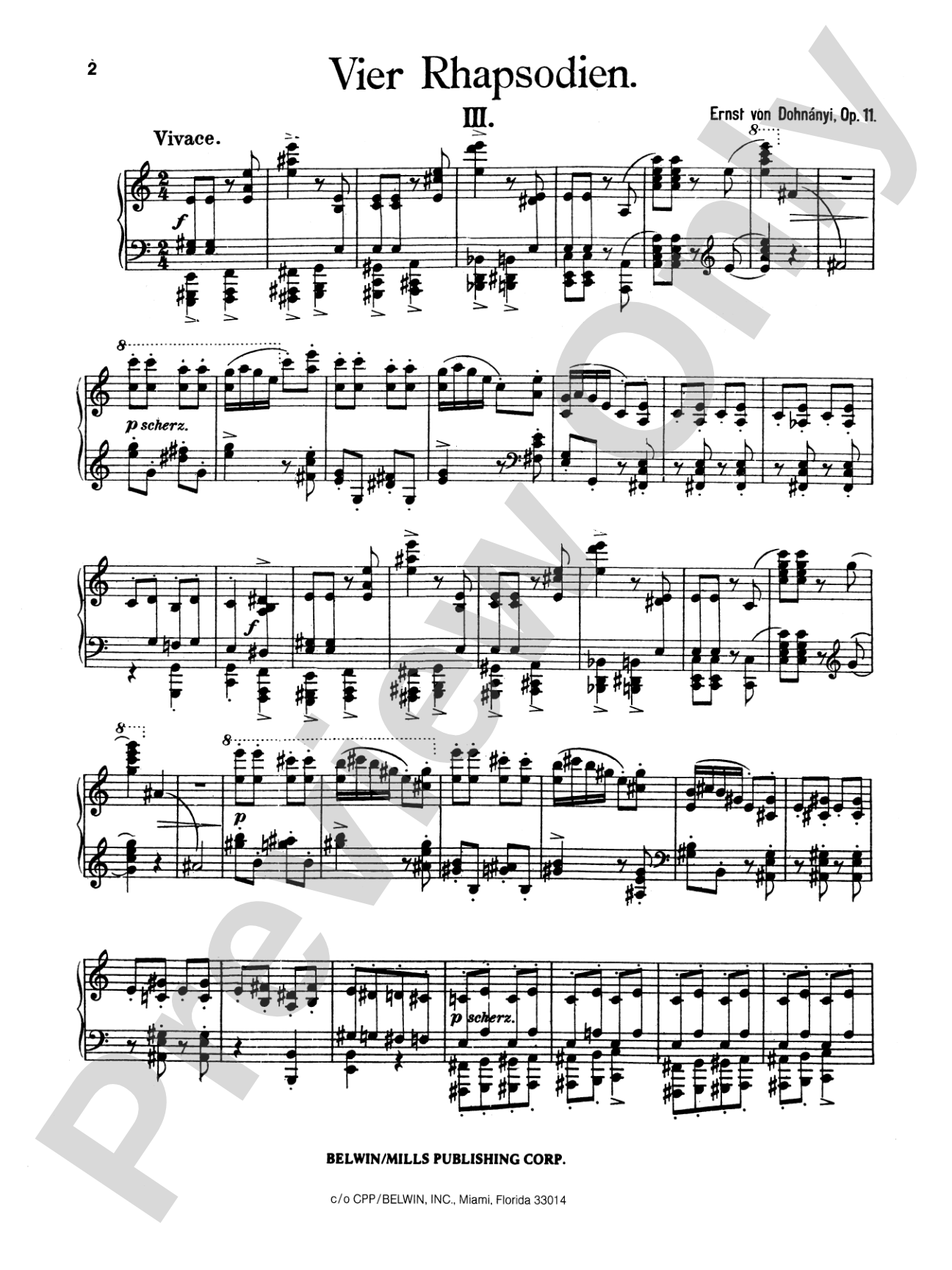
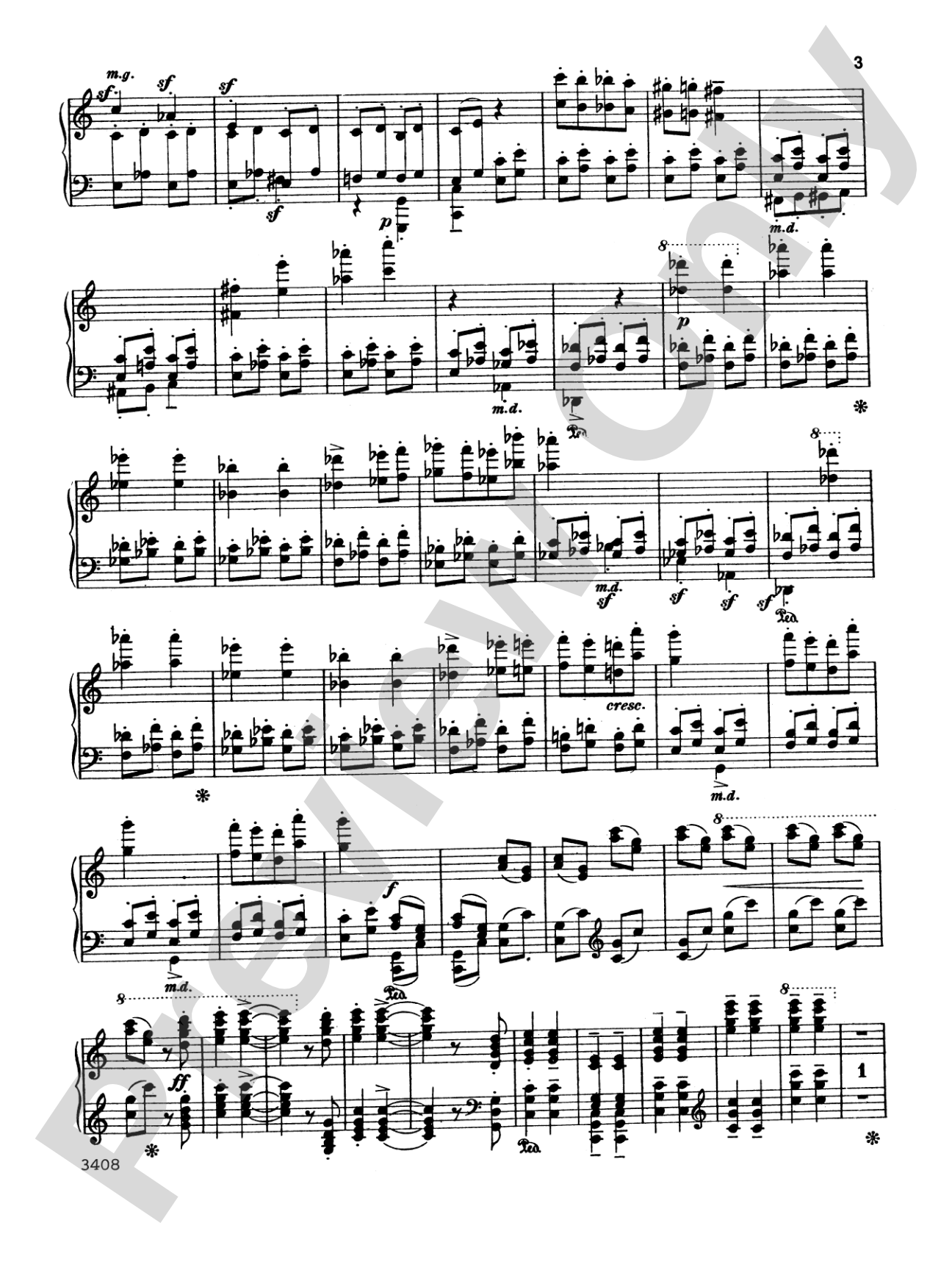
Dohnányi: Rhapsody, Op. 11, No. 3 Sheet Music Preview

Dohnányi: Rhapsody, Op. 11, No. 3

By Ernst Von Dohnányi

Level: Advanced

Item: 00-PC-0007002

Digital Download
$5.99
Description
Expertly arranged piano solo from our Kalmus Edition.

Don't just read it, hear it, play along with it, and watch your students grow with it. In MakeMusic Cloud, Dohnányi: Rhapsody, Op. 11, No. 3 comes alive with professional accompaniment, adjustable tempo, and built-in practice tools that turn solo practice into real progress.

Sample Audio
No sample audio found.
Sample Video
Additional Details
Series: Kalmus Edition
Publisher: Alfred Music
Page Count: 12
SKU: 00-PC-0007002

More about this title

About the Composer: Ernst von Dohnányi

Ernst von Dohnányi (1877-1960) was a Hungarian pianist, composer, and conductor whose works bridged late Romanticism and early modernism. His compositions for piano are marked by virtuosic writing, structural clarity, and a gift for memorable melody. Though overshadowed by some of his contemporaries, Dohnányi's keyboard works remain essential repertoire for advanced pianists seeking music that combines technical brilliance with genuine musical substance.

Why we love this

This rhapsody showcases Dohnányi's mastery of the rhapsodic form: it builds from intimate, lyrical passages into moments of genuine virtuosic display without ever sacrificing musical coherence. The piece rewards the kind of pianist who can balance technical command with interpretive maturity, making it an ideal choice for recitals where you want to showcase both musicianship and technique.

What to expect

The rhapsody unfolds like a musical reverie, moving between moments of introspection and bursts of passionate energy. Hungarian folk melody runs through its DNA, but filtered through a modernist harmonic sensibility that keeps the listener engaged and slightly off-balance. The overall effect is one of spontaneity controlled by rigorous musical architecture.

Who it's for

Advanced pianists preparing recital repertoire, competitive performance pieces, or concert programs that call for substantial 20th-century keyboard works. This is not introductory virtuosity; it demands secure technique, musical maturity, and the stamina to sustain rhapsodic development across twelve pages.

How to get the most out of it

  • Shape the opening melody with warmth and expressiveness; the rhapsodic form depends on your ability to sing through the keyboard rather than treating rapid passages as mere technical exercises.
  • Give yourself time to establish the character of each section before accelerating into virtuosic material. Dohnányi's transitions are deliberate, and rushing them flattens the form.
  • Balance pedal carefully in the lyrical sections to maintain harmonic color without obscuring melodic lines or becoming muddy in the faster passage work.
  • Pay attention to the relationship between the folk-influenced themes and the more abstract harmonic language; this tension is central to the piece's expressive arc.

How to use it

This works beautifully as a centerpiece in a recital built around early 20th-century piano music, particularly if paired with works by Bartók or Kodály that share similar folk influences. It also serves as an effective solo piece in concert settings where you want to move away from standard Romantic repertoire without venturing into pure modernism.

Skills your students will build

  • Sustaining rhapsodic form across multiple contrasting sections
  • Balancing lyrical expression with virtuosic passage work
  • Interpreting early 20th-century harmonic language and its relationship to folk melody
  • Managing tempo flexibility and rubato within a structured framework
  • Building narrative arc across an extended single-movement form

You May Also Like