
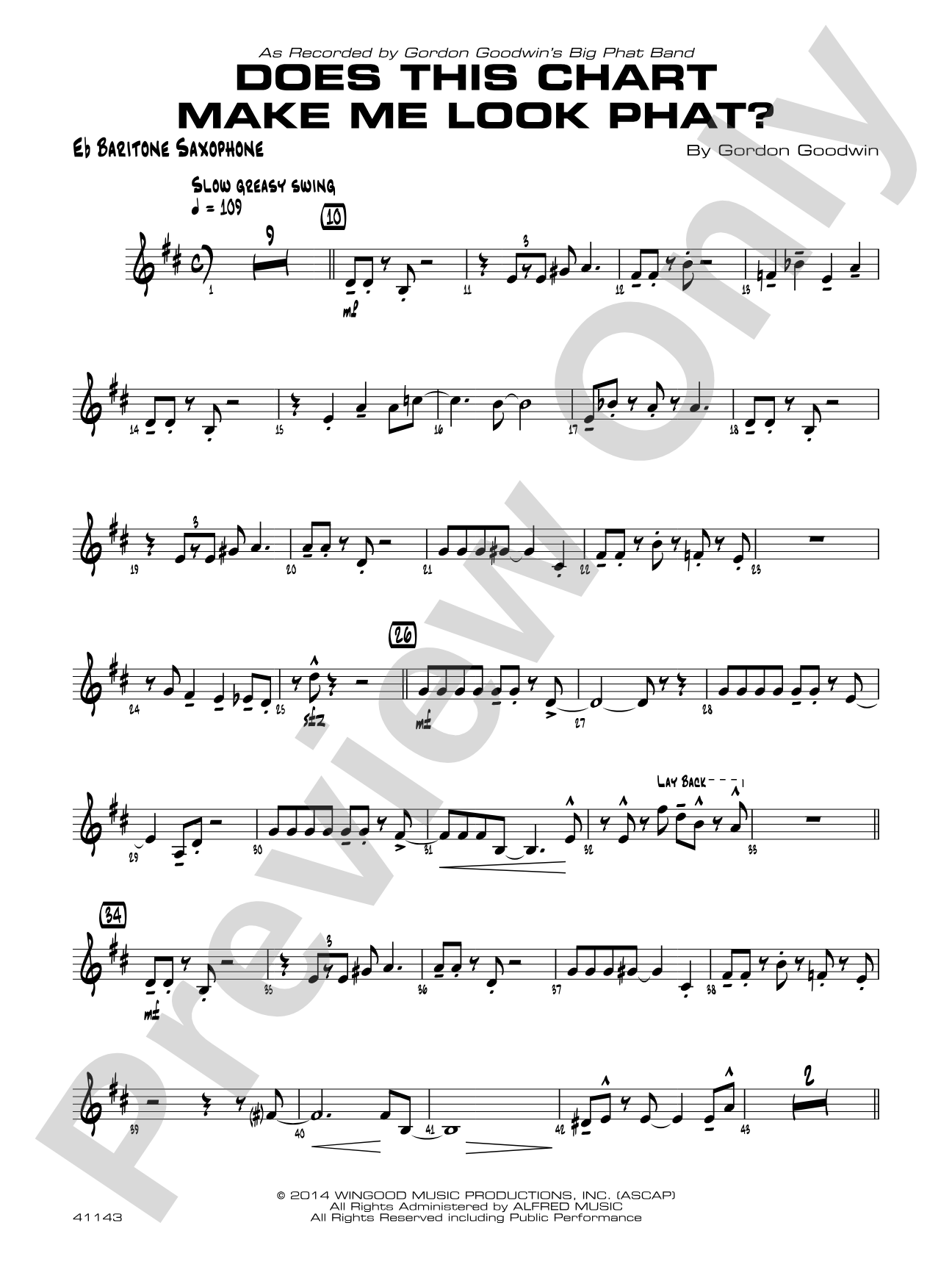
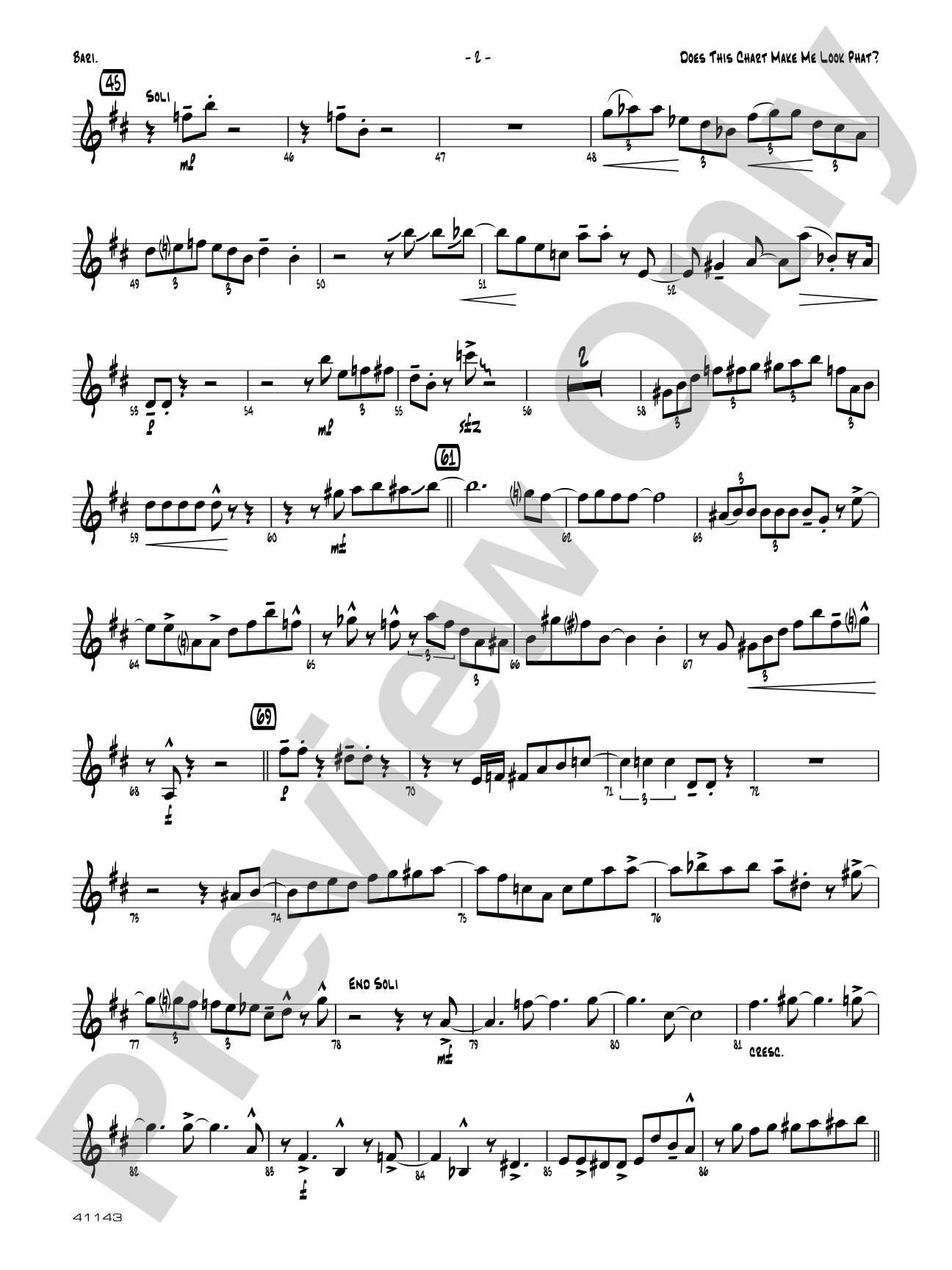

Does This Chart Make Me Look Phat?: E-flat Baritone Saxophone
By Gordon Goodwin
Grade: 6 (Professional / Very Advanced)
Item: 00-PC-0016279_BTX
$3.00
Pickup currently not available
Description
In the style of Nestico and Basie, this medium swing chart is full of nuances. Includes solo space for all saxes, trumpet 4, and trombone 1. At 110 BPM, this is truly a wonderful chart that will satisfy any mature band, as recorded by the Big Phat Band. (4:30)


Don't just read it, hear it, play along with it, and watch your students grow with it. In MakeMusic Cloud, Does This Chart Make Me Look Phat?: E-flat Baritone Saxophone comes alive with professional accompaniment, adjustable tempo, and built-in practice tools that turn solo practice into real progress.
Open in the Player
Jump straight in and assign it today.
Start Your Free Trial
Open this title and explore the full library in minutes.
Sample Audio
1
Audio File
--:--
0:00
0:00
Sample Video
No sample videos found.
Additional Details
Series:
Gordon Goodwin Series
Publisher:
Alfred Music
Page Count:
94
SKU:
00-PC-0016279_BTX
More about this title
About the Composer: Gordon Goodwin

Gordon Goodwin began composing at five years old, writing complete arrangements rather than fragments. By age thirteen, he had already written his first big band chart, Hang Loose, signaling the arrival of a generational talent. His work scoring films including Bad Boys II, Con Air, Remember the Titans, and Star Trek: Nemesis earned him three Emmy Awards and multiple Grammy nominations. He has written for and performed alongside artists ranging from Christina Aguilera to Ray Charles, and has conducted symphony orchestras across North America and Europe.
In 2000, Goodwin founded Gordon Goodwin's Big Phat Band, establishing himself as a bandleader and curator of contemporary big band jazz. His albums have consistently received Grammy recognition, with his debut, Swingin' for the Fences, making history as the first commercially available DVD audio release. Through his arranging and performance work, Goodwin has become a defining voice in modern jazz composition and orchestration.
Why we love this
Goodwin captures the sophisticated swing language of Nestico and Basie while infusing it with contemporary harmonic color and rhythmic sophistication. Every section gets something to play, with scattered solos for saxes, fourth trumpet, and first trombone that showcase individual voices without derailing the ensemble's forward momentum. The fact that the Big Phat Band recorded this at full professional level means you're learning from the composer's own interpretation.
What to expect
Sophisticated, groovy, and playful. The swing sits firmly in the pocket without ever feeling stiff, and the arrangement has the kind of effortless cool that comes from a composer who understands how big bands breathe and move. There's genuine joy in the orchestration, with moments that make audiences smile.
Who it's for
This chart is designed for experienced jazz ensembles with solid section work and capable soloists. Advanced high school programs, college jazz bands, and professional or semi-professional groups will find the harmonic language and solo requirements genuinely rewarding.
How to get the most out of it
- Anchor the rhythm section's groove at 110 BPM with precision before the saxes and brass enter; this tempo requires absolute clarity from piano, bass, and drums to support the soloists' interpretive freedom.
- Balance the arranged passages against the solo sections by letting the soloists breathe and take space without overwhelming them with section dynamics.
- Pay attention to the voicing nuances in the ensemble passages, particularly how the saxophones voice against the trombone section; these details distinguish a competent performance from a polished one.
- Work the solo sections individually first, then layer in the accompaniment so soloists understand exactly what's underneath them before running full sections.
How to use it
This works beautifully as a closing number for a jazz concert or festival performance, particularly if you're programming alongside other contemporary big band charts. At 4 minutes 30 seconds, it fills a substantial slot without overstaying its welcome, and the recorded Big Phat Band version gives students a professional reference point to study.
Skills your students will build
- Balancing section cohesion with solo spotlight
- Interpreting swing articulation and phrasing at medium tempo
- Reading complex jazz harmonies and voice leading
- Responding dynamically to soloists while maintaining ensemble groove
- Navigating the style requirements of the Basie-Nestico tradition