Dodo L'enfant Dors (Sleep, Baby Sleep): String Bass Sheet Music Preview

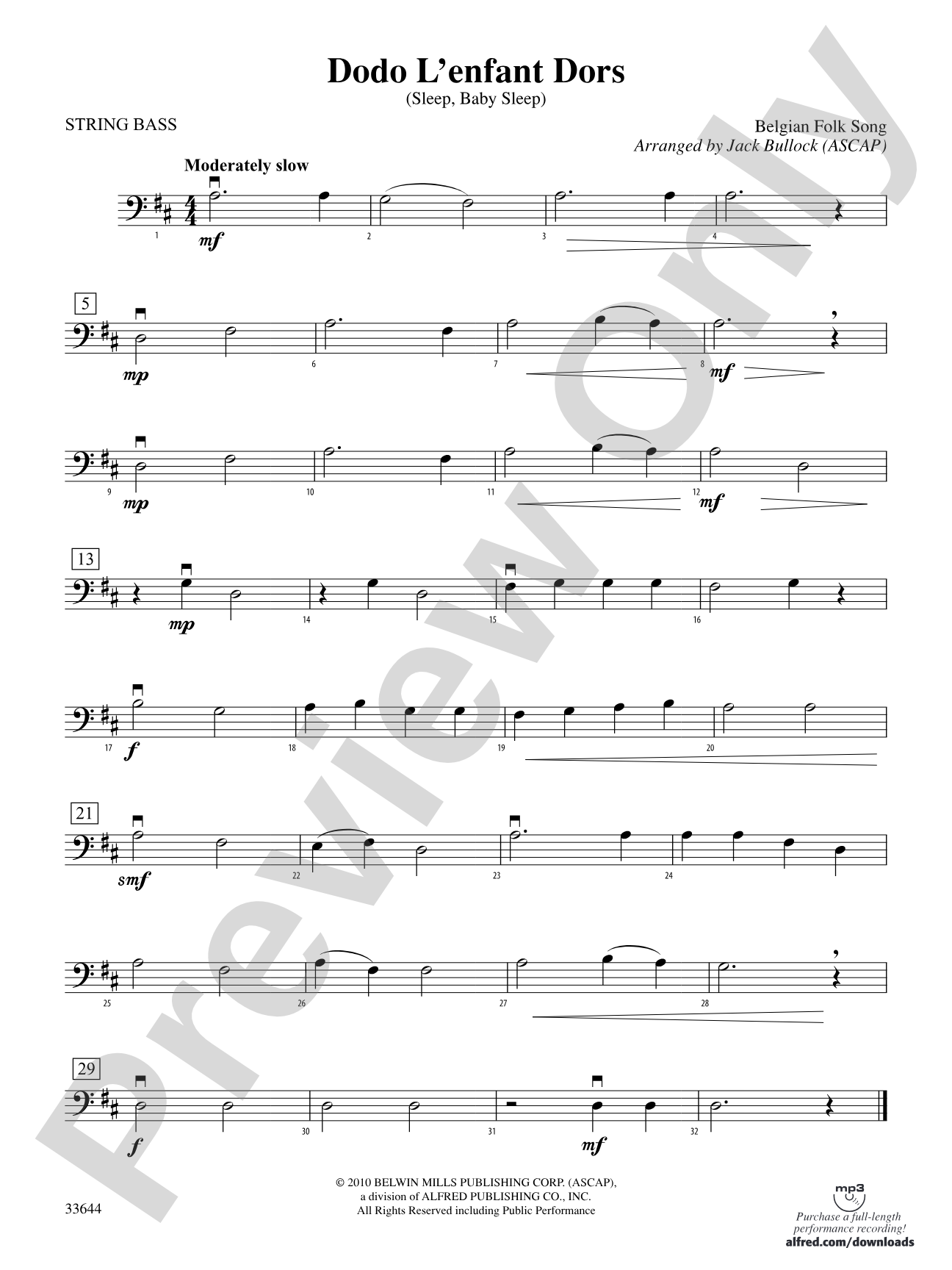
Dodo L'enfant Dors (Sleep, Baby Sleep): String Bass

Belgian Folk Song / arr. Jack Bullock

Grade: 1.5

Item: 00-PC-0014438_SB

Digital Download
$5.99
Description
With the essence of a French lullaby, yet possessing a distinct character, this simple lullaby has all the charm of concert music. Arranged perfectly for a first ensemble experience, the tempo is easily adjusted to the ability level of your group.

Don't just read it, hear it, play along with it, and watch your students grow with it. In MakeMusic Cloud, Dodo L'enfant Dors (Sleep, Baby Sleep): String Bass comes alive with professional accompaniment, adjustable tempo, and built-in practice tools that turn solo practice into real progress.

Sample Audio
0:00
0:00
Sample Video
Additional Details
Series: Orchestra Expressions
Publisher: Alfred Music
Page Count: 68
SKU: 00-PC-0014438_SB

More about this title

About the Arranger: Jack Bullock

Jack Bullock

Jack Bullock brings decades of practical music-making experience to his arranging work. A performer, composer, and educator, he earned advanced degrees in Music Education and studied trumpet with several accomplished artists, performing with ensembles ranging from the Miami Philharmonic to regional and national touring bands. His career as a classroom instrumental music teacher spanned two decades, including seven years at Ithaca College where he directed the band program and chaired the Music Education Department.

With more than 600 published works across concert band, orchestra, jazz ensemble, and marching band, Bullock has shaped music curricula and educational materials widely used in schools. He co-authored the Belwin 21st Century Band Method and contributed arrangements to Music Expressions, Alfred Music's comprehensive school music program. His work has earned him membership in ASCAP since 1980 and recognition in national Who's Who directories.

Why we love this

Bullock has written this arrangement with genuine insight into what makes a first string orchestra experience successful. The French lullaby character feels authentic and elegant without overwhelming young players, and the flexible tempo marking means your ensemble can perform it at a pace that feels natural to their current abilities rather than forcing them to race through or drag.

What to expect

Gentle and contemplative, with the soothing quality of a bedtime song that never turns saccharine. The writing captures the lyrical essence of a French lullaby while maintaining enough structural clarity that young musicians can grasp the piece's shape and purpose quickly.

Who it's for

Beginning string orchestras that have developed basic bowing control and rhythmic stability. This piece provides an early concert experience that feels musically rewarding without demanding advanced technical skills or complex ensemble coordination.

How to get the most out of it

  • Set the tempo based on your ensemble's comfort level with sustained bow control; slower tempos often reveal intonation issues more clearly, so adjust accordingly.
  • Shape each phrase with gentle dynamic breathing rather than mechanical crescendos and diminuendos; this lullaby rewards a vocalist's approach to phrasing.
  • Balance the melodic line between sections so it sings forward, even at quieter dynamic levels; younger ensembles often play too softly when aiming for intimacy.
  • Attend to the harmonic foundation in the lower strings; a clear, stable bass line supports the melody and steadies younger players' sense of pulse.

How to use it

Open a winter or spring concert with this short, accessible work to establish an intimate mood before moving to longer or more energetic pieces. It also serves well as a festival or competition entry for groups at this level, offering judges a clear window into your ensemble's musicality and attention to sound quality.

Skills your students will build

  • Sustaining lyrical phrasing across multiple measures
  • Playing at soft dynamic levels while maintaining tone quality
  • Balancing individual lines within a homophonic texture
  • Adjusting tempo with conductor direction
  • Reading concert pitches across all string parts simultaneously

You May Also Like