
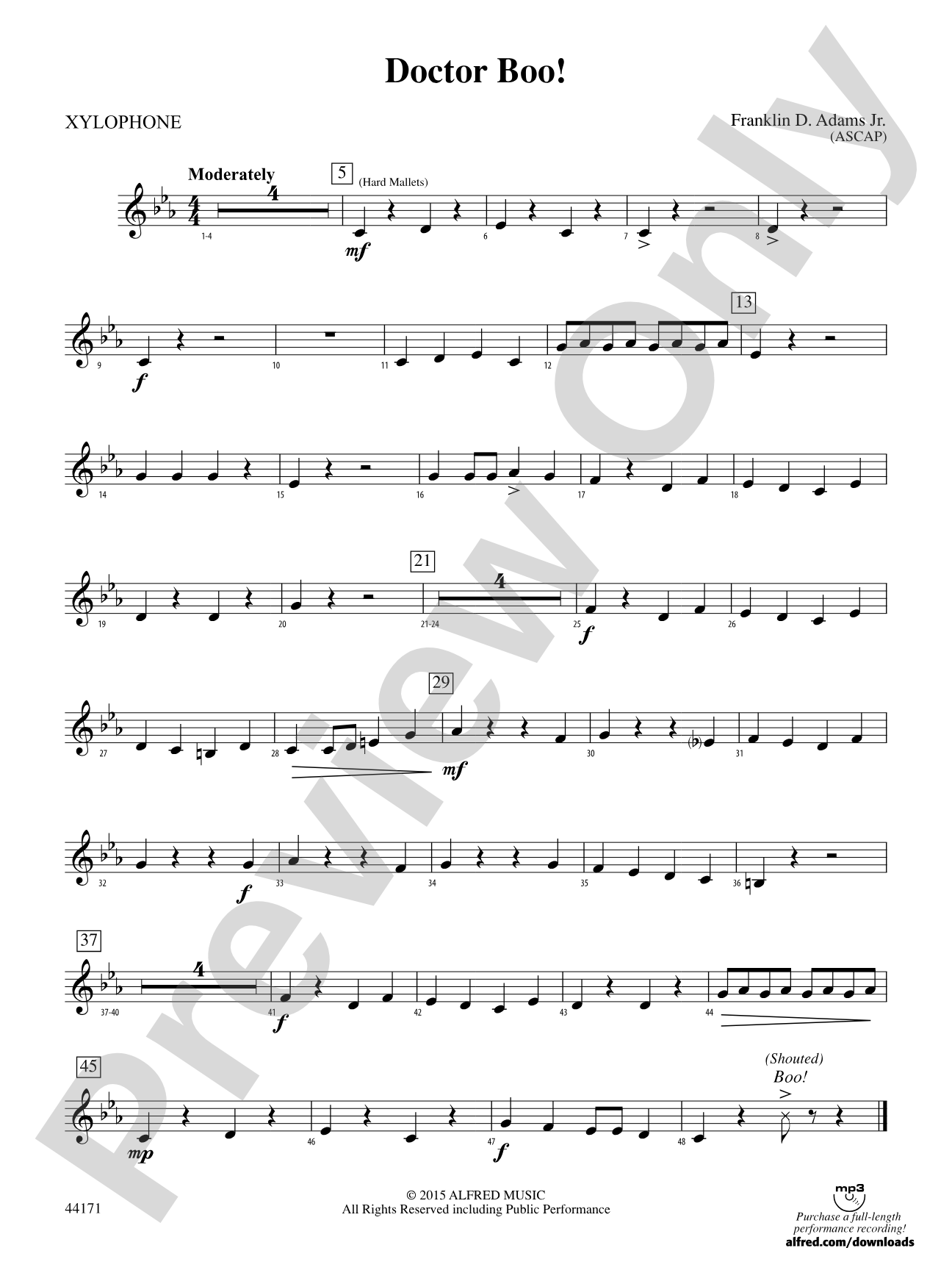

Doctor Boo!: Xylophone
By Franklin D. Adams, Jr.
Grade: 1 (Very Easy)
Item: 00-PC-0017021_X
$3.00
Pickup currently not available
Description
Eerie sounds reverberate through dark, dusty hallways as a Grandfather clock, covered with spider webs, suddenly springs to life in the dead of night---tick tock, tick tock . . . Everyone will have a scary good time making this musical visit to an abandoned old mansion haunted by a playful ghost known simply as . . . Doctor Boo! (1:40)


Don't just read it, hear it, play along with it, and watch your students grow with it. In MakeMusic Cloud, Doctor Boo!: Xylophone comes alive with professional accompaniment, adjustable tempo, and built-in practice tools that turn solo practice into real progress.
Open in the Player
Jump straight in and assign it today.
Start Your Free Trial
Open this title and explore the full library in minutes.
Sample Audio
1
Audio File
--:--
0:00
0:00
Sample Video
Additional Details
Series:
Alfred Debut Series
Publisher:
Alfred Music
Page Count:
128
SKU:
00-PC-0017021_X
More about this title
About the Composer: Franklin D. Adams

Franklin D. Adams brings decades of classroom experience to his compositions. As co-founder and administrator of MusicAlliance, an organization serving band programs across Northeast Ohio's private and parochial schools, he works daily with student musicians and understands what engages young players. His teaching career spans four years in southeast Ohio public schools and eleven years directing elementary and junior high bands in the Cleveland area, where he earned recognition including the Positive and Professional Teacher of the Year Award.
Adams holds a B.A. in music education from Anderson University and maintains professional memberships in the National Association for Music Education, the Ohio Music Education Association, and ASCAP. His compositions, published by Alfred Music Publishing and C. Alan Publications, emerge directly from his work in the classroom, where he has been writing for student bands throughout his entire career.
Why we love this
Doctor Boo! captures Grade 1 concert band's perfect sweet spot: it's genuinely fun to play without talking down to young musicians. Adams nails the novelty writing here with clever rhythmic figures and the grandfather clock tick-tock motif that students will recognize immediately, building confidence through clarity while keeping the piece moving. The eerie atmosphere gives bands a chance to explore color and expression on Halloween programming without requiring complicated technical demands.
What to expect
A mischievous midnight adventure filled with creeping shadows and sudden startles, but ones that make you laugh rather than jump. The piece invites playful interpretation of the haunted house setting, complete with mechanical clock sounds and the unpredictable antics of a friendly ghost exploring the abandoned mansion.
Who it's for
Grade 1 bands making their first steps into concert repertoire, particularly those performing in fall seasonal concerts. Young musicians benefit from the straightforward rhythmic and harmonic language while still getting to make musical choices about texture and mood.
How to get the most out of it
- Shape the grandfather clock rhythm as a recurring musical character throughout; let it breathe differently each time it appears, growing more insistent as the ghost makes its presence known.
- Balance the sustained background texture with the playful foreground melody so the "scary good time" feeling stays light rather than genuinely creepy.
- Use the 1 minute 40 second duration to your advantage in programming; it works beautifully as an opener or closer without consuming significant rehearsal time.
- Encourage sections to maintain steady pulse during the tick-tock figures; this is an ideal opportunity to reinforce internal beat security in a musical, engaging way.
How to use it
Program this as your October or Halloween concert opener to set a seasonal mood and immediately capture audience attention with its novelty appeal and immediately recognizable concept. At Grade 1, it's light enough to pair with multiple other selections on the same concert without overshadowing more traditional repertoire.
Skills your students will build
- Maintaining steady pulse through repetitive rhythmic figures
- Balancing foreground melody against background accompaniment texture
- Interpreting character and mood in concert band writing
- Responding to a recurring musical motif (the clock mechanism) throughout a piece
- Building ensemble blend in a shorter concert work