Do You Want To Know A Secret? Sheet Music Preview

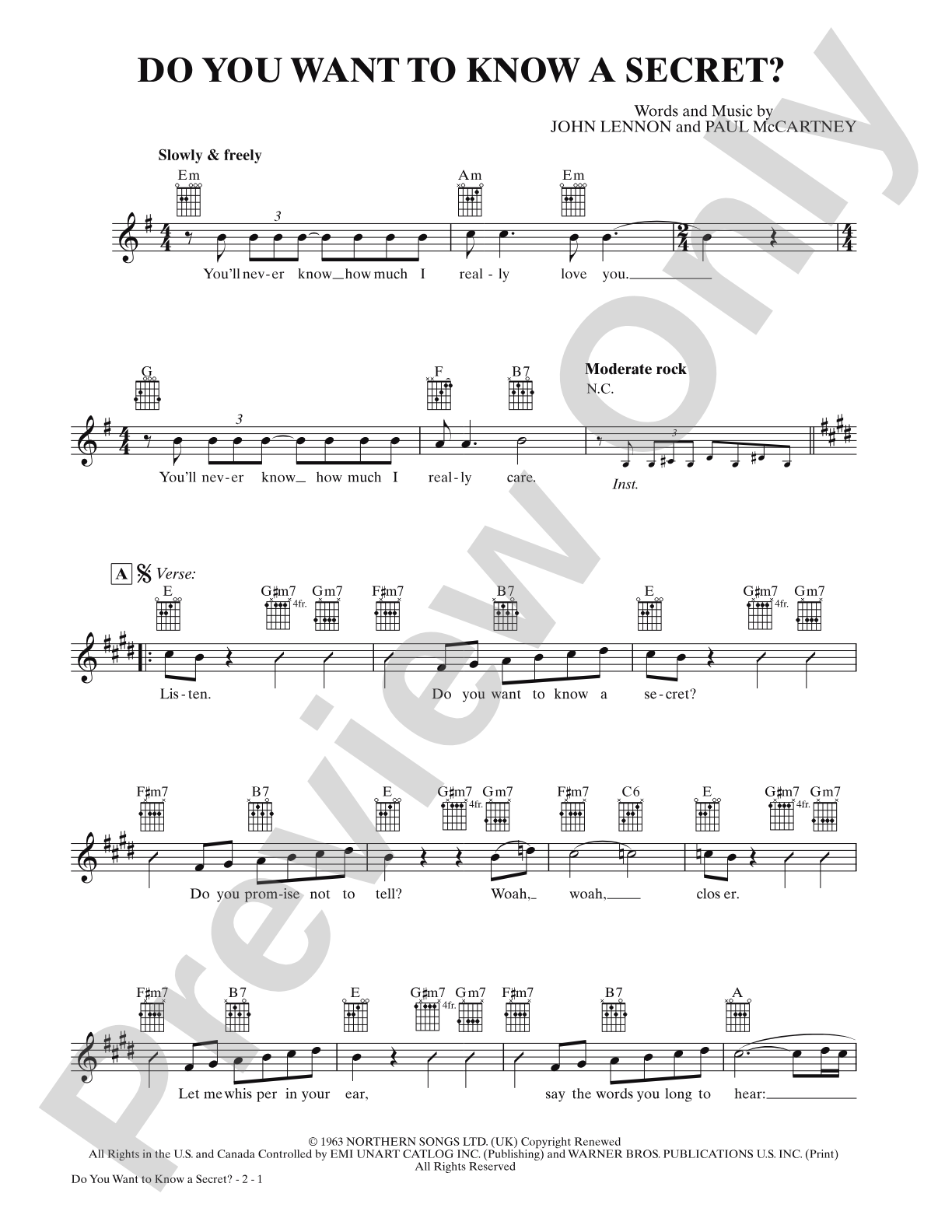
Do You Want To Know A Secret?: Lead Sheet

The Beatles

Item: 00-PSL-000587

Digital Download
$4.99

One moment…

Description
The list of 25 compositions includes not only originals penned by Lennon and McCartney themselves, but others by songwriters such as Leiber and Stoller, Burt Bacharach, Dixon and Farrell and The Isley Brothers. Titles include: Baby, It's You * Bésame Mucho * Boys * Do You Want to Know a Secret? * From Me to You * I Saw Her Standing There * I Wanna Be Your Man * Moonlight Bay * Mr. Moonlight * She Loves You * Shout * Twist and Shout and others.

Do You Want To Know A Secret?: Lead Sheet isn't in MakeMusic Cloud just yet...but it could be. Let us know you'd like to see it, and you'll help shape what comes next. In the meantime, start a free trial and dive into thousands of interactive titles your students can play along with today.

Sample Audio
No sample audio found.
Sample Video
Additional Details
Publisher: Alfred Music
Page Count: 88
SKU: 00-PSL-000587

More about this title

About the Artist: The Beatles

The Beatles transformed popular music across the 1960s with a catalog that spans from energetic rock and roll covers to sophisticated studio compositions. Their influence on songwriting, arrangement, and recording technique remains foundational to music education curricula worldwide, with their work demonstrating how accessible melodies and harmonies can achieve both commercial success and artistic depth.

Why we love this

This collection captures the full range of early Beatles material, mixing their own compositions with carefully chosen covers that show how they absorbed and reimagined American rock and roll, R&B, and pop standards. Singers get to explore vocal styles from the tender intimacy of 'Do You Want to Know a Secret?' to the raw energy of 'Twist and Shout,' all within a single, cohesive resource. The blend of material makes this ideal for jazz singers, pop vocalists, and anyone building a Beatles-focused program without hunting through multiple editions.

What to expect

These songs carry the optimism and joy of the early rock and roll era, filtered through the Beatles' increasingly sophisticated ear for harmony and arrangement. Whether you're tackling upbeat covers like 'Boys' or the spare, intimate 'Do You Want to Know a Secret?,' the material radiates an infectious energy tempered with genuine musicality.

Who it's for

This resource serves singers at the intermediate level and above who want to expand their Beatles repertoire beyond 'Yesterday' and 'Let It Be.' Pianists and guitarists accompanying vocalists will find clear chord changes and a manageable learning curve across the 25 titles.

How to get the most out of it

  • Pay attention to the vocal range and tessitura of each song; these arrangements span from high, bright material to lower-register grooves, so transpose strategically to match your voice type and maintain ease across the set.
  • Use the chord symbols to develop a rhythmic feel that matches the original recordings. Songs like 'Shout' and 'Twist and Shout' need driving, syncopated accompaniment, while 'Bésame Mucho' calls for a smoother, more legato touch.
  • Balance melody and harmony when playing piano comping. The Beatles' arrangements often feature economical but effective chord voicings; resist over-filling the texture and let the vocal line breathe.

How to use it

Build a full Beatles-focused recital or concert act using material from this single folio; the variety ensures you can program a complete arc from high-energy opening numbers through more introspective selections. Include this alongside other rock and pop standards to show how the Beatles adapted and transformed American influences into their own sound.

Skills your students will build

  • Reading chord symbols and interpreting them for piano comping and vocal leading
  • Navigating stylistic variation within a single artist's catalog
  • Singing with rhythmic precision and swing feel in rock and R&B contexts
  • Accompanying singers with appropriate harmonic density and rhythmic groove
  • Understanding the relationship between melody, harmony, and form in popular song structures

You May Also Like