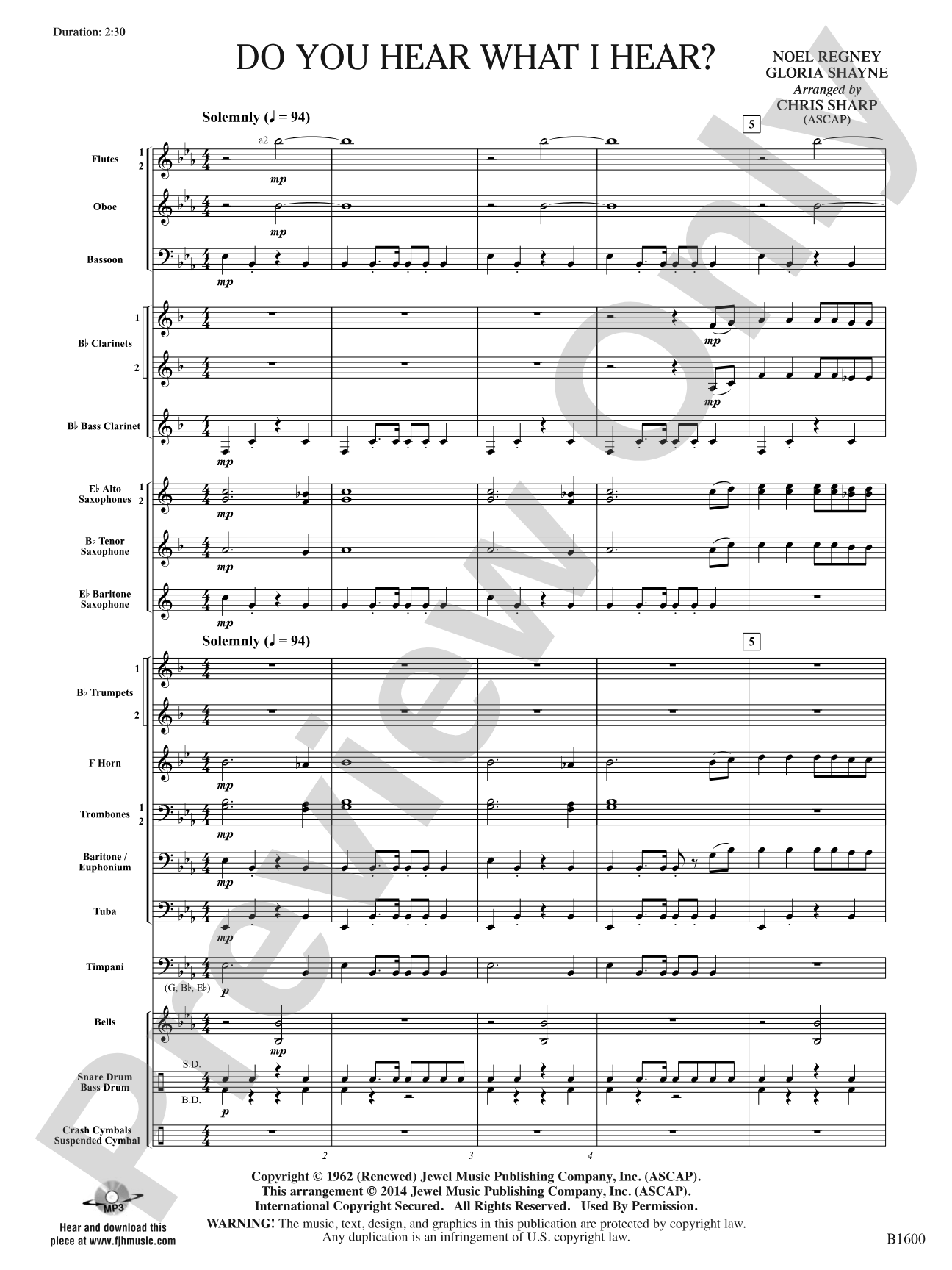
Do You Hear What I Hear?: Score Sheet Music Preview

Do You Hear What I Hear?: Score: Concert Band

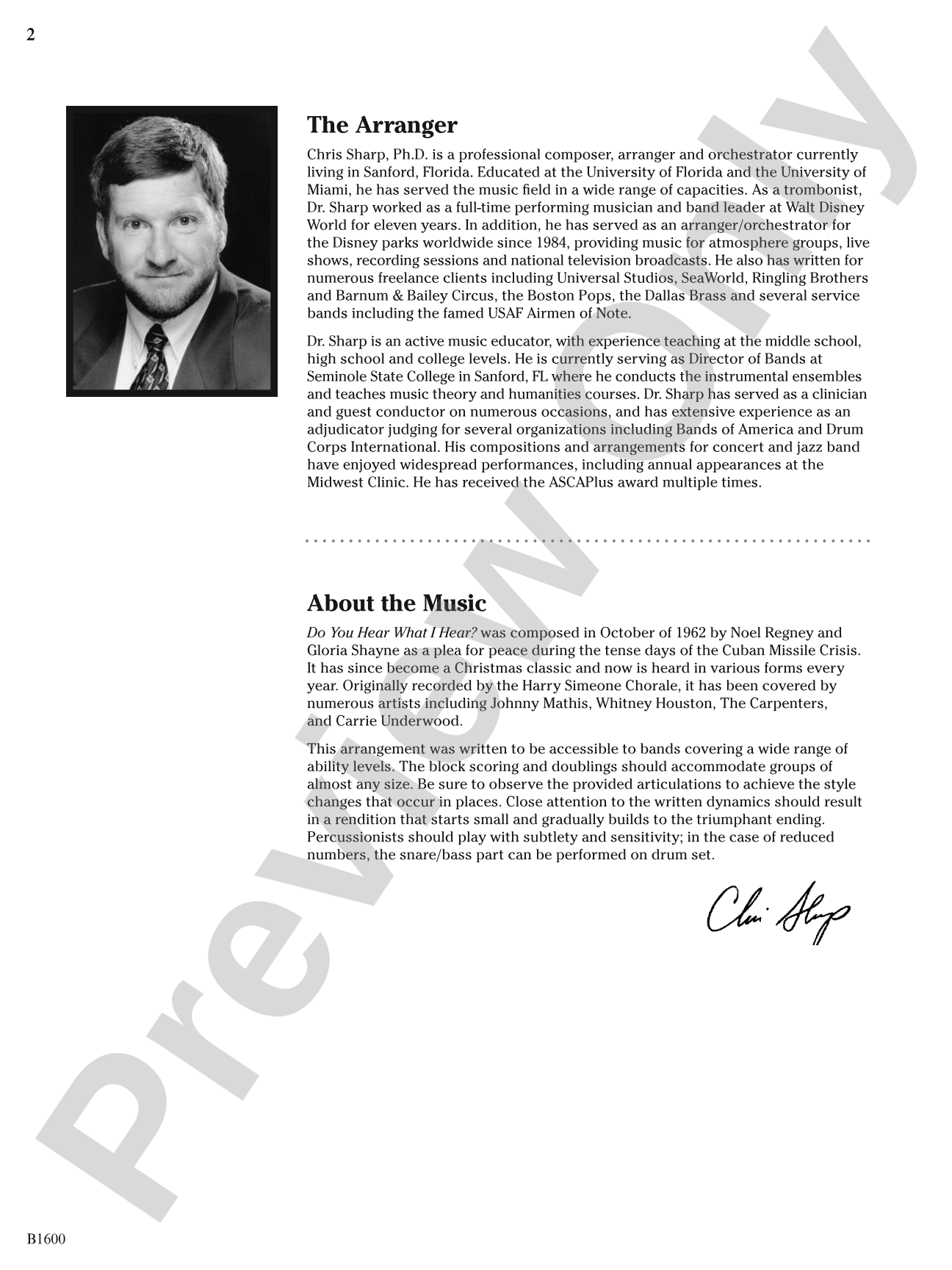
By Gloria Shayne Baker / arr. Chris Sharp

Grade: 2.5

Item: 98-DB1600S

Digital Download
$5.00
Description
This arrangement of a holiday classic is written to be accessible to bands at a wide range of ability levels. Solid block scoring and appropriate doublings can accommodate a group of almost any size. The delightful melody is constantly interspersed with thoughtful countermelodies and careful attention to texture. A superb arrangement of this endearing classic!

Do You Hear What I Hear?: Score: Concert Band isn't in MakeMusic Cloud just yet...but it could be. Let us know you'd like to see it, and you'll help shape what comes next. In the meantime, start a free trial and dive into thousands of interactive titles your students can play along with today.

Sample Audio
No sample audio found.
Sample Video
Additional Details
Series: FJH Young Band
Publisher: The FJH Music Company, Inc.
SKU: 98-DB1600S

More about this title

About the Composer: Gloria Shayne Baker

Gloria Shayne Baker co-wrote "Do You Hear What I Hear?" with Noël Regney in 1962, creating one of the most recognizable holiday melodies of the past sixty years. Originally composed as a plea for peace during the Cuban Missile Crisis, the song has become a standard in holiday programming across schools, churches, and concert halls worldwide.

Baker's gift for melody and her collaborative work with Regney resulted in a composition that transcends its historical moment. The song's emotional directness and accessible range have made it a staple for music educators looking for material that engages both performers and audiences.

Why we love this

Chris Sharp's arrangement strips away any sentimentality while preserving the song's emotional core, making it genuinely engaging for young musicians. The scoring balances simplicity with musical substance: block harmonies keep parts readable, but the constant interplay of melody and countermelody keeps rehearsals interesting and the performance rewarding.

What to expect

Warm and unhurried, with a gentle insistence rather than holiday-song bombast. The melody floats effortlessly while the harmonies underneath create depth without requiring technical fireworks, giving bands room to focus on musicality and blend.

Who it's for

This arrangement works for middle school and early high school bands building comfort with traditional four-part harmony and sectional independence. It's equally valuable for community bands or smaller ensembles where flexible instrumentation and accessible material matter.

How to get the most out of it

  • Anchor the main melody solidly in the trumpet section while ensuring the countermelody in lower instruments isn't buried; these lines need equal voice even though they sit at different registers.
  • Shape the phrasing in phrases rather than measure-to-measure; this melody benefits from long lines and breathing, not choppy articulation.
  • Balance texture shifts carefully by bringing out full ensemble moments and pulling back when the arrangement splits into smaller voicings.
  • Let the harmonic language breathe; resist the temptation to add vibrato or excessive dynamics that would oversell what Sharp has already written so deliberately.

How to use it

Place this in your holiday concert as an opener that sets a reflective tone before moving into faster or more energetic selections. It pairs well with other classic arrangements in a mixed pops program and doesn't demand the rehearsal time that more complex holiday pieces require.

Skills your students will build

  • Balancing melody with countermelody across different instrumental families
  • Sustaining phrases without rhythmic stops
  • Reading and executing block harmonic scoring
  • Adjusting dynamic shape within a single ensemble texture
  • Listening across sections to achieve blend and balance

You May Also Like