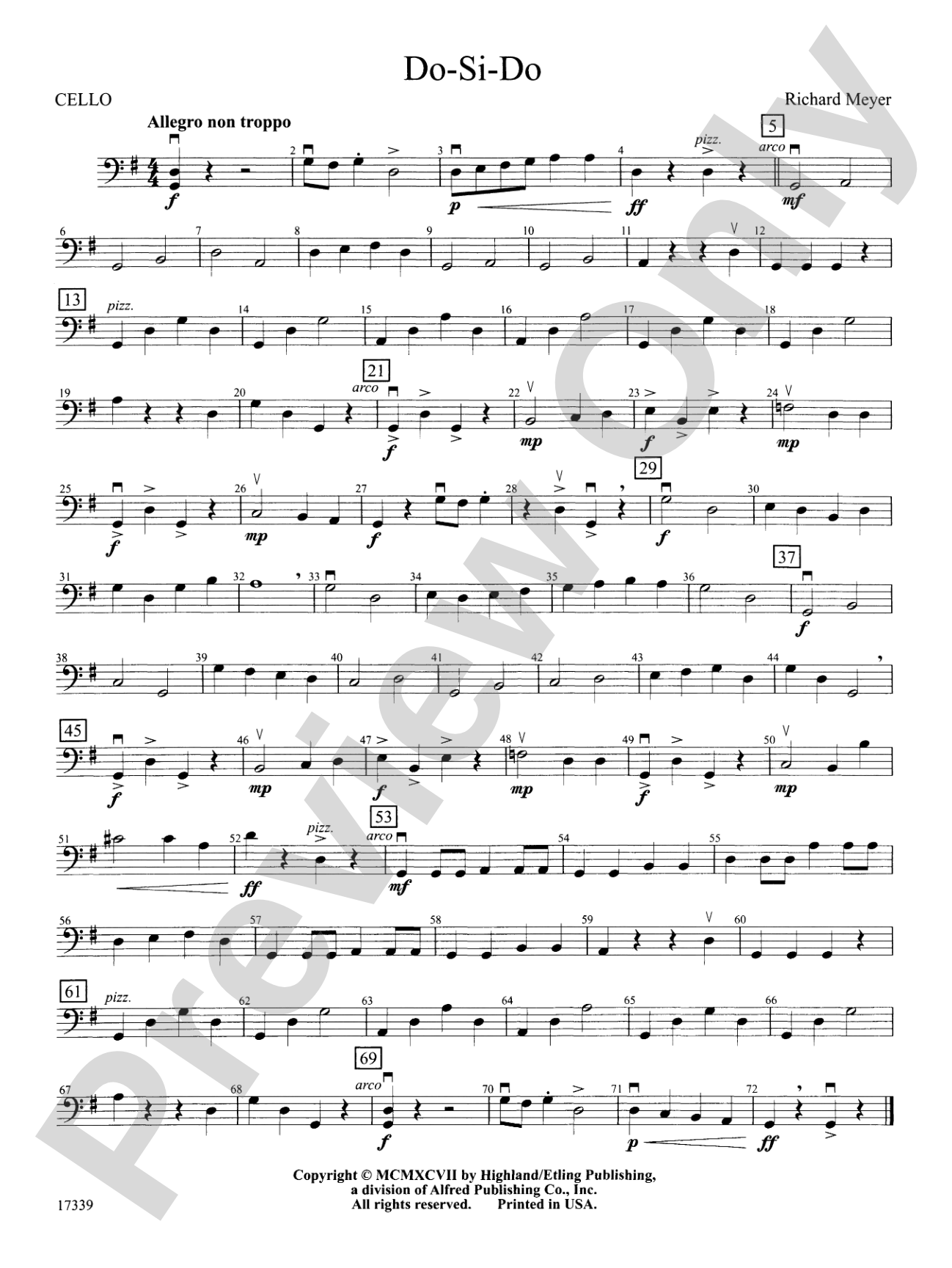
Do-Si-Do: Cello Sheet Music Preview

Do-Si-Do: Cello

By Richard Meyer

Grade: 1

Item: 00-PC-0000221_VC1

Digital Download
$5.99
Description
This original by Richard Meyer combines traditional fiddle style with a few rhythmic and harmonic surprises to produce a motivational and educationally sound work for the young string orchestra. Correlated with Strictly Strings, Book 1, page 34.

Don't just read it, hear it, play along with it, and watch your students grow with it. In MakeMusic Cloud, Do-Si-Do: Cello comes alive with professional accompaniment, adjustable tempo, and built-in practice tools that turn solo practice into real progress.

Sample Audio
0:00
0:00
Sample Video
Additional Details
Series: Highland/Etling Strictly Strings
Publisher: Alfred Music
Page Count: 62
SKU: 00-PC-0000221_VC1

More about this title

About the Composer: Richard Meyer

Richard Meyer

Richard Meyer spent 35 years teaching strings across elementary, middle, and high school levels in the public schools. At Oak Avenue Intermediate School in Temple City, California, he transformed the orchestra program from 29 students to 200 over 22 years while overseeing the city's elementary string curriculum.

Beyond the classroom, Meyer founded the "Giving Bach" program in 2009, which uses interactive concerts to reach special needs and underserved students throughout Southern California and has earned national recognition. He served as music director of the Pasadena Youth Symphony Orchestra for 16 years, leading performances across the United States, Vienna, Australia, and Canada. His work as a clinician at major conferences (A.S.T.A., Texas Orchestra Directors' Association, Ohio State University) and his 16-year tenure as string editor for Alfred Publishing Company reflect his deep influence on the field. Meyer is a prolific composer with over 190 published works and co-authored the String Explorer Series and Sight-read It for Strings.

Why we love this

Meyer writes with direct knowledge of what young orchestras can actually accomplish. The fiddle style hooks students immediately while the rhythmic and harmonic surprises keep them engaged without overwhelming beginners, making this a piece that feels rewarding to conduct from the first rehearsal. Correlated with Strictly Strings Book 1 means it lands exactly when students have the skills to play it confidently.

What to expect

Rooted in the directness and warmth of American fiddle traditions, Do-Si-Do surprises listeners with harmonic turns that feel gently unexpected rather than jarring. The piece invites students into an idiom that feels both approachable and slightly adventurous, balancing comfort with discovery.

Who it's for

Beginning string orchestras in their first year of study who have reached page 34 in Strictly Strings Book 1. The grade level and curriculum correlation make it ideal for elementary or early middle school orchestras ready to perform a stylistically distinctive piece that maintains technical accessibility.

How to get the most out of it

  • Emphasize the lift and swing characteristic of fiddle style by encouraging players to think about the natural pulse of folk music rather than rigid metric precision.
  • Balance the ensemble carefully during the harmonic surprises Meyer introduces; these moments are educational precisely because they challenge expectations, so let them land clearly without drowning them in other parts.
  • Use this as a springboard for discussing how traditional styles can coexist with contemporary harmonic thinking, which opens conversations about musical borrowing and arrangement.

How to use it

Program this early in the year as a festival or contest selection that builds confidence without demanding advanced technique. It also works beautifully in a concert pairing traditional Americana repertoire with pieces that show how folk styles continue to evolve in contemporary composition.

Skills your students will build

  • Fiddle articulation and swing rhythms
  • Reading harmonic progressions beyond diatonic harmony
  • Ensemble balance and blend across parts
  • Stylistic interpretation of folk idiom

You May Also Like