Do I Hear A Waltz? Sheet Music Preview

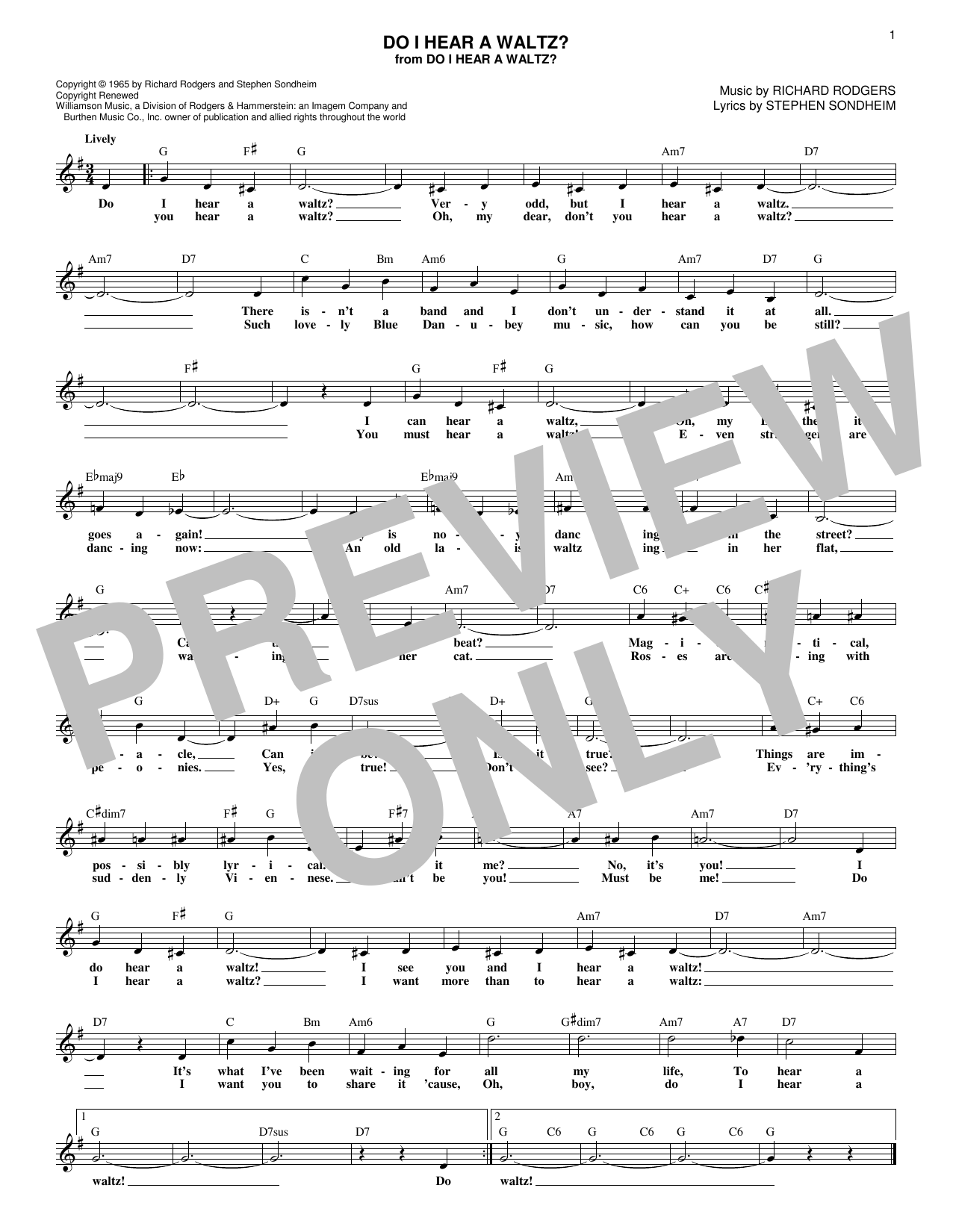
Do I Hear A Waltz?: Lead Sheet / Fake Book

As performed by Richard Rodgers

Item: 35-DS00375897

Digital Download
$3.99
Description

Do I Hear A Waltz?: Lead Sheet / Fake Book isn't in MakeMusic Cloud just yet...but it could be. Let us know you'd like to see it, and you'll help shape what comes next. In the meantime, start a free trial and dive into thousands of interactive titles your students can play along with today.

Sample Audio
No sample audio found.
Sample Video
Additional Details
Publisher: Hal Leonard
Page Count: 1
SKU: 35-DS00375897

More about this title

About the Artist: Richard Rodgers

Richard Rodgers stands as one of Broadway's most prolific melodists, with a catalog spanning five decades and countless standards that define American musical theater. His gift for crafting singable, emotionally direct melodies made him a natural collaborator with lyricists like Lorenz Hart and Oscar Hammerstein II, producing work that bridges the concert stage and the jazz repertoire with equal ease.

Rodgers' influence on music education extends far beyond Broadway. His songs have become foundational to jazz education, vocal pedagogy, and music theory instruction because they demonstrate how sophisticated harmonic language can serve emotional storytelling without sacrificing accessibility.

Why we love this

This lead sheet captures one of Rodgers' most charming creations in its most functional form. Jazz ensembles, vocal jazz students, and pianist-accompanists will find the single-page format both practical and sufficient; there's nothing extraneous here, just the essential melody and harmony ready for interpretation.

What to expect

Elegant without pretension. The three-four time creates an unhurried, almost waltzing quality that feels both theatrical and intimate. Rodgers' harmonic language brings warmth and sophistication to what could have been a simple melody, making it rewarding to accompany and listen to repeatedly.

Who it's for

Vocalist coaches preparing singers for auditions or recitals, jazz pianists building their standards vocabulary, and educators looking for straightforward lead sheet material that doesn't require page turning. This single-page format also works well for students learning to sight-read from lead sheets.

How to get the most out of it

  • Treat the melody with a conversational lightness. The waltz meter invites spaciousness, so avoid rushing into the beat; let each phrase breathe naturally.
  • Voice the piano accompaniment to complement rather than compete with the melody. Often the best voicings sit in the middle register, leaving room for singers and avoiding thick bass that muddies the three-four time.
  • Explore rhythmic flexibility in the melody line. Rodgers wrote singable phrases that reward slight rubato and phrasing adjustments; your lead sheet is a starting point, not a prescription.

How to use it

Feature this in a jazz standards concert or a musical theater vocal recital where it can sit comfortably alongside other Rodgers songs or period-appropriate standards. It also serves as excellent teaching material for a classroom unit on lead sheet reading or as an accompaniment for a vocalist in a solo and ensemble festival.

Skills your students will build

  • Reading lead sheets and chord symbols
  • Interpreting jazz voicings in waltz meter
  • Balancing accompaniment and melody as a collaborative pianist
  • Understanding Broadway harmonic language and its relationship to jazz standards

You May Also Like