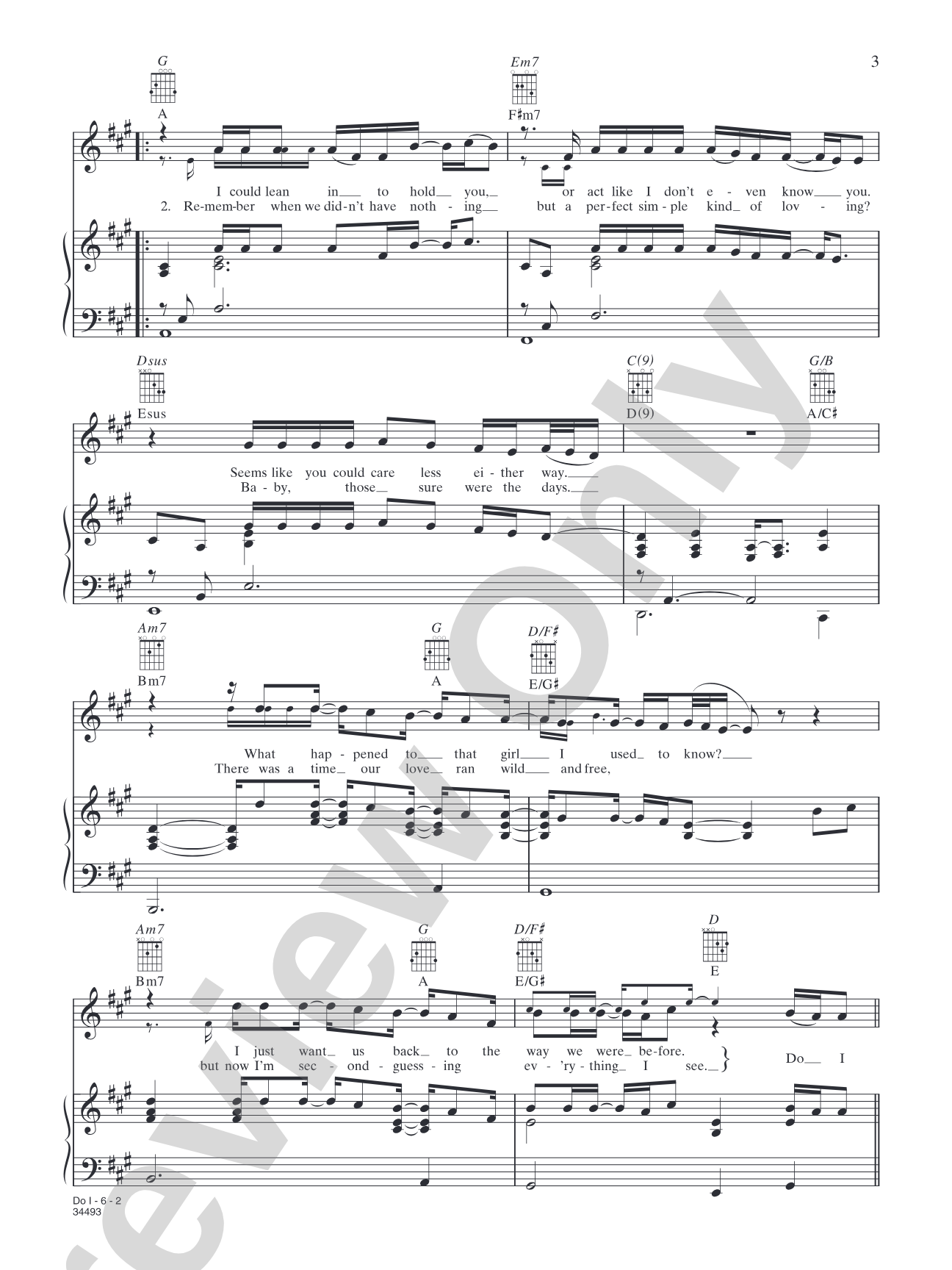
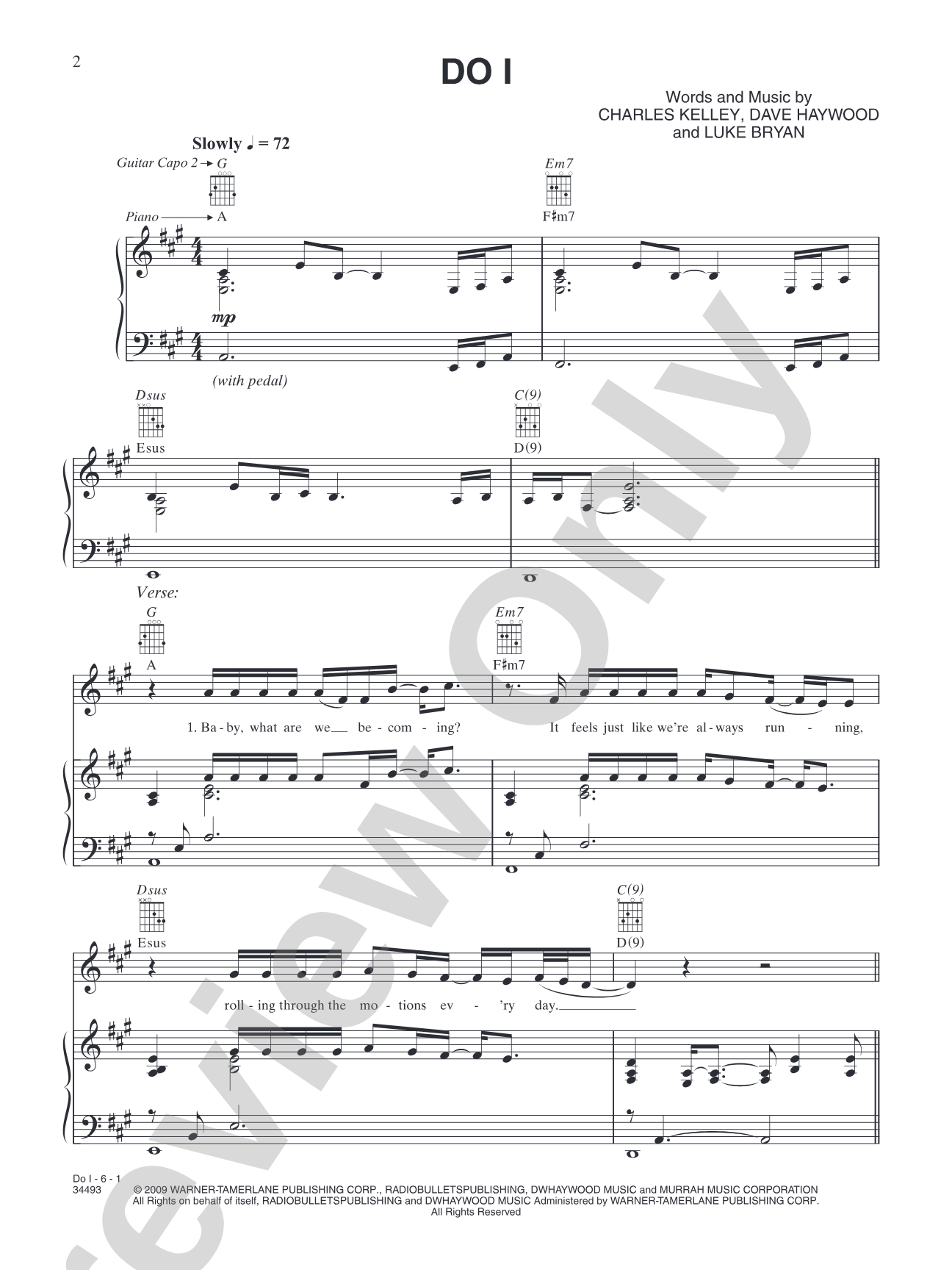
Do I Sheet Music Preview

Do I: Piano/Vocal/Chords

Words and music by Charles Kelley, Dave Haywood, and Luke Bryan / recorded by Luke Bryan

Item: 00-PS-0011607

Digital Download
$3.99

One moment…

Description

Do I: Piano/Vocal/Chords isn't in MakeMusic Cloud just yet...but it could be. Let us know you'd like to see it, and you'll help shape what comes next. In the meantime, start a free trial and dive into thousands of interactive titles your students can play along with today.

Sample Audio
No sample audio found.
Sample Video
Additional Details
Series: Original Sheet Music Edition
Publisher: Alfred Music
SKU: 00-PS-0011607

More about this title

About the Composer: Charles Kelley

Charles Kelley is a founding member of Lady Antebellum (now Lady A), one of country music's most successful groups. As a songwriter and vocalist, he has co-written numerous chart hits and earned multiple Grammy Awards, bringing a deep understanding of contemporary country songwriting and production to his work.

Why we love this

This piano/vocal arrangement gives singers and pianists direct access to a modern country hit with authentic harmonic content. The chord chart support makes it accessible for students learning to accompany themselves or collaborate with pianists, while the vocal melody line captures what makes the song resonate with audiences.

What to expect

Warm, intimate, and emotionally direct. The song invites connection through its lyrical honesty and straightforward melodic line, supported by harmonic language that feels modern yet rooted in country tradition. There's space to breathe and shape the phrases expressively.

Who it's for

Piano students and vocalists preparing for recitals, auditions, or informal performances who want to work with contemporary repertoire. Pianists developing skills in chord-based accompaniment will find real-world application here, while singers benefit from learning songs that sit naturally in their range.

How to get the most out of it

  • Balance the vocal line so lyrics remain clear even as the piano part thickens; country songs rely on storytelling as much as musicality.
  • Use the chord symbols to explore comping variations once you've learned the basic arrangement; this develops independence between hands.
  • Pay attention to where the vocal melody sits relative to the piano; country arrangements often place the voice in a conversational register rather than operatic tessitura.
  • Lock the rhythmic feel between voice and keyboard to capture the groove of the original; a loose, conversational delivery works better than rigid metering.

How to use it

Feature this in a student recital that embraces contemporary and traditional repertoire side by side, or use it as a platform for duet performance between singer and pianist. It works equally well as a solo showcase for a vocalist or as a vehicle for demonstrating collaborative musicianship.

Skills your students will build

  • Reading chord symbols and building accompaniments from figured bass notation
  • Balancing melody and harmony in the same performance
  • Understanding country music phrasing and lyrical delivery
  • Coordinating vocal and piano lines in real time

You May Also Like