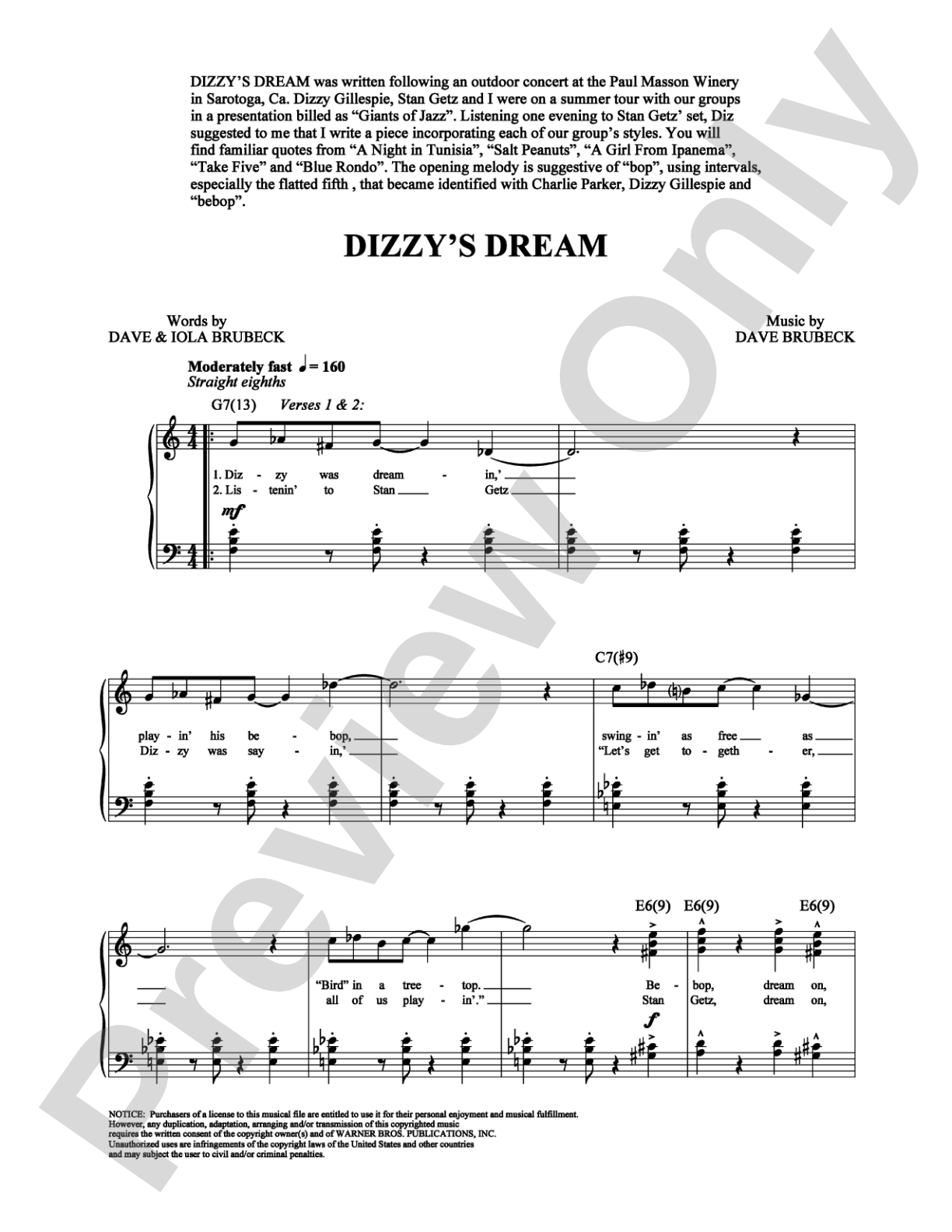
Dizzy's Dream: Piano/Vocal/Chords Digital Sheet Music

Dizzy's Dream: Piano/Vocal/Chords Digital Sheet Music

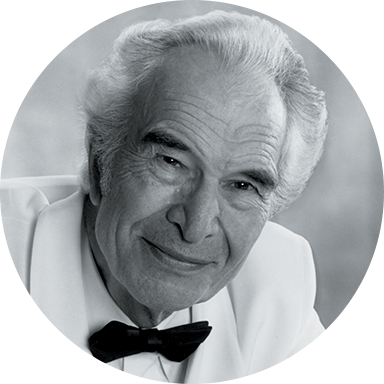
Dave Brubeck

Item: 00-PS-0000851

Digital Download
$3.99
Description

Dizzy's Dream: Piano/Vocal/Chords Digital Sheet Music isn't in MakeMusic Cloud just yet...but it could be. Let us know you'd like to see it, and you'll help shape what comes next. In the meantime, start a free trial and dive into thousands of interactive titles your students can play along with today.

Sample Audio
No sample audio found.
Sample Video
Additional Details
SKU: 00-PS-0000851

More about this title

About the Artist: Dave Brubeck

Dave Brubeck

Dave Brubeck stands as one of jazz's most consequential figures, equally accomplished as an improviser and a disciplined composer. His output spans choral works, hymns, orchestral pieces, chamber music, and large-scale vocal-instrumental compositions, many fully notated and performed by major ensembles including the London Symphony Orchestra and London Voices. His 1959 album "Time Out" became the first jazz recording to exceed one million copies sold, anchored by the enduring "Take Five."

Beyond his musical achievements, Brubeck was instrumental in dismantling racial barriers in mid-twentieth-century American music. He studied composition with Darius Milhaud at Mills College following World War II service, embracing Milhaud's directive to synthesize jazz language with classical discipline. His honors include a Grammy Lifetime Achievement Award, the Presidential Medal of the Arts, and election to the American Classical Music Hall of Fame in 2003.

Why we love this

Brubeck's jazz compositions for voice and piano offer singers and pianists direct access to one of jazz's most influential voices without requiring elaborate arrangements or rhythm sections. The piano/vocal/chords format lets you explore his harmonic vocabulary and rhythmic sophistication in an intimate setting where melody, accompaniment, and chord changes remain transparent and teachable.

What to expect

A conversation between two musicians exploring ideas with intelligence and warmth. Brubeck's melodies are lyrical and memorable, his harmonies gently unexpected; the piece invites both performers to listen actively to each other rather than simply executing their parts.

Who it's for

Vocalists and pianists studying jazz standards, singers preparing jazz recital material, and duos seeking repertoire that showcases sophisticated harmony and melodic writing. Advanced high school and college musicians will find Brubeck's language accessible yet harmonically substantive.

How to get the most out of it

  • Treat the chord symbols as a resource, not a constraint. Brubeck's notated piano part often contains the most idiomatic voicings; use the chords to understand his thinking rather than to reharmonize.
  • Balance clarity with swing. The written rhythm in the piano part should feel natural and conversational, not metronomic. Listen to Brubeck's own recordings to absorb the timing and lift he brings to his compositions.
  • Pay attention to dynamic range. Jazz vocals thrive on contrast between intimate passages and moments of full sound. The piano can support this by mirroring the vocalist's energy rather than maintaining a consistent accompaniment level.

How to use it

Program this alongside other Brubeck compositions or as a jazz standard within a broader recital that mixes classical and contemporary vocal literature. It works equally well as a feature in a jazz-focused concert or as a teaching piece for a pianist-vocalist duo developing interpretive skills.

Skills your students will build

  • Reading and interpreting jazz chord symbols in a notated score
  • Balancing written notation with improvisational phrasing conventions
  • Accompanying a vocalist while maintaining rhythmic independence
  • Understanding Brubeck's harmonic language and voice-leading choices

You May Also Like