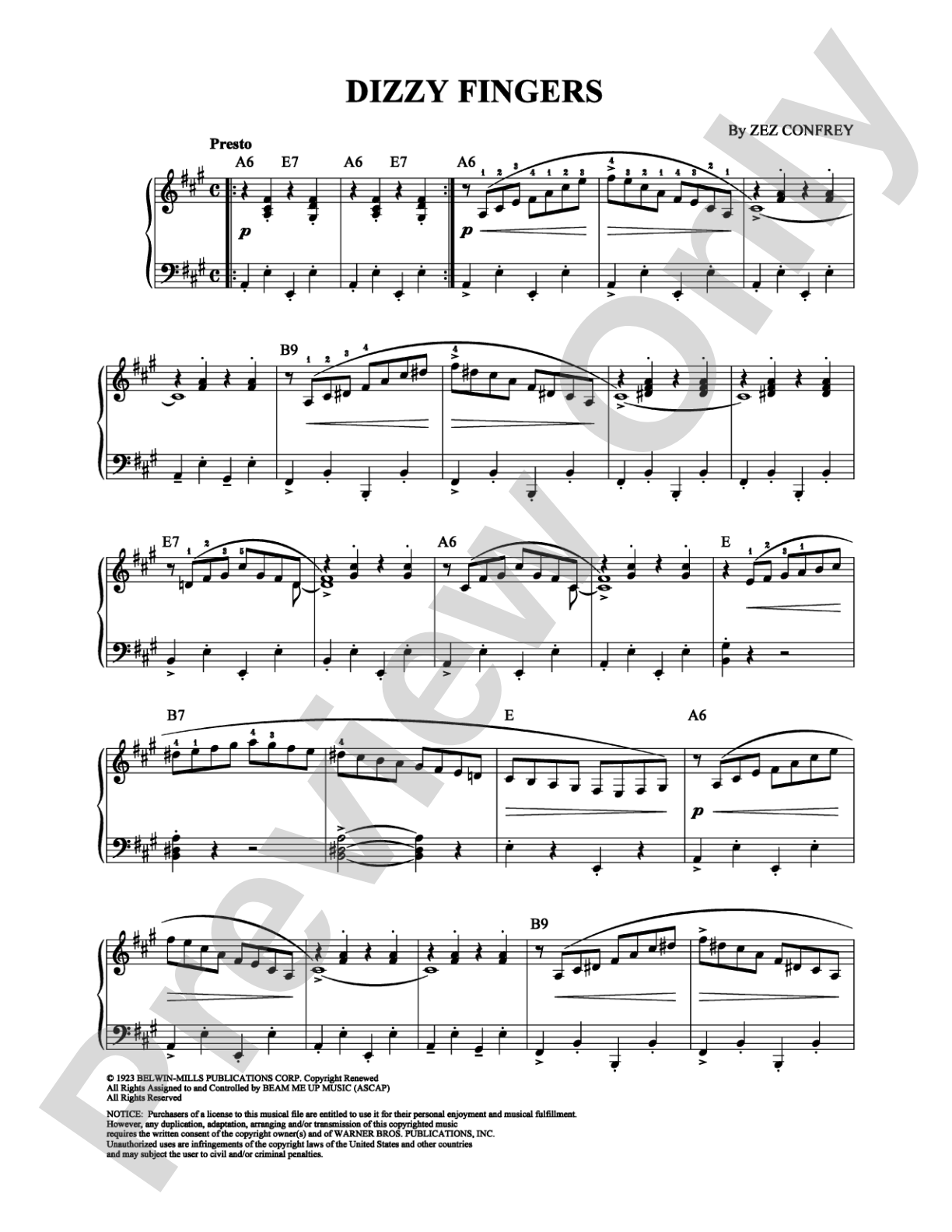
Dizzy Fingers: Piano Digital Sheet Music

Dizzy Fingers: Piano Digital Sheet Music

Zez Confrey

Item: 00-PS-0000820

Digital Download
$3.99
Description

Dizzy Fingers: Piano Digital Sheet Music isn't in MakeMusic Cloud just yet...but it could be. Let us know you'd like to see it, and you'll help shape what comes next. In the meantime, start a free trial and dive into thousands of interactive titles your students can play along with today.

Sample Audio
No sample audio found.
Sample Video
Additional Details
SKU: 00-PS-0000820

More about this title

About the Artist: Zez Confrey

Zez Confrey (1895-1971) was an American pianist and composer who bridged classical training and popular music with uncommon sophistication. His "novelty piano" compositions, written primarily in the 1920s, combined ragtime rhythms with modernist harmonies and technical demands that elevated the genre beyond entertainment into genuine musical challenge.

Why we love this

Dizzy Fingers remains one of the finest introductions to syncopated twentieth-century piano writing. Confrey's rhythmic invention and harmonic color feel fresh nearly a century later, and the piece teaches independence of hands and rhythmic precision without requiring advanced hand span or excessive octave work.

What to expect

Dizzy Fingers bounces with playful energy. The relentless syncopation creates forward momentum, while unexpected harmonic shifts and chromatic runs give the piece sophistication and personality. It feels both modern and timeless, technically engaging without being severe.

Who it's for

This piece belongs in the hands of early-intermediate to intermediate pianists ready to explore jazz vocabulary and syncopation. It works beautifully as a recital solo, a bridge between classical and popular styles, or a repertoire selection for students who thrive on rhythmic challenge and infectious melody.

How to get the most out of it

  • Lock in the steady left-hand pulse first. Once it becomes automatic, the syncopated right-hand figures will sit cleanly on top.
  • Lean into the jazz articulation. Confrey marks staccatos and accents deliberately; they define the character rather than just neat finger work.
  • Take care with the chromatic passages. Mark the scale degrees in pencil if needed to avoid fumbling the runs at tempo.
  • Tempo control matters more than speed. A relaxed, swinging delivery at moderate pace outshines a rushed scramble.

How to use it

Program this alongside other twentieth-century American composers to show how concert music and popular idioms overlapped in the Jazz Age. It pairs well with Gershwin, Copland, or other early modernists, and it lifts any recital with genuine style and audience appeal.

Skills your students will build

  • Syncopation and rhythmic independence between hands
  • Jazz articulation and swing phrasing
  • Chromatic voice leading and scale passage technique
  • Harmonic navigation through jazz-influenced progressions
  • Pedal control in a rhythmically active context

You May Also Like