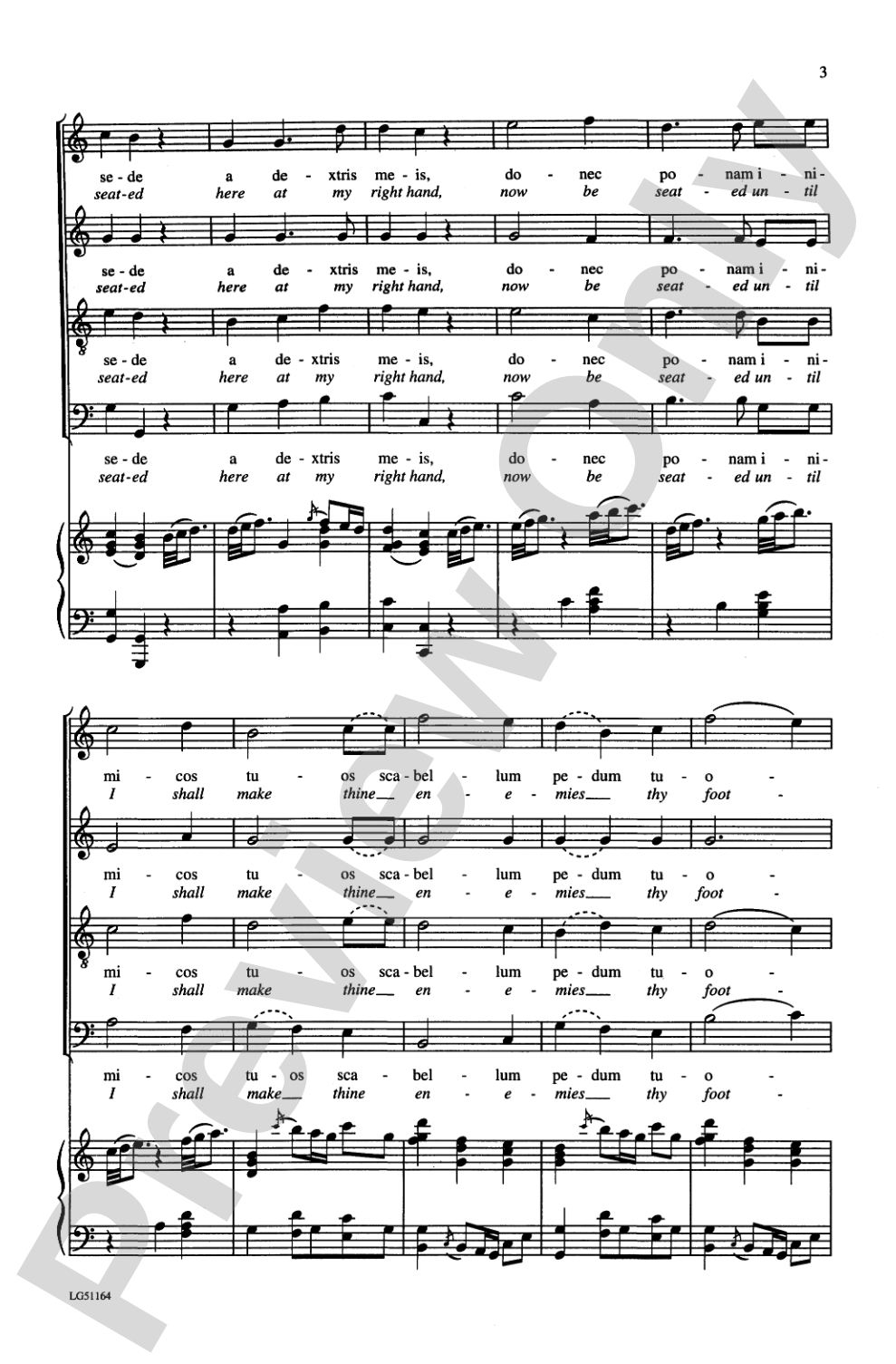
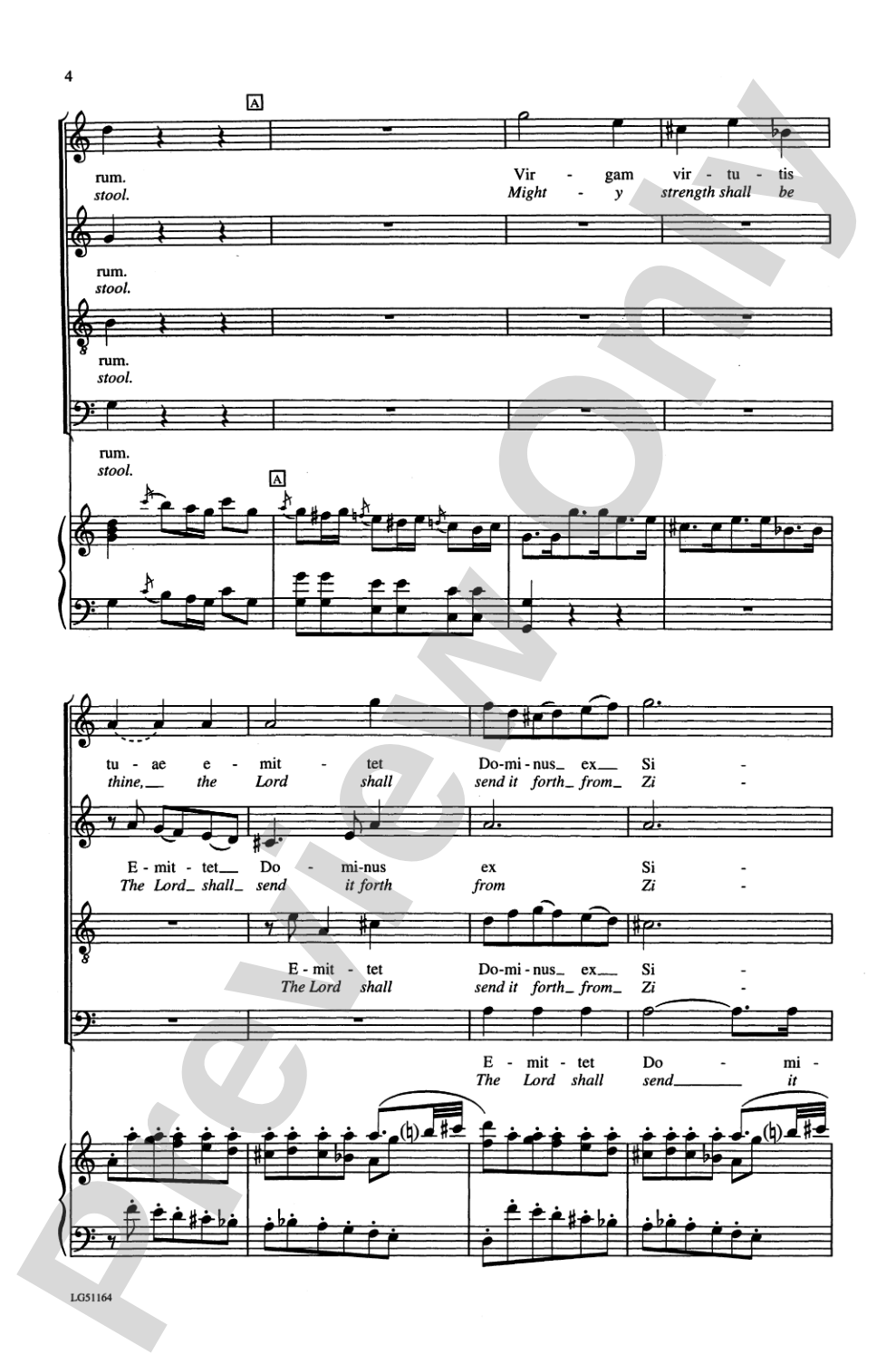
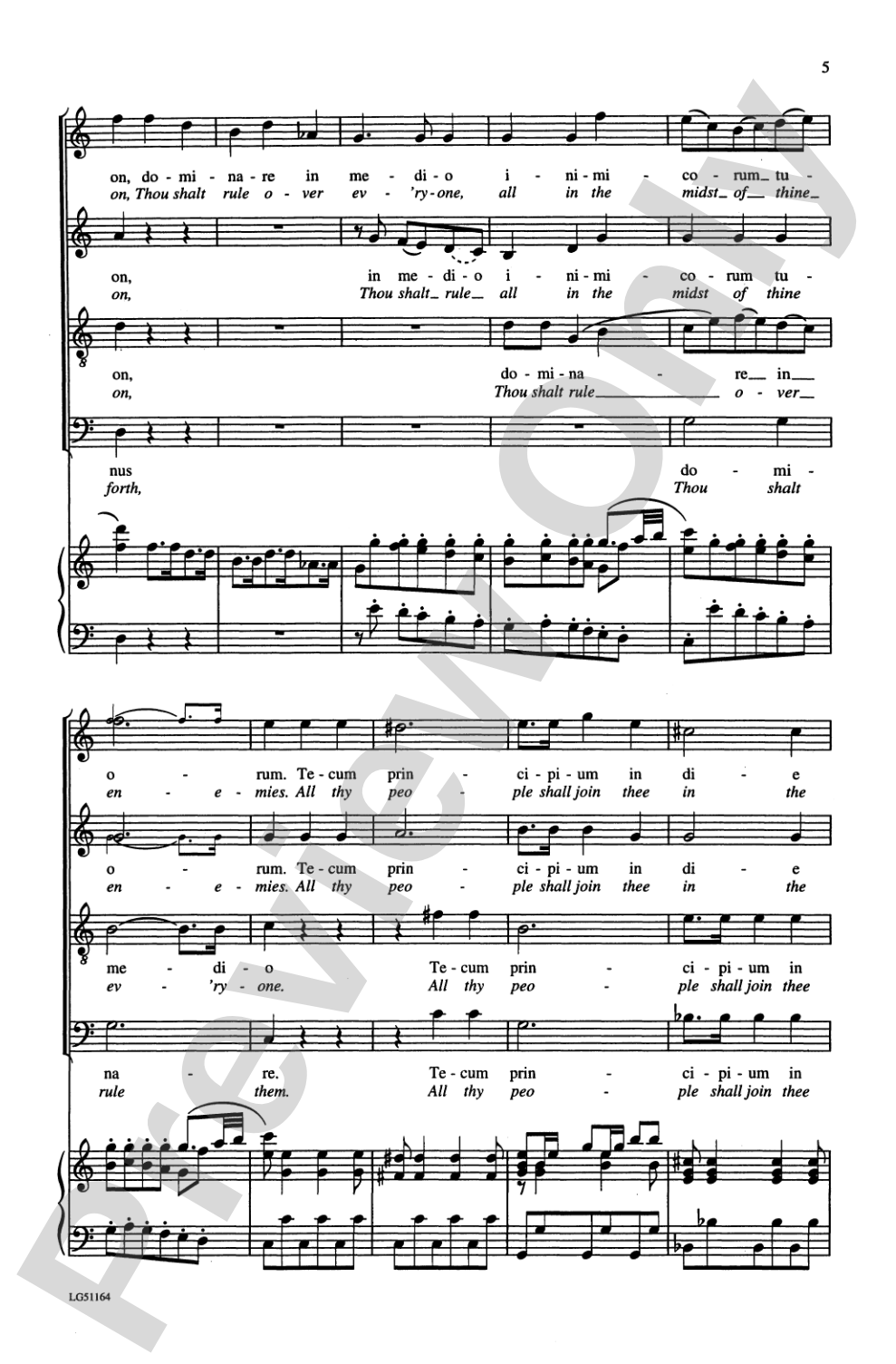
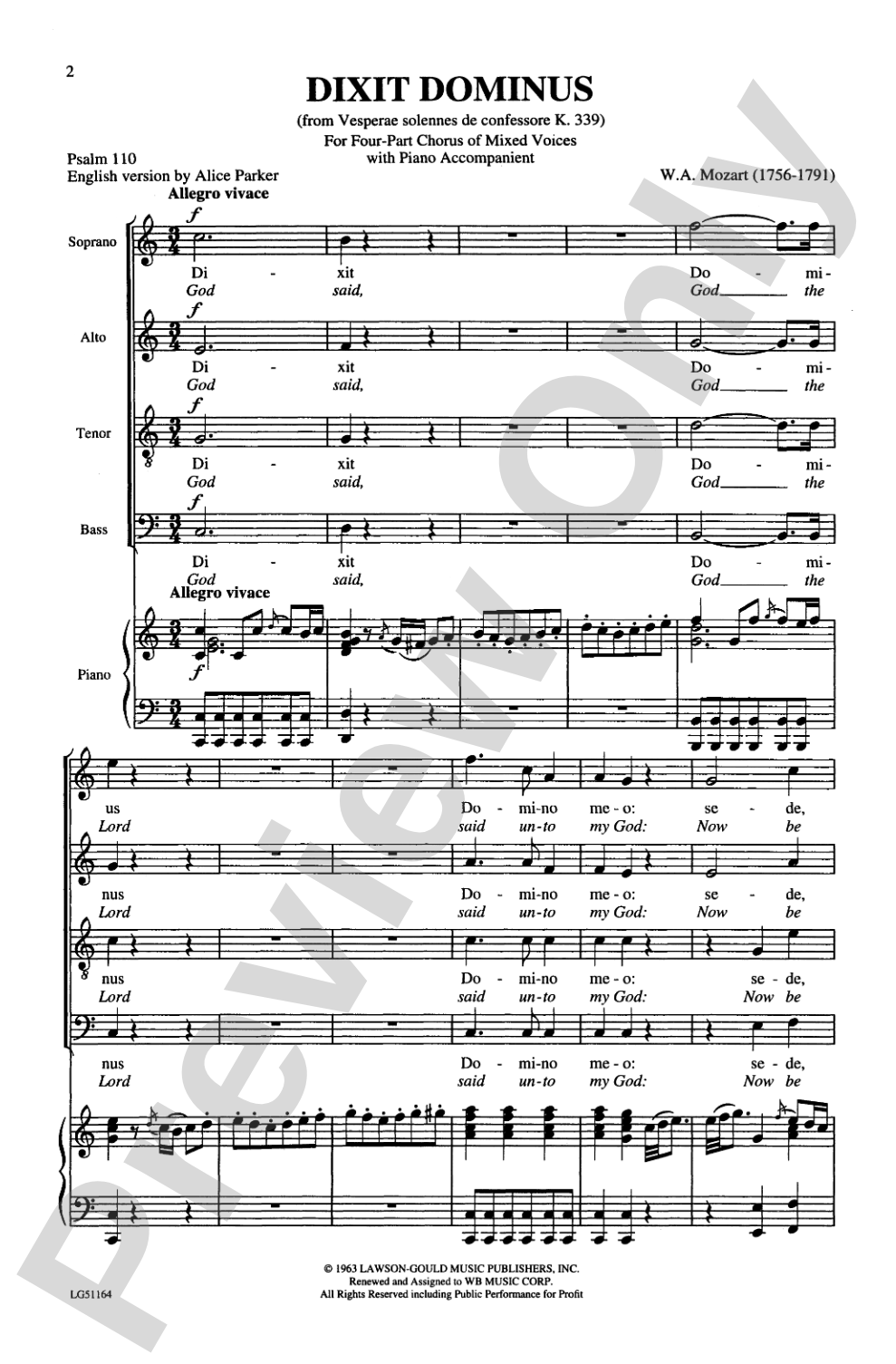
Dixit Dominus, K. 399 Sheet Music Preview

Dixit Dominus, K. 399: SATB Choral Octavo

By Wolfgang Amadeus Mozart / ed. Alice Parker

Item: 00-PO-0003013

Digital Download
$3.50

Minimum order quantity: 20 copies

Description

Dixit Dominus, K. 399: SATB Choral Octavo isn't in MakeMusic Cloud just yet...but it could be. Let us know you'd like to see it, and you'll help shape what comes next. In the meantime, start a free trial and dive into thousands of interactive titles your students can play along with today.

Sample Audio
No sample audio found.
Sample Video
Additional Details
Series: Alfred Archive Edition: Lawson-Gould Music Publishers
Publisher: Alfred Music
Page Count: 20
SKU: 00-PO-0003013

More about this title

About the Composer: Wolfgang Amadeus Mozart

Wolfgang Amadeus Mozart (1756-1791) composed across every major genre of his time, from operas and symphonies to chamber works and sacred music. His output, though cut short by his early death, established him as one of the most influential composers in Western music history, revered equally by performers and composers who followed for his harmonic sophistication, melodic invention, and structural clarity.

Why we love this

Mozart's sacred choral writing combines theological weight with musical elegance; this piece demands precise ensemble control and clean voice leading while remaining vocally grateful across all parts. The Alfred Archive Edition gives you a reliable, well-edited score that lets the architecture of the music speak without editorial distraction.

What to expect

Dixit Dominus unfolds with Mozart's characteristic blend of reverence and brilliance, moving between moments of stark harmonic clarity and passages of luminous vocal writing. The piece carries the weight of liturgical purpose without sacrificing the elegance and rhythmic vitality that define Mozart's style.

Who it's for

This work suits advanced high school and college choirs with solid music-reading skills and experience with counterpoint. Singers tackling Mozart's sacred music learn to balance Baroque contrapuntal technique with Classical harmonic directness.

How to get the most out of it

  • Balance the soprano line without letting it overwhelm the inner voices; Mozart's counterpoint depends on each line being heard.
  • Shape phrases through the harmonic rhythm rather than relying on text stress; the music's forward momentum comes from voice-leading logic.
  • Mark breath points carefully in rehearsal to avoid ragged entries, especially in faster passages where the four parts interlock.

How to use it

This octavo works well as a centerpiece in a concert pairing Classical sacred works with Baroque predecessors or Romantic successors, showing how musical language evolved across eras. It also serves as a standalone offering for church or liturgical contexts where Mozart's sacred catalog is valued.

Skills your students will build

  • Reading and executing Classical counterpoint with four independent voices
  • Balancing harmonic clarity with vocal independence
  • Sustaining long phrases while maintaining textual intelligibility in Latin
  • Ensemble tuning in extended homophonic and contrapuntal textures

You May Also Like