

Dixit Dominus: SAB Choral Octavo
from Dixit Dominus, RV 594
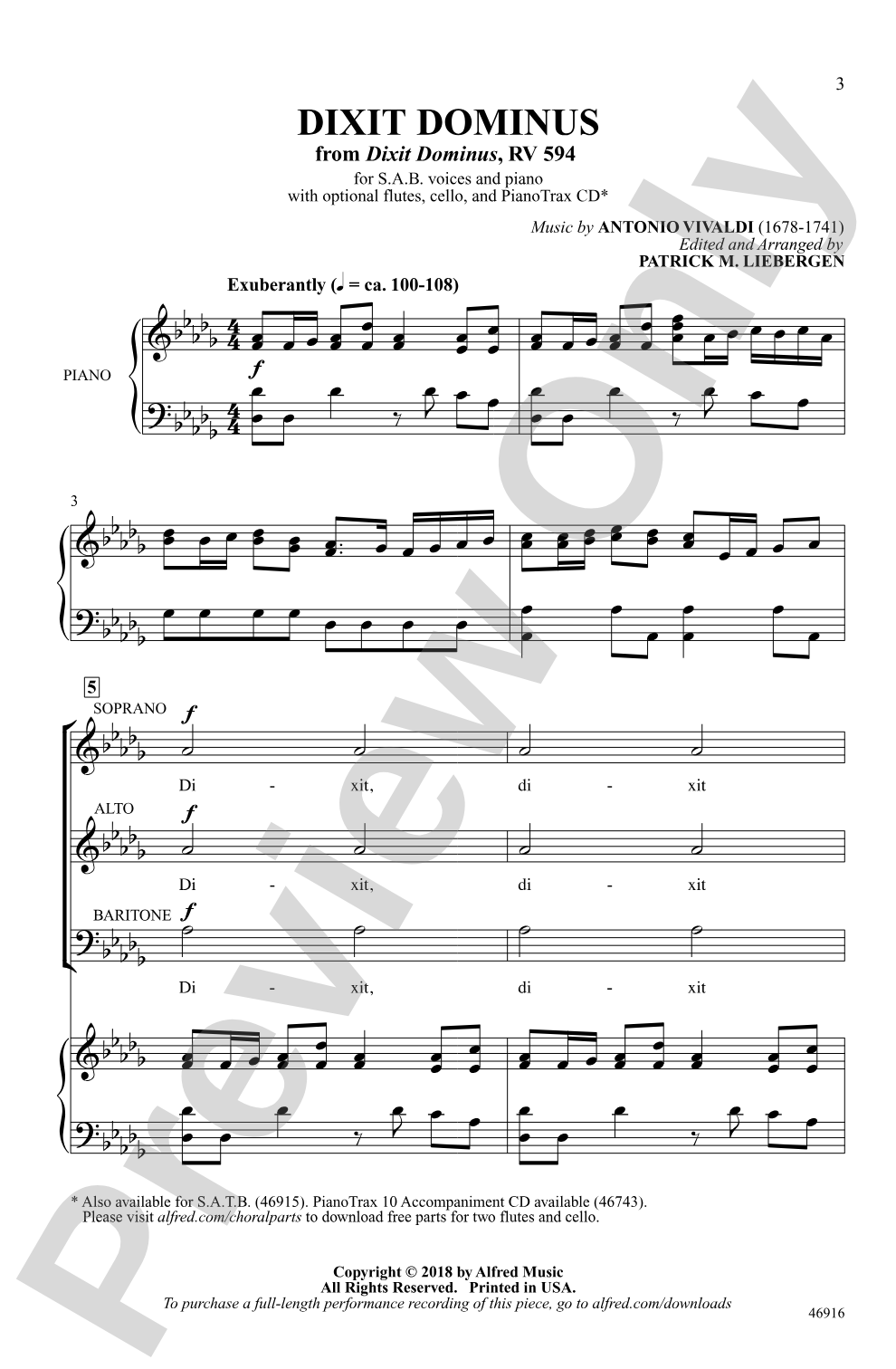
Music by Antonio Vivaldi / ed. and arr. Patrick M. Liebergen
Item: 00-PO-0005786
$2.05
Minimum order quantity: 20 copies
Pickup currently not available
Description
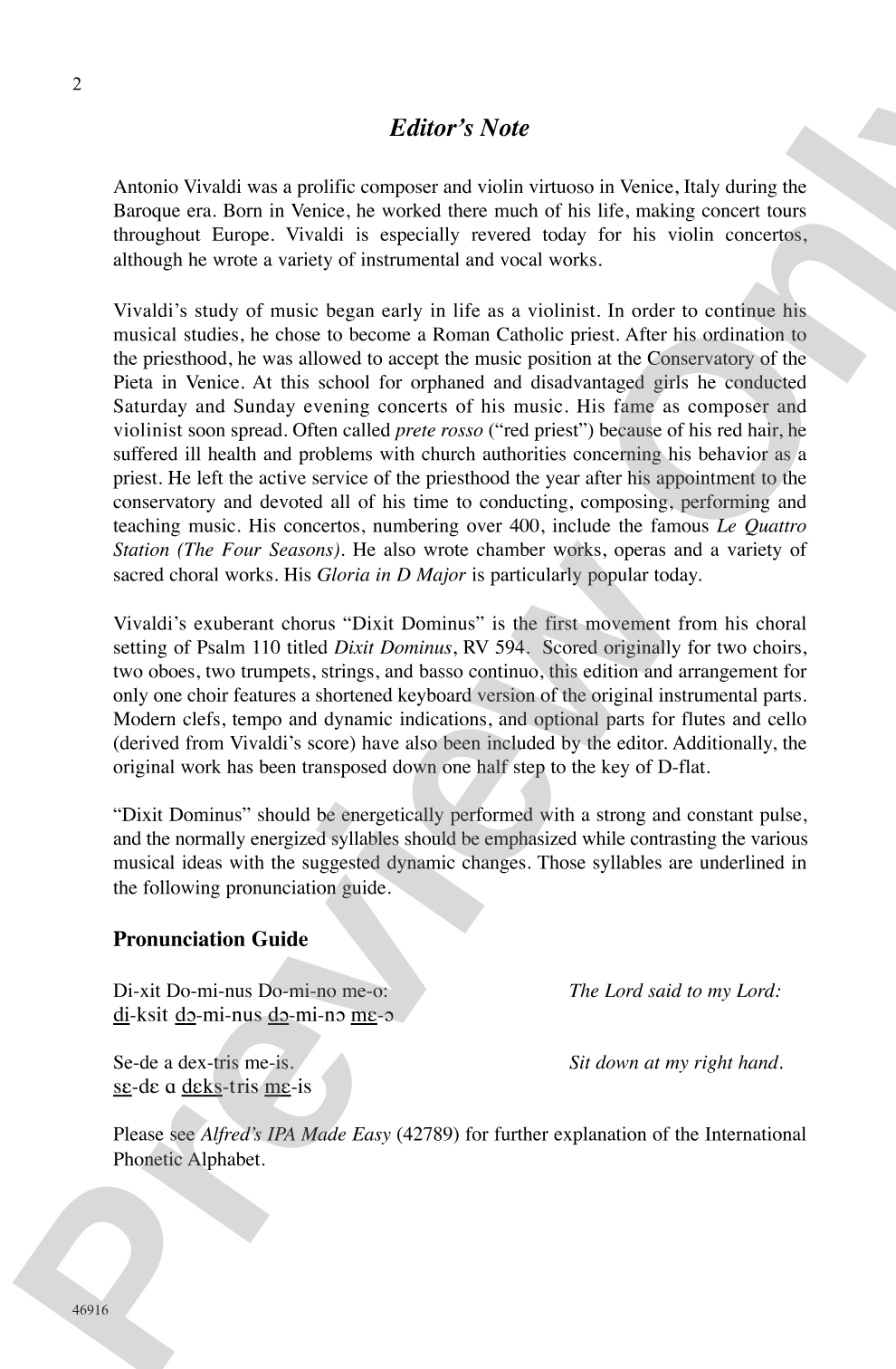
A straightforward Latin text and well-written vocal parts give many opportunities to develop choral techniques, impress adjudicators, and wow audiences. Add the optional flute and cello parts to enhance this winner from Baroque composer Antonio Vivaldi. Quality repertoire for mixed choirs! An informative note from the editor and a handy IPA guide are included in the publication.


Dixit Dominus: SAB Choral Octavo isn't in MakeMusic Cloud just yet...but it could be. Let us know you'd like to see it, and you'll help shape what comes next. In the meantime, start a free trial and dive into thousands of interactive titles your students can play along with today.
Request This Title
Tell us you want it.
Start Your Free Trial
Explore everything that's ready to play right now.
Sample Audio
1
Audio File
--:--
0:00
0:00
Sample Video
No sample videos found.
Additional Details
Series:
Alfred Choral Designs
Publisher:
Alfred Music
Page Count:
12
SKU:
00-PO-0005786
Instrumentation:
Opt. Flutes, Cello
More about this title
About the Composer: Antonio Vivaldi
Antonio Vivaldi (1678-1741) stands as one of Baroque music's most prolific and imaginative composers. His facility with melody, harmonic color, and structural clarity made him a dominant figure across Europe, and his sacred works demonstrate the same inventive spirit that defines his instrumental concertos. Vivaldi's liturgical compositions reveal a composer equally at home writing for the church as for the concert hall, blending devotional text with musical sophistication that engages performers and listeners alike.
Why we love this
Vivaldi's melismatic writing and transparent counterpoint shine through Liebergen's arrangement without sacrificing singability. The SAB voicing opens this Baroque masterwork to choirs that might find SATB versions unwieldy, making it accessible for both developing and advanced ensembles. The optional instrumental parts allow you to scale the piece to your resources while maintaining its rhetorical impact.
What to expect
The piece radiates the ceremonial brightness characteristic of Baroque sacred music, with Vivaldi's hallmark rhythmic vitality and soaring melodic lines. You'll hear the architectural clarity of the era combined with moments of genuine expressive warmth, creating an arc that holds audience attention while allowing singers to inhabit substantial musical material.
Who it's for
This arrangement suits intermediate to advanced mixed choirs seeking substantial repertoire for contest, festival, or concert performance. Directors building a diverse sacred repertoire will appreciate a Vivaldi work that doesn't demand a full SATB ensemble or require soloists to carry passages.
How to get the most out of it
- Shape phrases with the text's natural Latin stress patterns rather than letting metric accents drive the phrasing; this keeps the sacred context audible and prevents rhythmic stiffness.
- Balance the alto line carefully in passages where it carries musical material; Baroque texture often relies on clear inner voices to articulate harmonic movement.
- Use the IPA guide to ground consistent vowel shapes across your section rehearsals, particularly for the repeated Latin phrases that anchor the piece structurally.
- If you add the optional flute and cello parts, rehearse them separately first so they enhance rather than obscure the choral texture.
How to use it
Program this as a centerpiece for a concert featuring Baroque sacred works, or pair it with Renaissance motets and contemporary settings of Latin texts to frame a thematic program on liturgical music across centuries. Its moderate length and direct impact also make it ideal for festival competitions where strong first and last impressions matter.
Skills your students will build
- Singing Latin text with proper vowel consistency and diction clarity
- Executing Baroque phrasing and text stress patterns
- Balancing three-part mixed voicing with attention to inner-voice clarity
- Interpreting melismatic passages with musical intention rather than technical scrambling
- Coordinating with optional instrumental parts