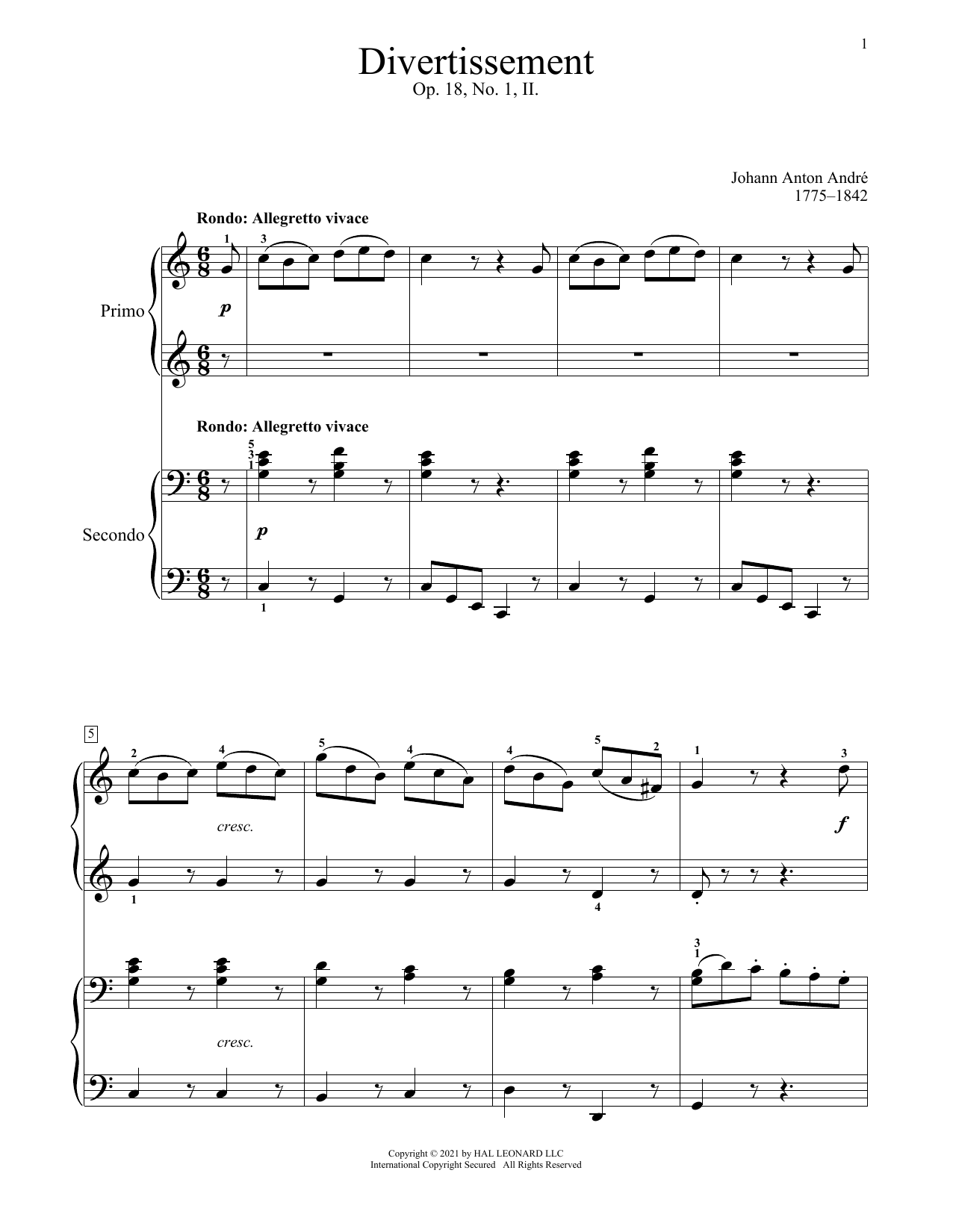
This rondo movement captures the elegance of Classical form without requiring a full ensemble. The writing is transparent enough for students to hear the architecture of the form clearly, yet it maintains genuine musical interest throughout. It's an ideal addition to a recital when you need something that sounds polished and stylistically grounded in just four pages.
What to expect
Spirited and refined, with the characteristic wit and charm of the rondo form. The movement unfolds with natural grace, balancing playfulness against structural clarity.
Who it's for
Intermediate pianists developing Classical repertoire and students ready to work with formal structures in a piece that rewards attention to period style. It works equally well for developing musicians who benefit from encounter with authentic Classical idiom.
How to get the most out of it
Shape the opening theme with a clear sense of forward motion in the rondo melody; the accompaniment should remain conversational rather than heavy.
Balance clarity of texture against the harmonic language. Classical writing can blur if the performer rushes the quicker passages.
Listen closely to the transitions between sections. They're often where the form breathes, so don't treat them as mere connective tissue.
How to use it
Include this as a standalone offering on a student recital, or pair it with other Classical or early Romantic movements to build a thematic program around form and style. It also serves well as a teaching piece when students are first internalizing how rondo sections return and develop.
Skills your students will build
Recognizing and executing rondo form (A-B-A-C-A structure)
Maintaining appropriate Classical-era articulation and phrasing
Balancing melody and accompaniment texture
Shaping harmonic progressions with period-appropriate voice leading
You May Also Like
Scan to Complete Your Purchase
Use your phone's camera to scan the code below
You'll log in on your phone and the order will be added to your account