
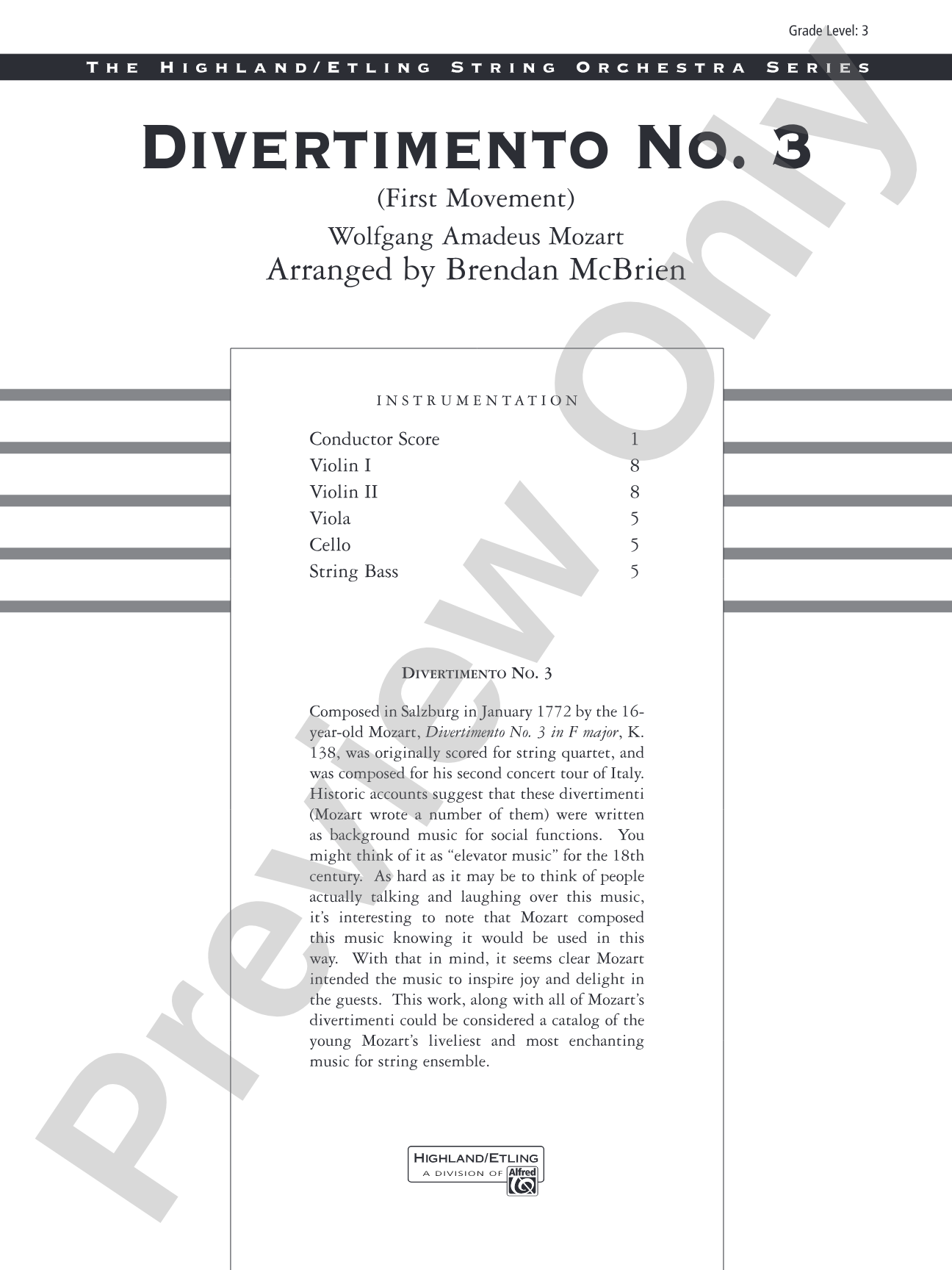
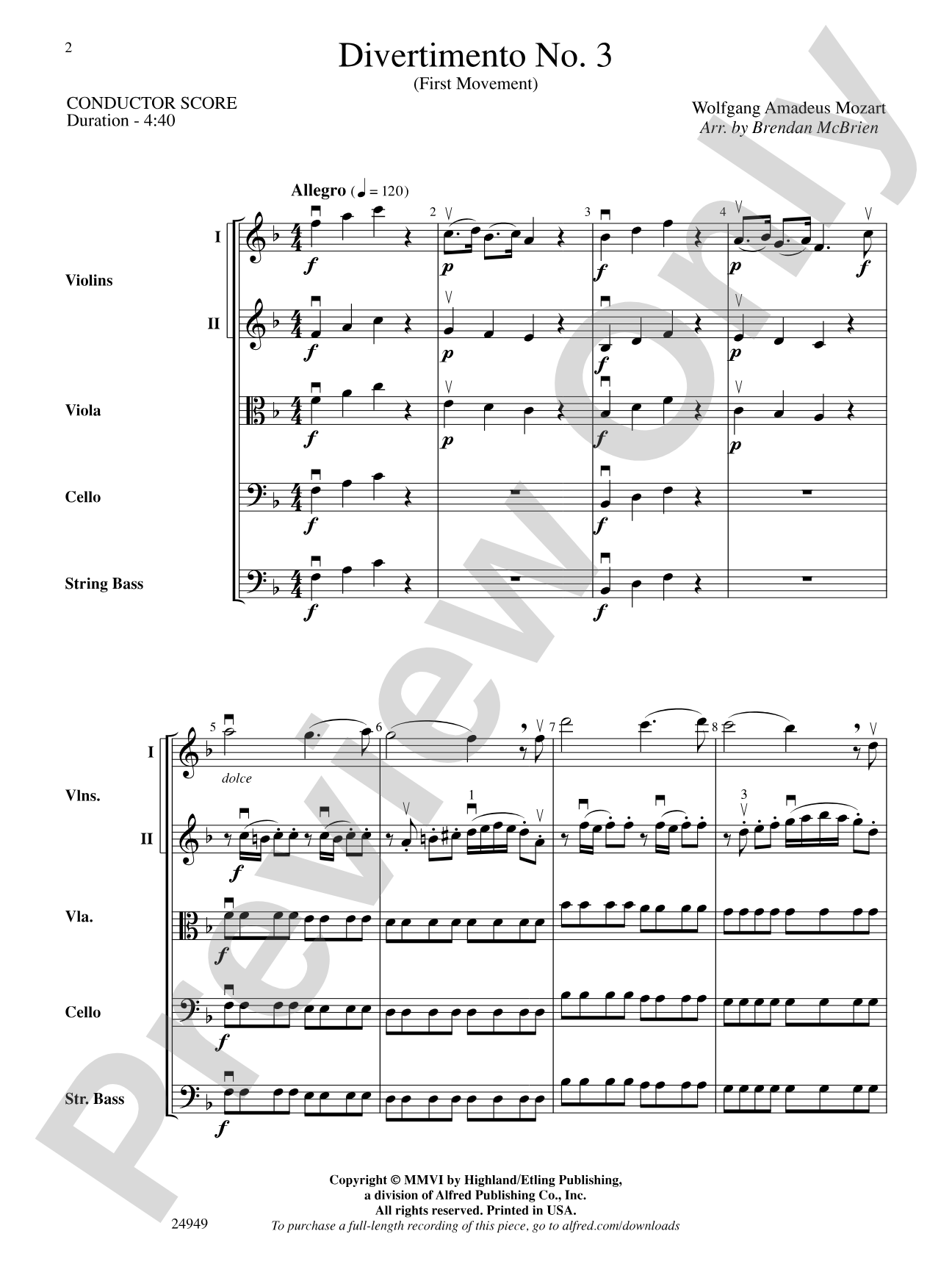
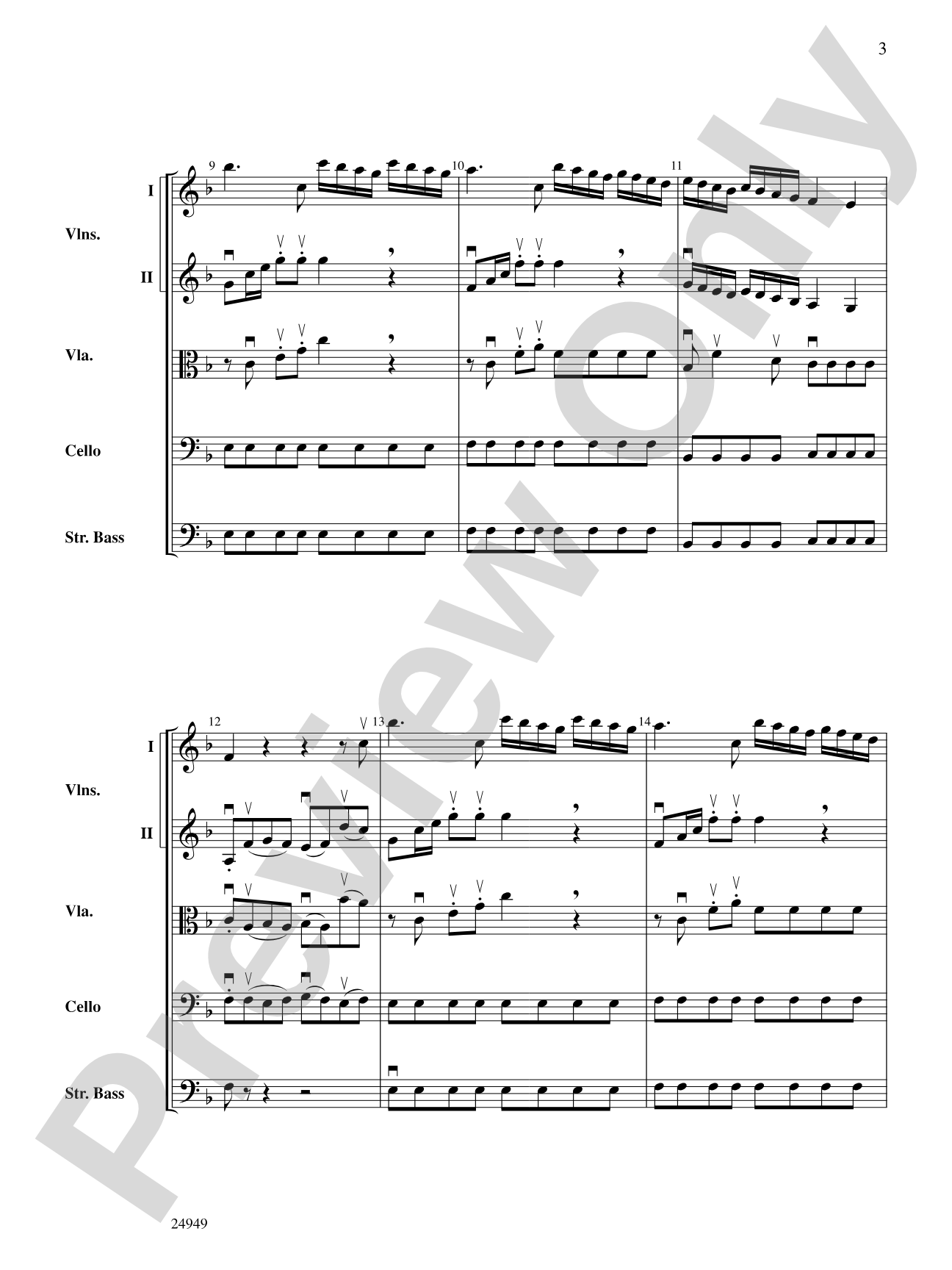
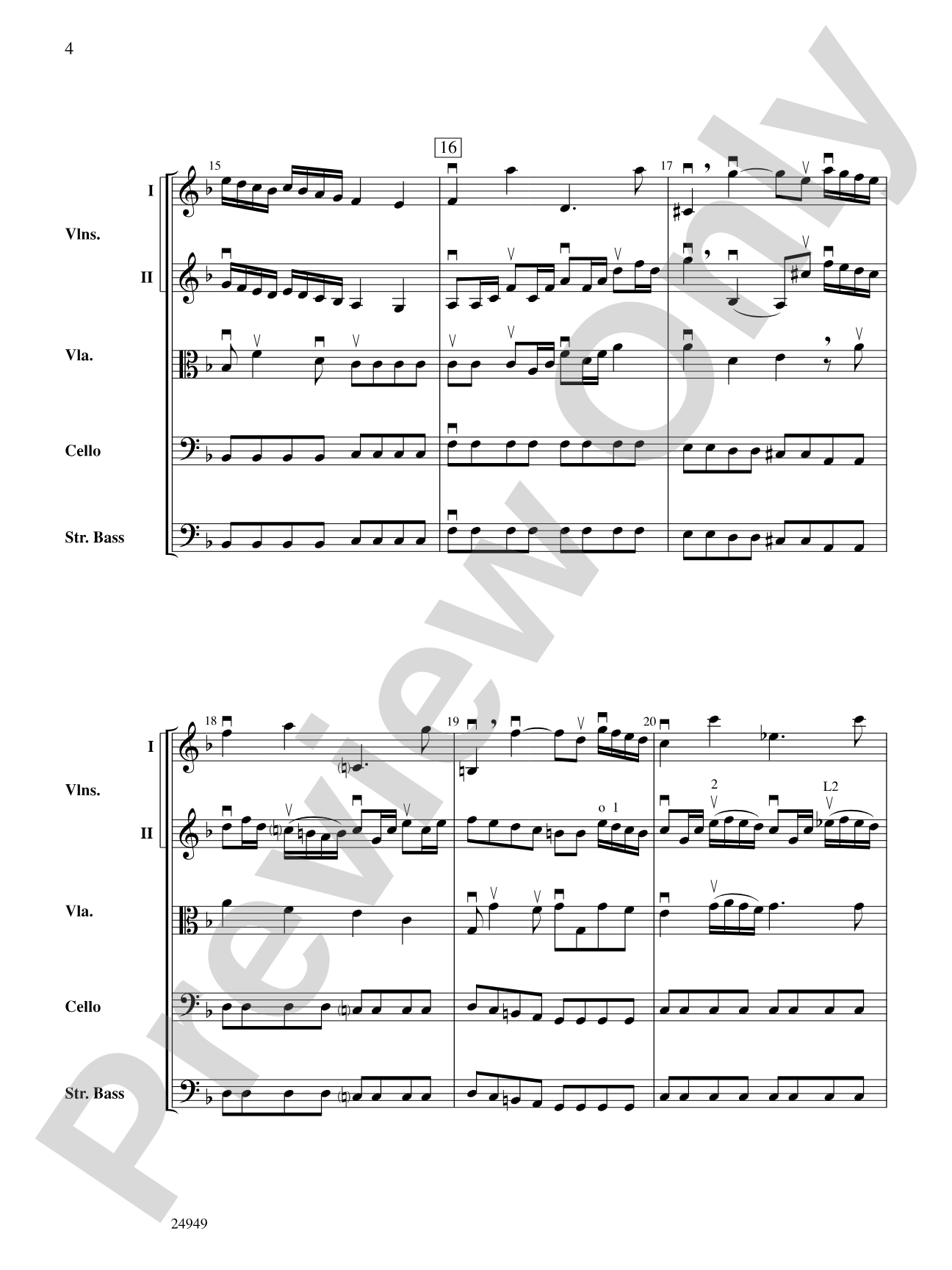
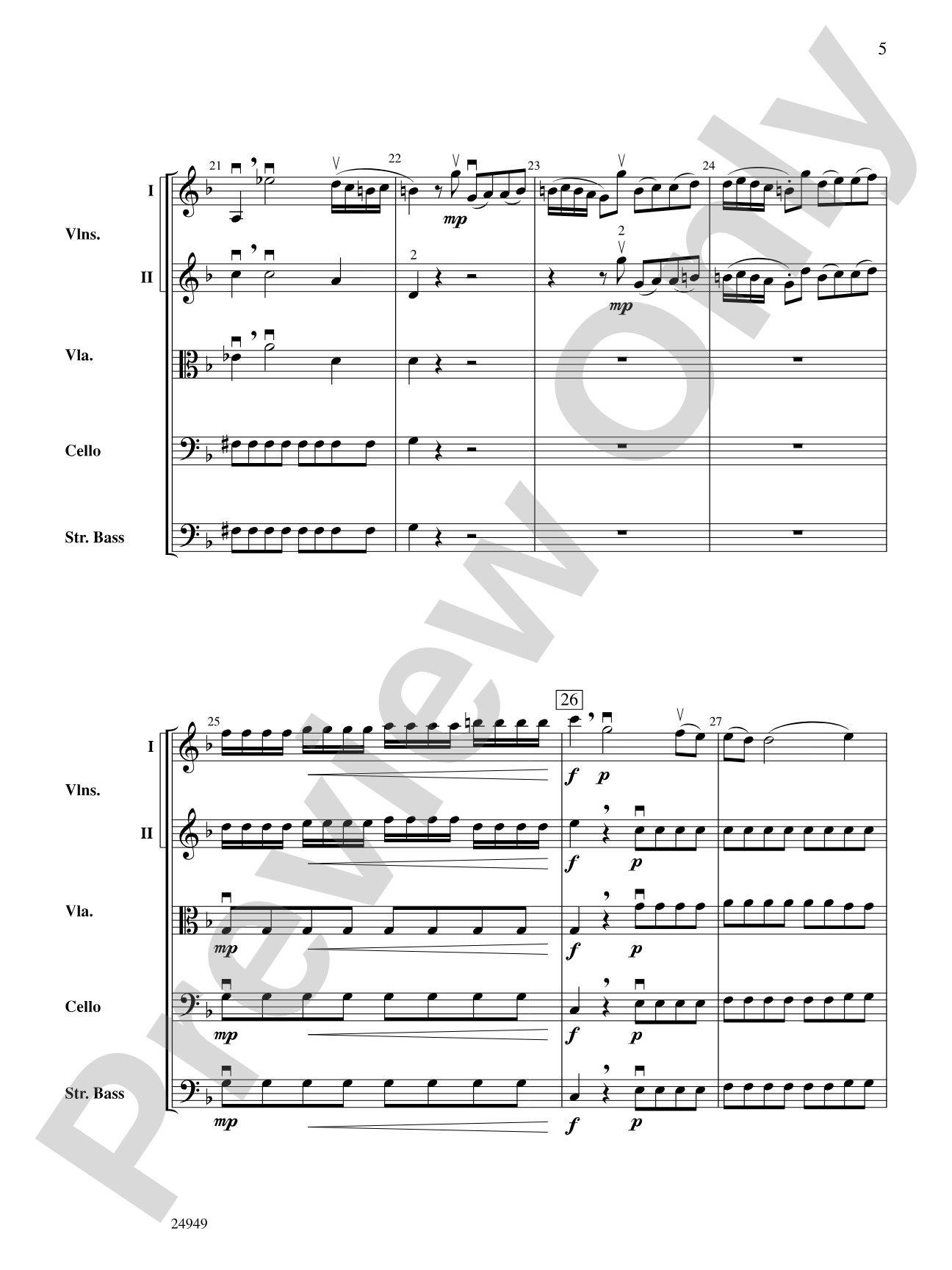
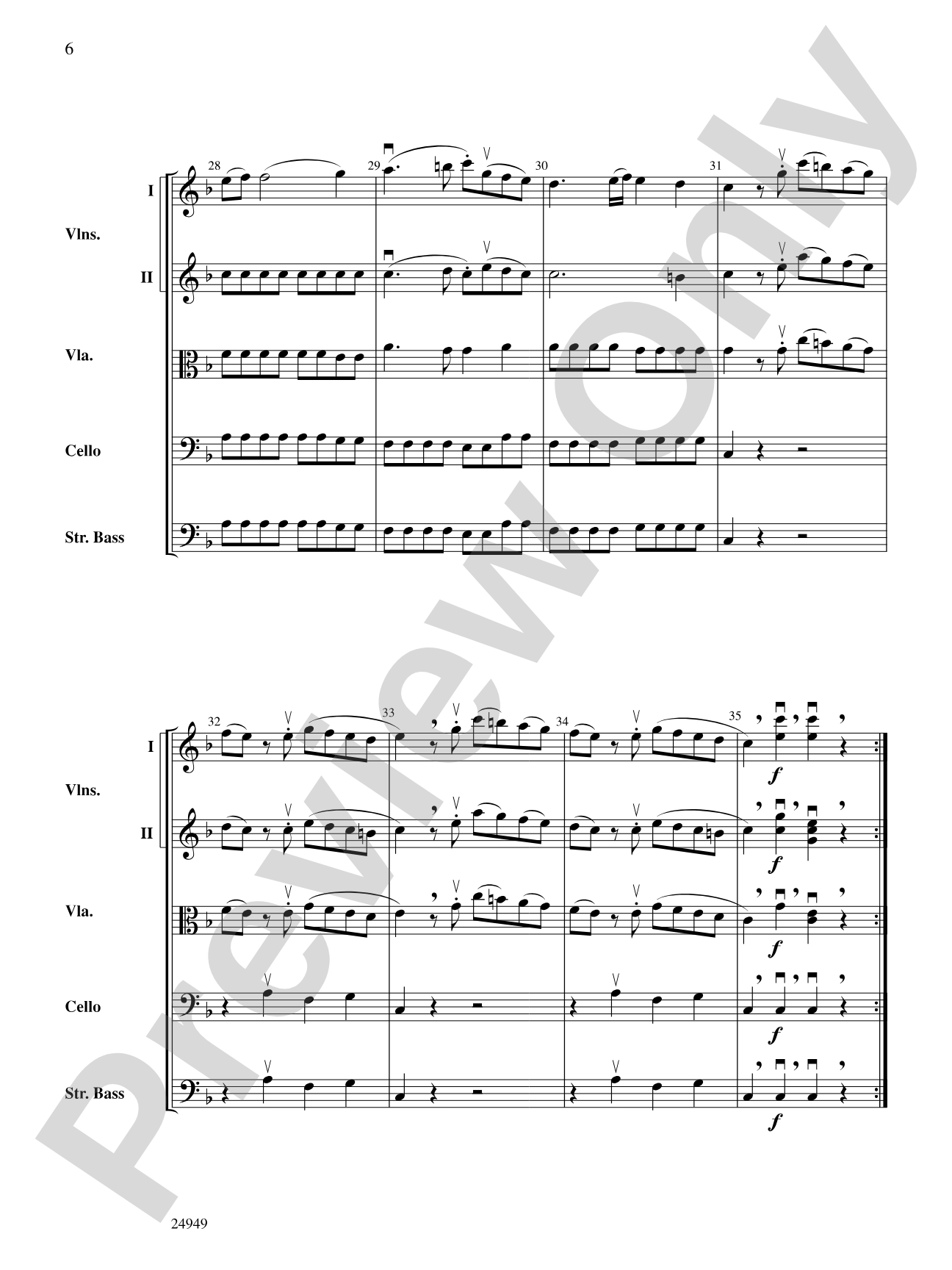
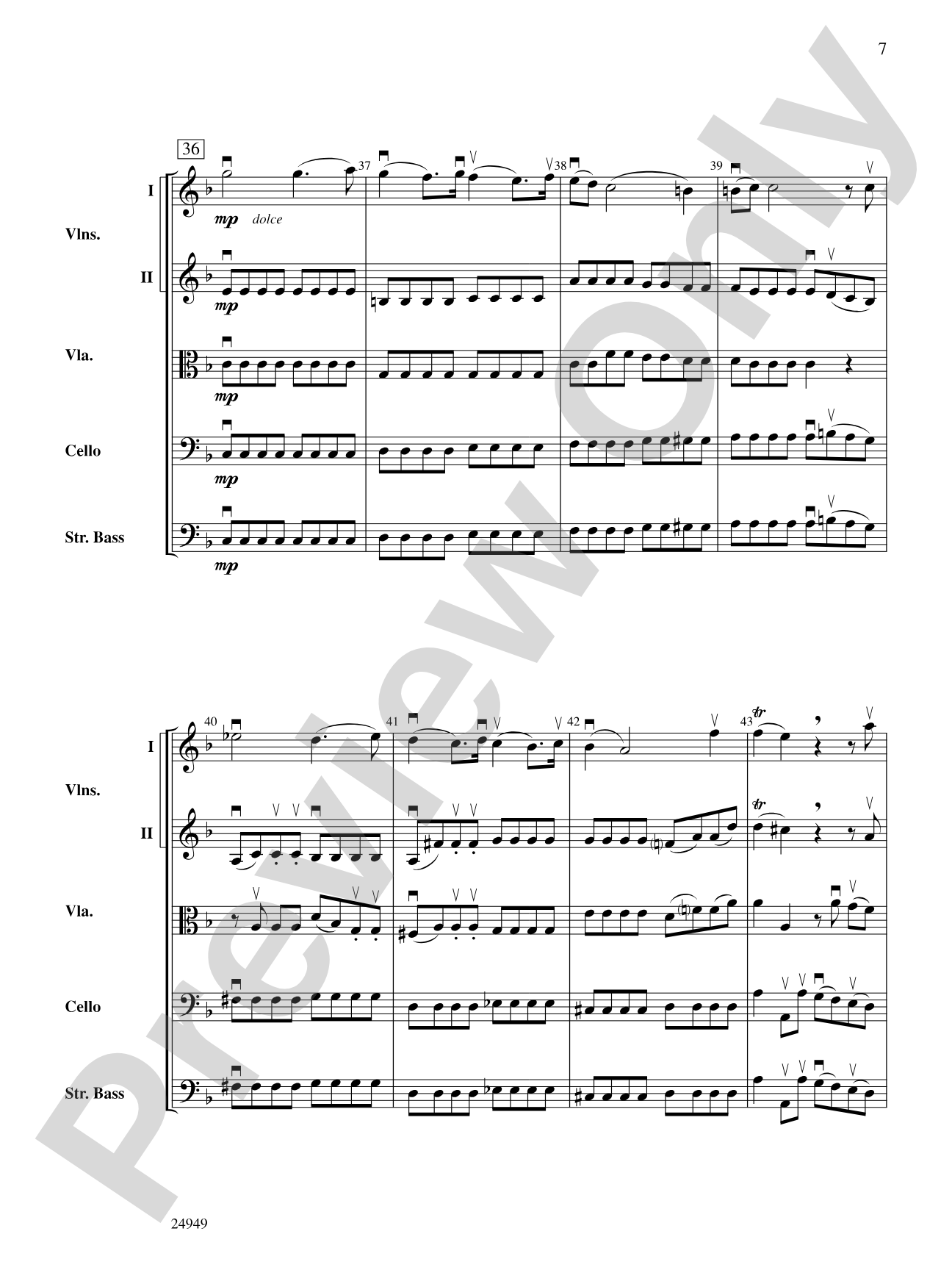
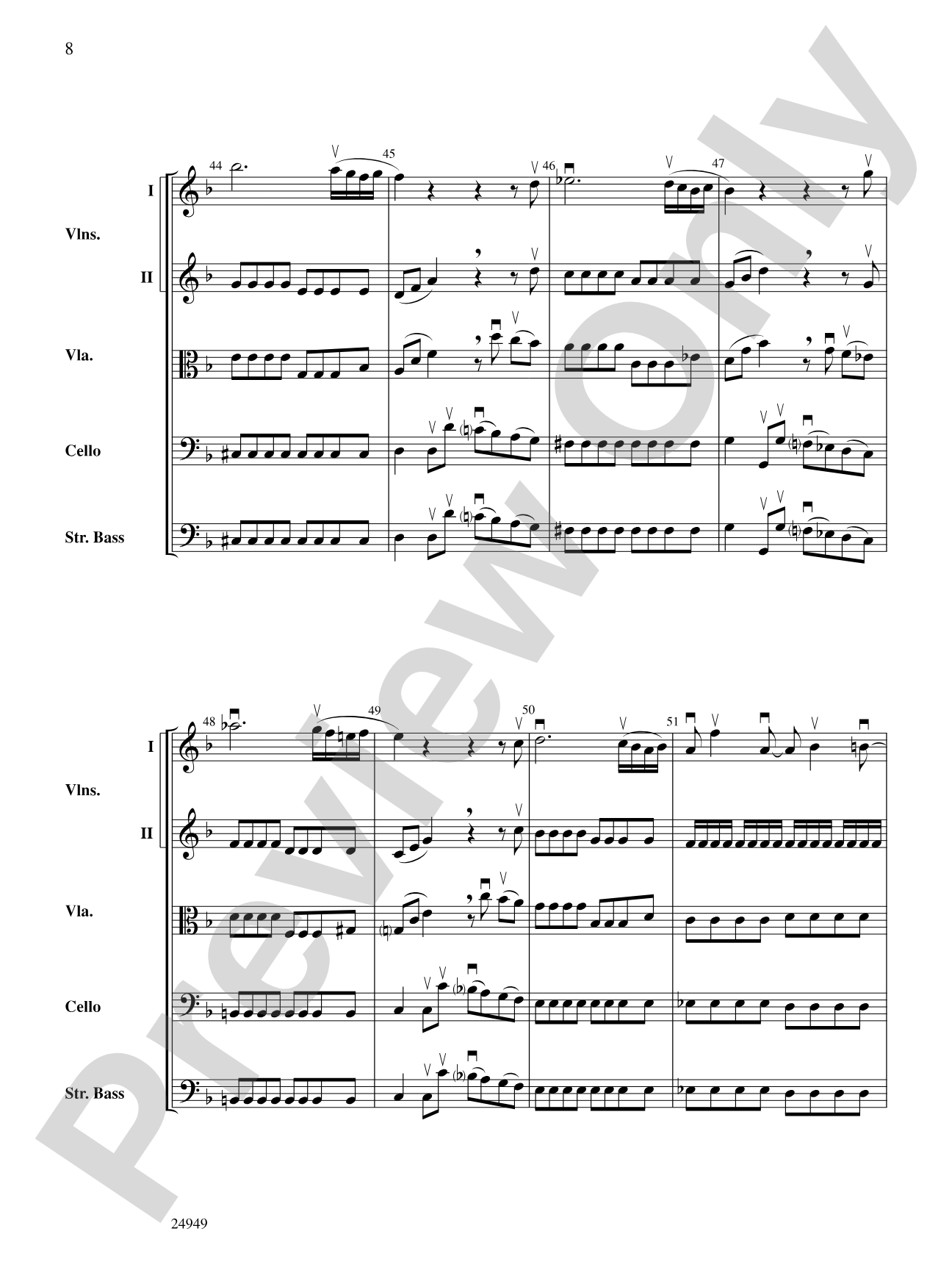
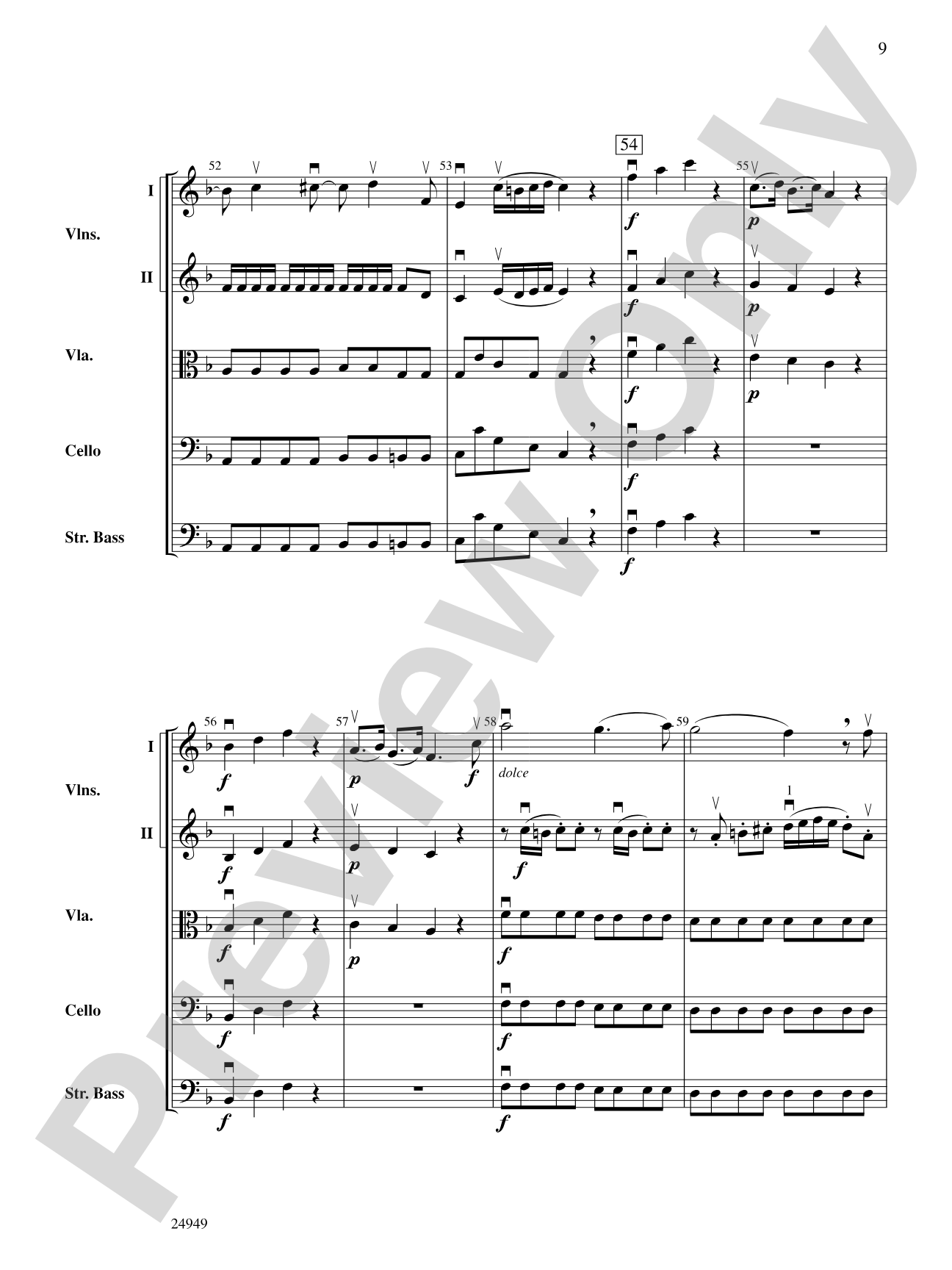
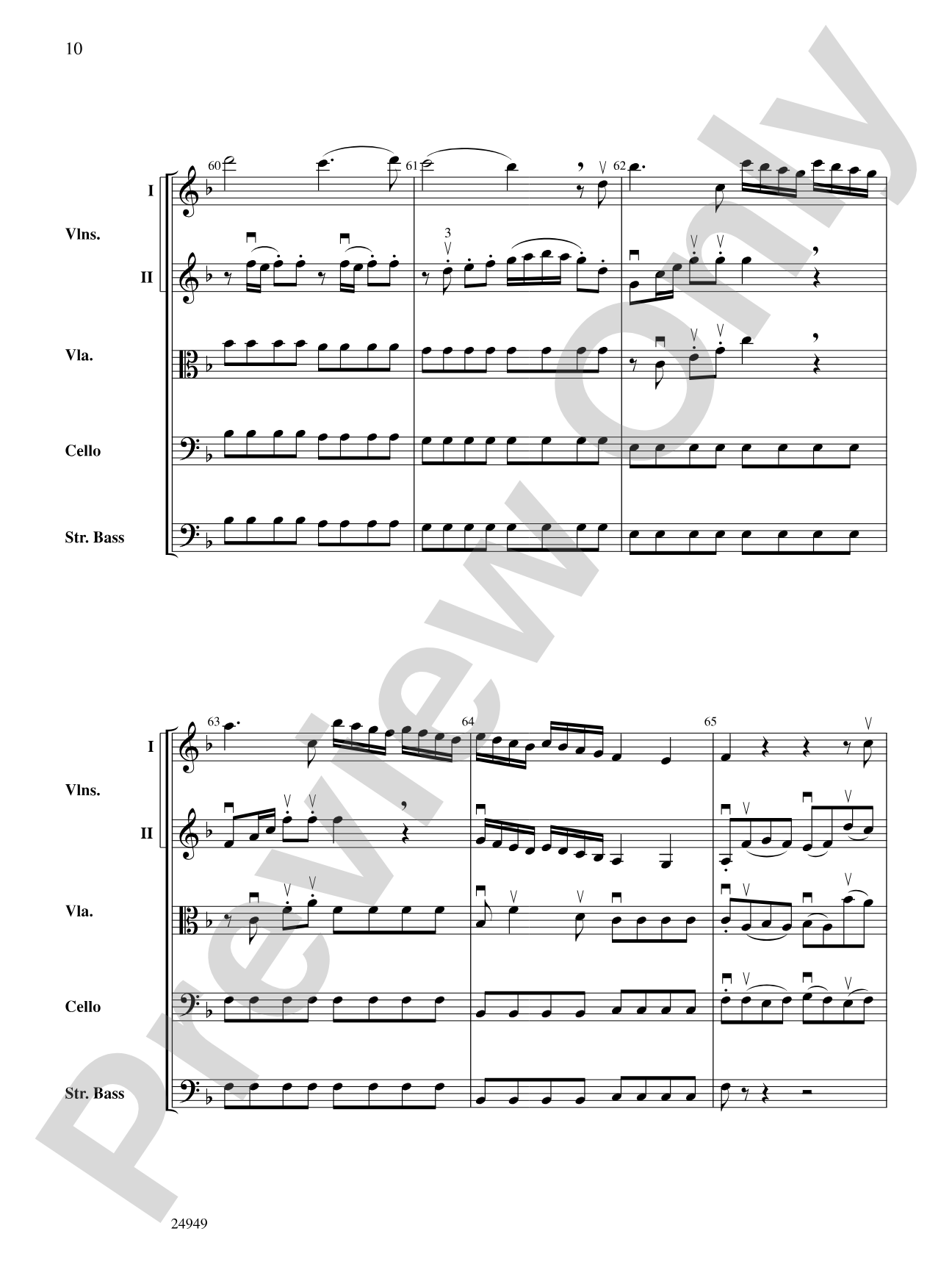
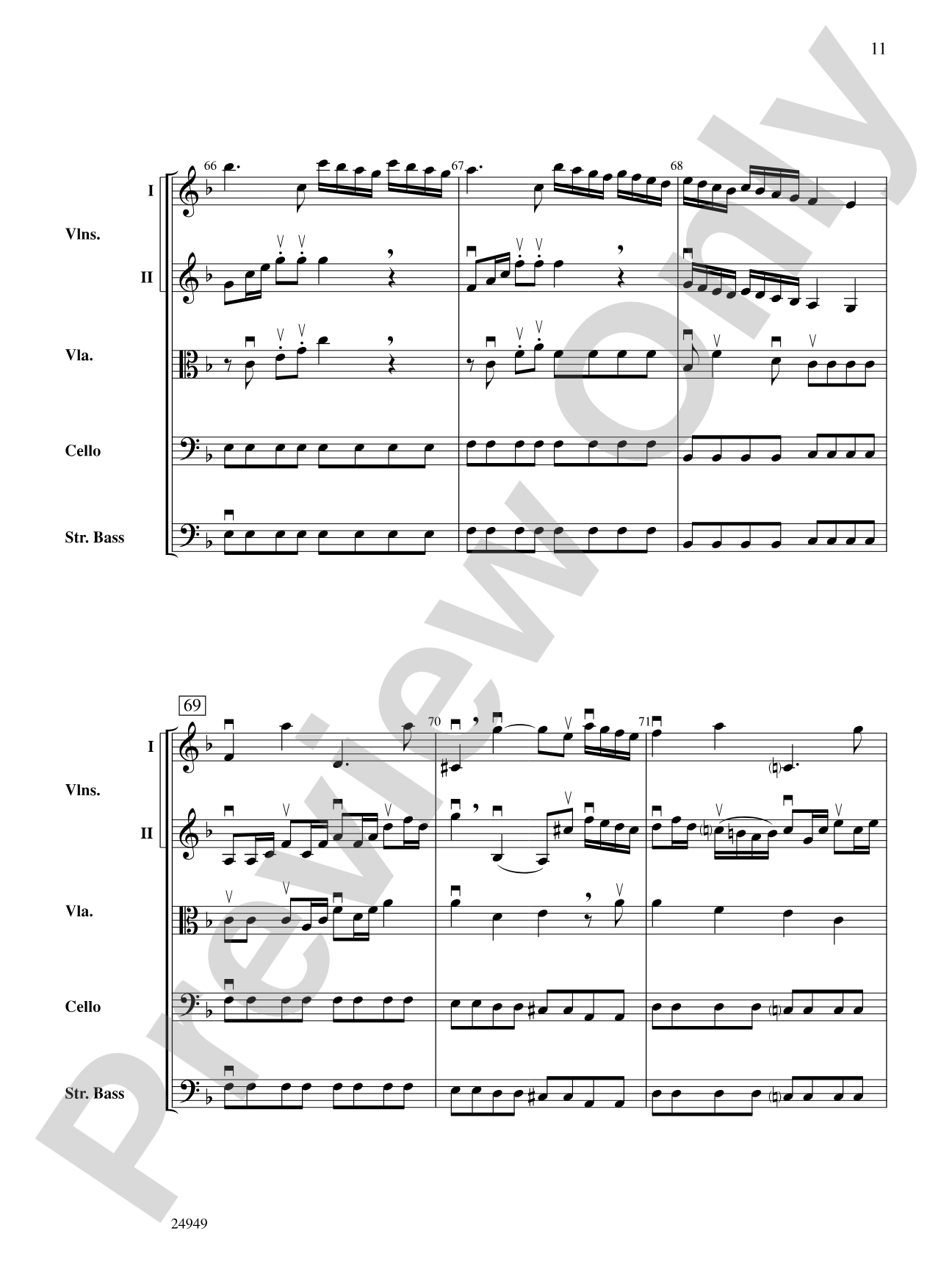
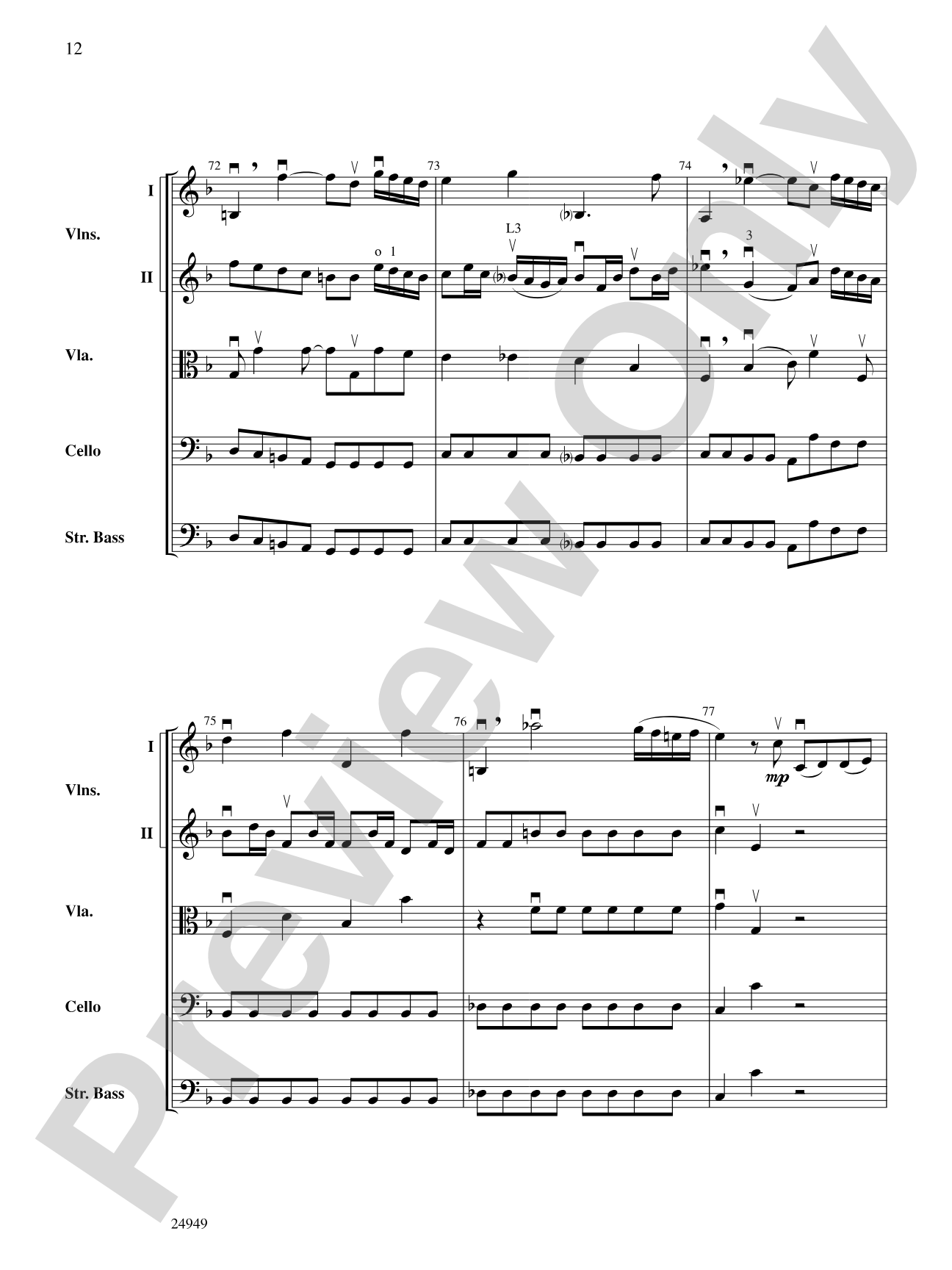
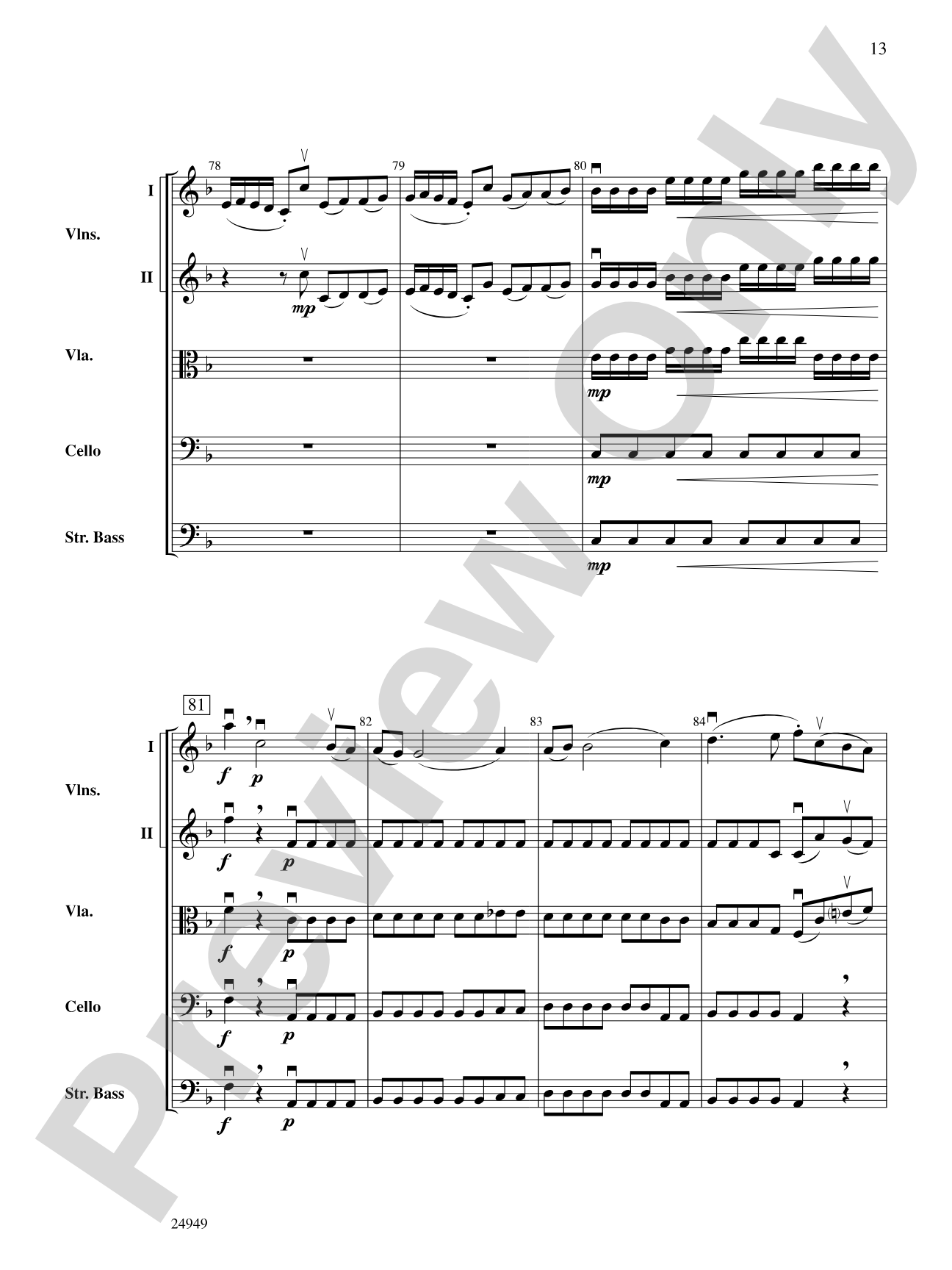
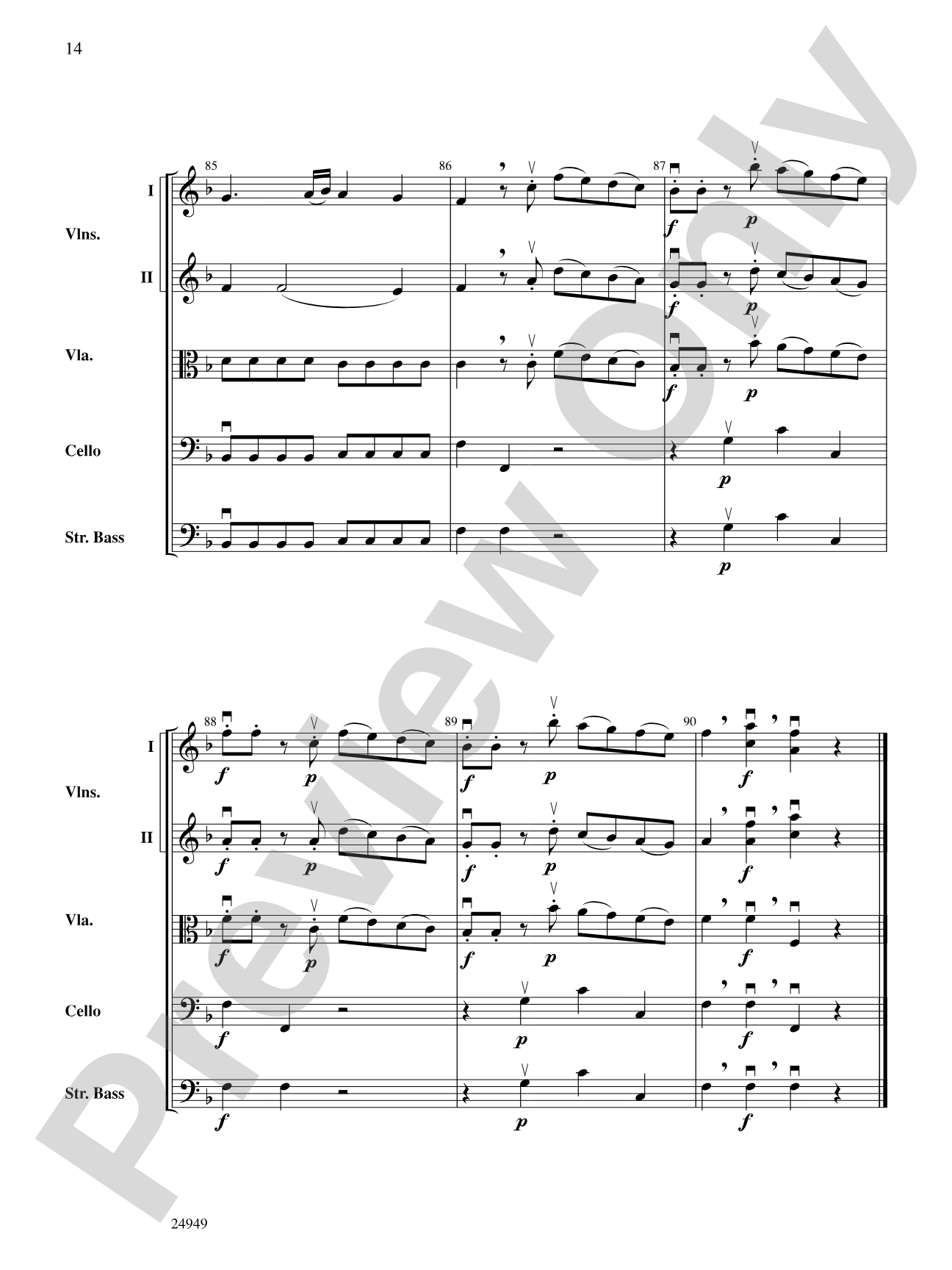



Divertimento No. 3 (1st Movement): String Orchestra Conductor Score & Parts
By Wolfgang Amadeus Mozart / arr. Brendan McBrien
Grade: 3
Item: 00-PK-0000949

$48.00
Pickup currently not available
Buy Extra Parts (Digital PDF Download)
| Product | Price | Quantity |
|---|---|---|
| Divertimento No. 3 (1st Movement): Score | $9.00 | |
| Divertimento No. 3 (1st Movement): 1st Violin | $5.99 | |
| Divertimento No. 3 (1st Movement): 2nd Violin | $5.99 | |
| Divertimento No. 3 (1st Movement): Viola | $5.99 | |
| Divertimento No. 3 (1st Movement): Cello | $5.99 | |
| Divertimento No. 3 (1st Movement): String Bass | $5.99 |
Parts Added to Cart!
Description
This divertimento by the 16-year-old Mozart captures the true essence of his genius. It sparkles with the youthful optimism and spontaneity that abound in his most beloved works. With a sunny and carefree mood, this winning concert opener will brighten up any program, and delight your audiences today as much as it did for Mozart's listeners over 200 years ago.


Don't just read it, hear it, play along with it, and watch your students grow with it. In MakeMusic Cloud, Divertimento No. 3 (1st Movement): String Orchestra Conductor Score & Parts comes alive with professional accompaniment, adjustable tempo, and built-in practice tools that turn solo practice into real progress.
Open in the Player
Jump straight in and assign it today.
Start Your Free Trial
Open this title and explore the full library in minutes.
Sample Audio
1
Audio File
--:--
0:00
0:00
Sample Video
No sample videos found.
Additional Details
Series:
Highland/Etling String Orchestra
Publisher:
Alfred Music
Page Count:
124
SKU:
00-PK-0000949
More about this title
About the Composer: Wolfgang Amadeus Mozart
Wolfgang Amadeus Mozart (1756-1791) composed across every major genre of his time and left a catalog of over 600 works before his death at 35. His music combines crystalline clarity, harmonic sophistication, and an instinctive sense of what instruments can do, making his compositions enduringly central to the concert repertoire and to music education worldwide.
Mozart wrote divertimentos throughout his career, often for social occasions and court entertainment. These works showcase his gift for melody and orchestration while remaining accessible to capable amateur ensembles. His juvenilia, including this divertimento written at 16, demonstrates the compositional maturity that would define his legacy.
Why we love this
A Grade 3 Mozart divertimento gives your students and audiences genuine repertoire, not a simplified approximation. The orchestration sits naturally for young string players while the melodic gift and formal clarity are unmistakably Mozart. Programming this opener establishes artistic credibility while its buoyant character sets an ideal tone for any concert.
What to expect
Sunlit and conversational, with a playful elegance that never loses sight of the melody. The movement unfolds with the kind of spontaneous charm that makes Mozart's music feel inevitable, as though the notes could arrange themselves no other way.
Who it's for
String orchestra directors working with Grade 3 ensembles who want to program authentic Classical repertoire that students will enjoy learning and audiences will recognize immediately. This arrangement also suits chamber orchestra settings and is rewarding for ensembles preparing for festival competition.
How to get the most out of it
- Keep the tempo conversational and unrushed; resist the urge to drive the opening theme. Mozart's elegance emerges when phrases breathe naturally.
- Balance the first and second violin lines carefully so dialogue and countermelody register without drowning the primary theme.
- Shape dynamic changes as gradual transitions rather than sudden shifts. The shift from piano to forte should feel organic, not mechanical.
- Listen for the bass line's role in supporting harmonic motion. Cellos and basses should anchor without plodding.
How to use it
Use this as your opening work to establish an immediate connection with the audience and set a refined, joyful tone for the concert ahead. It pairs naturally with other Classical-era chamber or orchestral works, or as a contrast to weightier Romantic pieces later in your program.
Skills your students will build
- Intonation within the Classical idiom and transparent textures
- Balanced ensemble playing across multiple independent lines
- Phrasing and dynamic shaping aligned to Classical form
- Reading parts within the Highland/Etling string orchestra instrumentation
- Ensemble awareness across conductor score and individual parts