
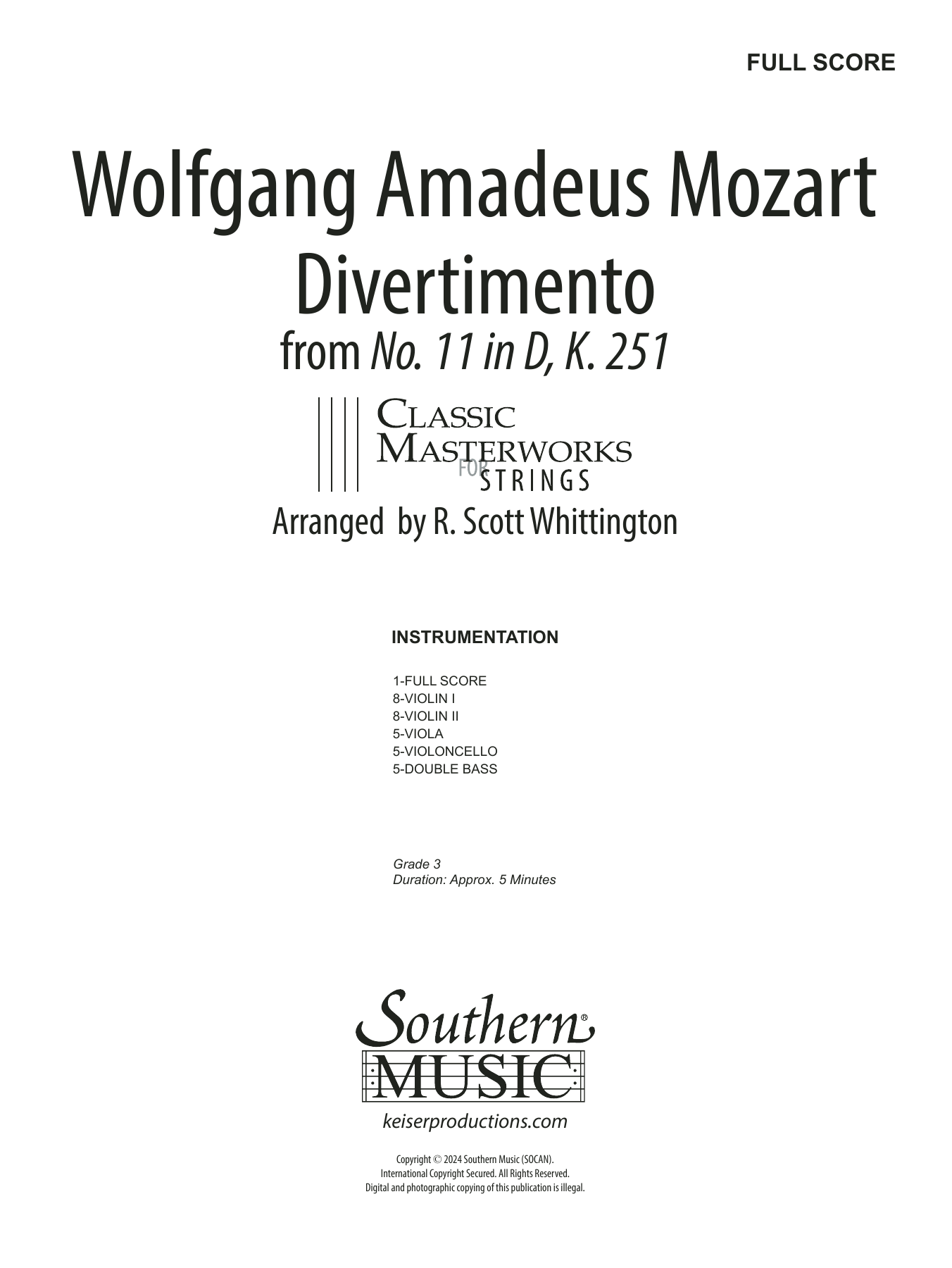

Divertimento from No. 11 in D, K. 251 (arr. R. Scott Whittington): String Orchestra Conductor Score & Parts
By Wolfgang Amadeus Mozart / Arranged by R. Scott Whittington
Grade: 3
Item: 35-PK01722337
$55.00
Pickup currently not available
Buy Extra Parts (Digital PDF Download)
Parts Added to Cart!
Description
This selection is taken from Mozart's DIVERTIMENTO K.251, No. 11 in D Major, a 6-movement work composed in Salzburg in the year 1776. The original oboe and horn parts have been redistributed among the strings in order to share melodic interest among all players. Difficulty level is 3. While the suggested tempo marking is 108, this piece can be played more quickly, based on the technical abilities of the orchestra.


Divertimento from No. 11 in D, K. 251 (arr. R. Scott Whittington): String Orchestra Conductor Score & Parts isn't in MakeMusic Cloud just yet...but it could be. Let us know you'd like to see it, and you'll help shape what comes next. In the meantime, start a free trial and dive into thousands of interactive titles your students can play along with today.
Request This Title
Tell us you want it.
Start Your Free Trial
Explore everything that's ready to play right now.
Sample Audio
No sample audio found.
Sample Video
No sample videos found.
Additional Details
Publisher:
Hal Leonard
SKU:
35-PK01722337
More about this title
About the Composer: Wolfgang Amadeus Mozart
Wolfgang Amadeus Mozart (1756-1791) composed with astonishing fluency across every genre of his time. His divertimenti represent a remarkable body of work: elegant, conversational pieces written for aristocratic patrons and social occasions, yet crafted with the same structural and harmonic sophistication he brought to his symphonies and operas. These works showcase his gift for giving every instrument something interesting to play.
For string educators, Mozart's divertimenti offer something precious. They demand musicality and rhythmic precision without requiring virtuosic difficulty, making them ideal for developing orchestral voices. The K. 251 divertimento, composed during Mozart's Salzburg years, demonstrates his mastery of form and his instinct for effective orchestration across a range of abilities.
Why we love this
This arrangement thoughtfully redistributes the original oboe and horn melodies across your string section, ensuring that no player spends long passages in accompaniment. The Grade 3 level sits at that sweet spot where students can focus on phrasing and ensemble balance rather than wrestling with technical hurdles. Mozart's transparent textures make this an excellent vehicle for teaching orchestration concepts without sacrificing musical substance.
What to expect
Bright and civilized, with the lightness of a chamber work expanded to full orchestra. The piece breathes easily through its melodic passages and offers moments of genuine lyrical warmth alongside its courtly elegance.
Who it's for
String orchestras at the intermediate level will find this accessible yet musically substantial. It serves directors who want to program recognizable classical material without spending rehearsal time on technical problems, freeing energy for musical refinement.
How to get the most out of it
- Set a tempo that lets your players hear the harmonic movement clearly; rushing obscures Mozart's elegant voice leading.
- Shape phrases by thinking through the melodic material as conversations between sections rather than as a single line.
- Balance the violin parts carefully when passing thematic material, especially where the arrangement redistributes original wind lines to the strings.
- Allow rubato in the slower passages to give students experience with flexible phrasing while maintaining ensemble cohesion.
How to use it
This works beautifully on a concert pairing classical chamber repertoire with larger works, or as an opener that establishes an intimate tone before shifting into weightier pieces. It also fits naturally into a program exploring Mozart's output across genres, showing students how the same compositional principles apply whether writing a divertimento or a concerto.
Skills your students will build
- Maintaining transparent ensemble texture across multiple simultaneous melodic lines
- Balancing independent string parts that share equal musical weight
- Executing Classical period phrasing conventions
- Reading and executing tempo adjustments based on ensemble capability
- Identifying and executing voice leading in redistributed orchestration