Divertimento: Bass Clarinet Sheet Music Preview

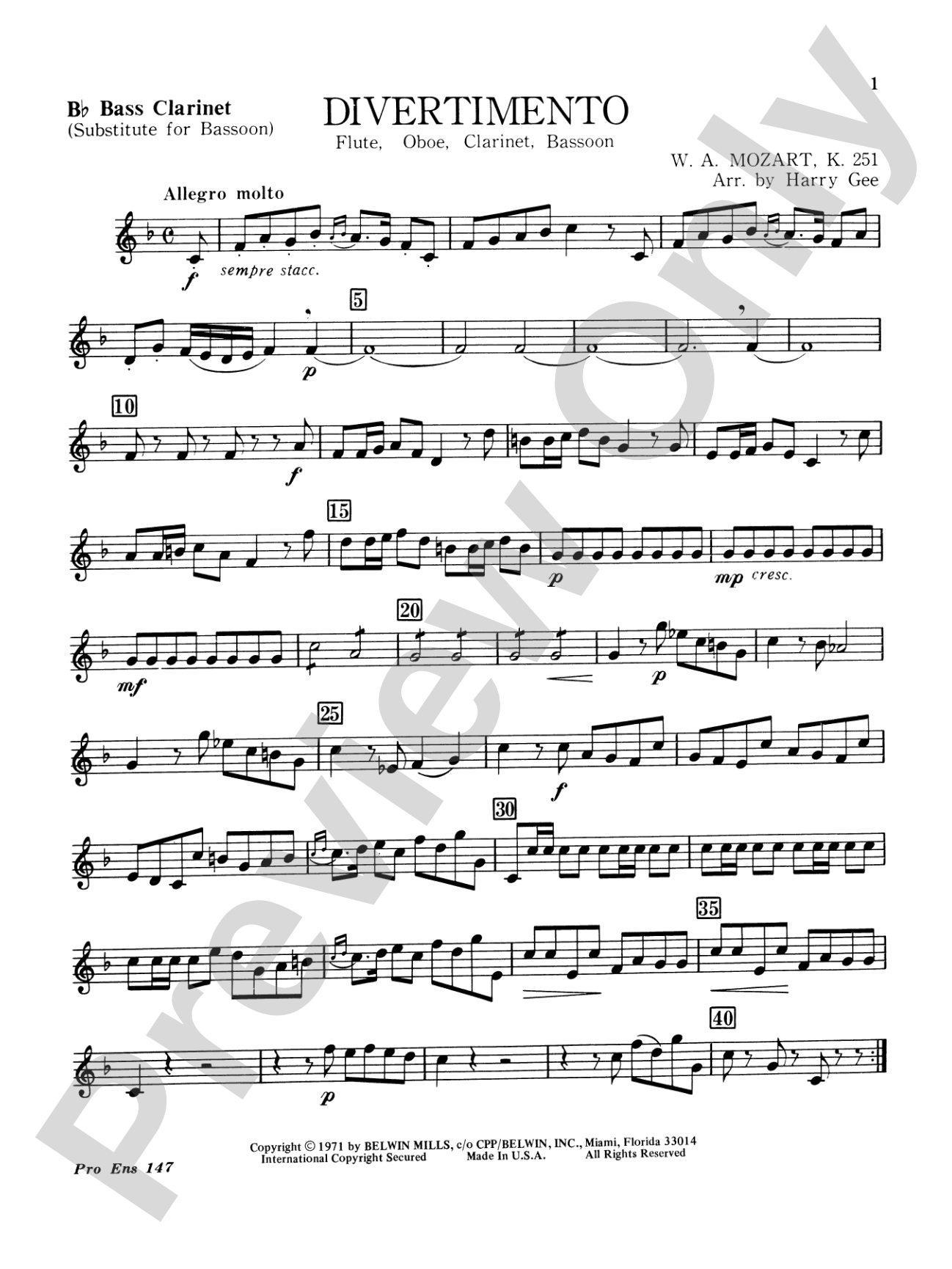
Divertimento: Bass Clarinet

By Wolfgang Amadeus Mozart / arr. Harry Gee

Grade: (V)

Item: 00-PC-0002548_BBC

Digital Download
$3.00
Description

Don't just read it, hear it, play along with it, and watch your students grow with it. In MakeMusic Cloud, Divertimento: Bass Clarinet comes alive with professional accompaniment, adjustable tempo, and built-in practice tools that turn solo practice into real progress.

Sample Audio
No sample audio found.
Sample Video
Additional Details
Publisher: Alfred Music
Page Count: 20
SKU: 00-PC-0002548_BBC

More about this title

About the Composer: Wolfgang Amadeus Mozart

Wolfgang Amadeus Mozart (1756-1791) was an Austrian composer whose prolific output spanned every major genre of his era. His chamber music for winds reveals a gift for writing idiomatically across diverse instrumental colors while maintaining the structural clarity and melodic brilliance that defined his style. Mozart's woodwind divertimenti represent a vital bridge between the Classical symphony and the intimate chamber work, showcasing his ability to balance technical demands with genuine musical substance.

For educators and students, Mozart's wind writing offers essential lessons in voice independence, transparent orchestration, and the art of building ensemble cohesion through melodic conversation rather than harmonic thickness. His woodwind quartets remain cornerstones of the chamber repertoire precisely because they reward careful listening and reward players who commit to stylistic awareness.

Why we love this

This arrangement brings Mozart's elegant Classical language within reach of intermediate quartets without sacrificing the character of the original. The piece demonstrates how four winds can create genuine conversation rather than hierarchical parts, and it's scored to reward ensemble maturity without requiring virtuosic technique. Festivals and competitions consistently respond to Mozart, and performers gain confidence performing music that has genuinely shaped the concert tradition.

What to expect

Light yet substantive, this divertimento unfolds with the graceful inevitability of a conversation between four refined speakers. The Classical balance of accessibility and structural sophistication creates music that sounds simple on first hearing but reveals fresh details with each rehearsal.

Who it's for

Intermediate woodwind quartets ready to tackle Classical idiom with stylistic awareness. This arrangement suits high school ensembles preparing for festival play or chamber music competitions, as well as community bands and adult ensembles seeking accessible yet substantive repertoire.

How to get the most out of it

  • Establish a steady harmonic pulse across the quartet; listen for the figured bass implicit in Mozart's part writing and ensure each voice carries equal weight in creating that foundation.
  • Shape phrases with period clarity; Mozart's melodic contours follow 8 or 16-bar patterns, and respecting those architectural lines prevents the music from sounding aimless.
  • Balance the top voice without allowing the other three to recede; this music lives in the interplay of equals, not in solo-plus-accompaniment texture.
  • Keep articulation consistent within motivic sections while allowing subtle shifts between exposition and development; Mozart rewards detailed score study that reveals where character should change.

How to use it

Pair this with a contemporary work to show the lineage of woodwind chamber writing, or program it as a festival or recital piece that bridges educational and concert contexts. Its 20-page length makes it ideal for concert programming where you want Classical authority without extended performance time.

Skills your students will build

  • Balancing four independent melodic lines within a homogeneous timbral blend
  • Reading and interpreting Classical phrase structure and period form
  • Adjusting articulation and dynamics to support harmonic function rather than surface gesture
  • Listening for transparent voice leading and ensemble blend in lower registers

You May Also Like